8 Easy Steps to Smoke Beef Brisket in an Electric Smoker
Many people struggle with getting that perfect smoked beef brisket — it’s easy to either overcook, underseason, or lose that tender, flavorful result. If you’re aiming for a juicy, mouthwatering brisket from your electric smoker, you’re not alone.
Smokin’ meat can seem intimidating, but with the right steps, you’ll be serving up restaurant-quality results in no time.
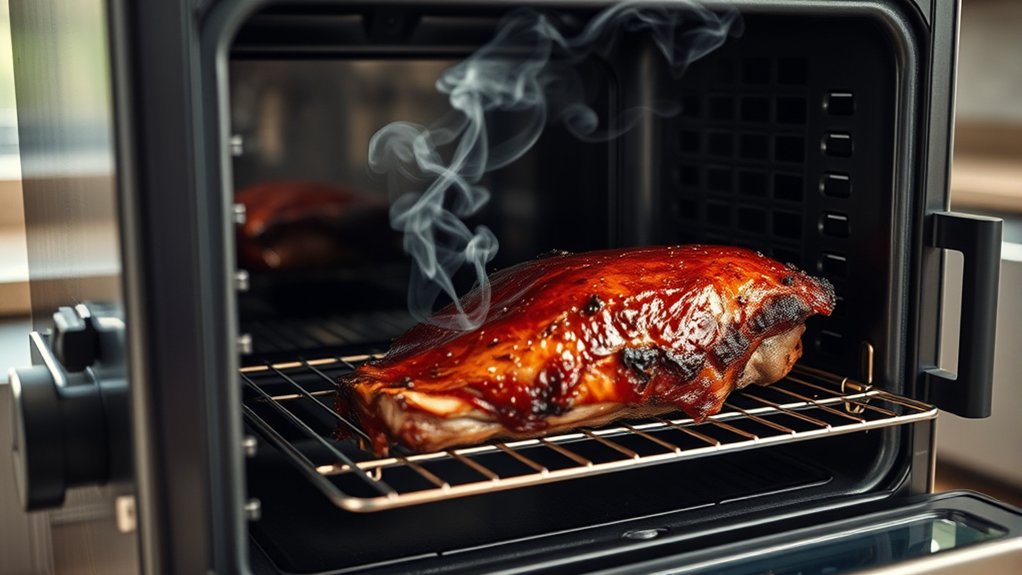
To smoke beef brisket in an electric smoker, start by choosing a quality cut and seasoning it well. Preheat your smoker to 225-250°F and keep that temperature steady.
Apply your favorite rub, then smoke the brisket for several hours, keeping the lid closed to trap smoke.
Wrap it in foil during the stall for tenderness, monitor the internal temp, and let it rest before slicing against the grain.
Stick with these steps, and you’ll learn even more tips to perfect your brisket.
Key Takeaways
- Prepare and season the brisket, then let it sit in the fridge overnight for enhanced flavor.
- Preheat the smoker to 225°F to 250°F and choose quality wood chips for the best smoke flavor.
- Keep the temperature steady and check the internal meat temperature regularly during the smoking process.
- Wrap the brisket during the stall phase to help it stay tender and prevent it from drying out.
- Rest the wrapped brisket in foil for at least 30 minutes before slicing against the grain.
How to Prepare Your Beef Brisket for Smoking
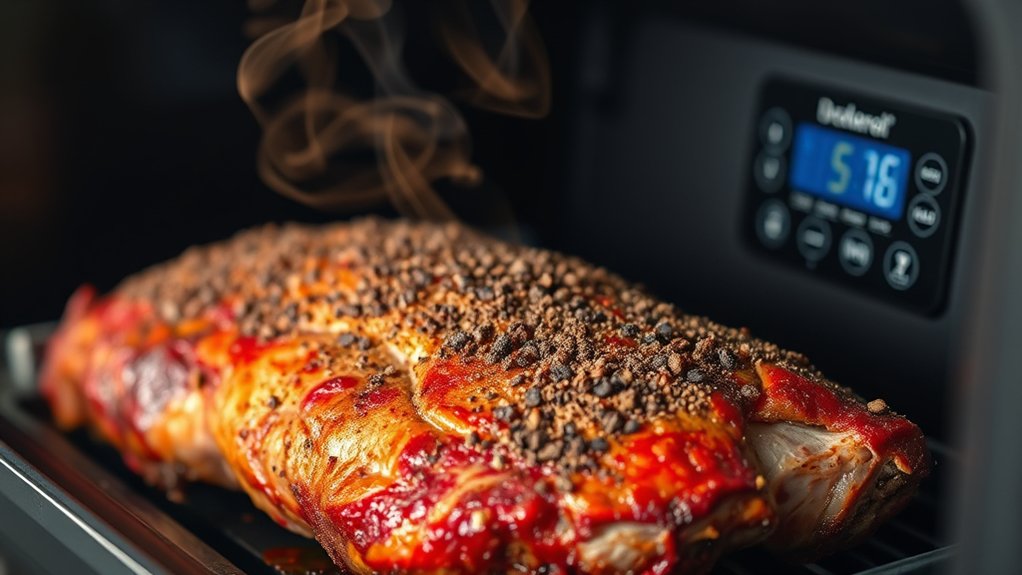
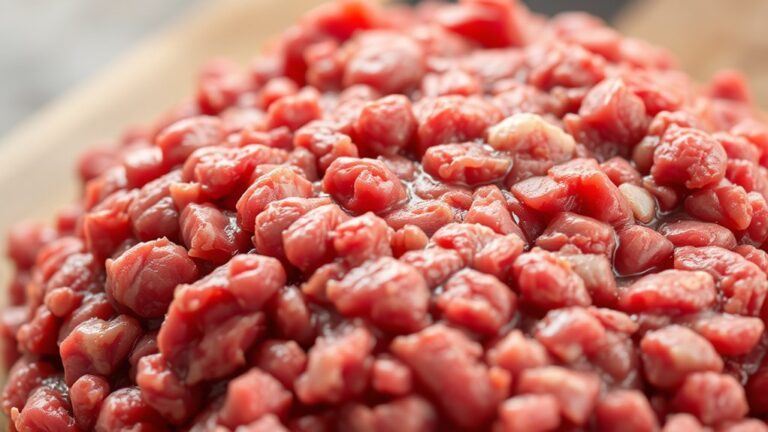
Before you start smoking, you need to properly prepare your beef brisket. First, pick a fresh, high-quality cut with good marbling. Trim off any excess fat, leaving about a quarter-inch layer for flavor and moisture.
Rub the brisket evenly with your favorite seasoning blend, making sure all sides are coated. For extra flavor, let it sit uncovered in the fridge for a few hours or overnight. This helps the rub soak in and creates a better bark.
Before placing it in the smoker, pat the brisket dry to help the smoke stick better. Let it sit at room temperature for about an hour to ensure even cooking. Proper prep keeps your brisket moist, tender, and full of flavor throughout the smoke.
Choosing the Best Electric Smoker Settings for Brisket
To achieve tender, flavorful brisket, selecting the right electric smoker settings is essential. Set your smoker to around 225°F to 250°F; this low and slow approach allows the meat to break down and develop rich flavors.
Maintain a consistent temperature throughout the cook to prevent drying out or uneven cooking. Use the smoker’s built-in controls to monitor and adjust the heat as needed.
If your smoker has a humidity setting, aim for moderate humidity to keep the brisket moist. Some models offer specific settings for different meats, so choose the one optimized for beef or brisket if available.
Applying Rubs and Seasonings for Maximum Flavor
To get the best flavor from your brisket, you need to choose the right spices that complement the meat. Make sure to balance salt and sugar in your rubs to boost flavor without overpowering the meat.
Applying your seasonings evenly and thoroughly guarantees every bite is packed with flavor. Don’t forget, a good rub is all about enhancing the natural taste of the meat.
Choosing the Right Spices
Choosing the right spices is key to bringing out the natural richness of your beef brisket. You want to enhance the meat’s flavor without overpowering it.
Use bold, smoky, and earthy spices like black pepper, paprika, and cumin to complement the beef. A good spice blend adds depth and complexity to your brisket.
Here’s a quick guide:
| Spice | Flavor Profile |
|---|---|
| Black Pepper | Pungent, spicy |
| Paprika | Sweet, smoky |
| Cumin | Warm, earthy |
Mix these evenly and apply generously. Feel free to experiment with other spices like garlic powder or chili powder to create your own signature rub.
The right spices will take your brisket to a whole new level.
Balancing Salt and Sugar
Getting the salt and sugar levels right is key to maximizing flavor and ensuring your brisket is perfectly seasoned. Salt enhances the meat’s natural flavors and helps it stay moist during smoking. Sugar adds a touch of sweetness, balances the saltiness, and creates a beautiful caramelized crust.
Aim for a balanced rub with roughly equal parts salt and sugar, but feel free to adjust based on your taste. Too much salt can overpower the meat, while too much sugar might burn during smoking. Thicker cuts can handle a bit more seasoning.
When applying your rub, make sure to coat the surface evenly and press it into the meat so it sticks well. Balancing these ingredients properly results in a flavorful, tender brisket with a nice crust.
Applying Rubs Properly
Once you’ve prepared your rub with the right balance of salt and sugar, applying it evenly is the next step to maximize flavor. Use your hands or a brush to coat the entire surface of the brisket thoroughly.
Don’t forget to massage the rub into every crevice to make sure every bite is flavorful. Let the rub sit on the meat for at least 30 minutes before smoking; this helps the flavors penetrate deeper.
Be generous but avoid overdoing it—too much rub can create a thick coating that burns. Pat the seasoning onto the meat rather than rubbing vigorously to prevent damaging the surface.
Consistent application guarantees a flavorful, well-seasoned crust that improves the smoky taste and creates a delicious bark.
Setting Up Your Electric Smoker for Even Cooking
To guarantee your beef brisket cooks evenly, start by properly setting up your electric smoker. Begin by cleaning the interior and confirming the heating element and vents are clear.
Fill the water pan with fresh water to maintain humidity, which helps keep the meat moist. Preheat the smoker to the desired temperature, usually around 225°F to 250°F, to create a stable cooking environment.
Position the racks evenly and place the brisket in the center to allow heat to circulate uniformly. Use a reliable thermometer to monitor internal temperature and verify consistent heat distribution.
Make sure the smoker’s door seals tightly to prevent heat loss. Proper setup confirms your brisket cooks evenly, resulting in tender, flavorful meat.
Monitoring and Maintaining the Perfect Temperature
Maintaining a consistent temperature throughout the smoking process is key for tender, flavorful beef brisket. Keep your smoker steady at around 225°F to 250°F for best results.
Use a reliable digital thermometer to check both the smoker’s internal temp and the brisket’s. Check regularly, about every hour, and make small adjustments as needed.
Adjust your smoker’s vents or power level if you notice temperature fluctuations. Don’t panic—small tweaks are all it takes to stay on track.
Here’s a quick visual guide:
| Temperature Range | Action |
|---|---|
| 200°F – 225°F | Slight increase with vents |
| 225°F – 250°F | Ideal smoking temp |
| 250°F – 275°F | Slight decrease if too hot |
| Above 275°F | Lower heat or add cold water |
| Below 200°F | Increase heat gradually |
Sticking to these temps helps your brisket cook evenly and stay juicy.
Top Techniques for Juicy, Tender Brisket
Achieving juicy, tender brisket hinges on a few key techniques that boost moisture and flavor. First, keep the brisket moist throughout the cook by spritzing it with a mixture of apple juice or broth every hour. This prevents it from drying out and adds flavor.
Second, keep the temperature steady—around 225°F to 250°F—so the meat cooks evenly and breaks down properly. Using a water pan in your smoker helps regulate humidity and keeps the environment moist.
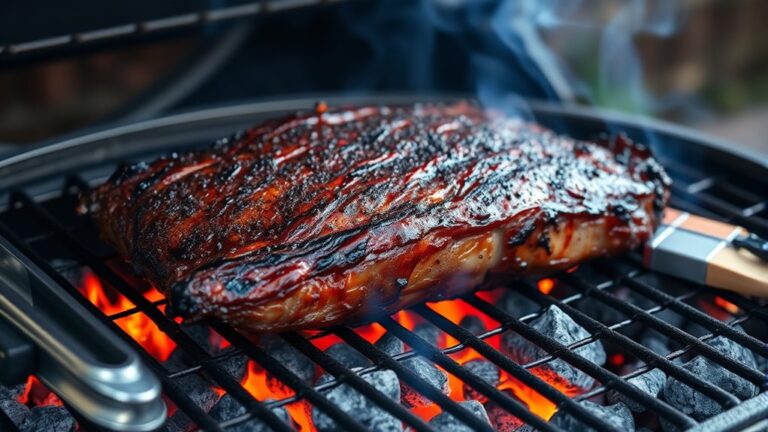
Moreover, wrapping the brisket in foil or butcher paper during the stall phase locks in juices and speeds up the tenderization process. Finally, don’t rush the cook. Low and slow is the secret to that melt-in-your-mouth texture you’re after.
Resting and Slicing Your Smoked Brisket for the Best Results
After removing the brisket from the smoker, giving it a proper rest period allows the juices to redistribute throughout the meat, guaranteeing every bite is flavorful and moist. Wrap the brisket loosely in foil and let it rest for at least 30 minutes. This step helps the meat retain its moisture and makes slicing easier.
When you’re ready to carve, use a sharp, long knife and cut against the grain to ensure tenderness. Slice the brisket into thin, even pieces to maximize flavor and tenderness. Avoid slicing too early, as the juices can escape, leading to dry meat.
Resting and proper slicing are essential to enjoying a juicy, tender brisket that lives up to its smoky flavor.
Troubleshooting Common Brisket Smoking Problems
Even with careful preparation, you might run into common issues while smoking brisket that can affect its flavor and texture.
If your brisket turns out tough, it’s probably undercooked. Check the internal temperature — it should be around 195-205°F.
A tough brisket likely needs more time; aim for an internal temp of 195-205°F.
If it’s dry, you may have overcooked it or smoked it too long at high heat. Wrapping the brisket in foil or butcher paper during the stall helps keep it moist.
If the smoke flavor is weak, make sure your smoker’s temperature stays steady and the wood chips are fresh.
Uneven cooking can happen if the brisket isn’t placed properly or if your smoker’s heat isn’t consistent.
Adjust your process as needed, and remember that patience and monitoring are key to getting great results.
Frequently Asked Questions
How Long Does It Typically Take to Smoke a Beef Brisket in an Electric Smoker?
It usually takes about 1 to 1.5 hours per pound to smoke a beef brisket in an electric smoker. So, for example, a 10-pound brisket might need around 10 to 15 hours.
Keep an eye on the internal temperature—you’re aiming for 195°F to 205°F for tender, flavorful meat. Remember to let it rest for at least 30 minutes before slicing to lock in juices.
What Type of Wood Chips Are Best for Smoking Brisket?
Did you know that hickory wood chips are the most popular choice, used in over 60% of traditional barbecue recipes?
For smoking brisket, hickory is perfect because it gives a strong, smoky flavor that matches beef’s richness.
You can also mix in some fruit woods like apple or cherry for a milder, sweeter aroma.
These options let you customize the flavor profile to your liking and make your brisket truly mouthwatering.
Can I Add Marinades or Liquids During the Smoking Process?
Yes, you can add marinades or liquids during the smoking process, but do so carefully. Spritz the brisket with a marinade or liquid like apple juice or beer every hour to keep it moist and boost flavor.
Just be cautious about opening the smoker too often, as it releases heat. Using a spray bottle makes it easy to apply quickly and control how much liquid you add.
This way, your brisket stays tender and juicy without disrupting the smoking process.
How Do I Know When My Brisket Is Fully Cooked and Tender?
You’ll know your brisket is ready when it hits an internal temperature of about 195-205°F and feels tender enough to easily slide a probe or fork in, like butter.
Don’t just rely on the clock—check for a nice crust and make sure the probe goes in effortlessly.
If it passes these tests, it’s time to take the brisket off the smoker and let it rest.
Is It Necessary to Wrap the Brisket During Smoking?
No, wrapping your brisket isn’t necessary, but it can help if you want to keep it moist and speed up the cooking process.
If you decide to wrap, do it after the brisket hits around 160°F. This helps push it through the stall and keeps it juicy.
Some people prefer smoking it unwrapped to get a crisper bark.
Ultimately, it depends on whether you prefer a juicier brisket or a crunchier exterior, and on your cooking style.
Conclusion
Don’t worry if it seems intimidating at first. Smoking a perfect brisket is easier than you think once you follow these steps. With patience and attention to detail, you’ll enjoy tender, flavorful meat that rivals any restaurant.
Even if you hit a few bumps along the way, each one is just a learning opportunity. Keep experimenting, and soon you’ll be impressing everyone with your expertly smoked brisket. Just get started—you’ve got this!