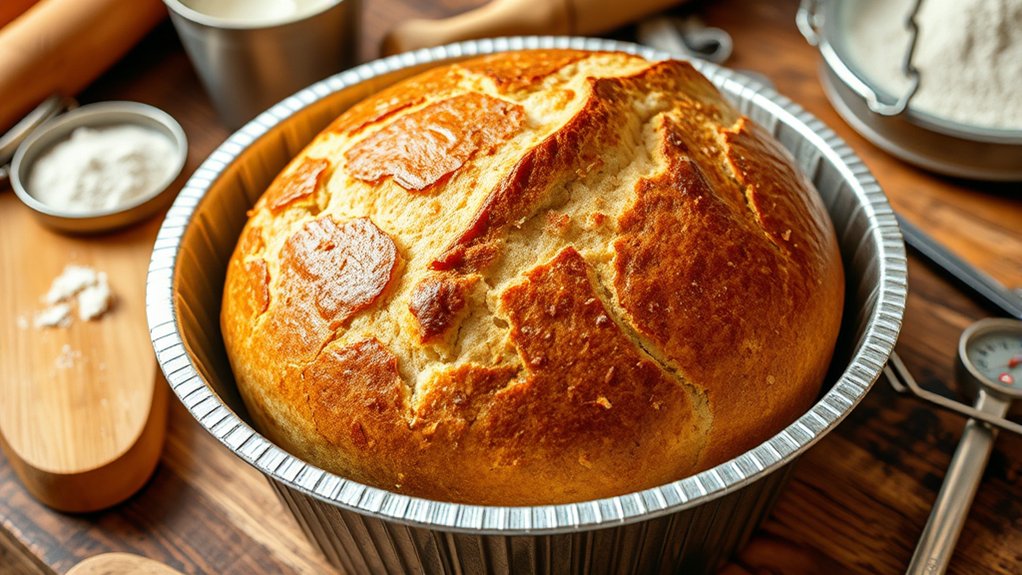
How You Can Bake Sourdough in Aluminum Pans Step by Step
Many home bakers dream of making perfect sourdough bread, but getting that crust just right can be tricky, especially when using different types of pans.
If you’ve been wondering how to bake sourdough in aluminum pans without sacrificing quality, you’re not alone. Luckily, with a few simple steps, you can achieve bakery-worthy results right in your own kitchen.
To bake sourdough in aluminum pans, start by choosing a durable, high-quality pan that fits your dough. Lightly grease or line it with parchment.
Preheat your oven to about 450°F and create steam for a crispy crust. Place your dough in the pan, then bake, monitoring the color and texture.
Let the bread cool completely before slicing to guarantee the best crumb. For detailed techniques and tips, keep exploring—more insights await.
Key Takeaways
- Select a heavy-duty, appropriately sized aluminum pan, preferably lined with parchment paper. This helps prevent sticking and makes for even heat distribution.
- Preheat your oven to 450°F (230°C). Create steam by adding water to a pan in the oven, which helps develop a nice crust on your bread.
- Gently transfer your well-shaped, proofed dough into the prepared aluminum pan. Make sure it’s placed properly so it can expand as it bakes.
- Bake until the crust turns a deep golden brown. Keep an eye on it because aluminum conducts heat quickly, so it can brown faster.
- Once baked, cool your sourdough on a wire rack for about an hour. This helps maintain the best texture and flavor before slicing.
How Does Aluminum Affect Sourdough Baking?
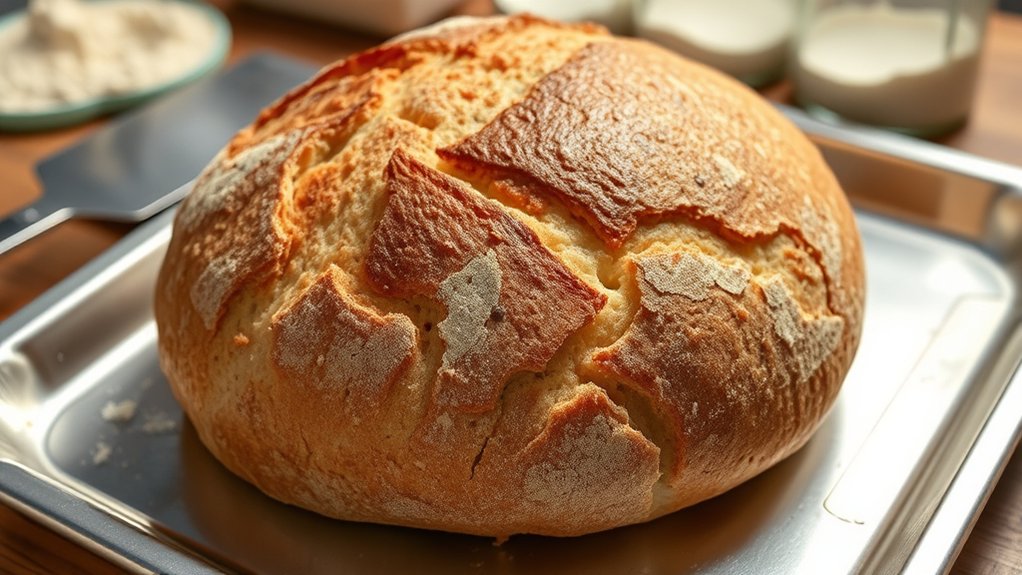
Aluminum pans can influence the baking process of sourdough in several ways. They conduct heat efficiently, which helps your bread bake evenly and develop a crisp crust.
However, this quick heat transfer can also cause the crust to brown faster, so you’ll need to watch your baking time closely. Aluminum’s reflective surface can impact heat distribution inside the pan, possibly creating hot spots that affect the bread’s rise and texture.
Additionally, aluminum reacts with acidic ingredients like sourdough starter, which might slightly change the flavor or cause discoloration over time.
Despite these factors, aluminum pans are popular because they’re affordable and have excellent heat conduction, making them a practical choice for many bakers.
Choosing the Best Aluminum Pan for Sourdough Bread
When choosing an aluminum pan for your sourdough, think about how durable it is and how well it conducts heat. This helps ensure even baking and a great crust.
You’ll also want to pick a size and shape that fits your loaf and matches your baking style. The right pan can make a big difference in getting that perfect crumb.
Material Durability and Conductivity
Choosing a durable aluminum pan guarantees your sourdough bread bakes evenly and keeps its quality over time. Material durability means the pan resists warping and corrosion, so you get consistent results with each bake.
Conductivity is important too. Aluminum heats quickly and spreads heat evenly, helping to prevent hot spots that can scorch your bread. Look for high-quality, thick aluminum pans that won’t deform at high temperatures.
The right balance of durability and conductivity ensures even crust development and thorough baking. Choose pans with good thermal spread and non-reactive coatings to keep your bread perfect every time.
Size and Shape Compatibility
Selecting the right size and shape of your aluminum pan is key to getting that perfect sourdough crust and crumb. You want a pan that lets your dough expand without overflowing or feeling cramped.
A standard 9×4-inch loaf pan works well for most sourdoughs, giving enough space for good oven spring. If you like a more rustic shape, go for a round or oval pan that matches your loaf style.
Keep in mind that a deeper pan will give you a taller loaf, while a shallower one results in a flatter crust. The shape also affects how heat is distributed.
A straight-sided pan helps develop a uniform crust, while a tapered shape might give your loaf a more artisanal look. Matching your dough and pan size ensures the best baking results.
Preparing Your Aluminum Pan and Dough for Perfect Results
To guarantee your sourdough turns out perfectly, start by preparing your aluminum pan properly. First, lightly grease the pan with butter or oil to prevent sticking and make it easier to remove the bread.
Properly greasing your pan ensures easy removal and a perfect sourdough crust.
You can also line it with parchment paper for extra non-stick protection. Make sure the dough is well-shaped and has finished its final rise before placing it in the pan.
Gently transfer the dough, handling it carefully to keep its structure intact. If you want a crisp crust, consider spritzing the dough with water or adding steam during baking.
Check that your dough isn’t too cold or warm; room temperature is best for even rising and baking. Proper prep of both the pan and dough sets the stage for a beautiful loaf.
How to Bake Sourdough in Aluminum Pans: A Step-by-Step Guide
To bake sourdough in aluminum pans, start by properly preparing your pan to prevent sticking and guarantee even heat.
Next, place your dough carefully in the pan for an ideal rise and crust formation.
Finally, follow baking and cooling tips to achieve the best texture and flavor in your finished loaf.
Preparing the Aluminum Pan
Before you start baking, it’s important to prepare your aluminum pan properly to prevent sticking and ensure even heat distribution.
First, lightly grease the pan with butter, oil, or non-stick spray to create a barrier that helps the dough release easily after baking.
You can also dust the pan with a thin layer of flour or rice flour for extra non-stick protection.
If you prefer, line the bottom with parchment paper for added ease.
Make sure the coating covers all sides of the pan to prevent dough from sticking during baking.
Proper preparation will help your sourdough bake evenly, develop a nice crust, and come out cleanly without damage.
Taking these steps saves you time and effort when removing the bread.
Proper Dough Placement
Once your pan is ready, carefully place your sourdough dough into it, making sure it’s evenly distributed. Gently shape it so it fills the pan without overstuffing, which could affect how it rises.
Use a spatula or your hands to smooth out the surface and ensure the dough sits uniformly. Proper placement helps the bread bake evenly and develop a nice crust.
Here’s a quick guide to help you visualize the steps:
| Step | Action | Tip |
|---|---|---|
| 1 | Center the dough | Keeps even baking |
| 2 | Spread evenly in the pan | Avoid thick spots |
| 3 | Leave space for expansion | Prevents overflow |
| 4 | Smooth the top | Ensures a uniform crust |
Following these steps will help your sourdough bake evenly and develop that perfect crust.
Baking and Cooling Tips
After placing your dough in the aluminum pan, it’s time to focus on the baking process to get the best results. Preheat your oven thoroughly, aiming for a hot temperature around 450°F (230°C) to create a crisp crust.
To mimic a steam environment, place a pan of water on the lower rack or spritz the dough with water before baking. Bake until the crust is deep golden brown, and the loaf sounds hollow when tapped.
Once out of the oven, let your sourdough cool on a wire rack for at least an hour. Cooling prevents the crust from becoming soggy and helps the interior set properly.
Resist the urge to cut into it too soon. Patience guarantees the best flavor and texture.
How to Achieve a Crusty, Flavorful Sourdough in Aluminum Pans
Achieving a crusty, flavorful sourdough in aluminum pans is totally doable with the right techniques. First, make sure to preheat your oven and pan thoroughly to create a hot environment that helps develop that nice crust.
Using a steaming method, like placing a water tray in the oven or spritzing water inside, during the first few minutes of baking can really boost crispness. This added moisture helps form that perfect crust.
Keep the dough uncovered during the initial bake so it gets direct heat contact. You can also apply a light coat of oil or water on the dough’s surface before baking to enhance browning and flavor.
Finally, bake at a high temperature, around 450°F (230°C), for the best crust. Proper handling and timing will make sure your sourdough turns out with that desirable crust and rich flavor.
Troubleshooting Common Sourdough Baking Issues in Aluminum Pans
Even with the best techniques, baking sourdough in aluminum pans can sometimes lead to issues like uneven crust, sticking, or a dense crumb.
To prevent sticking, lightly oil your pan or dust it with flour before placing the dough inside.
If you notice uneven crust, check that your oven temperature is accurate and consider rotating the pan halfway through baking for even heat distribution.
A dense crumb often happens from under-proofing or overworking the dough. Make sure you allow proper fermentation time and handle the dough gently.
If the crust isn’t as crisp as you’d like, try increasing the oven temperature slightly or baking with steam to improve crust development.
Adjusting these techniques will help you troubleshoot and improve your sourdough baking results.
Frequently Asked Questions
Can I Use Recycled Aluminum Pans for Sourdough Baking?
Yes, you can use recycled aluminum pans for baking sourdough, but there’s a caveat. Recycled aluminum might contain impurities or residues that could affect your bread’s taste or appearance. Make sure to thoroughly clean and check the pan for any damage before using it.
Keep in mind that recycled aluminum may not distribute heat as evenly as new pans. So, watch your baking closely to avoid uneven crusts or overbaking.
How Does Aluminum Impact the Fermentation Process of Sourdough?
Aluminum doesn’t greatly impact sourdough fermentation, as studies show it’s relatively inert with minimal interaction. About 85% of baked goods are unaffected by aluminum pans, so your sourdough’s natural microbes aren’t hindered.
You might worry about aluminum leaching, but at baking temperatures, it’s negligible. So, you can confidently use aluminum pans, knowing they won’t interfere with your sourdough’s natural fermentation process.
Are There Specific Aluminum Pan Coatings Suitable for Sourdough Baking?
You should look for aluminum pans with non-reactive, food-safe coatings like ceramic or anodized finishes. These coatings help prevent aluminum from interacting with your sourdough, keeping its flavor and safety intact.
Avoid uncoated aluminum that could react with acidic dough, leading to off-flavors or discoloration. Always check labels and manufacturer guidelines to make sure the coating is suitable for baking, especially with fermented doughs like sourdough.
How Should I Clean My Aluminum Pan After Baking Sourdough?
After baking sourdough in your aluminum pan, let it cool completely before cleaning. Use warm water and a gentle dish soap to wash away any residue.
Avoid abrasive scrubbers that might scratch the surface. If there’s stubborn dough stuck, soak the pan in warm soapy water for a few minutes.
Rinse thoroughly and dry immediately to prevent tarnishing or discoloration. Regular cleaning keeps your pan in good shape for future baking.
Can Aluminum Pans Be Used for Baking Sourdough in a Dutch Oven Style?
Yes, you can use aluminum pans for baking sourdough in a Dutch oven style. Just make sure the pan is oven-safe and has a tight-fitting lid or can be covered securely with foil.
Aluminum heats quickly and evenly, which helps create that perfect crust. Keep an eye on the baking time because aluminum can cause the bread to brown faster.
Always handle hot pans carefully to avoid burns.
Conclusion
Baking sourdough in aluminum pans is like tending to a growing garden—you nurture it with care, patience, and the right tools. It rewards you with a crusty, flavorful loaf. Cherish the process, knowing each step is a seed planted for delicious results.
With a little practice, your aluminum pan becomes a vessel of transformation. It turns simple ingredients into a symbol of your craft and passion. Keep baking, and watch your bread blossom.
Using aluminum pans for sourdough baking is a great way to achieve a beautiful crust. They heat evenly and help create that perfect bake every time. So don’t hesitate to give it a try.
Remember, every loaf you bake in an aluminum pan brings you closer to bread-baking mastery. It’s all about patience and practice. Over time, your sourdough will become even more delicious and satisfying.