How to Cook Beef Brisket on a Charcoal Grill in 8 Easy Steps
Many barbecue enthusiasts dream of mastering the perfect smoked brisket on a charcoal grill but often feel overwhelmed by the process. You’re not alone—getting that tender, flavorful meat just right can seem tricky at first.
Luckily, with a few simple steps, you can achieve mouthwatering results that will impress everyone at your next cookout.
To cook beef brisket on a charcoal grill in 8 easy steps, start by preparing your charcoal for indirect heat and maintaining a temperature of 225-250°F. Choose a well-marbled brisket, seasoned or marinated for flavor, and set up your grill with a water-filled drip pan.
Control the heat as you cook the brisket until it reaches 195-205°F, then rest and slice against the grain. Follow these steps carefully, and you’ll master smoky, tender brisket—whether you’re new or experienced, more tips await.
Key Takeaways
- Prepare your charcoal grill using the two-zone method for indirect heat. Keep the temperature steady between 225°F and 250°F.
- Choose a well-marbled beef brisket. Season it thoroughly and marinate for at least 4 hours before grilling.
- Set up the grill with a water-filled drip pan on the cooler side. Manage the vents to control the temperature during cooking.
- Cook the brisket until it reaches an internal temperature of 195-205°F. Check for tenderness and a dark bark.
- Rest the brisket for about 30 minutes. Then slice against the grain.
- Feel free to add sauce, herbs, or garnishes for presentation and extra flavor.
How to Prepare Your Charcoal Grill for Brisket Success
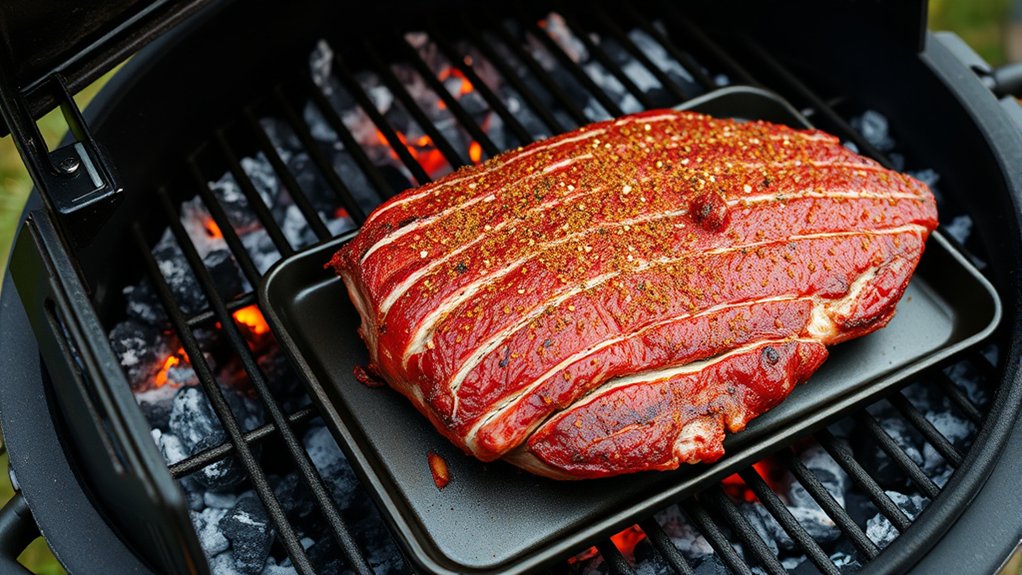
Before you start cooking, it’s really important to get your charcoal grill ready for brisket. Start by cleaning out any old ashes and debris from previous cooks to keep the airflow good and the heat steady.
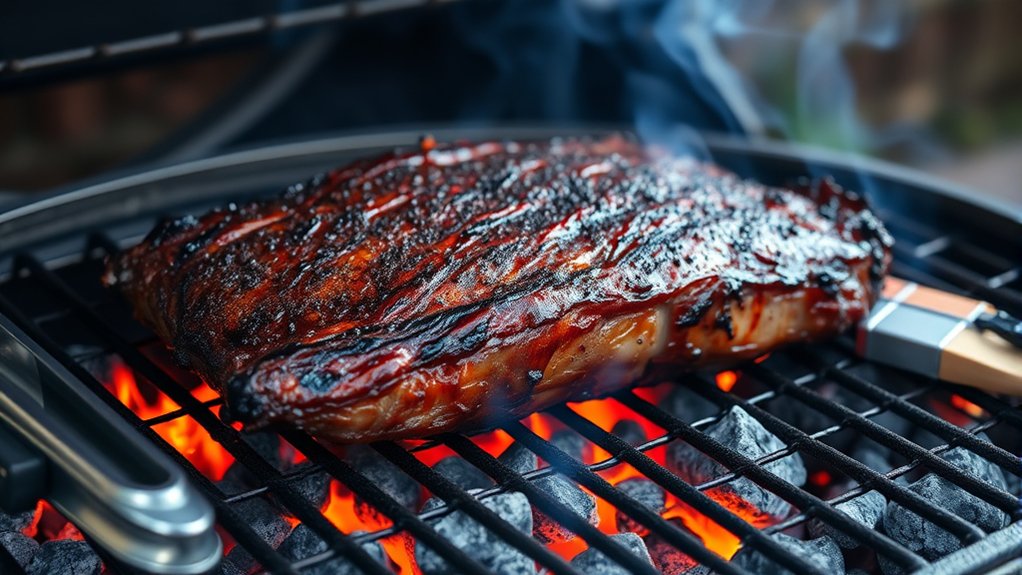
Next, arrange your charcoal using the two-zone method. Pile the coals on one side for direct heat, and leave the other side empty for indirect cooking. Light the charcoal with a chimney starter for even ignition.
Arrange coals on one side for direct heat and leave the other side empty for indirect cooking.
Let the coals burn until they’re covered in a light gray ash, which takes about 15-20 minutes. Then, place a drip pan filled with water on the cooler side to help keep the moisture in and control the temperature.
Finally, tweak the vents to control airflow and set your grill to a steady temperature around 225-250°F. That’s perfect for slow-cooking your brisket to tender perfection.
Choosing the Perfect Beef Brisket for Grilling
Choosing the right beef brisket sets the foundation for a flavorful and tender result on your grill. Look for a brisket with good marbling—thin streaks of fat throughout the meat—as this adds moisture and richness during cooking.
Opt for a whole packer brisket, which includes both the flat and point cuts, providing a balance of tenderness and flavor. Check for a deep red color, indicating freshness, and avoid any that look dry or discolored.
Feel free to ask your butcher for advice; they can recommend cuts suitable for grilling and help you pick a brisket with even thickness. The quality of your brisket directly impacts how well it absorbs smoke and flavors, so selecting a quality piece is key to a successful, delicious barbecue.
How to Set Up Your Charcoal Grill for Indirect Heat and Smoke
Setting up your charcoal grill for indirect heat and smoke is key to cooking brisket evenly and adding that rich smoky flavor.
Start by arranging the charcoal on one side of the grill to create a two-zone setup. Light the coals and wait until they’re covered with a light ash.
Then, spread the coals evenly on one side of the grill. Place a drip pan filled with water on the empty side to catch drippings and keep the meat moist.
Adjust the vents to control airflow and maintain a temperature between 225°F and 250°F. This setup ensures your brisket cooks slowly and evenly without direct heat burning it.
It also creates a smoky environment ideal for developing flavor during the long cooking process.
Seasoning and Marinating Your Brisket for Flavor
To boost your brisket’s flavor, start by choosing the right seasonings that complement the meat. Marinating techniques can add depth, but knowing how long to marinate guarantees the meat absorbs the flavors without becoming mushy.
Let’s investigate the best tips for selecting seasonings and timing your marinade for a perfect result.
Choosing the Right Seasonings
The right seasonings can turn a simple brisket into a flavorful masterpiece, so it’s key to pick ingredients that complement the rich meat. Classic options like salt, black pepper, garlic powder, and onion powder boost the natural flavors without overpowering.
For a smoky, spicy kick, try paprika, cayenne pepper, or chili powder. Herbs such as thyme, cumin, or oregano add depth and complexity to your brisket. Keep in mind that bold spices work well with slow cooking, giving flavors time to meld.
If you prefer a touch of sweetness, brown sugar or honey can balance out the heat and spice. In the end, choose seasonings that match your taste and the style you’re going for to create a well-rounded, delicious brisket.
Marinating Techniques for Flavor
Marinating your brisket before grilling can really boost its flavor and tenderness. Start by choosing a marinade that pairs well with beef, like a mix of soy sauce, Worcestershire, garlic, and a splash of apple cider vinegar.
Place the brisket in a resealable bag or container, then pour the marinade over it, making sure it’s fully covered. For the best flavor, marinate in the fridge for at least 4 hours or overnight if you can.
This gives the marinade time to soak in and really flavor the meat. Remember, marinating not only adds taste but also helps tenderize the brisket, making it more enjoyable on the grill.
Keep the meat chilled while marinating, and always discard any leftover marinade before cooking.
Tips for Perfect Marinade Duration
Getting the timing right for marinating your brisket can make all the difference in achieving peak flavor and tenderness. If you marinate too long, the meat can become mushy, and if you don’t marinate enough, it may lack depth. To get it just right:
- Marinate for at least 4 hours, but no more than 24 hours, for ideal flavor absorption without compromising texture.
- Use a refrigerated container to keep the meat safe and prevent spoilage during marination.
- Turn or massage the brisket occasionally to guarantee even seasoning and flavor penetration.
Following these tips helps you strike the perfect balance between flavor and tenderness, resulting in a deliciously seasoned brisket ready for the grill.
Controlling the Fire: Managing Temperature Throughout Cooking
To cook your brisket perfectly, you need to keep the temperature steady throughout the process. You can do this by maintaining consistent heat and adjusting the airflow to control the fire.
Small tweaks to the vents can make a big difference in preventing temperature swings. Just a slight turn can help keep things steady and avoid surprises.
Maintaining Consistent Heat
Maintaining consistent heat is key to perfectly cooked beef brisket on a charcoal grill. To do this well, focus on these three essential tips:
- Use a two-zone setup: Place the coals on one side of the grill for direct heat, and keep the other side cooler for indirect cooking. This setup helps you control the temperature easily.
- Monitor with a thermometer: Keep a grill thermometer nearby and check the temperature often, aiming for a steady 225–250°F.
- Adjust charcoal as needed: Add small amounts of coal gradually to keep the heat steady, avoiding big jumps that can dry out or undercook the brisket.
Staying attentive ensures your brisket cooks evenly and stays tender.
Adjusting Airflow Effectively
Controlling airflow is key to managing the temperature during your brisket cookout. To do this, adjust the vents on your grill.
Open the vents to increase airflow, which raises the temperature. Close them to reduce airflow and lower the heat. Keep a steady balance; too much oxygen can cause the coals to flare up and get too hot, while too little can starve the fire and cause inconsistent heat.
Use the bottom vent to control the overall fire intensity, and the top vent for fine-tuning airflow. Make small adjustments, then wait a few minutes to see how they affect the temperature.
Proper airflow management helps keep a steady temperature, ensuring your brisket cooks evenly and stays tender.
Step-by-Step: How to Grill Juicy, Tender Brisket
Start by preparing your grill for indirect heat, setting up one side with hot coals and leaving the other side cooler. This setup helps cook the brisket evenly without direct flame. To get juicy, tender results, follow these steps:
- Season the brisket well with a flavorful rub, then let it sit at room temperature for about 30 minutes.
- Place the brisket on the cooler side of the grill, fat side up, and close the lid. Keep a steady temperature around 225-250°F.
- Monitor the temperature regularly, adding coals as needed to maintain consistent heat, and avoid opening the lid too often to keep the moisture in.
These steps will help you achieve a perfectly cooked, tender brisket every time.
How to Check for Doneness and Rest Your Brisket Properly
How can you tell when your brisket is perfectly cooked and ready to rest? The best way is to use a meat thermometer. Insert it into the thickest part of the brisket; it should read about 195-205°F.
Use a meat thermometer to ensure your brisket reaches 195-205°F for perfect tenderness and flavor.
You’ll notice the meat feels tender and the fibers easily pull apart when tested with a fork. Another sign is a nice dark bark forming on the surface.
Once your brisket hits the target temperature and feels tender, it’s time to rest. Resting allows the juices to redistribute, ensuring moist, flavorful meat.
Wrap the brisket loosely in foil and let it sit for at least 30 minutes. This step is essential for achieving that melt-in-your-mouth texture and preventing the meat from drying out when sliced.
Serving Tips to Make Your Brisket Shine and Impress
Once your brisket has rested and is ready to serve, how you present and garnish it can really make it pop. Simple tips can turn your dish from good to wow.
First, slice against the grain. Cutting the meat this way makes each bite tender and professional-looking. It’s a small step that makes a big difference.
Next, add a finishing touch. Drizzle a bit of barbecue sauce or glaze to give it a shiny, flavorful finish that catches the eye.
Finally, garnish creatively. Serve with fresh herbs, pickles, or colorful sides to add visual interest and contrast. These little details will impress your guests and show off your grilling skills.
Frequently Asked Questions
How Long Does It Usually Take to Cook Brisket on a Charcoal Grill?
It usually takes about 1.5 to 2 hours per pound to cook brisket on a charcoal grill at a steady 225°F (107°C).
You should aim for an internal temperature of 195-205°F (90-96°C) for tender results.
Keep the grill temperature consistent, use a meat thermometer, and monitor the heat.
Rest the brisket for at least 30 minutes before slicing to guarantee juiciness and flavor.
What Type of Wood Chips Enhance the Flavor of Grilled Brisket?
You’ll want to use wood chips like hickory, mesquite, or oak to enhance your grilled brisket’s flavor. Hickory gives a sweet, smoky taste, perfect for a hearty finish.
Mesquite adds a bold, earthy flavor, great for a more intense profile. Oak provides a balanced, versatile smoke that complements the beef well.
Soak your chips in water for about 30 minutes before adding them to the coals for best results.
Can I Use a Gas Grill Instead of Charcoal for Brisket?
Yes, you can use a gas grill for brisket, but it’s like swapping a brush for a pen—different tools, similar results. You’ll want to control the temperature carefully, aiming for low and slow to mimic charcoal’s smoke and heat.
Use a smoker box or wood chips for flavor, and keep an eye on it, allowing the smoke to work its magic. Patience and precise heat control are your keys to tender, flavorful brisket.
How Do I Prevent My Brisket From Drying Out During Grilling?
To prevent your brisket from drying out, keep the grill temperature steady around 225-250°F.
Wrap the brisket in foil or butcher paper during cooking to lock in moisture.
Baste it occasionally with beef broth or a marinade, and avoid overcooking by using a meat thermometer.
Rest the meat for at least 15 minutes before slicing, which helps retain juices and keeps your brisket tender and flavorful.
What Are Common Mistakes to Avoid When Grilling Brisket?
You should avoid opening the grill too often, as this can cause temperature fluctuations and dry out the brisket.
Also, don’t forget to use a reliable thermometer to check the internal temperature because guessing can lead to overcooking.
Stay away from high heat since it can toughen the meat.
Finally, skip seasoning or marinades that are too salty or acidic, as they can break down the meat’s fibers and make it dry.
Conclusion
Now, picture slicing into your perfectly smoked brisket, its tender juices glistening in the sunlight. The smoky aroma lingers, inviting everyone to gather ‘round.
With your grill’s gentle heat and your careful touch, you’ve created a masterpiece that turns simple ingredients into a memorable feast.
As you serve each juicy slice, feel the satisfaction of mastering the art of grilling. Knowing this smoky, tender brisket will bring smiles and hearty conversations long after the last bite.