10 Steps to Smoke a Perfect Beef Rump Roast
Many barbecue enthusiasts dream of perfectly smoked beef rump roast but often feel overwhelmed by the process. You’re not alone—getting that tender, flavorful result can seem tricky at first.
Luckily, with a few simple steps, you can master the art of smoking a beef rump roast and impress everyone at your next gathering.
To smoke a perfect beef rump roast, start by choosing a well-marbled, fresh cut and season it with spices or marinade.
Set up your smoker at 225-250°F, using your preferred wood like hickory or oak, and keep the temperature steady.
Apply your rub, then smoke until the internal temp reaches your desired doneness.
Rest the meat afterward. Slice against the grain for tenderness and serve with tasty sides.
Keep these steps in mind to master the process and enjoy an incredible result.
Key Takeaways
- Select a well-marbled, uniform beef rump cut and season it generously with spices. Then, refrigerate it overnight to let the flavors soak in.
- Set up your smoker at about 225°F to 250°F. Use woods like hickory or oak for that rich smoky flavor you’re after.
- Apply a balanced rub or marinade to the roast. This helps the meat absorb flavors and keeps it moist during the smoking process.
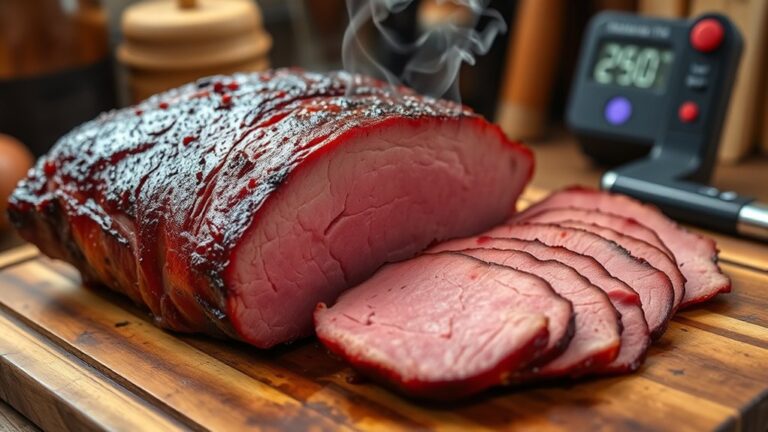
- Keep an eye on the internal temperature. Aim for somewhere between 125°F and 145°F. Once it hits your target, let the roast rest for 10 to 15 minutes before slicing.
- When ready, slice the beef against the grain into thin pieces. Serve it with your favorite sides for a tender and flavorful meal.
Choose the Best Beef Rump Cut for Smoking
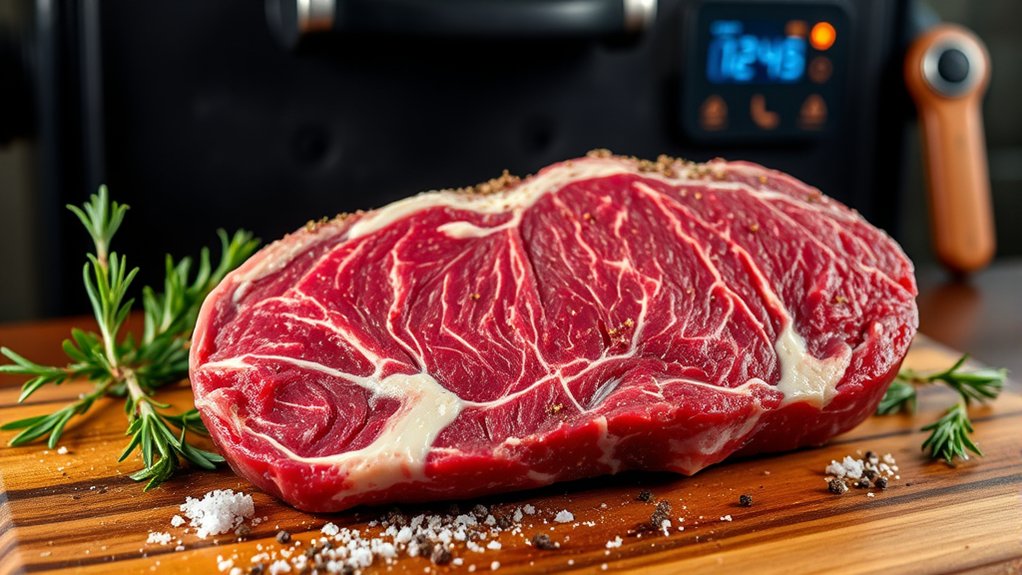
Choosing the right beef rump cut is key to getting tender, flavorful smoked meat. Look for a cut with good marbling because fat adds moisture and richness during smoking.
A well-marbled rump stays juicy and develops deep flavor. Pick a cut that’s uniform in shape for even cooking, and steer clear of overly lean pieces that might dry out.
Freshness really matters, so go for a cut with bright color and firm texture. If you can, choose a rump roast labeled as suitable for roasting or smoking.
When you’re shopping, ask your butcher for their best recommended cut for smoking. Don’t hesitate to get advice on trimming excess fat too.
Choosing the right rump guarantees your smoked meat will be tender, flavorful, and satisfying every time.
Prep and Season Your Beef Rump Roast
Before you start smoking, take the time to prep and season your beef rump roast properly. First, pat the roast dry with paper towels to ensure the seasoning sticks.
Next, rub it generously with your favorite spices—think salt, pepper, garlic powder, and paprika—covering every surface. Finally, let the roast sit uncovered in the fridge for at least an hour or overnight. This helps the seasoning penetrate and promotes a better crust.
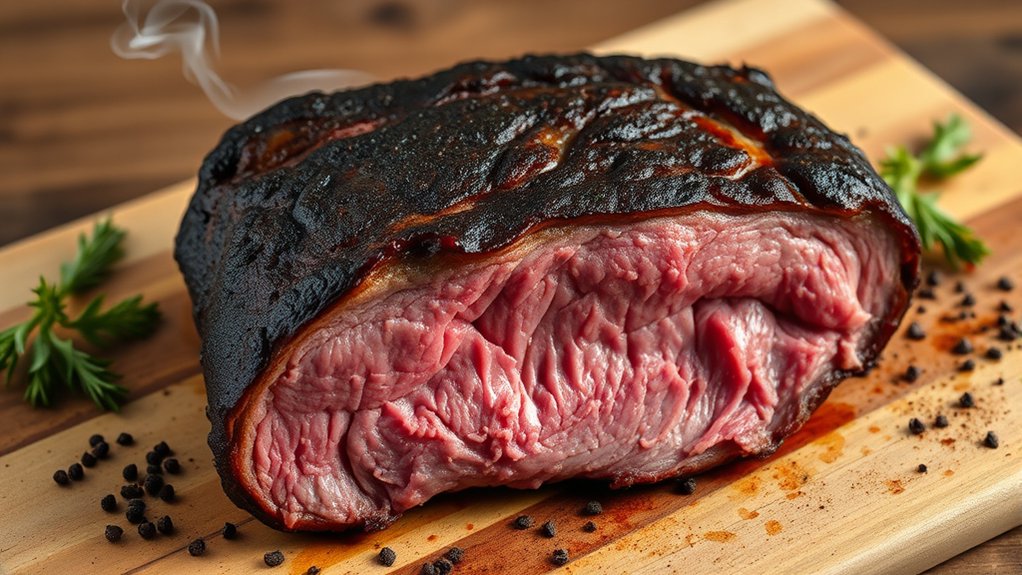
Visualize a thick layer of seasoning coating the meat, ready to develop rich flavor during smoking. By following these steps, your beef rump roast will be flavorful, tender, and perfectly prepared for the smoking process.
Set Up Your Smoker for Perfect Results
Start by preparing your smoker to create the ideal environment for cooking. Fill the hopper with quality wood or charcoal, depending on your smoker type. Light the fuel and let it ignite fully, making sure it burns steadily.
Adjust the vents to keep the temperature steady between 225°F and 250°F. This low-and-slow method is key to getting tender, flavorful meat. If your smoker has a water pan, place it inside to help regulate humidity and keep the meat moist.
Use a digital thermometer to keep an eye on the temperature inside the chamber. Make sure the smoker’s grates are clean and in place. Once the temperature stabilizes at your target, you’re ready to put your beef rump roast on the grill for perfect smoking.
Apply a Delicious Rub and Marinade
Choosing the right rub and crafting a tasty marinade can make or break your smoked beef roast. You want flavors that complement the meat without overpowering it, so pick spices and herbs wisely.
A well-balanced marinade adds moisture and depth, ensuring every bite is flavorful. It’s all about finding that perfect combination to elevate your dish.
Choosing the Right Rub
Selecting the right rub is key to infusing your beef rump roast with bold flavor and creating a tasty crust. Focus on balancing spices to enhance the meat’s natural richness.
A good rub usually includes salt and pepper for basic seasoning and to help form a flavorful crust. Add paprika or smoked paprika to bring depth and a smoky hue.
Garlic and onion powder provide savory undertones that pair perfectly with beef. Mix these ingredients well, then apply generously to cover every surface.
Feel free to add herbs like thyme or rosemary for extra aroma. The right mix of spices will elevate your roast, sealing in juices and flavor for a mouthwatering exterior.
Keep it simple but impactful for the best results.
Crafting a Tasty Marinade
Applying a flavorful marinade alongside your rub can really boost the beef’s tenderness and taste. Start by choosing ingredients that complement the beef, like soy sauce, garlic, and herbs. Mix them into a marinade that’s slightly acidic to help break down the muscle fibers.
Let the beef soak for at least a few hours, or ideally overnight, so it absorbs the flavors deeply. Be sure to pat the meat dry before applying your rub so it sticks well. Combining the marinade with your dry rub creates a layered flavor profile that enhances the smoking process.
Control Temperature and Cooking Time for Juicy Beef
To keep your beef juicy, you need to monitor its internal temperature closely. Use a reliable thermometer to track progress and adjust your cooking time as needed.
This helps you hit the perfect doneness without overcooking. Paying attention to temperature control is key to getting that ideal, juicy result.
Monitor Internal Temperature
Monitoring the internal temperature is key to keeping your beef rump roast juicy and tender. As you cook, keep a close eye on the thermometer—it’s your guide to perfect doneness. Think of the thermometer’s probe as your eye inside the meat, showing you exactly where it’s at.
Insert the thermometer into the thickest part of the roast, avoiding fat or bone, for the most accurate reading. Check the temperature regularly, especially during the final stages of cooking.
Once it hits your target temperature, remove the roast from the heat. Let it rest so the juices stay locked in. Staying attentive like this helps you hit just the right balance of flavor and tenderness, preventing overcooking or underdone meat.
Use a Reliable Thermometer
Using a reliable thermometer is key to controlling the temperature and making sure your beef rump roast turns out perfect. It helps you avoid overcooking or undercooking, so your meat stays juicy and tender.
Choose a digital or analog thermometer with quick response times for the most accurate readings. Insert the probe into the thickest part of the roast, avoiding fat or bones.
Regularly check the thermometer to track your progress. To keep things simple, here’s a quick reference:
| Temperature | Doneness Level | Recommended Internal Temp |
|---|---|---|
| 125°F | Rare | 125°F |
| 135°F | Medium Rare | 135°F |
| 145°F | Medium | 145°F |
A reliable thermometer is your best tool for perfectly cooked, juicy beef every time.
Adjust Cooking Time Accordingly
Once you have your thermometer in place, focus on adjusting the cooking time to match your desired level of doneness. Keep a close eye on the internal temperature and consider these steps:
- For rare, remove the roast at about 125°F. This will give you a juicy, red center.
- For medium-rare, aim for 135°F to let the meat rest and redistribute juices.
- For well-done, cook until 150°F or higher, but be aware it might dry out.
Use a Meat Thermometer to Monitor Internal Temp
To guarantee your beef rump roast reaches the perfect level of doneness, it’s really important to use a reliable meat thermometer. Insert the thermometer into the thickest part of the roast, avoiding bones or fat, for an accurate reading.
Keep a close eye on the internal temperature as the smoking process goes on. For medium-rare, aim for around 135°F; for medium, about 145°F; and for well-done, 155°F or higher.
Monitoring the temperature helps prevent overcooking or undercooking, so your roast turns out tender and juicy. Check the thermometer regularly, especially during the last stage of smoking.
Once your target temperature is reached, remove the roast and let it rest. This step is key for locking in juices and getting the perfect texture.
Select the Right Wood for Smoking Beef Rump
Choosing the right wood is essential for infusing your beef rump roast with rich, smoky flavor. The wood you select impacts the taste and aroma, so pick wisely.
For a bold, robust smoky profile, consider these options:
- Hickory offers a strong, bacon-like flavor that complements beef.
- Oak provides a medium smoky flavor without overpowering the meat’s natural taste.
- Cherry adds a mild sweetness and a hint of fruitiness for a balanced flavor.
Use these woods to create a layered, mouthwatering smoke that elevates your roast. Avoid softer, resinous woods like pine, which can produce unpleasant flavors.
The right wood choice makes your beef unforgettable, enhancing every bite with delicious smoky notes.
Rest Your Beef Rump for Juiciness and Slice It
After cooking, let your beef rump rest for at least 10-15 minutes to lock in the juices.
Properly slicing against the grain helps keep each piece tender and flavorful.
Taking these small steps really makes a difference in the overall quality of your smoked roast.
Importance of Resting
Resting your beef rump is an essential step that guarantees maximum juiciness and makes slicing easier. When you let it rest, the juices redistribute throughout the meat, ensuring each slice is tender and flavorful.
During resting, the muscle fibers relax, reducing the risk of juices spilling out when you cut. To get the best results, hold the roast for about 10 to 15 minutes.
Imagine steam slowly settling, locking in juices. The meat firms up, making it easier to carve. And the aroma becomes even more enticing as the flavors settle.
Skipping this step can lead to dry, less flavorful slices. Resting is your secret to a juicy, evenly cooked beef rump that’s perfect for serving.
Don’t rush—patience makes all the difference.
Proper Slicing Techniques
To guarantee your beef rump stays juicy and tender, proper slicing is key. First, let the meat rest for at least 10-15 minutes after smoking so the juices can redistribute.
When you’re ready to slice, use a sharp carving knife and cut against the grain. This shortens the muscle fibers, making each slice more tender and easier to chew.
Keep your slices thin, about 1/4 inch thick, for the best texture. Hold the roast steady with a fork or tongs, and work smoothly with even, deliberate strokes.
Avoid pressing down or sawing back and forth, as that can squeeze out the juices. Following these tips will give you slices that highlight the rich, juicy flavor of your smoked beef rump roast.
Serve Your Smoked Beef With Delicious Sides
Serving your smoked beef rump roast with the right sides really enhances its rich flavor and makes for a complete meal. Imagine a plate with:
Pair your smoked beef rump roast with creamy mashed potatoes, grilled vegetables, and crusty bread for a perfectly balanced, flavorful meal.
- Creamy mashed potatoes topped with a pat of butter, soaking up all those savory juices.
- Grilled vegetables like zucchini, bell peppers, and asparagus, adding vibrant color and fresh flavor.
- Crusty bread or garlic rolls to scoop up any remaining sauce or juices.
These sides go perfectly with the smoky, tender beef. The creamy potatoes balance out the richness, while the grilled veggies add a smoky char that boosts the flavor. Fresh bread gives you a satisfying crunch and a great way to enjoy every bite.
Choosing these sides guarantees your meal is flavorful, balanced, and totally satisfying.
Troubleshoot Common Smoking Challenges
Even experienced pitmasters face common challenges when smoking a beef rump roast, but knowing how to troubleshoot can save your cook and ensure great results.
If your meat isn’t tender enough, check your cooking temperature—maybe it’s too low—or your cook time might be too short.
For dryness, make sure you’re using a proper injection or marinade to keep the moisture in and avoid overcooking.
If the smoke flavor is weak, try adding more wood chips or extending your smoking time.
On the flip side, if the smoke is bitter or too strong, reduce your smoke exposure or switch to milder woods like fruit or hardwoods.
Always keep an eye on your smoker’s temperature and airflow, and don’t hesitate to make adjustments as needed.
Troubleshooting effectively will keep your beef juicy, flavorful, and perfectly smoked.
Frequently Asked Questions
How Long Can I Store Leftover Smoked Beef Rump?
You can store leftover smoked beef rump in an airtight container or tightly wrapped in foil or plastic wrap in the refrigerator for up to 3 to 4 days.
For longer storage, freeze it and enjoy within 2 to 3 months. Just make sure to reheat it to an internal temperature of 165°F before eating.
Always check for any signs of spoilage, like a bad odor or slimy texture, before consuming.
Can I Use a Gas Smoker for This Recipe?
Yes, you can definitely use a gas smoker for smoking a beef rump roast. Just preheat your smoker to the desired temperature, usually around 225°F, and prepare the roast with your preferred seasoning.
Use wood chips for added flavor, and keep an eye on the temperature to make sure it stays steady. Gas smokers are convenient and give you consistent heat, making it easier to get tender, flavorful beef rump roast.
What’s the Best Way to Reheat Smoked Beef Without Drying It Out?
Reheating smoked beef is like warming a delicate jewel—gentle and precise to keep its shine.
The best way is to reheat it slowly in the oven at 250°F, covered with foil to trap moisture.
Use a meat thermometer to make sure you don’t overcook it. Adding a splash of broth before reheating helps keep the meat moist.
This method ensures your smoked beef stays tender, juicy, and flavorful, just like the day you smoked it.
How Do I Prevent the Beef From Drying During Smoking?
To prevent your beef from drying out during smoking, keep the temperature steady and low, around 225°F. Using a water pan in your smoker helps maintain humidity, which keeps the meat moist.
Basting the beef occasionally with a flavorful liquid can also help lock in moisture. Once it hits your target internal temperature, wrapping it in foil is a good idea to trap the juices.
Finally, let the beef rest for about 15 minutes before slicing. This step allows the juices to redistribute, keeping your beef tender and juicy.
Can I Add Other Flavors to the Smoke or Marinade?
Yes, you can definitely add other flavors to the smoke or marinade. For smoky flavor variations, try woods like apple, cherry, or hickory.
For marinades, experiment with ingredients like garlic, soy sauce, Worcestershire, herbs, or spices to enhance the beef’s flavor. Marinate the meat for a few hours beforehand.
Use flavored wood chips during smoking to create a richer, more complex taste profile. This way, you can customize the flavor to suit your preferences.
Conclusion
Mastering the art of smoking a beef rump roast boosts your cooking skills and wow’s your guests. Imagine finally getting it right after a few tries, like a home chef who nails that perfect smoky tenderness.
With patience and attention to detail—choosing the right cut, controlling the temperature, and picking the ideal wood—you’ll keep producing mouthwatering results every time.
Keep experimenting and refining your process, and soon you’ll be enjoying restaurant-quality smoked beef right in your own backyard.