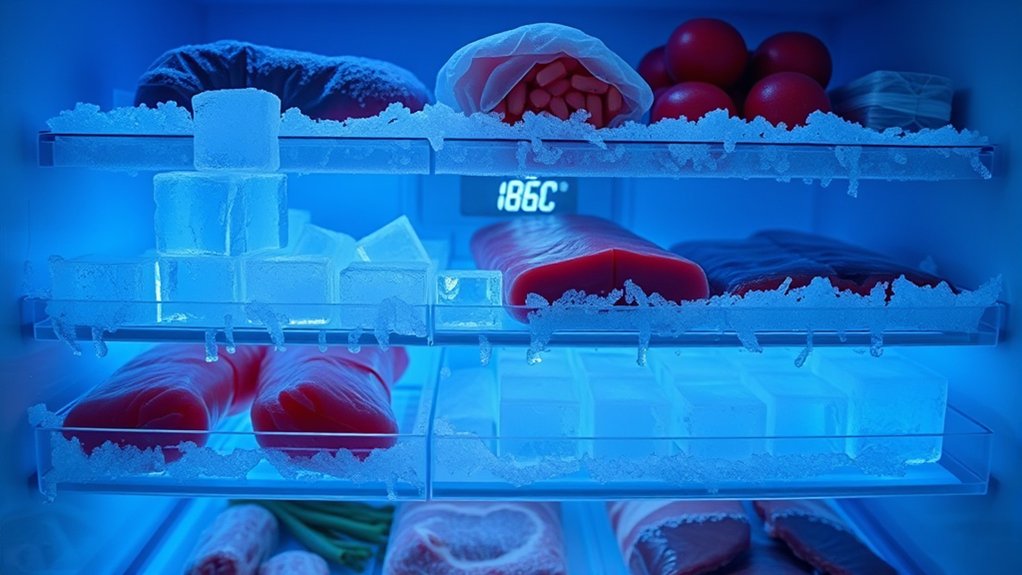
Ideal Freezer Temp?
Many people struggle with keeping their freezer at the right temperature, which can lead to food spoilage or waste. If you’re like most, you want your frozen foods to stay fresh and safe without wasting energy or risking freezer burn. You’re not alone in this challenge, but the good news is it’s easier than you think to get it just right.
The ideal freezer temperature is 0°F (-18°C), which stops bacteria and molds from becoming active and keeps your food safe. Maintaining this temperature guarantees your food stays fresh, preserves flavor, texture, and nutrients, and prevents freezer burn.
Regularly check your freezer with a thermometer placed in the center, and avoid setting it too cold to waste energy. If your freezer’s temperature drifts or you notice issues, it’s vital to address them quickly—there’s more to learn about keeping it just right.
Key Takeaways
- The ideal freezer temperature is 0°F (-18°C) to keep your food safe and stop bacteria from growing.
- Place a thermometer in the center of your freezer and leave it there for at least 8 hours to get an accurate reading.
- Temperatures above 0°F can increase the risk of spoilage, while going lower wastes energy without actually helping your food stay better.
- Make it a habit to check and record your freezer’s temperature regularly to ensure everything stays properly preserved.
- Also, try to keep the freezer in a good spot and avoid opening the door too often. This helps keep the temperature steady and consistent.
What Is the Ideal Freezer Temperature for Food Safety?
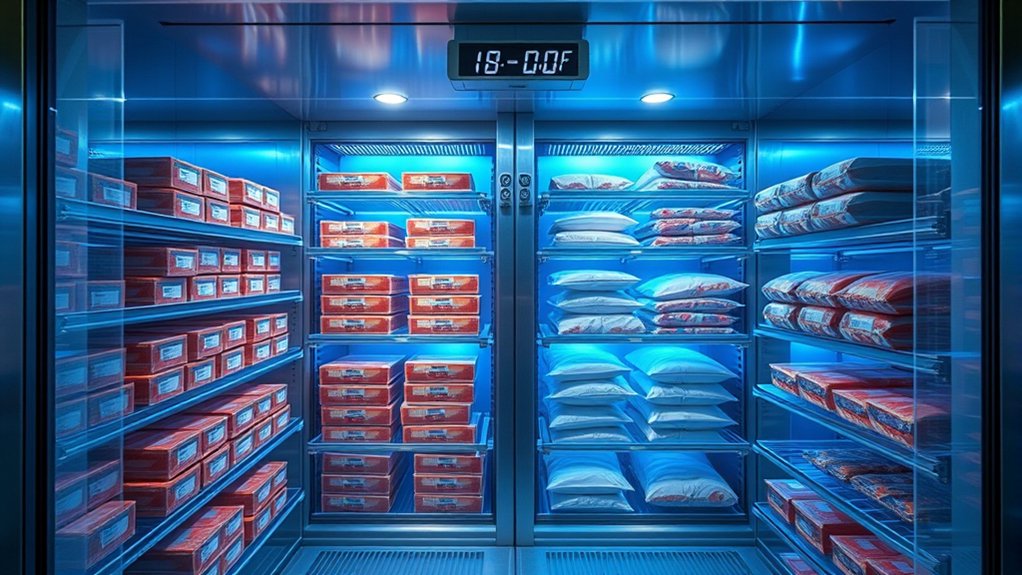
Maintaining the right freezer temperature is key to keeping your food safe and fresh. The ideal temperature for your freezer is 0°F (-18°C).
At this temperature, bacteria and molds become inactive, which helps prevent spoilage and keeps your food safe to eat. If the temperature goes above 0°F, your food might thaw slightly, increasing the risk of bacterial growth and freezer burn.
Setting it too low doesn’t harm your food but can waste energy. Use a reliable thermometer to check your freezer’s temperature regularly.
Keeping it steady at 0°F ensures your frozen foods stay safe and maintain their quality over time. Proper temperature control is a simple but important part of food preservation.
Why Maintaining the Right Freezer Temp Keeps Food Fresh
Keeping your freezer at the right temperature slows down the natural deterioration process of food, guaranteeing it stays fresh longer. When your freezer is too warm, bacteria and mold can grow, leading to spoilage and potential health risks.
A properly maintained temperature halts most microbial growth and enzymatic activity, preserving flavor, texture, and nutrients. Consistent cold temperatures also prevent freezer burn, which happens when moisture escapes from food, causing dehydration and freezer odors.
Maintaining the correct freezer temp also reduces the risk of food waste, saving you money and effort. By keeping your freezer at the ideal temperature, you ensure your frozen foods stay safe, tasty, and high quality for as long as possible.
Proper temperature management is key to extending food freshness and safety.
How to Accurately Check Your Freezer’s Temperature
To make sure your freezer stays at the right temperature, it’s important to check it regularly with a reliable thermometer. Place the thermometer in the center of the freezer, away from walls or door openings, and leave it for at least 8 hours or overnight for the most accurate reading.
Once the temperature stabilizes, record the reading. Use a digital or dial thermometer designed specifically for freezers for the best accuracy. Keeping a log of your readings over time can help you spot any issues early.
Here’s a quick reference to help interpret your results:
| Temperature (°F) | Ideal Range | Action Needed |
|---|---|---|
| 0 | Freezing point | Maintain current setting |
| -10 to 0 | Slightly above | Adjust thermostat slightly |
| Below -10 | Too cold | Reduce the temperature |
Regularly checking your freezer ensures it stays in the optimal range and keeps your food safe.
What Is the Best Temperature Range for Energy Efficiency and Preservation
Finding the ideal temperature range for your freezer can save energy and keep your food fresh. The best range for efficiency and quality is between -0.5°F and 0°F (-18°C to -17.8°C).
Keeping your freezer within this range helps prevent food spoilage while using less electricity. If it gets too cold, you’ll waste energy and risk freezer burn. If it’s too warm, food can thaw or spoil faster.
Use a thermometer to check the temperature regularly. Consider these tips:
- Keep the temperature steady and avoid frequent door openings.
- Keep the freezer full but not overcrowded.
- Clean the coils often for better efficiency.
- Adjust the thermostat if needed to stay within the right range.
Staying within this temperature range ensures your freezer works well and keeps your food fresh longer.
How to Recognize If Your Freezer Is Too Cold or Too Warm
Ever wonder if your freezer is set correctly? Signs of improper temperature include freezer burn, ice buildup, or frozen items that feel softer than usual. To check, look for these clues:
| Symptom | Possible Cause | Action to Take |
|---|---|---|
| Excessive ice buildup | Freezer is too cold or high humidity | Adjust the temperature |
| Frozen, soft foods | Freezer is too warm | Lower the temperature |
| Frosty surfaces | Excess moisture or overstuffing | Reduce items or check the seal |
| Freezer burn | Items exposed to air or too warm | Seal packages tightly |
Monitoring these signs helps you figure out if your freezer is running at the right temperature. This keeps your food fresh without wasting energy.
Simple Tips to Set and Maintain the Correct Freezer Temperature
Maintaining the correct freezer temperature is key to keeping your food fresh and saving energy. Start by setting your freezer to 0°F (-18°C), which is the best temperature for frozen foods.
Use a thermometer to check the temperature regularly. Try to keep the door closed as much as possible to keep things consistent. Avoid overfilling the freezer, as this can block airflow.
Periodically clean the gasket to ensure a good seal. If you notice temperature swings, adjust the thermostat as needed. Label and organize your food to reduce unnecessary door openings.
Staying on top of these simple tips will help keep your food fresh longer and your freezer working efficiently.
Adjusting Freezer Settings for Different Types of Food
Adjusting your freezer settings based on different types of food helps preserve quality and prevent spoilage. For meats like beef, pork, or poultry, keep the temperature at or below 0°F to stay fresh and stop bacteria from growing.
Frozen vegetables and fruits also do best at 0°F, keeping them crisp and flavorful. For baked goods or leftovers, slightly higher temperatures around 0°F are fine, but avoid going over 10°F because it can affect texture and safety.
If you’re freezing large amounts, try setting the temperature a bit lower temporarily to speed up the process. Remember, each food has its own needs, so adjusting your freezer’s temperature or placement can really help keep things fresh and reduce waste.
Why You Need a Thermometer to Keep the Temp Just Right
Using a thermometer guarantees you get accurate temperature readings, so your freezer stays just right. It helps prevent food spoilage by catching temperature fluctuations early.
Plus, it keeps your freezer running efficiently, saving you energy and money.
Ensures Accurate Temperature Readings
Even a slight misreading can lead to improper storage conditions, so having an accurate thermometer is essential for keeping your freezer at the right temperature. Without precise readings, you might think your freezer is cold enough when it’s not, risking food spoilage or waste.
An accurate thermometer helps you monitor temperature fluctuations and make quick adjustments. Regularly checking the readings guarantees your freezer stays at the ideal temperature, around 0°F or -18°C.
It also helps identify malfunctions early, preventing larger issues. This way, you can ensure your food remains safe and fresh.
- Provides real-time temperature data
- Detects temperature fluctuations quickly
- Guarantees consistent food preservation
- Prevents hidden temperature errors
- Helps maintain food safety standards
Prevents Food Spoilage Risks
Because temperature fluctuations can go unnoticed without a thermometer, your food is at greater risk of spoilage. If the freezer’s temperature rises above 0°F, bacteria and molds can thrive, causing your food to spoil faster or become unsafe.
Without a reliable thermometer, you might not realize the temperature has shifted, risking the quality and safety of your stored items. Properly regulated temperatures slow bacterial growth and preserve food longer, saving you money and reducing waste.
A thermometer helps you catch problems early, so you can adjust the temperature before spoilage occurs. Consistent, correct freezer temps guarantee your frozen foods stay fresh, safe, and nutritious.
Using a thermometer is a simple but essential step to prevent food spoilage risks and keep your frozen goods in top shape.
Maintains Freezer Efficiency
Maintaining the ideal freezer temperature is key to making sure your appliance runs efficiently. When the temperature stays consistent, your freezer uses less energy and doesn’t overwork itself.
Using a thermometer helps you monitor the temperature accurately, so you can make quick adjustments if needed. Without it, you might keep the freezer too cold or too warm, which reduces efficiency.
Proper temperature control also prevents frost buildup that can interfere with performance. Regularly checking the thermometer keeps your freezer in the best range, maintaining freshness and saving energy.
- Prevents unnecessary energy consumption
- Reduces frost buildup
- Minimizes wear and tear on components
- Keeps food frozen consistently
- Saves money on electricity bills
What Are the Risks of Incorrect Freezer Temperatures?
When your freezer isn’t at the right temperature, food can spoil faster and bacteria can grow more quickly, putting your health at risk.
You might also notice a jump in your energy bills because your freezer has to work harder to stay cold.
Knowing these risks helps you keep your food safe and your energy costs in check.
Food Spoilage Risks Increase
Incorrect freezer temperatures can significantly increase the risk of food spoilage, which affects both safety and quality. When your freezer isn’t at the right temperature, food can thaw and refreeze repeatedly, damaging its texture and flavor.
This cycle can lead to spoilage, mold, and unpleasant odors. Plus, improperly frozen food may develop ice crystals that ruin its appearance and taste. If the temperature is too high, bacteria and enzymes stay active, speeding up spoilage.
On the other hand, if it’s too low, your freezer might waste energy or cause freezer burn. To avoid these problems, check your freezer’s temperature regularly and keep it at the recommended 0°F (-18°C).
Monitoring the temperature helps prevent bacterial growth, freezer burn, texture deterioration, flavor loss, and increased spoilage risk.
Bacterial Growth Accelerates
If your freezer isn’t at the right temperature, bacteria can multiply quickly, increasing the risk of foodborne illnesses. Warmer temperatures let bacteria like Listeria and Salmonella grow faster, even in frozen foods.
While freezing slows bacterial growth, it doesn’t completely stop it. Once food thaws, bacteria can multiply rapidly if not stored properly. Keeping your freezer at around 0°F (-18°C) helps prevent this.
Inadequate freezing temperatures can lead to harmful bacteria developing, which may cause food poisoning when eaten. This risk is higher in foods stored for long periods or prone to contamination.
Proper temperature control is key to stopping bacterial growth and keeping your food safe. Maintaining the right freezer temperature helps preserve food quality and prevents health risks.
Energy Consumption Rises Significantly
Maintaining the proper freezer temperature not only safeguards your food from bacteria growth but also impacts how much energy your appliance consumes. When your freezer is set too warm, it has to work harder to keep food frozen, which increases energy use and raises your utility bills.
On the other hand, setting it too cold wastes unnecessary energy and can cause freezer burn. An incorrect temperature can make your freezer cycle on and off more often, stressing its components.
This inefficiency leads to higher electricity bills and shortens the lifespan of your freezer. To save energy, keep your freezer at the recommended 0°F, and check the temperature regularly with a thermometer.
How Ambient Temperature and Door Use Affect Freezer Performance
Ambient temperature and door use greatly impact your freezer’s ability to maintain the ideal temperature. If the room is warmer, your freezer has to work harder to keep everything cold, which can cause temperature fluctuations.
Consistently opening the door allows warm air to enter, making the compressor run more often and for longer periods. This also introduces moisture, which can lead to frost buildup and reduce efficiency.
To keep your freezer running smoothly, try not to open it unnecessarily. Make sure it’s placed in a cool, stable environment, especially during hot weather.
Keep the door closed as much as possible. Proper placement and mindful door use help your freezer stay at the right temperature, reducing strain on its parts and keeping your food fresh.
When to Call a Professional for Freezer Calibration Help
Sometimes, despite your efforts to keep the freezer temperature steady, it still isn’t performing correctly. If you notice persistent temperature inconsistencies or spoiled food, it’s time to call a professional. They can accurately calibrate your freezer, making sure it stays at the right temperature.
You should also consider professional help if you experience frequent temperature swings that you can’t fix with simple adjustments. If your freezer is making strange noises or the compressor runs all the time, these are signs you need expert help.
Finally, when your freezer isn’t improving after troubleshooting, a professional can diagnose underlying issues that might not be obvious. Don’t wait too long if problems keep happening—getting help early can save your food and energy.
Frequently Asked Questions
How Often Should I Check My Freezer’s Temperature?
You should check your freezer’s temperature at least once a month to keep it consistent and safe. Regular checks help you catch issues early, like temperature changes that could spoil your food.
Use a reliable thermometer placed inside the freezer, ideally near the food. If you notice the temperature is too high or too low, adjust the settings accordingly.
Keeping a record of the temperature checks can also help you maintain proper storage conditions and prevent problems down the line.
Can Freezer Temperature Affect Food Taste and Texture?
Yes, freezer temperature can affect food taste and texture. When your freezer’s too warm, ice crystals form unevenly, leading to freezer burn and dryness, which dull flavors and make textures grainy.
Conversely, if it’s too cold, it can cause freezing damage to delicate foods, altering their original mouthfeel. Maintaining a consistent temperature guarantees your food stays fresh, flavorful, and retains its proper texture.
This helps preserve quality in every bite.
What Foods Require the Coldest Freezer Settings?
You should set your freezer to the coldest settings for foods like ice cream, seafood, and meats. These items need lower temperatures to stay fresh and avoid spoilage.
Keeping frozen meats, especially poultry and beef, at colder settings helps prevent bacteria growth. If you’re storing large amounts or delicate items like fish, make sure your freezer is as cold as possible.
This way, you’ll maintain the quality and texture of your frozen foods and prevent freezer burn.
How Does Frequent Door Opening Impact Temperature Stability?
Frequent door opening causes temperature fluctuations in your freezer. Each time you open it, cold air escapes and warm air enters, making the temperature rise.
This forces your freezer to work harder to restore the ideal cold environment, which can affect food quality and safety. To keep things stable, try to open the door quickly and less often.
Keep the door closed as much as possible to prevent unnecessary temperature swings.
Are There Specific Freezers Designed for Different Temperature Needs?
Yes, there are freezers designed for different temperature needs. When shopping, you’ll find models tailored for specific purposes like storing pharmaceuticals, laboratory samples, or food.
These freezers feature precise temperature controls to meet strict standards. You should select one based on what you intend to store, ensuring it maintains the right environment.
Always check the specifications to confirm it aligns with your temperature requirements for ideal storage and safety.
Conclusion
Keeping your freezer at the right temperature isn’t just about food quality; it’s also about safety. Did you know that improperly stored frozen foods can cause foodborne illnesses?
Regularly checking and maintaining your freezer’s temperature helps ensure your food stays fresh and safe longer. Use a thermometer to stay within the recommended range.
Don’t hesitate to call a professional if needed. A little effort now can save you from costly waste and health risks later.
Remember, the ideal freezer temperature keeps your food safe and preserves its quality.