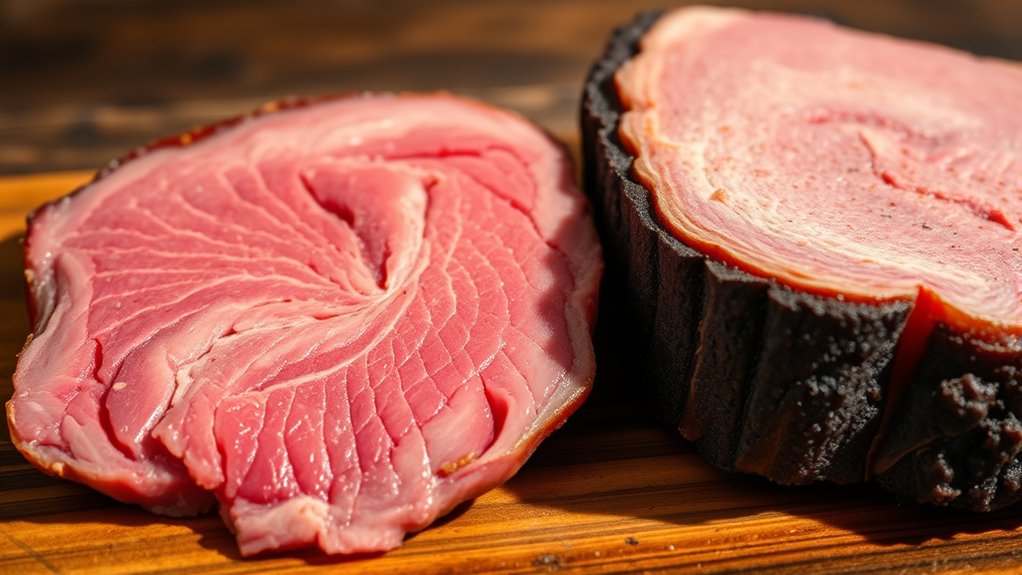
7 Key Differences Between Corned Beef and Brisket
Many home cooks and food lovers often get confused between corned beef and brisket, unsure which one to choose for their dishes. You’re not alone—these cuts are similar but have distinct differences that can affect your meal’s flavor and texture.
Corned beef is a cured, processed meat soaked in a salty spice brine, while brisket is a raw, leaner cut from the cow’s chest that needs slow cooking.
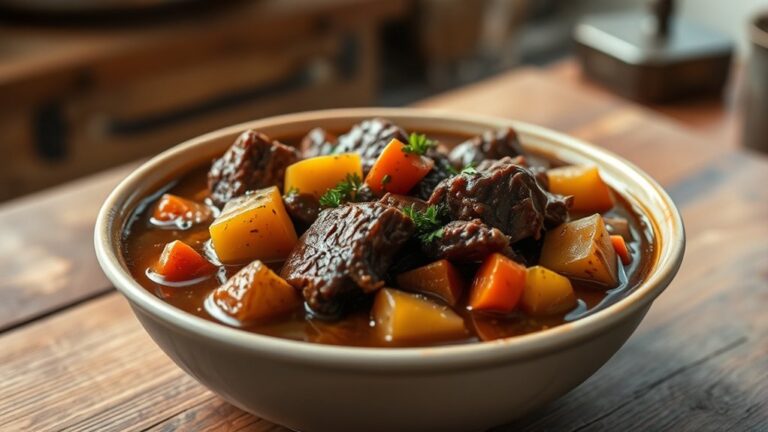
Corned beef has a soft, uniform texture and salty, spiced flavor, typically served sliced or in stews.
Brisket offers a firmer, denser bite with a richer taste suited for roasting or smoking.
Knowing these differences will help you pick the right option for your dishes—keep exploring to learn more.
Key Takeaways
- Corned beef is cured in a salty, spiced brine, while brisket is raw and unprocessed.
- Corned beef is usually boiled or baked. Brisket, on the other hand, needs slow roasting or smoking to become tender.
- Due to curing, corned beef has a softer, moister texture. Brisket tends to be denser and fattier.
- The flavor of corned beef is salty and spiced, giving it a distinctive taste. Brisket offers a rich, beefy flavor with smoky or roasted notes.
- Corned beef is generally more affordable and widely available in cans or packages. Brisket is often more expensive and typically sold fresh, especially during certain seasons.
What Are Corned Beef and Brisket?
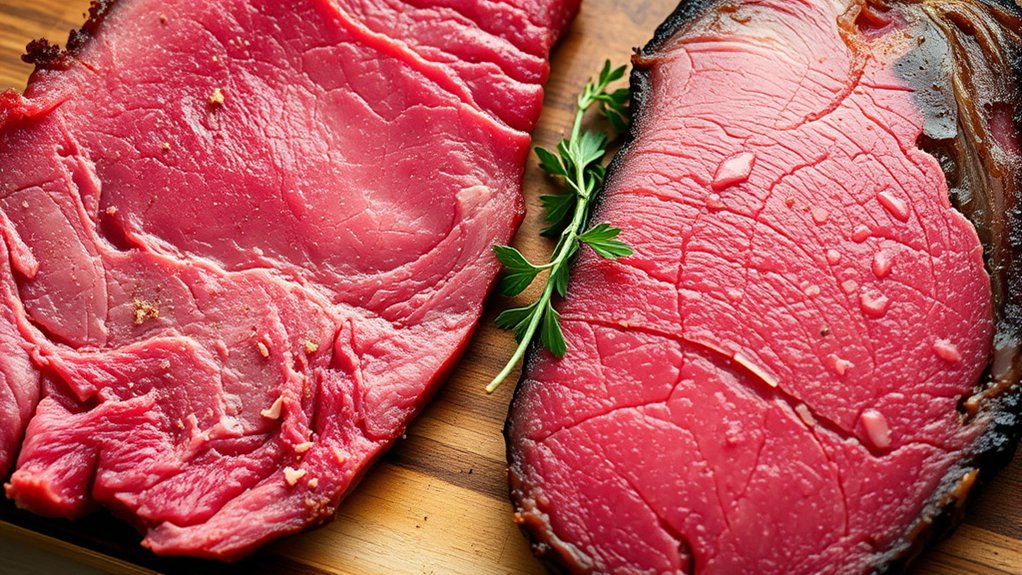
Corned beef and brisket are both popular cuts of beef, but they differ in preparation and texture. Corned beef is made from brisket that’s cured in a seasoned salt brine, giving it a distinctive flavor and pink color. It’s usually cooked slowly until tender, then sliced for sandwiches or served as a main dish.
Brisket, on the other hand, is a cut from the chest area of the cow. It’s typically sold raw and needs slow cooking methods like smoking, braising, or roasting to break down the connective tissue. When cooked properly, brisket is known for its rich, beefy flavor and tender texture.
While both are versatile, they’re prepared quite differently to highlight their unique qualities. Corned beef’s signature taste comes from the curing process, while brisket relies on slow cooking to develop its flavor and tenderness.
How Are Corned Beef and Brisket Prepared Differently?
You’ll notice that corned beef and brisket are prepared using different techniques. Corned beef is usually brined with seasonings before cooking. Brisket, on the other hand, often undergoes dry or wet cooking methods without brining.
Corned beef generally takes longer to prepare because of its curing process. In contrast, brisket typically cooks faster since it doesn’t require curing.
Cooking Methods Comparison
The way corned beef and brisket are prepared highlights their distinct qualities and flavors. Corned beef is typically cooked slowly in boiling water or simmered, often with spices, to tenderize the cured meat. It’s usually boiled or baked, resulting in a moist, tender texture that’s easy to shred.
Brisket, on the other hand, is often cooked using dry heat methods like roasting or smoking, or slow braising for tenderness. These methods allow the fat to render and connective tissues to break down, creating a rich, flavorful meat with a firm yet tender bite.
While corned beef’s preparation emphasizes moist heat, brisket benefits from slow, dry or moist heat to develop its deep, smoky, or roasted flavors.
Seasoning and Brining Techniques
While both corned beef and brisket are popular beef cuts, they go through different seasoning and brining processes that give each its unique flavor.
Corned beef is soaked in a salty brine infused with spices like peppercorns, mustard seeds, bay leaves, and sometimes sugar. This curing process can last several days, letting the meat absorb flavors and develop its salty taste.
Brisket, on the other hand, isn’t usually brined but is often seasoned with dry rubs or marinades before cooking. The seasonings might include salt, pepper, garlic, and other spices, but it doesn’t undergo the long curing process that corned beef does.
This difference in preparation results in corned beef’s salty, spiced flavor compared to the more straightforward, savory taste of brisket.
Preparation Time Differences
Corned beef usually takes a lot longer to prepare than brisket because of the curing process. You’ll need to brine the beef in a salt and spice mixture for several days, often 5 to 7 days, to develop its signature flavor and tenderness.
This curing step is essential and can’t be rushed, which makes the overall prep time much longer. On the other hand, brisket typically only needs seasoning and slow cooking, which can be done in just a few hours.
If you’re short on time, brisket is the quicker choice. Corned beef, however, requires patience since the curing process is what turns a simple cut into the flavorful, tender dish we associate with corned beef.
How Do Corned Beef and Brisket Taste? Flavor Differences Explained
You’ll notice right away that corned beef and brisket have different flavors, even though they come from the same cut of beef. Corned beef is usually savory, salty, and mildly spiced because of the curing process.
Brisket, on the other hand, has a richer, beefier taste with a smoky or roasted note depending on how it’s prepared. To help you compare, here’s a quick flavor breakdown:
| Flavor Profile | Corned Beef | Brisket | Common Seasonings |
|---|---|---|---|
| Saltiness | High | Moderate | Corned beef is heavily salted |
| Spices | Pepper, coriander, cloves | Pepper, garlic, onion powder | Often smoked or slow-cooked |
| Beef Flavor | Mild, cured | Intense, roasted | Varies with cooking method |
| Texture Influence | Tender, moist from curing | Juicy, slightly fibrous | Depends on cooking technique |
| Overall Taste | Slightly tangy, savory | Deep, smoky, beefy | Customizable with seasonings |
What Are the Texture Variations Between Corned Beef and Brisket?
The textures of corned beef and brisket are quite different, which affects how they feel when you bite into them. Corned beef is typically softer and more uniform because of the curing process, giving it a tender, almost flaky texture.
Brisket, on the other hand, has a more varied texture. It’s firmer and can be chewy if not cooked properly, but when slow-cooked, it becomes melt-in-your-mouth tender. The muscle fibers in brisket are thicker, making it denser to bite.
The fat content also plays a role. Brisket has more fat, adding juiciness and richness. Corned beef is usually leaner but stays moist thanks to the brining process.
When Should You Use Corned Beef or Brisket in Your Cooking?
Choosing between corned beef and brisket really depends on what dish you’re making and how you like to cook.
If you’re making something hearty and salty like boiled dinner or corned beef hash, go with corned beef. It’s already cooked and ready to serve, which saves you time.
Use corned beef when you want tender, flavorful meat that’s easy to slice and serve hot or cold. On the flip side, brisket is great for slow-cooked recipes like barbecue, braises, or smoked dishes.
Brisket benefits from long, low-temperature cooking that breaks down connective tissue and develops rich flavor. Pick brisket when you want a versatile cut you can season and cook in different ways.
Basically, your choice depends on the texture and flavor profile you’re after for your dish.
Top Tips for Cooking Perfect Corned Beef and Brisket
To get perfect results, pay close attention to the ideal cooking temperatures for corned beef and brisket. Keep the heat low and steady to guarantee tenderness and prevent drying out.
Following these tips will help you achieve juicy, flavorful meat every time. Just take your time, and you’ll be rewarded with a delicious meal.
Ideal Cooking Temperatures
Wondering how to get your corned beef or brisket perfectly tender? The key is cooking at the right temperature. For corned beef, aim for a slow simmer around 190-200°F (88-93°C). This gentle heat helps break down connective tissue without drying out the meat.
Brisket, on the other hand, benefits from low and slow cooking at 225-250°F (107-121°C), especially when smoking or roasting, to develop flavor and tenderness.
Use a meat thermometer to monitor the internal temperature. For corned beef, cook until it reaches about 190°F (88°C).
For brisket, target an internal temperature of 195-205°F (90-96°C) for ideal tenderness.
Tips for Tender Results
Achieving tender corned beef and brisket depends largely on proper cooking techniques and attention to detail. First, cook them low and slow—use gentle heat to break down connective tissues without drying out the meat.
For corned beef, simmer in enough liquid to cover the meat completely, and avoid boiling rapidly, which can make it tough. For brisket, consider using a slow cooker or oven at a low temperature, around 275°F (135°C).
Rest the meat after cooking for at least 15 minutes before slicing. This helps retain juices and guarantees tenderness.
Moreover, adding a touch of acid, like vinegar or tomato, during cooking can help tenderize the meat. These tips will help you achieve juicy, fork-tender results every time.
Should You Buy Corned Beef or Brisket? Cost, Availability, and Choosing the Right Cut
Deciding whether to buy corned beef or brisket depends on factors like cost, availability, and the specific cut you need.
Corned beef is often pre-cooked and sold in cans or packages, making it convenient and usually more affordable.
Brisket, on the other hand, is sold raw and tends to be more versatile, but it might be pricier depending on the quality.
Availability can vary based on your location and the store’s stock.
If you’re looking for quick preparation, corned beef is easier. Brisket offers more cooking options if you prefer to prepare it yourself.
- Corned beef is ready-to-eat and budget-friendly
- Brisket offers flexibility for different recipes
- Availability depends on local grocery stock
Frequently Asked Questions
Can Corned Beef Be Made From Brisket at Home?
Yes, you can make corned beef from brisket at home. Start with a whole beef brisket and brine it in a seasoned salty solution, usually with spices and curing salts, for several days.
After curing, rinse the meat, then simmer or slow-cook it until tender. This process lets you customize the flavors and enjoy homemade corned beef, perfect for sandwiches or traditional Irish stews.
Which Cut of Beef Is More Suitable for Slow Cooking?
Did you know that brisket makes up about 70% of the beef used in barbecue? For slow cooking, brisket is great because its connective tissue breaks down slowly over time.
You’ll want to pick a good-quality, well-marbled cut to ensure tenderness. Slow cooking turns it into melt-in-your-mouth goodness, perfect for roasting, braising, or smoking.
It gives you rich, flavorful results every time.
How Long Does It Take to Cook Corned Beef Versus Brisket?
Cooking times for corned beef and brisket can vary, but generally, you’ll need about 2.5 to 3 hours for corned beef in a slow cooker or boiling water.
For brisket cooked at a similar temperature, expect around 3 to 4 hours. If you’re roasting, plan for 1.5 to 2 hours per pound for brisket.
Corned beef might take a little longer depending on your method. Always check for tenderness before serving to make sure it’s ready.
Are There Any Health Differences Between Corned Beef and Brisket?
Yes, there are health differences between corned beef and brisket. Corned beef tends to be higher in sodium because of the curing process, which can affect blood pressure if you eat too much.
Brisket usually has less sodium and more fat, especially if you trim the fat. If you’re watching your salt or fat intake, you might prefer brisket.
Moderation and choosing lean cuts can help you manage health risks.
Can I Substitute Brisket for Corned Beef in Recipes?
You can swap brisket for corned beef, but keep in mind it’ll taste and feel different. Brisket is leaner and doesn’t go through the curing process that gives corned beef its salty, spiced flavor.
If you decide to use brisket, try adding some spices or brining it beforehand to get closer to that corned beef flavor. The finished dish might surprise you, but it’s not exactly an equal replacement.
Conclusion
Now that you understand the key differences between corned beef and brisket, you’re better equipped to make your meaty choice.
Whether you prefer the tender, seasoned slices of corned beef or the hearty, flavorful bite of brisket, knowing their unique qualities helps you decide.
Dive into delicious dishes with confidence and enjoy the distinct textures and tastes each cut offers.
Remember, with a little care, your culinary creations will always be flavorful and fabulous—especially when choosing between corned beef and brisket.