What Temperature Is Ideal Inside Your Freezer?
Many people struggle with keeping their frozen foods fresh and safe. It’s frustrating when you’re unsure if your freezer is set at the right temperature, risking spoilage or freezer burn. You’re not alone—maintaining the perfect freezer temperature can be tricky.
The ideal temperature inside your freezer is 0°F (-18°C), which keeps food safe, fresh, and flavorful. At this temperature, bacteria and molds become inactive, and your food stays frozen solid.
If the temperature rises or fluctuates, your food can spoil or develop freezer burn. Monitoring with a thermometer guarantees your freezer stays at the right setting.
Keep going to find out how to maintain the best temperature for all your frozen foods.
Key Takeaways
The ideal freezer temperature is 0°F (-18°C) for keeping your food fresh and safe.
Keeping it at this temperature helps prevent spoilage and ensures everything stays frozen solid.
It’s a good idea to use a thermometer to check the temperature regularly and make sure it’s at the right setting.
Try to avoid temperatures above 5°F because that can increase the risk of your food thawing and going bad.
Make a habit of monitoring and adjusting the thermostat so your freezer stays at a consistent, optimal temperature.
What Is the Ideal Freezer Temperature?
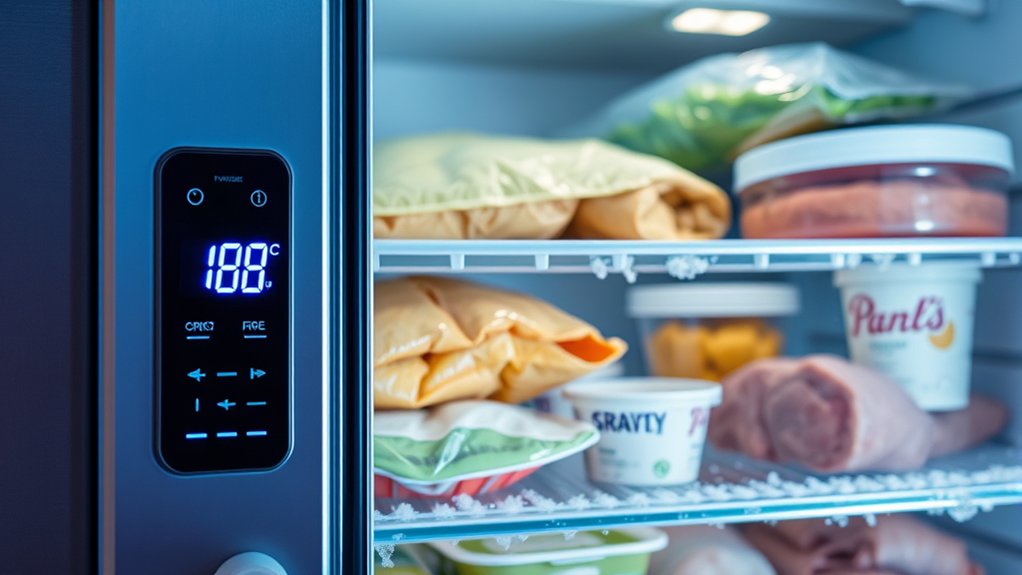
Maintaining the right freezer temperature is key to keeping your food fresh and preventing spoilage. The ideal temperature is 0°F (-18°C), which keeps your food frozen solid and avoids freezer burn.
At this temperature, bacteria and molds become inactive, helping your food stay good longer. Slightly higher temperatures, like 5°F, can cause food to thaw slowly and increase the risk of spoilage.
At 0°F, bacteria and molds are inactive, keeping food fresh longer and reducing spoilage risk.
Using a thermometer makes it easy to monitor and keep the temperature steady. If your freezer gets too warm, your food might develop ice crystals or spoil faster.
On the other hand, setting it too cold wastes energy and can cause freezer burn. Regularly checking the temperature ensures your freezer works well and your food stays safe and fresh.
Why Proper Freezer Temperature Is Critical for Food Safety
Keeping your freezer at the proper temperature is essential because it directly impacts food safety. When your freezer is too warm, bacteria can grow on stored food, increasing the risk of foodborne illnesses.
Freezing slows bacteria growth but doesn’t kill all bacteria, so maintaining a consistent, cold temperature is key. If the temperature rises above 0°F (-18°C), food can spoil faster and become unsafe to eat.
Proper freezing also helps preserve food quality, preventing freezer burn and texture changes. Moreover, a stable temperature reduces the chances of ice crystals forming inside food, which can compromise texture and flavor.
Keeping your freezer at the right temperature guarantees your food stays safe, fresh, and enjoyable for as long as possible.
How to Check Your Freezer Temperature Correctly
To guarantee your freezer stays at the proper temperature, it’s important to check it regularly using a reliable method. Place a digital or dial thermometer inside the freezer, ideally in the center or near the back where temperatures are most consistent. Avoid putting the thermometer near the door, since opening it often can cause fluctuations.
Close the door and wait at least 8 hours or overnight for an accurate reading. Once that time has passed, check the thermometer’s display. If it reads between 0°F and 5°F (-18°C to -15°C), your freezer is at the right temperature.
Repeat this process every month to keep everything running smoothly and your food safe. Properly checking the temperature helps prevent spoilage and keeps your food in good shape.
Signs Your Freezer Is Too Cold or Not Cold Enough
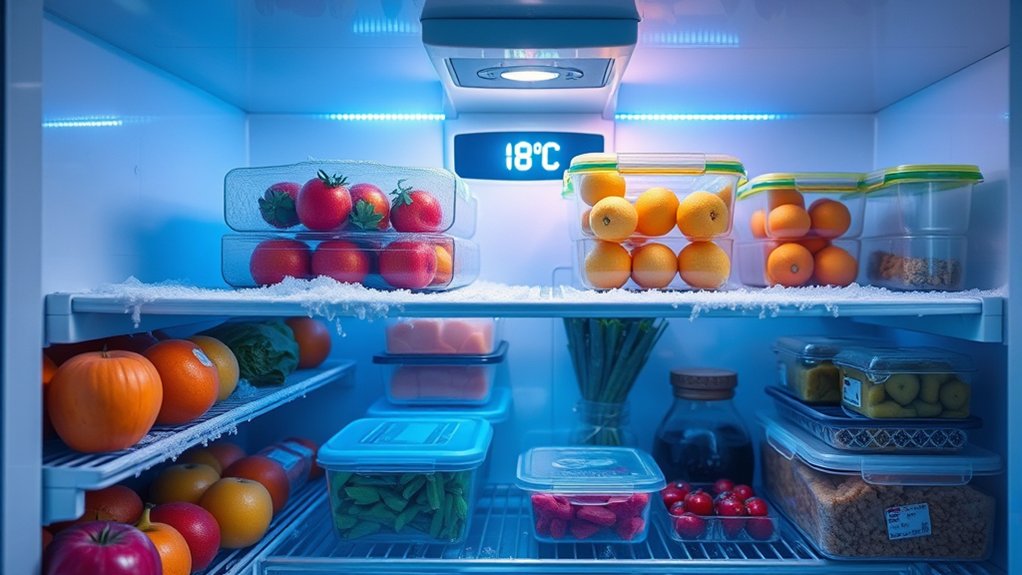
If your freezer isn’t at the right temperature, you might notice some signs that tell you if it’s too cold or not cold enough. For example, if food freezes instantly or gets ice crystals quickly, it’s probably too cold.
On the other hand, if food feels warm or is partially thawed, the temperature isn’t cold enough.
| Sign | What It Means | Action Needed |
|---|---|---|
| Excess ice buildup | Freezer is too cold | Adjust the thermostat or defrost |
| Frozen food spoiling | Not cold enough | Check the temperature settings |
| Soft or thawed items | Not cold enough | Ensure the door seals properly |
| Thick frost on walls | Too cold | Lower the temperature |
| Freezer running constantly | Possibly too cold or faulty | Inspect for issues or adjust temp |
What Causes Freezer Temperature Fluctuations?
Freezer temperature fluctuations can often be traced back to a variety of causes, many of which are related to how the appliance is used or maintained. For example, frequently opening the door lets warm air in, which raises the temperature inside.
Overloading the freezer can block airflow, preventing it from cooling evenly. A faulty door seal also lets cold air escape, making the temperature unstable. If the condenser coils are dirty, the freezer has to work harder, which can cause temperature swings.
You might notice fluctuations if the thermostat isn’t working properly or if the freezer is placed near heat sources. Regularly checking the door seal, avoiding overpacking, and cleaning the coils can help keep the temperature steady. Being mindful of these factors helps ensure your freezer stays at a consistent, safe temperature.
Tips for Maintaining a Consistent Freezer Temperature
To keep your freezer at the right temperature, use a reliable thermometer to check it regularly.
Avoid overloading the space, as this can block airflow and cause temperature swings.
Make a habit of checking the temperature often to ensure it stays steady.
Use a Reliable Thermometer
Using a reliable thermometer is essential for keeping your freezer at the right temperature. It helps you monitor and ensure your freezer stays at 0°F (-18°C).
Without an accurate thermometer, you might not realize if your freezer is too warm, risking food spoilage, or too cold, wasting energy.
Place the thermometer in the center of the freezer for the most accurate reading. Check it regularly—at least once a month—and adjust the temperature control as needed.
Look for features like easy-to-read displays or digital readings for convenience. Keep in mind that temperature fluctuations can happen, so consistent monitoring is key.
With a dependable thermometer, you can confidently maintain the best environment to keep your food fresh and safe.
Avoid Overloading Freezer
Overloading your freezer can block proper airflow, which can lead to temperature swings that affect food safety. When you pack too much inside, cold air can’t circulate properly, causing uneven cooling.
To prevent this, leave space between items so air can move freely. Organize your food neatly, stacking items without stuffing the freezer full. Using storage bins helps keep everything organized and easy to find.
Check out the table below for tips to keep your freezer balanced:
| Tip | Benefit |
|---|---|
| Leave space between items | Ensures proper airflow |
| Avoid overstuffing | Keeps the temperature steady |
| Use storage bins | Organizes and makes items accessible |
| Regularly rotate stock | Prevents overcrowding and spoilage |
| Keep freezer door closed | Keeps cold air inside and temperature stable |
Regular Temperature Checks
Regularly checking your freezer’s temperature helps confirm it stays within the safe range of 0°F to 5°F. This simple step prevents spoilage and keeps your food fresh. Use a reliable thermometer and place it in the center of the freezer for the most accurate reading.
Make sure to check the temperature at least once a month. Catching fluctuations early can save you from bigger problems down the line. If you notice it’s too high, try adjusting the thermostat or look for issues like door leaks or defrost problems.
Here are some helpful tips to keep in mind:
- Record your temperature readings so you can track changes over time.
- Adjust the thermostat gradually to avoid sudden temperature swings.
- Clean the door seals regularly to prevent warm air from leaking in.
- Try to avoid opening the freezer door too often, as that can cause temperature fluctuations.
Staying vigilant with your temperature checks ensures your freezer runs smoothly and keeps your food safe and fresh.
How Freezer Temperature Affects Energy Bills and Efficiency
When your freezer is set colder than it needs to be, it ends up using more energy than necessary, which means higher energy bills. The colder the freezer, the more work it has to do to stay at that temperature, using up more power.
Running your freezer at a very low temperature causes the compressor to cycle more often, wasting electricity and putting extra strain on the appliance. Over time, this inefficiency can lead to significantly higher utility costs.
On the flip side, setting the temperature too high risks your food spoiling. The key is to find the right balance between saving energy and keeping your food safe.
Keeping your freezer at the recommended 0°F (−18°C) helps it run efficiently, saves you money, and keeps your food fresh without overworking the compressor.
What to Do When Your Freezer Isn’t Cold Enough
If your freezer isn’t cold enough, start by checking the temperature settings to make sure they’re correct.
Next, look for any blockages around the vents or coils that might be stopping airflow. Cleaning or clearing these areas can often fix the cooling issue quickly.
Check Freezer Temperature Settings
Start by checking your freezer’s temperature setting to make sure it’s at the recommended level. If it’s not, adjust the thermostat accordingly. Most freezers should be set between 0°F and -18°C.
Once you’ve set the right temperature, wait a few hours to see if it stabilizes. Use a reliable thermometer to verify the actual internal temperature.
Avoid overloading your freezer, as this can block airflow. Keep the door closed as much as possible to maintain consistent cold.
Ensuring your freezer is correctly set helps prevent food spoilage and saves energy. Regularly checking the temperature is a simple way to keep it working efficiently.
Inspect for Freezer Blockages
A common reason your freezer isn’t cold enough is due to blockages that restrict airflow. Over time, ice buildup or stored items can block vents, stopping cold air from circulating properly.
To check for blockages, unplug your freezer and open the door. Look for ice around the vents and clear away any frost with a soft cloth or warm, damp sponge.
Rearrange your stored items to make sure vents aren’t blocked. This helps cold air flow freely and keeps your freezer at the right temperature.
If you see a lot of ice buildup, consider defrosting your freezer completely. Regularly inspecting and clearing these blockages helps maintain a consistent temperature and prevents spoilage.
Keeping proper airflow is key to making sure your freezer operates efficiently and stays cold enough.
When to Call a Technician or Consider a New Freezer
Knowing when to call a technician or consider replacing your freezer can save you time and money. If your freezer isn’t maintaining the proper temperature despite adjustments, it’s time to seek professional help.
Consider calling a technician if you notice persistent frost buildup or ice forming outside the coils. Unusual noises like banging or constant humming are also signs that something’s wrong.
Excessive energy bills without explanation can mean your freezer isn’t running efficiently. Frequent breakdowns or faulty defrost cycles are other indications that repairs might be needed.
If repairs become costly or the freezer remains inefficient even after servicing, replacing it might be the better option. A new model can save energy and improve reliability.
Trust your instincts. Taking action early can prevent food spoilage and avoid larger expenses down the road.
Summary: Tips for Keeping Your Freezer at the Right Temperature
Maintaining the correct freezer temperature is key to keeping your food fresh and preventing spoilage. To do this, regularly check the temperature with a reliable thermometer, aiming for 0°F (-18°C).
Keep the freezer door closed as much as possible to prevent temperature fluctuations. Avoid overfilling, which can block air circulation, and leave enough space for cold air to circulate freely.
Clean the coils and door seals regularly to ensure efficient cooling. If you notice frost buildup, defrost the freezer promptly.
Adjust the thermostat if needed, especially during seasonal changes. By following these simple tips, you guarantee your freezer operates at the ideal temperature.
This helps preserve food quality and saves energy. Proper maintenance keeps your freezer running smoothly and your food safe.
Frequently Asked Questions
How Often Should I Check My Freezer’s Temperature?
You should check your freezer’s temperature at least once a month to make sure it stays consistent and safe. Regular checks help you catch problems early, like temperature changes that could spoil your food.
Use a reliable thermometer placed inside the freezer, ideally near the center. If you notice it’s too warm or cold, adjust the thermostat right away to keep everything at the right temperature and your food fresh.
Can Temperature Variations Damage Frozen Food Quality?
Temperature fluctuations can damage the quality of your frozen food faster than a tornado through a town. When your freezer’s temperature changes, ice crystals form and melt repeatedly, leading to freezer burn, texture changes, and flavor loss.
This damage isn’t just minor; it can turn your favorite ice cream into a tasteless, gritty mess. To keep your food at its best, make sure your freezer stays at a consistent, ideal temperature.
Avoid any sudden shifts in temperature to protect your food’s quality. Keeping things steady is the key to preserving your frozen favorites.
What Are Common Causes of Freezer Temperature Fluctuations?
You often experience freezer temperature fluctuations because of frequent door openings, which let warm air in. Overloading the freezer can block airflow and cause uneven cooling. A faulty door seal lets cold air escape, and adding warm or new food can disrupt the temperature.
Power outages or a malfunctioning thermostat can also cause these changes. To keep the temperature steady, try to minimize door openings and avoid overloading the freezer. Check the seals regularly and make sure your thermostat is working properly.
How Do Different Types of Freezers Maintain Temperature?
Freezers keep their temperatures steady using different key mechanisms. Chest freezers, for example, rely on thick insulation and a strong compressor to stay cold.
Upright freezers use fans to circulate cold air evenly, helping maintain a consistent temperature throughout. Compact or portable freezers are designed to be efficient with smaller sizes and simpler cooling systems.
Each type combines thermostats, compressors, and circulation fans to keep your frozen foods fresh and safe, no matter what style of freezer you choose.
Is It Safe to Store Medication in the Freezer?
Yes, it’s safe to store medication in the freezer if the instructions specify so. You should keep the temperature steady between 0°F and -20°F (-18°C to -29°C), which prevents spoilage and preserves medication effectiveness.
Use a thermometer to monitor the temperature regularly and avoid fluctuating conditions. Make sure the medication is in a sealed, airtight container to prevent contamination or moisture damage.
Always follow your healthcare provider’s storage guidelines.
Conclusion
Keeping your freezer at the right temperature is key to food safety and efficiency. Regularly check and adjust as needed, just like you’d tend to a trusty steed in a barn.
Don’t ignore signs of trouble. Acting quickly can save your groceries and your energy bill. A well-maintained freezer keeps your food safe, costs less, and guarantees you’re always ready for a feast or a surprise visitor.
Remember, the ideal freezer temperature is around 0°F (-18°C). Staying vigilant with this setting will help your freezer serve you well for years to come.