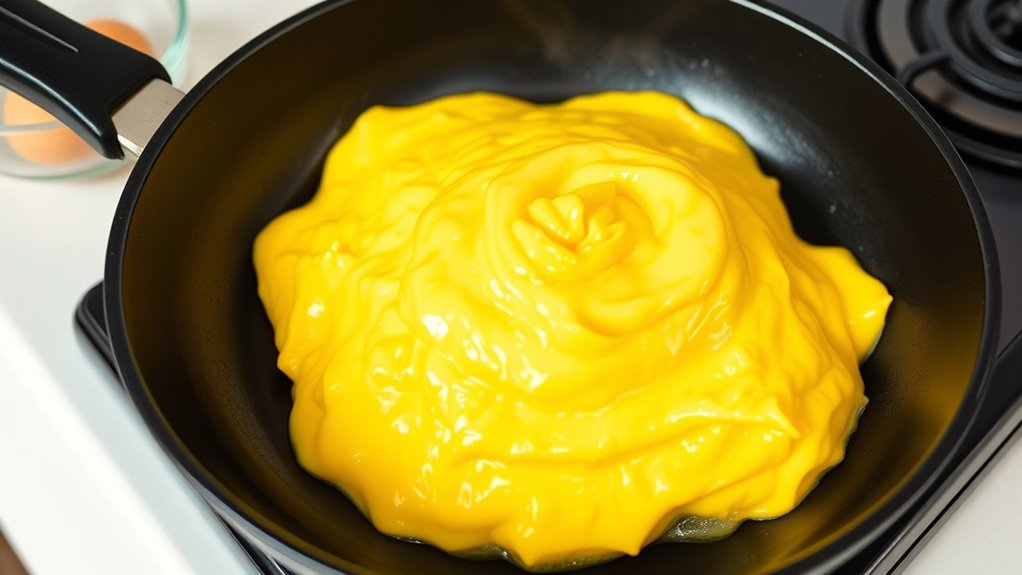
How to Make Scrambled Eggs Without Milk in 7 Simple Steps
Many people love a hearty breakfast, but making scrambled eggs without milk can sometimes feel tricky or disappointing. You’re not alone—finding ways to enjoy fluffy, delicious eggs without dairy is a common challenge.
Luckily, with a few simple tricks, you can master dairy-free scrambled eggs that taste just as good.
To make scrambled eggs without milk in 7 simple steps, start by whisking fresh eggs thoroughly until frothy.
Heat a non-stick skillet over medium-low and add a bit of oil or butter.
Pour in the eggs and gently stir, pushing the curds from the edges toward the center.
Cook slowly until just set, then remove from heat.
For fluffy, dairy-free eggs, learn tips on seasoning, flavors, and troubleshooting to perfect your breakfast.
Key Takeaways
- Whisk eggs thoroughly until yolks and whites are fully combined and frothy.
- Use a non-stick skillet over medium-low heat with oil or butter to prevent sticking.
- Pour beaten eggs into the skillet and gently stir to form soft curds without overcooking.
- Avoid adding milk. If you want some extra fluffiness, you can substitute with water or dairy-free alternatives.
- Remove eggs from heat slightly before they are fully cooked to keep them moist and fluffy.
Why Make Scrambled Eggs Without Milk? Benefits and Reasons
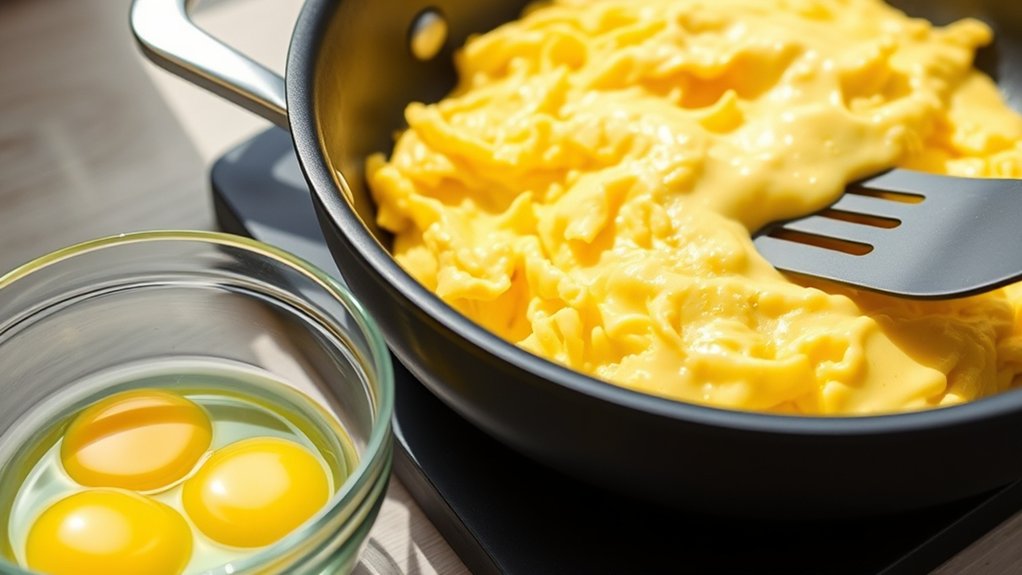
Choosing to make scrambled eggs without milk offers several benefits that might surprise you. First, it simplifies the recipe by reducing the number of ingredients and making the process quicker.
Without milk, your eggs will have a firmer, fluffier texture, which many people prefer. It also makes the dish more suitable for those with dairy allergies or lactose intolerance, so everyone can enjoy a classic breakfast.
Skipping milk can also prevent the eggs from becoming overly creamy or watery, giving you more control over the texture. You might find that your scrambled eggs turn out lighter and more satisfying without the extra liquid.
What Ingredients Do I Need for Dairy-Free Scrambled Eggs?
To make dairy-free scrambled eggs, you’ll need eggs and your favorite seasonings to add flavor.
You can replace milk with dairy-free alternatives like almond milk, coconut milk, or even water.
Optional add-ins like vegetables, herbs, or spices can also improve your dish.
Eggs and Seasonings
For dairy-free scrambled eggs, you’ll need just a few simple ingredients: eggs, salt, and pepper. Use fresh eggs for the best flavor and texture.
Crack the eggs into a bowl and whisk them thoroughly to incorporate air, making your eggs fluffy. Season with a pinch of salt to enhance the natural taste, then add freshly ground black pepper for a bit of spice.
You can also consider adding other seasonings like paprika, garlic powder, or onion powder to boost flavor. But if you prefer a classic taste, keeping it simple works perfectly.
Dairy-Free Alternatives
You only need a few simple ingredients to make dairy-free scrambled eggs. Instead of milk, you can use plant-based options like almond milk, soy milk, coconut milk, or oat milk. These add moisture and help create a creamy texture.
Choose unsweetened versions to avoid affecting the flavor of your eggs. You might also consider using vegetable broth or water if you prefer a more neutral taste.
A small amount of dairy-free yogurt can add richness. Just keep in mind that some plant-based milks may alter the flavor slightly, so pick one that complements your eggs.
Whisk these liquids thoroughly with your eggs and seasonings to guarantee a smooth, fluffy scramble without dairy.
Optional Add-Ins
Adding a few simple ingredients can really boost your dairy-free scrambled eggs with flavor and texture. Think about mixing in herbs, vegetables, or proteins to make the dish more personalized.
Fresh chives, parsley, or basil can add brightness, while sautéed spinach, tomatoes, or bell peppers bring vibrant flavors and nutrients. For extra richness, try dairy-free cheese or nutritional yeast.
If you’re looking to add protein, options like cooked ham, smoked salmon, or tofu work great. These add-ins not only improve the taste but also make your scrambled eggs more filling.
Here’s a quick overview:
| Add-In Type | Examples |
|---|---|
| Herbs & Spices | Chives, parsley, turmeric |
| Vegetables | Spinach, bell peppers, tomatoes |
| Proteins | Tofu, ham, smoked salmon |
| Dairy-Free Cheeses | Nutritional yeast, vegan cheese |
How Should I Prepare My Eggs for Fluffy, Dairy-Free Scrambled Eggs?
Start with fresh eggs for the best fluffiness and flavor. Whisk them thoroughly until the yolks and whites are completely combined and slightly frothy.
This will help your scrambled eggs turn out light and airy, even without dairy. A good whisking ensures they cook evenly and get that perfect fluffy texture.
Use Fresh Eggs
Fresh eggs are the foundation of fluffy, dairy-free scrambled eggs. Using fresh eggs guarantees better flavor, richer texture, and improved consistency. When eggs are fresh, the whites and yolks hold together better, making your scramble more cohesive and tender.
Older eggs tend to be watery, which can lead to uneven cooking and a watery texture. To select the best eggs, check the expiration date and avoid eggs with cracks or unusual odors.
Store eggs in your refrigerator at or below 40°F to maintain freshness. Before cooking, give them a quick visual check to confirm yolks aren’t broken and whites are clear.
Starting with fresh eggs ensures a more flavorful, fluffy, and satisfying scramble every time.
Whisk Thoroughly Before Cooking
Whisking your eggs thoroughly is key to getting a light, fluffy dairy-free scramble. When you beat the eggs well, you trap air, which helps make the scramble tender and airy.
Use a fork or whisk and beat the eggs vigorously until the yolks and whites are fully combined with no streaks. This helps distribute moisture evenly and prevents the eggs from becoming dense or rubbery.
Don’t rush—spend at least 30 seconds whisking to get a smooth, uniform mixture. For even fluffier eggs, try adding a pinch of salt or a tiny splash of water before whisking.
Properly prepared eggs will give you a smoother, more satisfying scramble every time.
How Do I Make Fluffy Scrambled Eggs Without Milk? Step-by-Step Guide
To make fluffy scrambled eggs without milk, focus on beating the eggs thoroughly to incorporate air, which creates a light texture. Use a whisk or fork to beat the eggs vigorously for about 30 seconds until the mixture is uniform and slightly frothy.
This aeration helps produce fluffy eggs without added dairy. Next, heat your pan over medium-low heat and add a small amount of oil or butter to prevent sticking.
Pour in the beaten eggs and let them sit undisturbed for a few seconds. Gently stir with a spatula, pushing the eggs from the edges toward the center.
Continue gently folding until the eggs are just set but still slightly runny. Remove from heat immediately for soft, fluffy scrambled eggs.
How Can I Make Dairy-Free Scrambled Eggs Tastier? Flavor Tips and Variations
Looking to make your dairy-free scrambled eggs more flavorful? Try adding herbs like chives, parsley, or dill for fresh, vibrant tastes. Spices such as paprika, turmeric, or black pepper can add warmth and depth.
For a savory boost, mix in nutritional yeast or a splash of soy sauce or tamari. You can also incorporate diced vegetables like bell peppers, tomatoes, or spinach for added texture and flavor.
Experiment with different oils—olive oil, sesame oil, or even flavored oils—to improve richness. If you enjoy a bit of spice, add a dash of hot sauce or red pepper flakes.
These simple variations can turn your plain scrambled eggs into a tasty, satisfying dish without dairy, keeping it healthy and delicious.
What Are Common Problems When Making Dairy-Free Scrambled Eggs: and How Do I Fix Them?
One common challenge when making dairy-free scrambled eggs is getting the right texture—they can turn out watery, rubbery, or too dry. Watery eggs happen if you add too much liquid or cook them at too high a temperature. To fix this, use minimal liquid and cook on low to medium heat, stirring gently.
Rubberiness occurs if you overcook or beat the eggs too vigorously. To prevent this, remove the eggs from heat as soon as they start to set and stir gently. If your eggs are too dry, it’s probably because they cooked too long or at too high a temperature.
To avoid dryness, take them off the heat sooner and serve immediately. Adjusting your heat and timing helps you make tender, fluffy dairy-free scrambled eggs.
Final Tips for Perfect Dairy-Free Scrambled Eggs Every Time
Achieving perfect dairy-free scrambled eggs every time comes down to a few simple but essential tips. First, use fresh eggs for the best texture and flavor.
Whisk them thoroughly to incorporate air, which helps make the eggs light and fluffy. Cook on medium-low heat to prevent overcooking and sticking.
Stir gently and constantly for even curds. Add a pinch of salt and pepper for flavor, and consider a splash of water or dairy-free milk for extra fluffiness if you like.
Use a non-stick skillet to reduce sticking and make cleanup easier. Remove the eggs from heat just before they’re fully cooked—they’ll finish cooking with residual heat.
With these tips, you’ll always create moist, fluffy, dairy-free scrambled eggs that are perfect for any breakfast.
Frequently Asked Questions
Can I Add Cheese to Dairy-Free Scrambled Eggs?
Yes, you can definitely add cheese to dairy-free scrambled eggs. Just pick dairy-free cheese options like vegan cheddar, mozzarella, or pepper jack. These melt well and add a creamy flavor.
Simply sprinkle the cheese over your eggs during the last minute of cooking so it melts into the eggs. This way, you get a rich, flavorful dish without any dairy, perfect for dairy-free diets.
What Are Some Vegan Alternatives to Milk for Scrambled Eggs?
Imagine pouring a splash of creamy coconut or almond milk into your eggs, turning your scramble into a rich, vegan delight. You can also try plant-based options like soy milk, cashew milk, oat milk, or rice milk.
These alternatives blend seamlessly, adding moisture and flavor without any dairy. As you whisk, picture a silky, fluffy texture coming together—perfect for a dairy-free, vegan breakfast that’s just as satisfying.
How Long Should I Cook Scrambled Eggs Without Milk?
You should cook scrambled eggs without milk for about 2 to 3 minutes, or until they’re just set but still moist. Keep the heat medium to prevent burning, and gently stir the eggs continuously to ensure even cooking.
Once they reach your preferred consistency—whether soft and slightly runny or firmer—you can take them off the heat. Be careful not to overcook, or they might turn dry and rubbery.
Can I Use Almond or Soy Milk Instead of Water?
Yes, you can use almond or soy milk instead of water, turning your eggs into a creamy canvas. These plant-based milks add subtle flavor and richness, making your scramble feel like a luxurious breakfast treat.
Just swap them in equal measure, and whisk well. Keep in mind, almond and soy milk might slightly alter the taste, but they’ll add a delightful twist that enhances your eggs to new heights.
Are Dairy-Free Scrambled Eggs Suitable for a Low-Fat Diet?
Yes, dairy-free scrambled eggs can be suitable for a low-fat diet. When you prepare them without added butter or high-fat oils and use egg whites or egg substitutes, you reduce fat content considerably.
Opt for cooking sprays or minimal healthy oils like olive oil. Also, including plenty of vegetables boosts fiber and nutrients without adding much fat, making your meal both healthy and satisfying.
Conclusion
Making scrambled eggs without milk is simple, cost-effective, and perfect for those with dairy allergies. Eggs are a complete protein source, providing all nine essential amino acids.
By following these easy steps, you’ll enjoy fluffy, flavorful eggs every time. Whether for breakfast or a quick snack, dairy-free scrambled eggs are a nutritious and versatile choice.
Give it a try and start your day with a delicious, allergy-friendly meal — all without milk.