How to Smoke Beef Brisket in an Electric Smoker in 8 Easy Steps
Looking to master the art of smoking beef brisket in an electric smoker? You’re not alone—many BBQ enthusiasts struggle to get that perfect smoky flavor and tender texture.
But don’t worry, with a little guidance, you’ll be turning out mouthwatering brisket that rivals your favorite barbecue joints.
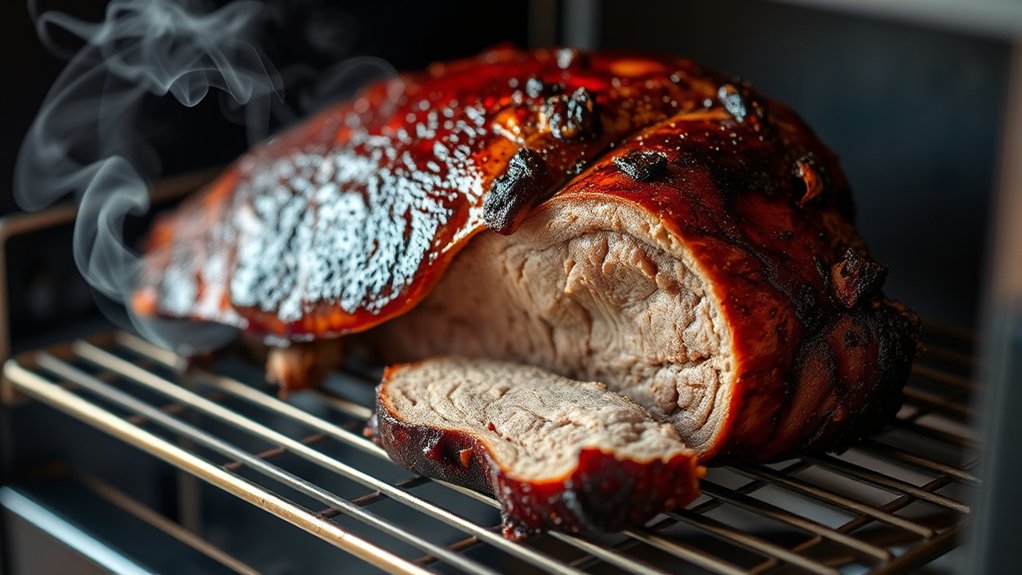
To smoke beef brisket in an electric smoker, start by gathering quality meat, season it well, and preheat your smoker to 225-250°F.
Place the brisket fat-side up on the grates, ensuring good airflow, and monitor the temperature regularly. Keep it moist with a water pan and baste periodically.
Cook until it hits 195-205°F, then let it rest before slicing against the grain.
Mode details and tips to perfect your smoke are just a glimpse away.
Key Takeaways
- Prepare and season the brisket, then preheat your electric smoker to 225-250°F before you start smoking.
- Place the brisket fat-side up on the smoker grate. Make sure it’s stable and that there’s good air circulation around it.
- Keep the temperature steady and smoke flowing. Use a water pan to help with moisture, and adjust the vents if your smoker has them.
- Monitor the internal temperature, aiming for 195-205°F. Baste the brisket regularly and let it rest when it’s done.
- When it’s time to serve, slice against the grain. Pair it with your favorite sides and enjoy that smoky, tender goodness.
Gather Your Supplies and Prepare Your Beef Brisket
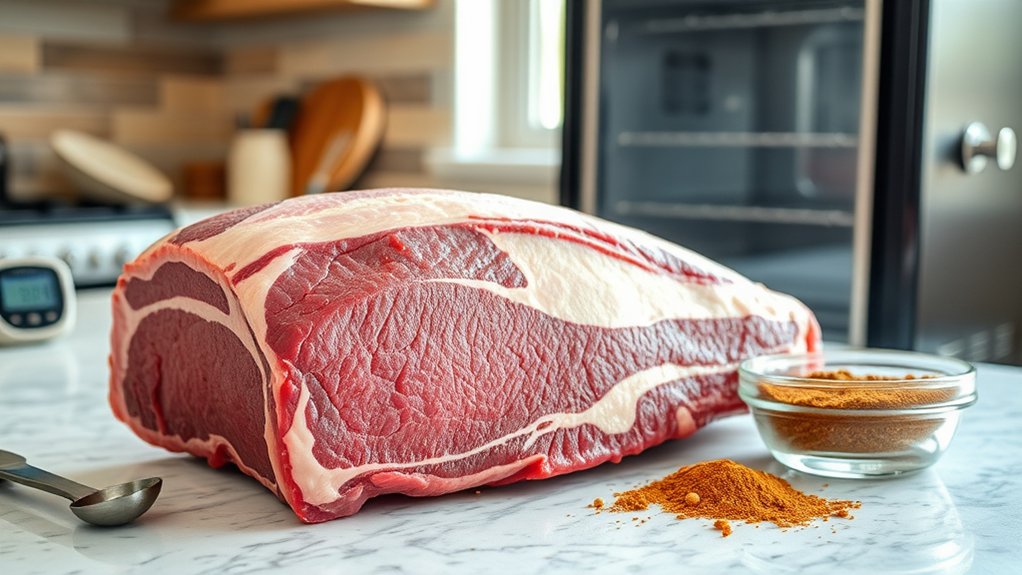
Before you start smoking, gather all the supplies you’ll need. This includes a good quality beef brisket, a reliable electric smoker, wood chips, a meat thermometer, and any seasonings or rubs you plan to use.
Choose a brisket with good marbling for tenderness and flavor. Have your smoker ready with the appropriate wood chips—oak, hickory, or mesquite work well.
Select a well-marbled brisket and prepare your smoker with oak, hickory, or mesquite wood chips for optimal flavor.
Keep a meat thermometer handy to monitor the internal temperature. If you like, prepare your seasonings or rubs beforehand to boost the beef’s flavor.
Make sure everything is within reach so you can focus on the process without interruptions. Proper preparation helps you achieve that juicy, smoky brisket you’re aiming for.
Season Your Brisket for Maximum Flavor
Once you’ve gathered your supplies and prepared your brisket, it’s time to focus on seasoning. A good rub boosts flavor and creates a delicious bark. Start with a base of salt and black pepper—these are essential for flavor and moisture retention.
You can add garlic powder, onion powder, paprika, and a touch of cayenne for extra depth and heat. Rub the seasoning mixture evenly over the entire surface of the brisket, pressing it into the meat to guarantee it sticks.
Don’t be shy—cover all sides thoroughly. Let the seasoned brisket sit for at least 30 minutes, or refrigerate it overnight for deeper flavor infusion. Proper seasoning is key to a tender, flavorful smoked brisket that’ll impress everyone.
Preheat Your Electric Smoker to the Ideal Temperature
To guarantee your brisket cooks evenly and develops that perfect smoky flavor, you need to preheat your electric smoker to the right temperature. Set your smoker between 225°F and 250°F, which is ideal for slow smoking.
Turn it on and let it run empty for about 15-20 minutes until it reaches the desired temperature. This helps the interior heat evenly and stabilizes the smoker, preventing temperature fluctuations during cooking.
Using a reliable thermometer to monitor the temperature is essential. Once preheated, you’re ready to set up your brisket. Proper preheating helps achieve a tender, flavorful result and ensures smoke adheres well to the meat’s surface, setting the stage for a successful smoking process.
Set Up Your Smoker and Place the Brisket Inside
Place the brisket carefully inside your preheated smoker, making sure it sits on the grate fat-side up to help with even rendering and flavor infusion.
Ensure the brisket is centered and not touching the sides or other pieces so heat and smoke can circulate properly.
If your smoker has multiple racks, put the brisket on the middle or lower rack for consistent cooking.
Adjust the smoker’s vents if needed to keep a steady temperature and smoke flow.
Use tongs or gloves to handle the meat gently, avoiding punctures or tears.
Once the brisket is in place, close the smoker lid securely to trap heat and smoke.
This setup guarantees good contact with smoke and heat, setting the stage for a flavorful, tender brisket.
Monitor the Temperature and Keep Your Brisket Moist
Keep a close eye on the smoker’s temperature to make sure it stays steady throughout.
Use a water pan to add moisture and help keep the right humidity, so the brisket doesn’t dry out.
Baste the meat periodically to keep it juicy and boost the flavor.
Maintain Steady Temperature
Maintaining a steady temperature is key for perfectly smoked beef brisket, and keeping an eye on it helps ensure consistent results. Use your smoker’s thermometer to track the internal temperature, aiming for around 225°F to 250°F.
Fluctuations can cause uneven cooking or dryness, so adjust the smoker’s vents or power settings as needed. Try not to open the lid too often, as this drops the temperature.
Instead, check the temperature at regular intervals to make sure it stays stable. Consistency helps the brisket cook evenly, making it tender and flavorful.
Staying vigilant with temperature control is essential for that smoky flavor and melt-in-your-mouth texture you’re after.
Use Water Pan
Using a water pan in your smoker helps regulate the internal temperature and prevents the brisket from drying out. It adds humidity, keeping your meat moist and tender throughout the smoking process.
Place the water pan beneath the brisket and fill it with hot water to keep the moisture level steady. Keep an eye on the water level and refill as needed so it doesn’t run dry.
Proper water management helps stabilize the temperature and enhances flavor. Here’s a quick guide to different placements and water types:
| Water Pan Placement | Water Type | Refill Frequency |
|---|---|---|
| Beneath the brisket | Hot water | Every 2-3 hours |
| Side compartment | Cold water | Check hourly |
| Near smoke source | Boiling water | As needed |
| Center of smoker | Tap water | When empty |
| Corner spot | Distilled water | Every 4 hours |
This simple step keeps your brisket juicy and flavorful every time.
Baste for Moisture
Monitoring the temperature closely during smoking is essential to guarantee your brisket stays moist and cooks evenly. As the meat cooks, it can dry out if the moisture isn’t maintained, so basting becomes vital.
Every hour or so, gently brush the brisket with a liquid like beef broth, apple juice, or a marinade of your choice. This not only adds flavor but also helps keep the surface moist, preventing it from drying out.
Use a spray bottle or a basting brush for even coverage. Be careful not to open the smoker too often, as temperature fluctuations can occur.
Consistent basting guarantees the brisket stays juicy and tender, resulting in a flavorful, moist finish every time.
Cook Until the Brisket Reaches the Right Internal Temp
To guarantee your brisket is perfectly cooked, keep a close eye on its internal temperature. Use a reliable meat thermometer and check it regularly.
For a tender, sliceable brisket, aim for an internal temp of around 195°F to 205°F. If you prefer it more tender and moist, closer to 205°F is ideal because the connective tissues break down fully.
Don’t rely solely on time, as each brisket cooks differently. Check the temperature periodically, especially during the final hours.
When the brisket hits your target temp, remove it from the smoker promptly. This helps prevent overcooking and keeps it juicy.
Rest and Slice Your Brisket for Juiciness
Once your brisket is done cooking, let it rest for at least 20 minutes to lock in those juicy flavors.
When you’re ready to slice, grab a sharp knife and cut against the grain. This helps make each bite more tender.
Taking the time to rest and slice properly makes a big difference in how juicy and flavorful your brisket turns out.
Resting Time Matters
Patience is key when it comes to juicy, tender brisket. Resting allows the juices to redistribute throughout the meat, so they don’t spill out when you slice.
After removing your brisket from the smoker, let it rest, either uncovered or loosely tented, for at least 30 minutes. This step is essential because it helps keep the meat moist and boosts flavor.
If you cut into it too soon, the juices will escape, leaving your brisket dry and less flavorful. Resting also helps the meat fibers relax, making slicing easier and cleaner.
During this time, the internal temperature stabilizes, ensuring each slice is juicy and tender. Don’t rush this process—your patience will pay off with a moist, flavorful brisket that’s worth the wait.
Proper Slicing Technique
Proper slicing is essential to maximize juiciness and tenderness in your brisket. First, let the meat rest for at least 30 minutes to lock in the juices.
Use a sharp slicing knife to cut against the grain. This shortens the muscle fibers and makes each bite more tender. Look for the grain lines by examining the meat, then cut perpendicular to those lines.
Keep your slices about 1/4 to 1/2 inch thick. Thinner slices help keep the meat moist, while thicker slices preserve the juiciness. Avoid pressing down on the meat or rushing through the process, as this can squeeze out the juices.
Slice carefully and evenly so each piece shows off the meat’s tenderness and smoky flavor. Proper slicing turns your smoked brisket into a juicy, melt-in-your-mouth experience.
Serve and Enjoy Your Perfect Smoked Beef Brisket
Now that your smoked beef brisket is perfectly cooked and tender, it’s time to serve and enjoy it. Let it rest for about 15 minutes to allow the juices to redistribute, which helps keep each slice moist.
Slice against the grain for maximum tenderness and presentation. Consider pairing your brisket with classic sides like coleslaw, baked beans, or cornbread to enhance the flavors.
Slice against the grain and serve with classic sides like coleslaw, baked beans, or cornbread to elevate flavors.
For an extra boost, try drizzling your favorite barbecue sauce or squeezing fresh lemon over the slices for brightness. Remember, presentation matters—arrange the slices neatly on a platter for a great look.
Most importantly, savor each bite and appreciate the smoky aroma, rich flavor, and tender texture of your expertly prepared brisket.
Frequently Asked Questions
How Long Does It Typically Take to Smoke a Beef Brisket in an Electric Smoker?
It typically takes about 1.5 to 2 hours per pound to smoke a beef brisket in an electric smoker. So, a 10-pound brisket might need around 15 to 20 hours.
You should keep an eye on the internal temperature, aiming for 195 to 205°F for tender results. Keep the smoker steady at 225°F, and use a meat thermometer to make sure it’s cooked perfectly without overdoing it.
What Wood Chips Are Best for Smoking Beef Brisket?
You should choose wood chips like hickory, oak, or mesquite for smoking beef brisket. These woods give a rich, smoky flavor that really complements the hearty taste of the meat.
Hickory offers a classic, bold flavor, while oak provides a milder, versatile smoke. Mesquite gives a stronger, distinctive flavor—use it sparingly.
Avoid softer woods like pine, which can produce unpleasant tastes and harmful chemicals.
Can I Use a Frozen Brisket for Smoking?
Using a frozen brisket isn’t ideal; it’s a bit like trying to start a spaceship with a paperclip. You can smoke it, but it’ll take longer and the meat won’t cook evenly.
Thaw it in the fridge for 24-48 hours first, then pat it dry. This helps the smoke penetrate better and results in tender, flavorful meat.
Patience is key for a perfect smoked brisket. Taking the time to thaw properly makes all the difference.
How Do I Prevent My Brisket From Drying Out?
To prevent your brisket from drying out, keep it moist throughout the smoking process. Wrap it in foil or butcher paper once it hits your target temperature, and consider adding some beef broth or apple juice inside the wrap for extra moisture.
Maintaining a steady temperature in your smoker is key, so try to keep things consistent. Avoid overcooking by regularly checking the internal temperature to ensure it stays juicy and tender.
Is It Necessary to Wrap the Brisket During Smoking?
Yes, wrapping your brisket during smoking is often necessary. Think of it like sealing in juicy flavor and tender moisture, kind of like wrapping a gift to keep everything fresh.
Once your brisket reaches around 165°F, wrap it tightly in butcher paper or foil. This helps trap heat and moisture, so your meat doesn’t dry out.
It also speeds up the cooking process and is a secret weapon for getting that perfect, melt-in-your-mouth texture.
Conclusion
Smoking beef brisket in an electric smoker is a rewarding process that yields tender, flavorful results. Did you know that properly smoked brisket can contain up to 70% moisture, ensuring juicy slices every time?
By following these simple steps, you’ll master the art of smoking brisket and impress your friends. Just remember, patience is key. Your perfect smoked brisket is worth the wait!