What Temp Should You Cook Beef Short Ribs in the Oven?
Many home cooks want perfectly tender beef short ribs but often struggle to get that melt-in-your-mouth texture. You’re not alone—cooking these flavorful cuts just right can be tricky. The key is in the temperature and patience.
You should cook beef short ribs in the oven at a low, steady temperature of around 275°F to 300°F. This gentle heat allows the collagen to break down slowly, making the ribs tender and flavorful.
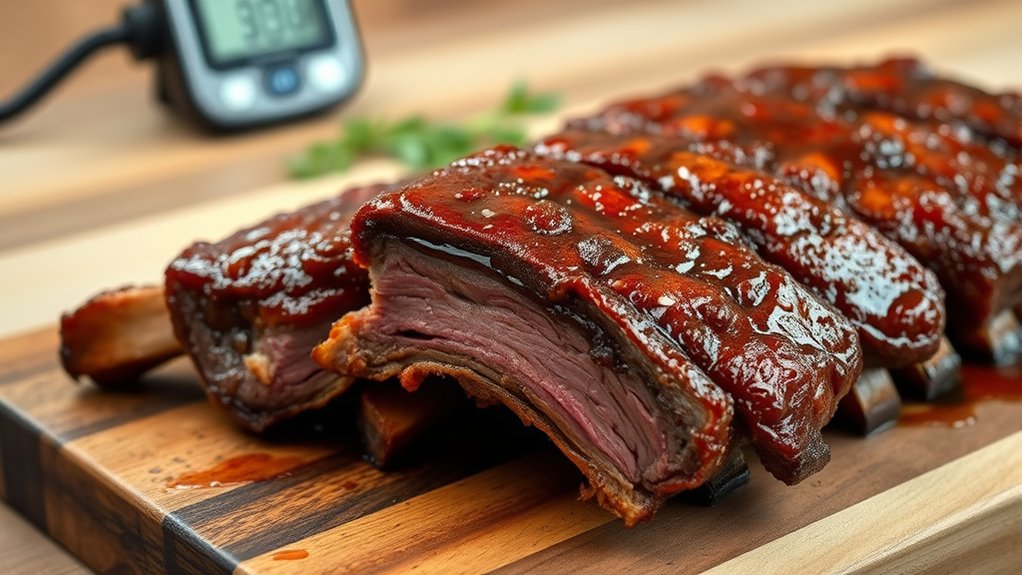
Cover the ribs with foil or a lid to retain moisture, and use a meat thermometer to check for an internal temperature of 190°F to 205°F.
Keep in mind, proper temperature control is key, and you’ll find more tips if you keep exploring.
Key Takeaways
- Cook beef short ribs at 275°F (135°C) for slow, even, and tender results.
- Keep the oven temperature between 275°F and 300°F for the best tenderness. This range helps break down the connective tissues without drying out the meat.
- Use a meat thermometer to check the internal temperature. You’re aiming for about 190°F to 205°F for perfectly cooked ribs.
- Cover the ribs with foil or a lid during cooking. This traps moisture and keeps the meat juicy.
- Adjust the cooking time depending on the size of your ribs. The goal is to get deep heat penetration to make them tender and flavorful.
What Is the Best Oven Temperature for Cooking Beef Short Ribs?
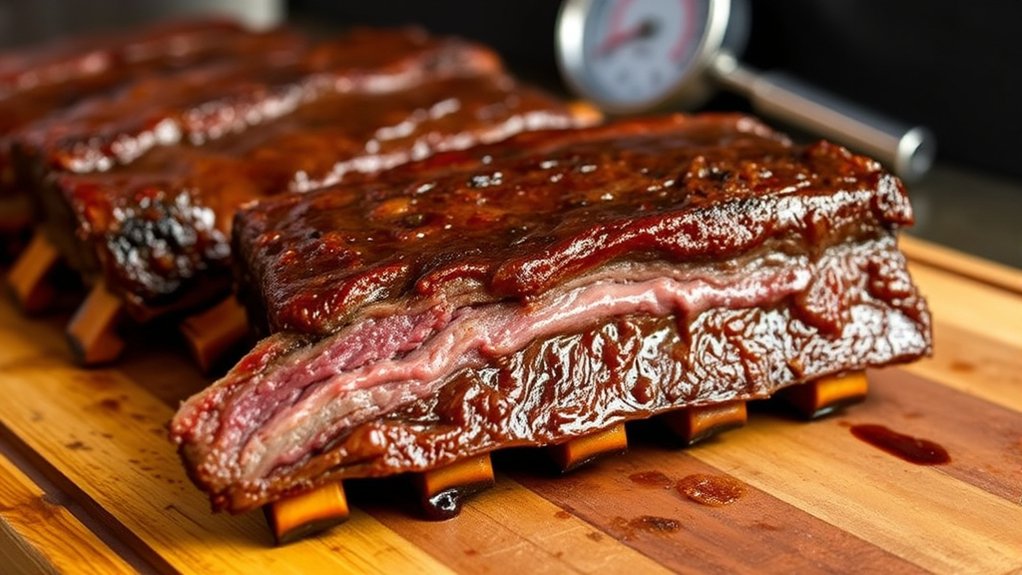
What is the best oven temperature for cooking beef short ribs? To get tender, flavorful short ribs, set your oven to around 275°F (135°C). This moderate heat helps the meat cook slowly and evenly, breaking down connective tissues without drying out.
If you crank up the heat too high, you might end up with tough, chewy ribs. On the other hand, cooking too low can extend the cooking time longer than necessary. For best results, cover the ribs with foil or a lid to trap moisture and keep them tender.
You can also finish with a quick higher-temperature sear if you want a caramelized crust. Overall, 275°F strikes the perfect balance for juicy, fall-off-the-bone beef short ribs.
How Does Low-and-Slow Temperatures Make Short Ribs Tender?
Cooking short ribs at low temperatures allows the collagen in the meat to slowly break down into gelatin, making the meat tender and juicy. This gentle process helps retain moisture, so the ribs stay moist and flavorful.
Collagen Breakdown Process
Low-and-slow cooking transforms tough beef short ribs into tender, melt-in-your-mouth cuts by breaking down collagen, a connective tissue that gives the meat its firmness. Collagen is a protein that surrounds muscles and bones, keeping their structure intact.
When you cook ribs slowly at low temperatures, around 275°F (135°C), heat gradually causes collagen to turn into gelatin. Gelatin dissolves into moisture, enriching the meat’s texture and flavor.
This process takes several hours, allowing heat to penetrate deeply and break down tough fibers. As collagen melts away, the meat becomes softer and more succulent, with an almost buttery feel.
The slow breakdown ensures even tenderness throughout, preventing the meat from drying out or becoming tough. It gives you that perfect fall-apart texture you’re aiming for.
Moisture Retention Benefits
As collagen breaks down during slow cooking, it releases gelatin that helps the meat stay moist. Cooking at low-and-slow temperatures lets this happen gradually, so the meat doesn’t dry out.
When you cook short ribs gently, the connective tissues melt into the meat, creating a natural barrier that locks in juices. This makes the ribs tender, juicy, and full of rich, moist flavor.
Cooking too quickly at high heat can cause moisture to escape, leaving the meat dry and tough. Keeping a steady, low temperature gives the collagen time to turn into gelatin, boosting moisture retention.
In the end, this slow method ensures your short ribs stay flavorful, succulent, and perfectly tender.
What’s the Right Temperature to Achieve Fall-Off-the-Bone Ribs?
Ever wonder what temperature will give you fall-off-the-bone beef short ribs? The key is cooking them low and slow. Aim for an oven temperature of around 275°F to 300°F.
This range allows collagen and connective tissue to break down gradually, resulting in tender, succulent ribs that fall apart easily. Use a reliable meat thermometer to monitor internal temperature, which should reach about 195°F to 205°F for ideal tenderness.
Keep in mind, cooking at this gentle heat preserves moisture and improves flavor. If you’re looking for ribs that are literally fall-off-the-bone, don’t rush the process. Patience at these temperatures will give you the best results.
Should You Use a Higher Temperature to Cook Short Ribs Faster?
Is it wise to crank up the heat to speed up cooking short ribs? Not really. Higher temperatures can toughen the meat and cause uneven cooking.
Instead, slow and steady wins the race for tender, flavorful ribs.
If you choose to raise the heat, here’s what might happen:
- You risk drying out the meat, making it chewy instead of tender.
- The fat might render too quickly, leaving the meat greasy.
- The connective tissues won’t break down properly, resulting in tougher ribs.
- You might experience uneven cooking, with the outside overdone and the inside underdone.
Stick to a moderate oven temperature to guarantee your short ribs are juicy, tender, and cooked evenly, even if it takes a little longer.
How to Adjust Oven Temperature for Ribs of Different Sizes and Thicknesses
When cooking ribs of different sizes and thicknesses, you should adjust the oven temperature accordingly to guarantee even cooking. Thicker ribs may need a slightly lower temperature and longer cooking time.
Smaller cuts can tolerate higher heat, so you can cook them a bit faster. Always modify your cooking time based on the size to prevent undercooking or overcooking.
Adjust Temperature Based On Thickness
Thicker beef short ribs need a lower oven temperature or longer cooking time to cook evenly without getting tough. When adjusting the temperature based on thickness, keep these tips in mind:
- Thicker Ribs: Lower the oven to around 275°F (135°C) to allow slow, gentle cooking.
- Medium-Sized Ribs: Keep the oven at 300°F (150°C) for a nice balance of heat.
- Thin Ribs: Increase the temperature slightly to 325°F (160°C) to help prevent drying out.
- Check for Doneness: Use a meat thermometer to make sure the internal temperature hits 190°F (88°C). That’s when the ribs will be tender and pull apart easily.
Adjusting the temperature based on thickness helps you get tender, evenly cooked ribs no matter their size.
Modify Cooking Time Accordingly
Adjusting the cooking time is key to getting your ribs just right. Larger or thicker cuts need more time to soften the connective tissues, so keep that in mind.
As a general rule, add about 15-30 minutes to the cooking time for bigger or thicker ribs. While consistent temperature helps, the size really affects how long they need to cook.
Use this table as a quick guide for your adjustments:
| Rib Size | Additional Cooking Time |
|---|---|
| Small | 15 minutes |
| Medium | 20 minutes |
| Large | 30 minutes |
Always check for tenderness by inserting a fork or thermometer. Adjust the cooking time if needed to make sure your ribs are melt-in-your-mouth tender.
How Temperature Affects Flavor and Caramelization in Short Ribs
Temperature plays an essential role in developing the rich flavors and appealing caramelization in short ribs. When you cook at the right heat, you activate the Maillard reaction, which creates complex flavors and a beautiful crust.
If you cook too low, the meat stays dull and lacks depth. Too high, and you risk burning the exterior before the inside is tender.
Imagine a deep, golden-brown crust forming as sugars caramelize. Juices thicken into a flavorful glaze. Aromas of roasted beef fill your kitchen.
A rich, golden crust forms as sugars caramelize, filling your kitchen with the irresistible aroma of roasted beef.
The meat becomes tender and falls apart with a rich, smoky flavor.
Maintaining the proper temperature guarantees you get that perfect balance of flavor, texture, and caramelization.
Common Mistakes When Cooking Short Ribs at Incorrect Temperatures
Cooking short ribs at the wrong temperature can make the meat tough and unappetizing or too dry. It’s easy to end up with less-than-ideal results if you don’t get the heat right.
If your temperature isn’t consistent, your ribs might cook unevenly, which isn’t what you want. Keeping a steady temperature is key to tender, flavorful short ribs.
Avoid these common mistakes by paying close attention to your heat control. That way, your ribs will turn out perfectly every time.
Overcooking Renders Meat Tough
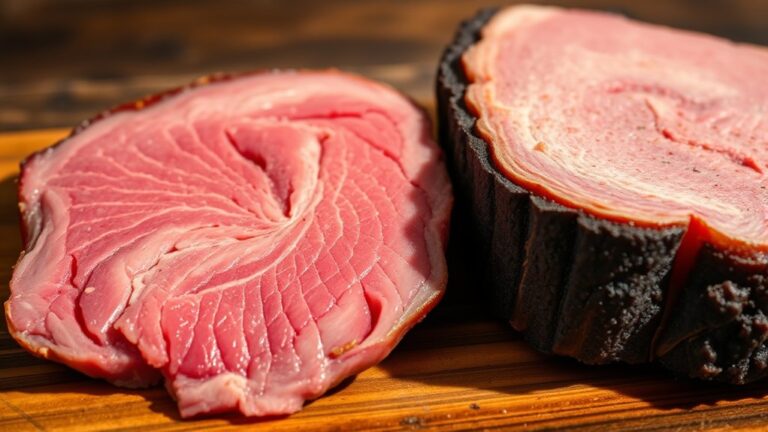
When beef short ribs are cooked at too high a temperature for too long, the meat can become tough and chewy instead of tender. Overcooking breaks down the connective tissues excessively, causing the meat to dry out and lose its succulence. Imagine biting into ribs that feel like rubber or leather, rather than melting in your mouth.
To visualize this, think of shrinking and curling as the moisture evaporates. Gritty texture from over-reduction of natural fats. Loss of juiciness, leaving the meat dry and stringy. Hard, fibrous bites that resist your teeth.
Avoid these pitfalls by sticking to proper cooking temperatures and times, ensuring your short ribs stay tender and flavorful.
Undercooking Leaves Ribs Tough
If you don’t cook beef short ribs long enough or at a low enough temperature, they’ll stay tough and chewy instead of becoming tender. Undercooking prevents collagen from breaking down properly, so the meat stays difficult to chew.
To guarantee tenderness, cook short ribs at a temperature that allows slow, even cooking. Here’s a quick guide to help you avoid undercooking:
| Temperature | Result |
|---|---|
| Too low | Tough, chewy, collagen intact |
| Proper | Tender, juicy, collagen broken down |
| Time Needed | Effect |
| Shorter | Meat remains tough |
| Longer | Collagen converts, meat becomes tender |
Always aim for a balance, cooking long enough to achieve melt-in-your-mouth tenderness.
Inconsistent Temperature Control
Inconsistent temperature control is one of the most common mistakes when preparing beef short ribs, often leading to uneven cooking and disappointing results. When your oven fluctuates or isn’t properly calibrated, you risk overcooking or undercooking parts of the ribs. Imagine opening the oven to find some sections perfectly tender while others remain tough.
To prevent this, monitor your oven’s temperature with a reliable thermometer. Be aware of these pitfalls:
- Opening the oven too often, causing temperature drops.
- Using a faulty oven that fluctuates unexpectedly.
- Not preheating the oven thoroughly before cooking.
- Ignoring the importance of consistent heat during the entire cooking process.
Staying vigilant about temperature stability guarantees your ribs cook evenly and turn out tender and flavorful.
How to Use a Meat Thermometer to Cook Perfect Short Ribs
Using a meat thermometer is essential for guaranteeing your beef short ribs are cooked to perfection. First, insert the thermometer into the thickest part of a rib without touching the bone, as bone can give false readings.
For best results, wait until the thermometer stabilizes before reading the temperature. When cooking low and slow, aim for an internal temperature of around 190-205°F to get tender, fall-off-the-bone ribs.
If you’re cooking for a shorter time, check the temperature periodically—especially as you get close to your target. Always clean the thermometer probe after each use to prevent cross-contamination.
Using a thermometer takes the guesswork out of cooking, helping you reach the perfect doneness every time. This ensures your short ribs are juicy, tender, and cooked just the way you like them.
What Temperature Should You Finish Ribs for Juiciness?
Wondering what temperature you should finish your ribs at to keep them juicy? The ideal range is around 190°F to 203°F (88°C to 95°C). When you hit this, the collagen breaks down, making the meat tender and moist.
Think of it like this: your ribs should have a slight bend when lifted, almost like they’re about to fall off the bone. The meat pulls back a bit from the bones, showing a clean edge. Plus, the surface should be glossy and caramelized, glistening with moisture.
When tested with a fork, the meat should feel tender but not mushy. Staying within this temperature window ensures your ribs stay moist and flavorful, avoiding dryness or toughness. Use a reliable meat thermometer to be precise, and pull the ribs out right at that perfect temperature.
How Different Cooking Methods Impact the Ideal Oven Temperature
Different cooking methods greatly influence the oven temperature you should use for beef short ribs. If you’re braising, go for a low and slow approach, around 275°F, to break down connective tissue and keep the meat tender.
Roasting at a higher temperature, like 350°F, gives you a quicker cook with a caramelized exterior. But be careful—if you don’t monitor it, the meat can dry out.
For slow-cooking or oven-steaming, keeping the temperature low helps preserve moisture and develop rich flavors. Grilling or broiling short ribs at high heat isn’t ideal for oven cooking but can be used for finishing or searing.
Adjust your oven temperature based on the method, and find the right balance of heat and cook time to get tender, flavorful short ribs.
Frequently Asked Questions
Can I Cook Beef Short Ribs at a Higher Temperature for Quicker Results?
Yes, you can cook beef short ribs at a higher temperature for quicker results, but it’s not ideal if you want tender, fall-off-the-bone meat.
Higher temperatures, like 400°F or more, will cook them faster but may dry out or toughen the meat.
For best results, stick to a lower temp around 275°F to 325°F and cook them slowly.
This method guarantees juicy, tender short ribs.
What Internal Temperature Indicates the Ribs Are Fully Cooked and Safe to Eat?
You’ll want to aim for an internal temperature of 190°F to 205°F for fully cooked, tender beef short ribs. Curiously, at 200°F, collagen breaks down completely, giving you melt-in-your-mouth meat.
Use a meat thermometer to check the thickest part of the ribs. Once they hit this range, you’re safe to eat, and your ribs will be juicy, tender, and flavorful, just as they should be.
How Does Oven Humidity Affect the Cooking Temperature for Short Ribs?
Oven humidity doesn’t directly affect the cooking temperature for short ribs, but it does influence how the heat surrounds them.
When the humidity is high, moisture stays in the oven, which helps tenderize the meat and might mean you can cook at a slightly lower temperature.
On the other hand, dry heat can dry out the meat faster, so you may need to cook at a higher temperature or for a bit longer to get that perfect tenderness.
Adjusting your oven settings based on the humidity can help you achieve perfectly cooked, tender short ribs every time.
Should I Cover the Ribs During Cooking at Certain Temperatures?
Covering your ribs is like wrapping them in a cozy blanket, which helps keep moisture in. If you’re cooking at lower temperatures, around 275°F, it’s a good idea to cover the ribs to prevent them from drying out and to keep the meat tender and juicy.
At higher temperatures, around 350°F, you can leave them uncovered. This helps develop a crisp exterior and a nice bark. Adjust based on how you want your ribs—moist and fall-off-the-bone or crispy and caramelized.
How Does Resting Time After Cooking Influence the Final Temperature of Short Ribs?
Resting your beef short ribs after cooking allows the juices to redistribute, which can slightly increase the internal temperature by about 5°F. During this time, the residual heat continues to cook the meat gently, ensuring tenderness and flavor.
You should rest the ribs for 10-15 minutes, loosely covered with foil. This step helps achieve a more evenly cooked, juicy, and flavorful final product.
Conclusion
So, when you’re oven-roasting beef short ribs, think of slow and steady as your best friend. Set the temperature around 275°F to 300°F, like whispering secrets to tender, fall-off-the-bone goodness.
Rushing the process is like trying to catch lightning—futile and frustrating. Patience turns tough meat into a symphony of flavor, melting in your mouth like butter.
Trust the process, and your ribs will sing with juicy, savory perfection. For the best results, cook beef short ribs at a temperature of 275°F to 300°F in the oven.