What Is the Ideal Temperature for a Fridge Freezer for Food Safety?
Many people struggle with keeping their food fresh and safe in the fridge and freezer. It’s easy to worry if your appliances are at the right temperature, especially with so many other things demanding your attention.
You’re not alone—proper temperature control is key to preventing spoilage and freezer burn.
To keep your food safe, set your fridge between 35°F and 38°F and your freezer at 0°F. Regularly check temperatures with a reliable thermometer to guarantee accuracy, as fluctuations can cause spoilage or freezer burn.
Avoid common mistakes like opening doors too often or overcrowding.
Proper organization and consistent monitoring help maintain ideal conditions. Keep exploring for more tips on how to keep your fridge and freezer performing at their best.
Key Takeaways
- The ideal fridge temperature is between 35°F and 38°F (1.7°C to 3.3°C) for keeping your food fresh and safe.
- For the freezer, aim for around 0°F (-18°C). This temperature helps prevent bacteria growth and keeps your food from spoiling.
- It’s a good idea to regularly check the temperatures with a reliable thermometer. This way, you can make sure everything stays in the safe zone.
- Keeping the right temperatures is key to avoiding foodborne illnesses caused by bacteria multiplying.
- When you maintain consistent temperature settings, your food stays fresher longer and retains better quality.
What Is the Ideal Temperature Range for Your Fridge and Freezer?
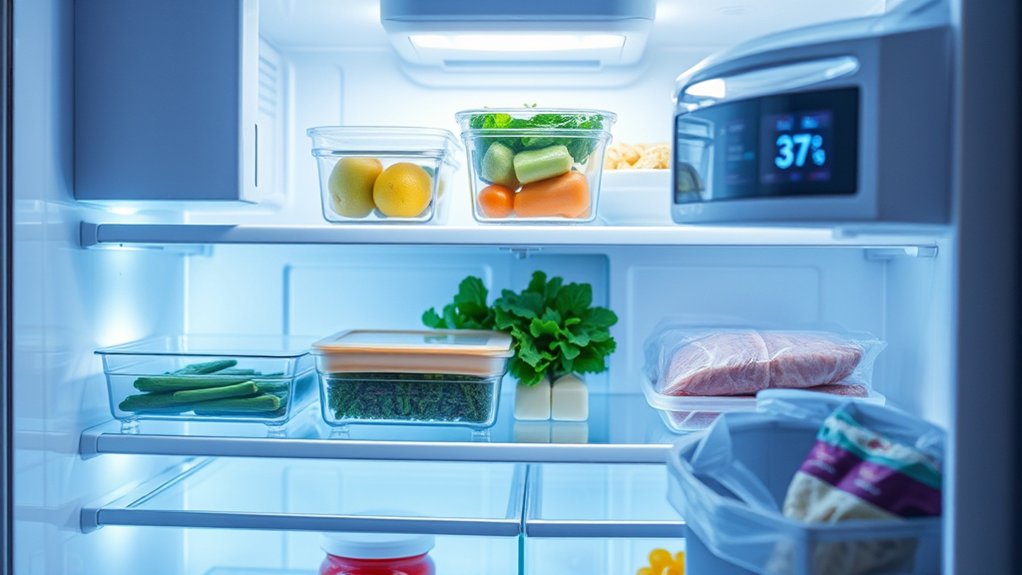
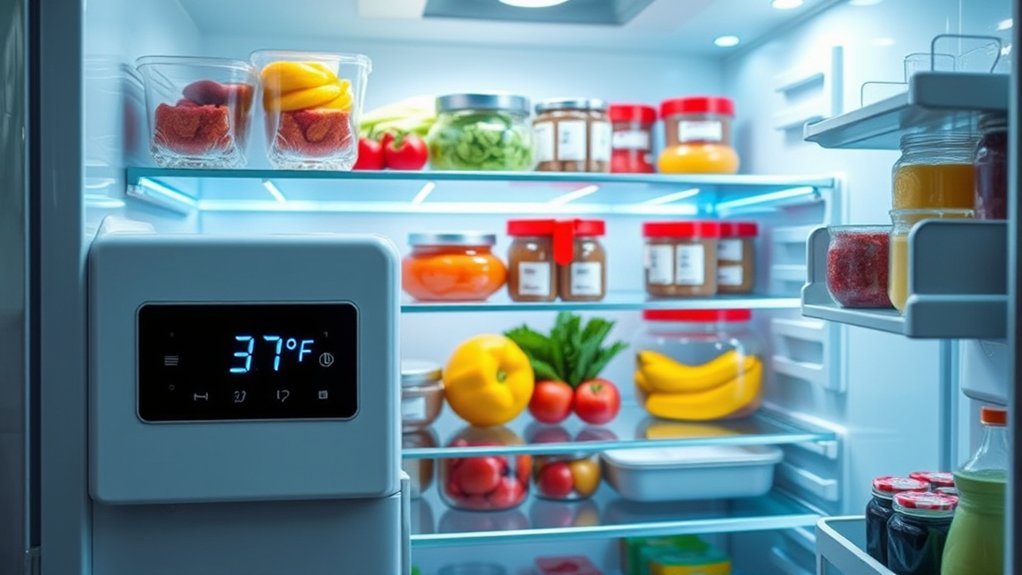
Have you ever wondered what the perfect temperature is to keep your food fresh and safe? The ideal range for your fridge is between 35°F and 38°F (1.7°C to 3.3°C). This keeps perishable foods like dairy, meats, and leftovers fresh without freezing them.
Keep your fridge between 35°F and 38°F to ensure food stays fresh without freezing.
For your freezer, aim for 0°F (-18°C). This temperature prevents bacteria growth and preserves food quality. Use a reliable thermometer to monitor both appliances regularly.
If the temperature rises above these ranges, your food may spoil faster or become unsafe. Likewise, temperatures that are too low in the fridge can cause freezing of items that shouldn’t be frozen.
Maintaining these specific temperatures guarantees your food stays fresh, safe, and retains its flavor and texture longer.
Why Keeping the Correct Temperatures Is Key to Food Safety
Maintaining the correct temperatures in your fridge and freezer is crucial because it directly affects food safety and quality. When your fridge gets too warm, bacteria can grow quickly, increasing the chance of foodborne illnesses.
On the other hand, if it’s too cold, you might damage delicate items like produce and dairy. Proper temperatures in the freezer help prevent bacteria, molds, and yeasts from thriving, keeping your food fresh longer.
This also helps preserve the taste and texture of your food. Consistently setting your appliances to the right temperature reduces spoilage and waste, saving you money.
It also makes sure your food stays safe to eat, lowering health risks. Regularly checking and adjusting your fridge and freezer temperatures is a simple way to protect yourself and your family.
How Cold Should Your Freezer Be to Keep Food Fresh?
To keep your food fresh and safe, your freezer should be set to 0°F (-18°C). At this temperature, bacteria and molds are effectively slowed down, preventing spoilage and foodborne illnesses.
Set your freezer to 0°F (−18°C) to keep food fresh, safe, and prevent spoilage by slowing bacteria and mold growth.
Freezing at 0°F guarantees that perishable items like meat, seafood, and leftovers stay preserved for longer periods without compromising quality. If your freezer is warmer than this, ice crystals may melt, and food can deteriorate faster.
On the other hand, setting it too cold isn’t necessary and might waste energy. Use a reliable thermometer to monitor the temperature regularly, making sure it stays at or below 0°F.
Maintaining this temperature is vital for good food preservation and safety.
How to Check and Adjust Your Fridge and Freezer Temperatures
You should regularly check your fridge and freezer temperatures with a reliable thermometer to make sure they stay within safe ranges.
If the temperatures are off, simply adjust the settings to keep your food fresh and safe.
Monitoring your appliances often and making quick adjustments can really help prevent spoilage and foodborne illnesses.
Monitoring Temperature Settings
Checking and adjusting your fridge and freezer temperatures is straightforward, but it’s important to do it regularly to keep your food safe. Start by placing a thermometer inside both compartments to get accurate readings. For the fridge, aim for 37°F (3°C), and for the freezer, set it to 0°F (-18°C).
Check the temperatures at least once a month to make sure they stay consistent. If the readings are off, adjust the thermostat controls accordingly. Keep in mind that opening the doors can cause temperature fluctuations, so check after they’ve been closed for a few hours.
Regular monitoring helps you catch any issues early and ensures your appliances are maintaining safe temperatures for food storage.
Adjusting for Optimal Safety
Once you’ve placed thermometers inside your fridge and freezer, adjusting the temperature settings is simple. First, find the temperature controls, which are usually dials or digital panels.
Then, follow these steps:
- Set the fridge to between 37°F and 40°F (3°C to 4°C) for the best food safety and freshness.
- Adjust the freezer to 0°F (-18°C) to prevent ice buildup and keep frozen items preserved.
- Test the temperatures after 24 hours and recheck to make sure they stay steady. Make any small adjustments if needed.
Common Mistakes That Cause Temperature Fluctuations
One common mistake that causes temperature fluctuations in your fridge and freezer is frequently opening the doors or leaving them open for long periods. Every time you do this, cold air escapes, and the appliance has to work harder to restore the right temperature.
This cycle can lead to inconsistent temperatures, which can put your food at risk of spoilage. Overcrowding the fridge also blocks proper airflow, causing uneven cooling and hot spots.
Placing hot food directly into the fridge raises internal temperatures and forces the appliance to overcompensate. Ignoring door seals, like leaving gaskets dirty or damaged, allows cold air to escape constantly.
To keep the temperature stable, open the doors only when necessary. Keep them closed as much as possible and check that seals are clean and in good shape.
Using a Thermometer to Monitor Your Fridge and Freezer
Using a thermometer to monitor your fridge and freezer is key for keeping your food safe. It helps you spot temperature issues early before they lead to spoilage or health risks.
To do this effectively, just follow these steps:
- Place the thermometer in the center of the fridge and freezer, away from doors or walls.
- Check the temperatures at least once a week to catch any fluctuations.
- Keep a log of your readings to spot trends and catch problems early.
How Temperature Fluctuations Affect Food Safety and Quality
When your fridge temperature fluctuates, bacteria can multiply quickly, putting your food safety at risk.
These changes also cause food to spoil faster and can make flavors or textures deteriorate.
Keeping a steady temperature helps preserve both the quality and safety of your food.
Impact of Temperature Changes
Temperature fluctuations in your fridge can really affect food safety and quality. When temperatures unexpectedly rise, bacteria can grow quickly, increasing the chance of foodborne illnesses. On the other hand, sudden drops can cause food to freeze too soon, altering its texture and flavor.
Here are three main impacts:
- Increased spoilage risk: Warm spots let bacteria flourish, leading to faster food spoilage.
- Loss of nutritional value: Fluctuations can break down nutrients, especially in produce and dairy.
- Compromised taste and texture: Quick temperature changes can make meats tough and fruits mushy.
Keeping your fridge’s temperature steady helps ensure food stays safe, tastes better, and lasts longer. This protects your health and cuts down on waste.
Food Preservation Challenges
Fluctuations in fridge temperature pose significant challenges to preserving food quality and safety. When temperatures rise even slightly, bacteria can multiply rapidly, increasing the risk of foodborne illnesses. Cold spots or inconsistent temperatures can cause food to spoil faster or develop harmful pathogens unnoticed.
Freezing food at improper temperatures can lead to freezer burn, affecting taste and texture. On the other hand, frequent temperature changes can cause condensation and moisture buildup, encouraging mold and spoilage. Maintaining a stable temperature is essential to minimize these risks and extend food freshness.
You need to monitor your fridge regularly, making sure it stays within the safe range. Proper temperature control helps prevent spoilage, reduces waste, and keeps your food safe to eat longer.
Tips for Organizing Your Refrigerator to Maintain Consistent Temperatures
Organizing your refrigerator properly is key to keeping temperatures consistent and your food safe. To do this well, follow these tips:
Proper fridge organization keeps food fresh and temperatures stable. Follow these simple tips for safety and efficiency.
- Group similar items together. Keep dairy, meats, and produce in their own areas to prevent cross-contamination and temperature swings.
- Avoid overloading. Leave some space between items so air can circulate freely, helping the fridge stay at a steady temperature.
- Use clear containers and labels. This makes it easier to find what you need quickly and keeps the door from staying open too long, which can cause temperature drops.
When and How to Defrost Your Freezer for Best Performance
You should defrost your freezer when a thick layer of frost builds up, usually every few months.
Use proper techniques like turning off the appliance and removing its contents. This helps prevent damage and speeds up the defrosting process.
Keeping an eye on frost buildup ensures your freezer runs efficiently and stays at the right temperature.
Optimal Defrosting Frequency
Regularly defrosting your freezer is essential to keep it working well and ensure your food stays safe. How often you should do it depends on how much you use it and how quickly frost builds up. Usually, you should defrost when the ice gets about 1/4 inch thick or more, which can take a few months.
Here are some key points to remember:
Check for frost buildup once a month so you can spot it early.
Defrost more often if you notice your freezer isn’t cooling properly or your energy bills go up.
When defrosting, clear out old or frozen items to prevent spoilage and make space.
Sticking to a regular defrosting routine helps your freezer run smoothly, stops ice from building up, and keeps your food safe.
Proper Defrosting Techniques
To guarantee your freezer runs efficiently and keeps food safe, it’s important to defrost it at the right times and using proper techniques. You should defrost when ice buildup reaches about a quarter-inch thick, as it can block airflow and reduce efficiency.
Turn off the freezer and remove all food beforehand. Place towels around the base to catch melting ice. Avoid using sharp objects to scrape ice, since this can damage the interior.
Instead, let the ice melt naturally or use gentle heat sources like a fan or a warm cloth on stubborn spots. Once all the ice has melted, clean the interior with mild soap and water, then dry thoroughly before restarting the freezer.
Proper defrosting guarantees peak performance and keeps your food safe.
How Modern Smart Controls Help Keep Your Fridge and Freezer at the Right Temperature
Modern smart controls change the way refrigerators and freezers keep the right temperatures by giving you precise, real-time adjustments. They constantly monitor temperature sensors to make sure your appliance stays within safe ranges without you needing to do anything.
These controls can automatically adjust cooling cycles, which helps prevent temperature swings that might spoil your food. Plus, they often connect to your smartphone, so you can get updates and alerts if something’s off.
Smart controls automatically adjust cooling and send smartphone alerts to keep food fresh and safe.
Here are three ways smart controls make your food safer:
- Automatic adjustments keep temperatures steady and reduce spoilage.
- Real-time alerts notify you immediately if there’s a problem.
- Energy-efficient operation saves power while keeping things at the right temperature.
These features help ensure your fridge and freezer stay at the perfect temperature, keeping your food fresh and safe without any hassle.
Troubleshooting Temperature Problems in Your Fridge Freezer
When your fridge or freezer isn’t keeping the right temperature, it can spoil food and waste energy. First, check that the door seals tightly and aren’t damaged, as leaks let warm air in.
Next, make sure the vents inside are clear for proper air circulation. If the temperatures are still off, verify the thermostat settings—sometimes they get bumped or reset.
Clean the condenser coils regularly because dust buildup can reduce cooling efficiency. If your unit still struggles, listen for unusual noises that might mean a failing compressor or fan.
Finally, see if the appliance is overloaded, which can hinder cooling. If none of these steps fix the problem, it’s best to call a professional to check for mechanical issues.
Frequently Asked Questions
How Often Should I Check My Fridge and Freezer Temperatures?
You should check your fridge and freezer temperatures at least once a month to keep your food safe. Regular checks help catch any temperature fluctuations early, preventing spoilage and foodborne illnesses.
Use a reliable thermometer and place it in the middle of the fridge and freezer. If you notice temperatures are off, adjust the settings and monitor more often until they stabilize.
Consistent checks help keep your food safe and fresh.
Can Temperature Fluctuations Harm My Frozen or Refrigerated Food?
Temperature fluctuations can seriously damage your frozen or refrigerated food—imagine leftovers turning into a science experiment! When temperatures go above safe levels, bacteria can grow quickly, increasing the risk of foodborne illnesses.
On the flip side, if it gets too cold, it can cause freezer burn or harm delicate foods. To keep your food safe and fresh, try to keep temperatures steady.
Regularly check your fridge and freezer, and avoid big temperature swings whenever possible. That way, your food stays safe and tastes great!
What Are Signs My Fridge or Freezer Isn’T Maintaining Proper Temperatures?
You’ll notice your fridge or freezer isn’t maintaining proper temperatures if your food spoils quickly or if you see ice buildup or frost in the freezer.
Condensation, strange odors, or inconsistent cooling are also signs something’s wrong. Regularly check the temperature with a thermometer. Your fridge should be around 37°F (3°C), and the freezer at 0°F (-18°C).
This helps ensure your food stays safe and fresh.
Does Opening the Fridge or Freezer Door Affect Temperature Stability?
Yes, opening the fridge or freezer door affects temperature stability. Every time you open it, cold air escapes, which makes the temperature go up temporarily.
This causes your appliance to work harder to bring the temperature back down. To keep your food safe, open the door only when you really need to, and try to keep it closed as much as possible.
Also, make sure the seal is tight so cold air doesn’t leak out. Doing this helps keep your food at a safe, steady temperature.
Are There Specific Foods That Require Different Temperature Settings?
Yes, you should set different temperatures for specific foods. For example, keep raw meats at 40°F or below to prevent bacteria growth. Dairy products should be stored at 35-38°F to stay fresh.
Fruits and vegetables often need slightly higher temperatures around 40°F, while leftovers should be stored at 40°F or lower. Adjust your fridge and freezer settings accordingly to keep all foods safe and fresh.
Conclusion
Keeping your fridge and freezer at the right temperatures isn’t just about avoiding spoilage; it’s about safeguarding your health.
Imagine opening your fridge and knowing every item is perfectly preserved, fresh, and safe to enjoy.
By regularly checking, adjusting, and organizing, you guarantee your food stays at its best.
Don’t let fluctuating temperatures be the silent thief of quality. Stay vigilant, and your meals will always be safe and satisfying.
For food safety, the ideal temperature for a fridge freezer is typically around 37°F (3°C) for the fridge and 0°F (-18°C) for the freezer.