10 Key Differences Between Prime and Choice Beef
Many people struggle with choosing the right beef for their dishes, unsure whether to go for prime or choice. It can be confusing, especially when you want tender, flavorful meat without overspending.
You’re not alone—making the right choice can make all the difference in your cooking experience.
Prime beef has more marbling, making it juicier, more tender, and flavorful, perfect for quick, high-heat cooking.
Choice beef has less marbling and may be a bit firmer, often better suited for slow cooking or roasting.
Prime is usually pricier and less available, while Choice offers good quality at a lower cost.
Understanding these differences helps you pick the right beef for your dish—more details await if you investigate further.
Key Takeaways
- Prime beef has more marbling, which means it’s usually more tender and has a richer flavor than Choice beef.
- It’s also generally more expensive and harder to find because there’s less Prime available.
- Prime is best for quick, high-heat cooking methods like grilling. Choice, on the other hand, does well with slow cooking methods.
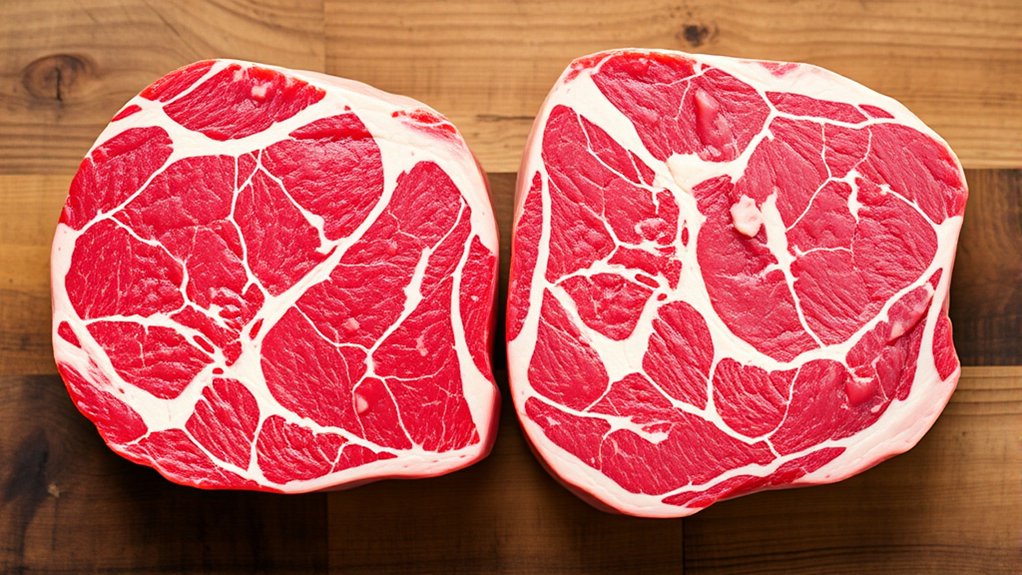
- The marbling in Prime beef is evenly spread throughout, while Choice tends to have less marbling, mostly around the edges.
- Aging makes Prime beef more tender, especially if it’s aged for a longer time.
Understanding Beef Grades: What Are Prime and Choice?
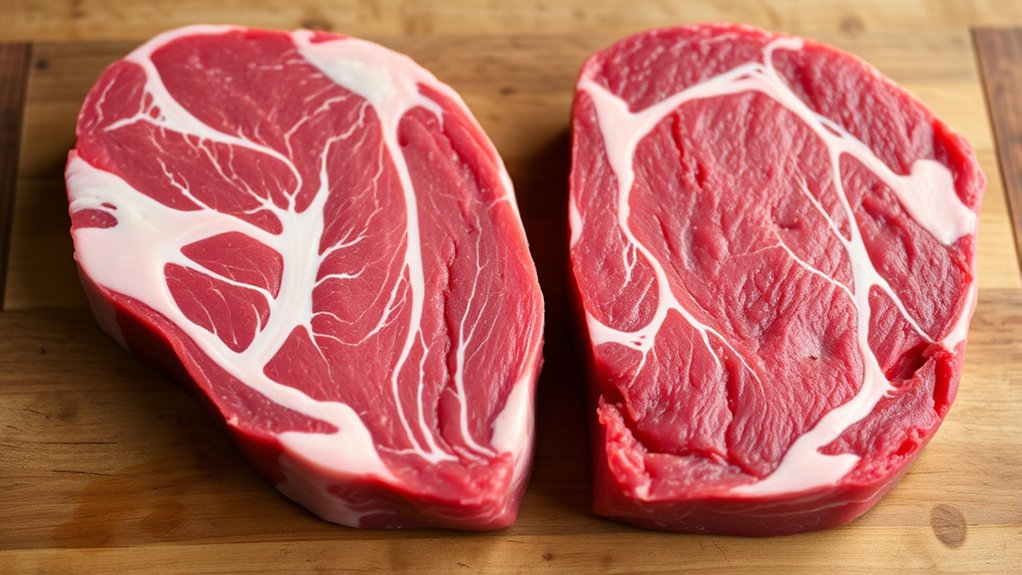
With regard to selecting beef, understanding the differences between Prime and Choice grades is essential. Prime beef comes from young cattle and has the highest level of marbling, which means fat interspersed within the muscle.
This marbling makes the meat exceptionally tender, juicy, and flavorful. Choice beef, while still high quality, has less marbling than Prime, resulting in slightly less tenderness but still offering good flavor and quality.
The grading process involves inspecting the beef’s marbling, maturity, and overall appearance. This helps you determine the meat’s quality and how it will cook. Knowing these grades helps you choose the right beef for your dish, whether you want premium tenderness or a more economical option with still excellent flavor.
What’s the Main Difference in Marbling Between Prime and Choice?
The main difference in marbling between Prime and Choice beef is how much fat is inside the muscle and how evenly it’s spread.
Prime beef has lots of fat streaks that are evenly distributed throughout the meat, giving it a rich, juicy flavor.
Choice beef has less marbling, with fat mainly around the edges, making it leaner and milder in taste.
In Prime, the marbling looks like fine, widespread flecks. For Choice, the marbling is more sparse and concentrated in certain areas.
This difference affects the flavor, juiciness, and overall eating experience. Prime is usually preferred if you want maximum tenderness and richness.
How Do Tenderness and Texture Compare in Prime vs. Choice Beef?
Prime beef, with its higher marbling, tends to be more tender and has a smoother texture, making each bite more enjoyable. Choice cuts can vary a lot in texture depending on the specific cut and how you cook them.
How you prepare each type can also change how tender they turn out. Knowing these differences helps you get the best results every time.
Marbling’s Impact on Tenderness
Marbling plays an essential role in determining the tenderness and texture of beef, especially when comparing Prime and Choice grades. The more marbling present, the more evenly fat deposits are distributed within the muscle, leading to a softer, juicier bite. Prime beef typically has abundant marbling, which boosts tenderness by lubricating muscle fibers during cooking.
Conversely, Choice beef has less marbling, making it leaner and slightly less tender. To understand its impact, consider that marbling melts during cooking, creating a buttery texture. Increased marbling correlates with easier chewing.
Less marbling can result in a firmer, denser bite. Proper cooking amplifies marbling’s tenderizing effect, especially in Prime cuts. Ultimately, higher marbling levels enhance tenderness and elevate the eating experience.
Texture Variations in Cuts
Texture variations between Prime and Choice beef really impact your eating experience. Prime beef tends to be more tender and juicy because of higher marbling, which melts during cooking and makes each bite feel soft and melt-in-your-mouth.
You’ll notice cuts labeled Prime are often smoother and less fibrous, making them more enjoyable to eat. Choice beef can be a bit firmer and chewier, especially if it’s a leaner cut. It might need a little extra care when cooking to avoid becoming tough.
The muscle structure in Choice beef can be coarser, giving it a more substantial bite. Whether you prefer the tender, delicate texture of Prime or the firmer, meatier feel of Choice depends on your personal taste.
Cooking Techniques Influence
Since tenderness and texture can vary quite a bit between Prime and Choice beef, picking the right cooking method is key to bringing out their best qualities. Prime beef, with its higher fat content, stays tender when cooked quickly at high heat.
Choice beef, on the other hand, benefits from slow methods like roasting or braising that break down connective tissues. To get the most tender results:
- Sear Prime cuts quickly to lock in moisture.
- Use low, slow heat for Choice cuts to tenderize.
- Marinate tougher Choice cuts to improve texture.
- Rest meats after cooking to keep the juices in.
Which Cuts Are Usually Classified as Prime or Choice?
Ever wonder which beef cuts are typically classified as Prime or Choice? Prime beef usually comes from the most tender, well-marbled parts of the animal, like the ribeye, loin, and tenderloin. These cuts are prized for their juiciness and flavor, making them perfect for grilling or roasting.
Choice beef includes a broader range of cuts, such as sirloin, chuck, and round. While these may be leaner or less marbled, they can still be tender and flavorful when cooked properly. Prime cuts are often reserved for high-end restaurants or special occasions, while Choice cuts are more common in grocery stores and for everyday meals.
Knowing which cuts fall into each category helps you pick the right beef for your cooking style and budget.
How Do Prices for Prime and Choice Beef Differ?
You’ll notice that Prime beef generally commands higher prices than Choice, mainly because of its better marbling and tenderness. Market value differences are mainly driven by what consumers want and the quality standards in place, which influence prices.
Factors like grading, supply, and production costs also play a big role in shaping the price gap between the two grades. All these elements together help explain why Prime tends to be more expensive than Choice.
Price Variations Explained
The prices for Prime and Choice beef can vary a lot, mainly because of differences in quality, marbling, and what people want. Prime beef, with its lots of marbling, usually costs more because it’s more tender and flavorful.
Choice beef, while still good quality, has less marbling, so it’s generally more affordable. The higher marbling in Prime beef raises production costs and, in turn, the price.
Because there’s less Prime beef available, its scarcity pushes prices up. Plus, many people, especially in fine dining, want Prime, which drives the prices even higher.
On the other hand, Choice beef is more common, helping keep its prices lower and more steady.
All these things together create noticeable price differences, with Prime beef usually costing more because it’s considered a premium product.
Market Value Differences
Market values for Prime and Choice beef differ quite a bit because of their perceived quality and demand. Prime beef, known for its marbling and tenderness, sells for higher prices since people see it as premium quality and flavor.
It’s often used in fine dining and specialty markets, making it more exclusive. Choice beef, though still high quality, has slightly less marbling and is more widely available, which means it’s usually cheaper.
The higher demand for Prime beef pushes up its market value, making it more expensive for both retailers and consumers. On the other hand, Choice offers a more affordable option without losing much tenderness or flavor, appealing to a broader audience.
Cost Factors Influencing Prices
Several factors influence the prices of Prime and Choice beef, with marbling being a primary driver. Higher marbling levels increase the meat’s tenderness and flavor, which raises costs.
Moreover, other key factors include supply and demand. Limited Prime beef supply pushes prices higher.
Breed and genetics also play a role. Certain breeds produce more marbled meat, affecting costs.
Processing and grading add expenses, especially for Prime beef. Handling and aging are also important, as longer aging times and better handling increase production costs.
These elements directly impact retail prices, making Prime beef generally more expensive than Choice. Understanding these factors helps you see why prices fluctuate and why Prime commands a premium in the market.
What’s the Best Way to Cook Prime vs. Choice Beef?
Wondering how to best cook prime versus choice beef? The trick is knowing their tenderness and marbling. Prime has more fat, so it’s great for quick, high-heat methods like grilling or pan-searing to boost flavor and juiciness.
Choice is leaner, so slow cooking or moist heat methods work better to prevent dryness and tenderize tougher cuts. Use this table as a quick guide:
| Beef Type | Best Cooking Method | Recommended Cuts |
|---|---|---|
| Prime | Grilling, Broiling | Ribeye, Porterhouse |
| Choice | Braising, Slow Roasting | Chuck, Round |
| Both | Sous vide, Pan-frying | Sirloin, Tenderloin |
Adjust your approach to get the most flavor and tenderness from each grade.
How Does Aging Affect the Quality of Prime and Choice Beef?
Aging beef makes it more tender and enhances its flavor, so your steak ends up being more enjoyable. The process also helps determine how long you should let the meat rest before cooking.
Enhances Tenderness and Flavor
Aging beef brings out its full potential by breaking down muscle fibers and connective tissues. This process makes the meat more tender and enhances its flavor.
Natural enzymes work to soften the meat and concentrate its savory taste, making each bite more enjoyable.
Consider these benefits:
- Enhanced tenderness – Aging makes the meat easier to chew.
- Deeper flavor concentration – It boosts the beef’s natural richness.
- Improved juiciness – Tissues break down to help the meat retain moisture.
- Reduced gamey taste – Aging can mellow strong, unwanted flavors.
Influences Aging Duration Needed
The length of time beef needs to age really affects its final quality, with prime and choice cuts responding differently to the process. Prime beef, with its higher marbling, benefits from longer aging to help break down connective tissues and boost tenderness and flavor. Usually, prime cuts are aged for 14 to 28 days to get the best results.
Choice beef, which has less marbling, needs shorter aging periods—around 7 to 14 days—to see improvements without risking spoilage or dryness. Aging lets enzymes work on muscle fibers, refining texture and taste.
But overaging can cause spoilage, especially in choice cuts. Knowing these differences helps you pick the right aging time for each type, so you get the best flavor and tenderness every time.
Affects Overall Meat Quality
As beef ages, its overall quality improves a lot, but the level of improvement varies between prime and choice cuts. Aging makes the meat more tender, flavorful, and juicy, which makes eating it more enjoyable.
Prime beef benefits the most from aging. It develops a richer flavor and a melt-in-your-mouth texture because of its higher marbling. Choice beef also gets better, but the changes aren’t as dramatic.
Here’s what aging does for you:
- It increases tenderness by breaking down muscle fibers.
- It intensifies flavor through natural enzymatic and chemical changes.
- It boosts juiciness by helping the meat retain moisture.
- It develops more complexity in taste, especially in prime cuts.
In the end, aging improves meat quality overall, but prime beef gains the most, offering a superior eating experience.
Which Grade Offers Better Flavor for Grilled or Broiled Dishes?
When choosing beef for grilling or broiling, many wonder which grade offers the most flavor. Prime beef usually has a richer, more intense flavor because of its higher fat content and marbling.
The fat melts during cooking, which boosts taste and juiciness. That makes prime beef ideal for high-heat methods like grilling and broiling.
Choice beef, on the other hand, is leaner but still offers good flavor. It’s often less juicy and might lack some of the depth you get from prime cuts.
If flavor is your top priority for these cooking methods, prime beef is generally the better pick. Its marbling helps make the meat more tender and flavorful, especially when cooked quickly over high heat.
That said, well-prepared choice beef can still be tasty, especially if you cook it carefully to keep it moist.
Where Can You Find Prime and Choice Beef in Markets?
Wondering where to find prime and choice beef in markets? You’ll usually spot them in specific sections. Here’s what to look for:
- Butcher counters: Prime and choice beef are often displayed here, freshly cut and labeled clearly.
- Grocery store meat cases: Check the labels—prime beef is typically marked “Prime,” while choice beef is labeled accordingly.
- Specialty stores: Butcher shops and gourmet markets often carry higher grades, including prime cuts.
- Online retailers: Many suppliers sell prime and choice beef online, offering delivery right to your door.
Knowing where to look helps you pick the right cut, whether shopping in person or online. Pay attention to labels and ask staff if you’re unsure.
Why Does Marbling Impact Juiciness and Moisture?
Marbling plays a big role in how juicy and moist a beef cut will be when cooked. The fat within the muscle fibers melts during cooking, releasing juices that keep the meat tender and flavorful.
When marbling is abundant, it creates a natural barrier that prevents moisture loss, making each bite moist. Without enough marbling, the meat can become dry and tough.
This fat also boosts flavor, giving the beef a richer taste. As you cook, the marbled fat melts evenly, spreading moisture throughout the cut.
Frequently Asked Questions
How Do Prime and Choice Beef Compare in Nutritional Content?
Prime and choice beef have similar nutritional profiles, both offering high-quality protein, B vitamins, and minerals like zinc and iron.
However, prime beef tends to be a bit fattier, which means it has more calories and saturated fat.
Choice beef is leaner, making it a better choice if you’re trying to cut down on fat.
Are There Regional Differences in Prime and Choice Beef Availability?
Imagine a map painted with regions where premium cuts shine brighter. You’ll see that prime beef is more common in high-end steakhouses and specialty markets, especially in urban areas.
Choice beef, on the other hand, is widely available across the country, from grocery chains to local butchers. Regional differences depend on local demand, supply chains, and culinary traditions.
This means prime cuts are easier to find in certain cities, while choice is more universally available nationwide.
Can You Find Both Grades in Organic or Grass-Fed Options?
Yes, you can find both Prime and Choice beef in organic or grass-fed options. Organic beef meets strict farming standards, while grass-fed emphasizes the diet, and both grades can be produced under these conditions.
Look for labels indicating “organic” or “grass-fed” alongside the beef grade at your grocery store or butcher. Keep in mind, organic and grass-fed options may be less common for Prime, but they are often available for Choice.
How Long Should Prime and Choice Beef Be Aged Before Cooking?
You should age prime beef for about 7 to 14 days and choice beef for 7 to 10 days before cooking. Aging helps improve tenderness and flavor.
Wet aging, where the beef is vacuum-packed, usually lasts longer than dry aging, which can have a more intense taste. Keep the beef refrigerated at a steady temperature of around 34-38°F.
Make sure to store it properly to prevent spoilage during the aging process.
Do Chefs Prefer Prime or Choice for Certain Recipes?
Back in the day, chefs often preferred Prime for its marbling, which gives it a tender, juicy bite perfect for high-end steaks or special occasions. Choice, while slightly leaner, still works well for recipes that benefit from a leaner cut, like stir-fries or roasts.
As a chef, you’ll choose based on the dish’s purpose. Prime is great for elegance, while Choice offers versatility. Both options provide quality that can really enhance your culinary creation.
Conclusion
Think of prime and choice beef as different notes in a symphony. You get a richer, more complex melody with prime, but choice still hits a satisfying tone.
Knowing these key differences helps you pick the perfect cut for your meal, whether you’re after tenderness, flavor, or budget.
With this knowledge, you’re now the conductor of your own beef experience, ready to craft a culinary masterpiece that hits all the right notes.