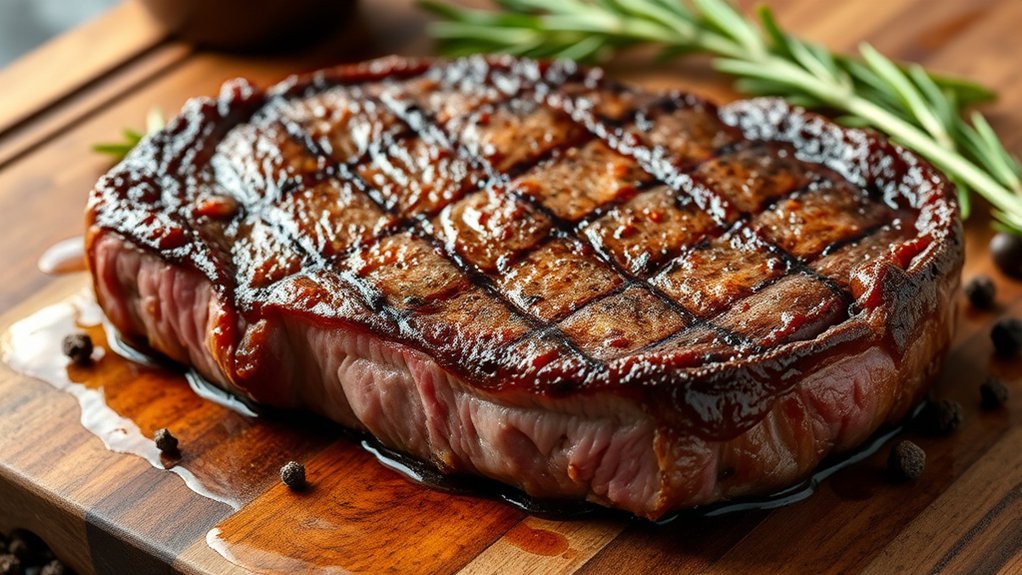
7 Tips to Make Beef Shoulder Steak Tender
Many home cooks find beef shoulder steak tough and challenging to enjoy perfectly. You’re not alone—making this cut tender can feel tricky, but with the right techniques, you can turn it into a delicious, juicy meal.
To make beef shoulder steak tender, start by understanding its tough fibers and use gentle cooking methods like braising or slow cooking.
Tenderize the meat physically with mallets or slicing against the grain, and marinate it with acidic ingredients for extra flavor and softness.
Control your cooking temperature carefully and aim for 190-205°F.
Rest the meat after cooking and slice properly to lock in juices.
Follow these tips, and you’ll uncover more expert techniques to perfect your steak.
Key Takeaways
– Use slow cooking methods like braising or sous vide to break down tough connective tissues.
This helps make the meat more tender and flavorful.
– Marinate with acidic ingredients and herbs to tenderize and add flavor.
A good marinade can work wonders in softening the meat.
– Slice the steak against the grain to shorten muscle fibers for easier chewing.
It makes a big difference in how tender the steak feels.
– Rest the meat after cooking to allow juices to redistribute and improve tenderness.
Just a few minutes can make your steak juicier and more enjoyable.
– Maintain consistent low temperatures during cooking to prevent toughness and ensure even doneness.
Cooking slowly and at low heat helps keep the steak tender throughout.
Why Is My Beef Shoulder Steak Tough?
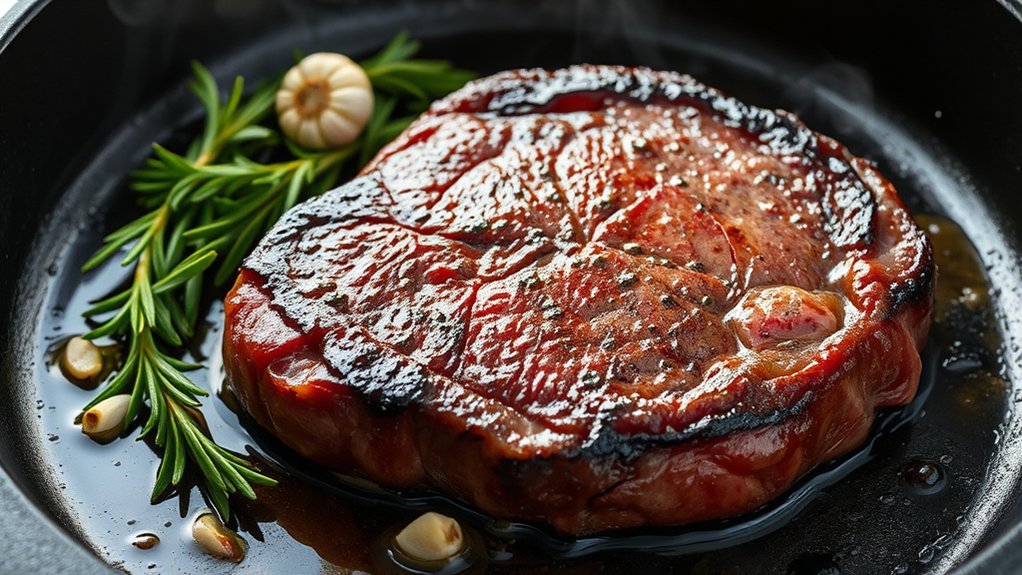
If your beef shoulder steak turns out tough, it’s often because it has more connective tissue and muscle fibers that need proper cooking to break down. This cut comes from a heavily used muscle, so it naturally has more collagen, which can make it chewy if not cooked right.
When you don’t give it enough time or use the right heat, those tough fibers stay intact, making the steak dry and hard. Overcooking can also make it tougher by tightening the fibers.
To avoid this, pay attention to cooking methods and timing. Slow cooking or braising work well because they help break down the connective tissues. Understanding this cut is key to turning it into a tender, flavorful steak.
How to Tenderize Beef Shoulder Steak Effectively
To effectively tenderize beef shoulder steak, start by choosing the right method based on your cooking plan.
First, consider mechanical tenderizing—use a meat mallet or fork to break down muscle fibers, making the steak more tender.
Second, opt for slow cooking methods like braising, which gently relaxes tough tissues over time.
Third, slice the steak thinly against the grain; this shortens muscle fibers and boosts bite.
Fourth, rest the meat after cooking. Allowing it to sit for a few minutes helps retain juices and improves tenderness.
Combining these techniques guarantees your beef shoulder steak becomes more palatable and tender, whether you’re grilling, braising, or frying.
Using these methods together ensures juicy, tender beef shoulder steak for any cooking style.
Pick the method that best fits your recipe and desired texture for the best results.
Marinate Your Shoulder Steak for Better Flavor and Tenderness
Marinating your shoulder steak is a simple way to boost both its flavor and tenderness. Soaking the meat in a tasty marinade lets the acids, enzymes, and seasonings seep deep into the muscle fibers.
This process helps break down tough proteins, making the steak more tender, while also infusing it with delicious flavors. Use ingredients like vinegar, citrus juice, soy sauce, or wine as your base, and add herbs, garlic, or spices for extra taste.
Keep the steak in the fridge while marinating for at least 1-2 hours, or up to 24 hours for best results. Just be careful not to over-marinade, as too long can make the meat mushy.
Marinating is a simple way to take your beef shoulder steak to the next level.
What Are the Best Cooking Methods for Tender Shoulder Steak?
To get your shoulder steak tender, try slow cooking methods like braising or using a slow cooker. These techniques help break down tough fibers and make the meat more enjoyable.
Marinating beforehand can also boost tenderness and flavor, giving your steak a nice boost before cooking.
Always watch the heat levels. Cooking too quickly or at too high a temperature can toughen the meat, so keep it gentle for the best results.
Slow Cooking Techniques
Slow cooking is one of the best ways to get tender, flavorful beef shoulder steak tips. By cooking it slowly, you break down connective tissues, making the meat melt-in-your-mouth tender.
To do this right, use a slow cooker or Dutch oven set to low heat. This ensures gentle, even cooking that keeps the meat moist.
Add enough liquid, like broth or sauce, to help keep the meat tender and juicy.
Cook for 6 to 8 hours so the collagen can fully break down.
Try not to lift the lid too often, as opening it releases heat and can extend the cooking time.
This method makes your beef shoulder steak irresistibly tender and packed with flavor. Patience is key—slow cooking turns tough cuts into a delicious, melt-in-your-mouth dish.
Marinate for Tenderness
Because shoulder steak can be tough, marinating it before cooking can really boost its tenderness and flavor. A good marinade helps break down muscle fibers and adds moisture, making the meat easier to chew.
Use acidic ingredients like vinegar, citrus juice, or wine, along with herbs and spices, to improve flavor and tenderize. Marinate the steak for at least a few hours or overnight for the best results.
Keep it refrigerated during this process to ensure food safety. Just be careful not to over-marinate, as acids can turn the meat mushy if left too long.
Once marinated, you can cook the steak using methods like grilling, broiling, or pan-searing. When done properly, these methods yield juicy, tender results.
Use Proper Heat Levels
Choosing the right heat level is key to getting a tender, juicy shoulder steak. High heat sears the meat quickly, locking in flavors, but overdoing it can make it tough.
Low and slow cooking helps break down connective tissue, making the steak tender. For the best results, try these methods:
- Searing on high heat for a few minutes per side to develop flavor.
- Broiling in the oven at high temperatures for rapid cooking.
- Sous vide at a precise, low temperature for several hours, then searing briefly.
- Slow roasting at low temperatures to tenderize without drying out.
Adjust the heat depending on your chosen method so you don’t overcook or undercook the steak. This way, your shoulder steak stays tender and full of flavor.
Use Resting and Slicing Techniques to Keep Your Steak Juicy
To keep your steak juicy and flavorful, it’s important to master resting and slicing techniques. After cooking, let your steak rest for about 5 to 10 minutes. This gives the juices time to redistribute throughout the meat, so they don’t spill out when you cut.
When you’re ready to slice, cut against the grain—look for the muscle fibers and slice perpendicular to them. This shortens the fibers, making each bite more tender and easier to chew.
Use a sharp knife to make clean, even cuts. This helps preserve the juices and keeps your steak moist. Avoid slicing too early, as cutting too soon releases juices and can make your steak drier.
Slow Cook and Braise for Fall-Off-The-Bone Tenderness
To get that fall-off-the-bone tenderness, you want to cook your beef shoulder steak tips low and slow. It’s all about giving the meat enough time to break down properly.
Be sure to add enough liquid to keep everything moist and stop the meat from drying out. Keeping the temperature steady throughout the process is key to getting the most tender results.
Low and Slow Cooking
Slow cooking transforms beef shoulder steak tips into tender, flavorful bites by breaking down connective tissues over low heat for several hours. This method ensures your meat becomes melt-in-your-mouth tender.
To make the most of low and slow cooking, set your slow cooker or oven to a low temperature, usually around 275°F to 300°F. Cook the meat for at least 4-6 hours, depending on thickness, to allow collagen to fully break down.
Avoid lifting the lid too often, as this releases heat and prolongs the cooking process. Check for tenderness by gently probing; your steak should easily shred or pull apart.
Patience is key. This technique guarantees juicy, fall-apart beef every time.
Use Adequate Liquid
Using enough liquid is key to getting fall-off-the-bone tenderness when slow cooking or braising beef shoulder steak tips. The liquid creates a moist environment that helps break down connective tissues, making the meat tender and flavorful.
You should cover the meat partially or fully with broth, water, or a tasty mixture to keep the moisture consistent. Don’t be stingy with the amount; too little liquid can cause the meat to dry out or burn.
As the steak cooks slowly, the liquid gently transfers heat and melts collagen, transforming tough cuts into tender bites. Keep an eye on the level and add more if needed during cooking to stay moist. Proper liquid levels ensure your beef shoulder steak becomes melt-in-your-mouth tender and delicious.
Maintain Consistent Temperature
Maintaining a consistent temperature throughout the cooking process is key to getting that fall-off-the-bone tenderness with beef shoulder steak tips. Fluctuations can make the meat tough or unevenly cooked.
To keep the temperature steady, use a reliable slow cooker or Dutch oven with a tight-fitting lid. Set the heat to low or keep it at a gentle simmer.
Try to avoid opening the lid too often, as it releases heat and can disrupt the cooking. Use a thermometer to keep an eye on the internal temperature, aiming for around 190°F to 205°F for the best results.
Common Mistakes That Make Shoulder Steak Tough: and How to Fix Them
One common mistake that makes shoulder steak tough is overcooking it, which causes the muscle fibers to seize up and become chewy. To fix this, avoid cooking it at high heat for too long. Instead, go for gentle methods like braising or slow roasting. These break down connective tissue and keep the meat tender.
Using a meat thermometer is a great tip to ensure you don’t cook the steak beyond the ideal internal temperature. Also, skipping the resting period after cooking lets juices escape, making the steak tougher. Always slice against the grain to shorten muscle fibers and improve tenderness.
Frequently Asked Questions
Can Dry Aging Improve the Tenderness of Beef Shoulder Steak?
Yes, dry aging can improve the tenderness of beef shoulder steak. When you dry age, natural enzymes break down muscle fibers, making the meat more tender. It also concentrates flavors, which enhances the taste.
However, shoulder steak is usually tougher than premium cuts. So, while dry aging can help, marinating or slow cooking might still be necessary for the best results. It’s a great way to boost both tenderness and flavor.
What Internal Temperature Indicates a Perfectly Tender Shoulder Steak?
You should aim for an internal temperature of around 135°F (57°C) for a perfectly tender beef shoulder steak. When you cook it to this level, the meat reaches medium doneness, making it juicy and tender without being tough.
Use a meat thermometer to check the temperature accurately. Once it hits 135°F, remove it from heat and let it rest for a few minutes to allow the juices to redistribute.
Are There Specific Herbs or Spices That Enhance Tenderness?
Yes, certain herbs and spices can help make beef shoulder steak more tender. Herbs like rosemary, thyme, and bay leaves contain natural enzymes that break down muscle fibers.
Marinating the steak with garlic, onion, and a little vinegar or citrus juice can also boost tenderness. These ingredients work together to make your steak more juicy and flavorful.
How Does the Thickness of the Steak Affect Tenderness Techniques?
Thicker steaks require different tenderness techniques because they need more time to cook evenly. You should consider marinating them longer or using slow-cooking methods like braising to break down connective tissues.
Searing the outside helps lock in juices, but be careful not to overcook the center. Using a meat thermometer is your best bet to reach the right internal temperature without drying out the steak.
Is It Better to Cook Shoulder Steak Quickly or Slow for Maximum Tenderness?
Cooking shoulder steak slowly often yields better tenderness because it breaks down connective tissues, making the meat more tender.
While quick cooking can work for tender cuts, shoulder steak benefits from low, slow heat to maximize tenderness and flavor.
You should opt for slow cooking methods like braising or simmering, especially if you want a melt-in-your-mouth texture.
Conclusion
By mastering marination, methods, and mindful resting, you’ll turn tough shoulder steaks into tender treasures. Avoid mistakes, welcome patience, and practice proper prep.
With each step, you’ll sharpen your steak skills, savor succulent bites, and surprise yourself with perfect, juicy results. Remember, consistent caring creates culinary classics.
So, stay savvy, stay steady, and serve up sensational steaks every time. Your dedication makes deliciousness definitely doable, especially when making beef shoulder steak tender.