10 Essential Tips to Organize Your Kitchen
Feeling overwhelmed by a cluttered kitchen? You’re not alone—many people struggle with keeping their space organized and functional. A messy kitchen can make cooking stressful and daily routines frustrating.
Luckily, with a few simple tips, you can turn your kitchen into a tidy, efficient haven.
To organize your kitchen, start by identifying clutter hotspots and routines that cause messes. Declutter and purge items you no longer need, and set up designated trash and recycling stations.
Maximize storage with clever solutions like vertical shelves, magnetic strips, and pull-out drawers. Organize by zones for efficiency and keep everything accessible.
Regular upkeep keeps your space tidy and safe. Keep exploring for more tips to turn your kitchen into a well-organized haven.
Key Takeaways
- Declutter regularly by removing expired items and duplicates. This helps create a more functional space.
- Use smart storage solutions like vertical shelves, magnetic strips, and stackable containers. These tricks maximize your space.
- Identify clutter hotspots and develop routines to clear countertops. Keeping surfaces tidy makes cooking so much easier.
- Schedule routine maintenance such as cleaning out the fridge and wiping surfaces. Regular upkeep helps maintain organization.
- Replace worn or damaged tools and appliances whenever needed. This ensures your kitchen stays safe and efficient.
Identify Your Kitchen’s Biggest Clutter Challenges
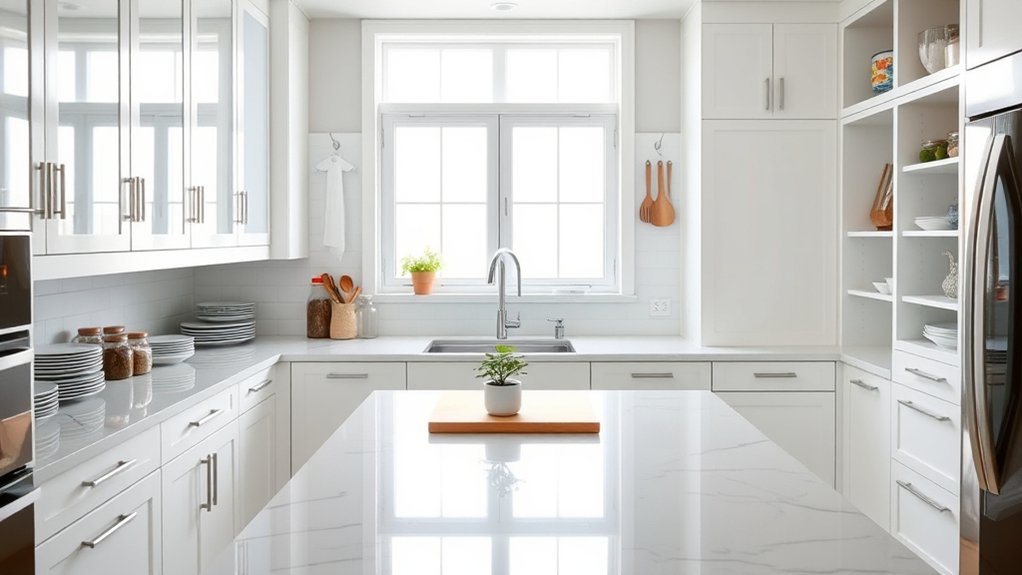
Understanding where your kitchen tends to get most cluttered is the first step toward organizing effectively. Pay attention to everyday patterns—do your countertops fill with mail, grocery bags, or utensils? Are your cabinets overflowing with duplicate items or expired food?
Identifying these trouble spots helps you target specific areas that need attention. Take note of frequently used zones like near the stove or sink, where clutter can quickly build up. Also, observe where items tend to pile up or get lost, such as in corner cabinets or drawers.
Recognizing these patterns gives you insight into your habits and storage shortcomings. With that awareness, you can plan to tame chaos, making your kitchen more functional and easier to maintain.
Declutter and Purge Unnecessary Items
Start by figuring out which items you no longer use or need, and be honest with yourself about what’s truly essential.
Set clear goals for your decluttering process to help you stay focused and motivated.
When you get rid of unnecessary things, your kitchen will feel more organized and functional.
Identify Items for Removal
The first step in organizing your kitchen is to identify items that no longer serve a purpose. Start by checking your cabinets and drawers for things you rarely use or haven’t touched in months. Look for expired food, duplicate utensils, or broken appliances. Clearing out these items creates space and reduces clutter.
Picture tossing old, expired spice jars gathering dust, broken or mismatched Tupperware lids, and unused kitchen gadgets taking up space. As you sort through, be honest about what you truly need.
Items that no longer bring value or function only add chaos. Removing unnecessary things helps create a cleaner, more functional space. It makes it easier to find what you need and keep your kitchen organized.
Set Decluttering Goals
Setting clear decluttering goals helps you stay focused and motivated throughout the process. Start by figuring out what you want to achieve, like freeing up counter space, organizing drawers, or cutting down on duplicate items.
Break your goals into smaller, manageable steps. For example, you might sort one cabinet at a time or set a timeline for finishing. Be specific about what to keep, donate, or recycle.
Set deadlines to help you avoid procrastination. Prioritize items you rarely use or no longer need. Establishing concrete goals makes the process less overwhelming.
Set Up a Recycling and Trash Station
Creating an efficient recycling and trash station is key to keeping your kitchen tidy and eco-friendly. Pick a spot that’s easy to access but out of the way of daily traffic.
Use multiple containers to separate recyclables, compost, and trash, making sorting simple. Visualize your station with a sleek bin for plastics and metals, a compost bin for organic waste, and a smaller trash can for general waste.
Label each container clearly to avoid confusion. Consider color-coded bins for quick identification. Keep trash bags nearby for easy disposal, and ensure your station stays clean and odor-free.
This setup encourages regular sorting, reduces mess, and promotes eco-friendly habits in your kitchen.
Maximize Storage With Clever Solutions
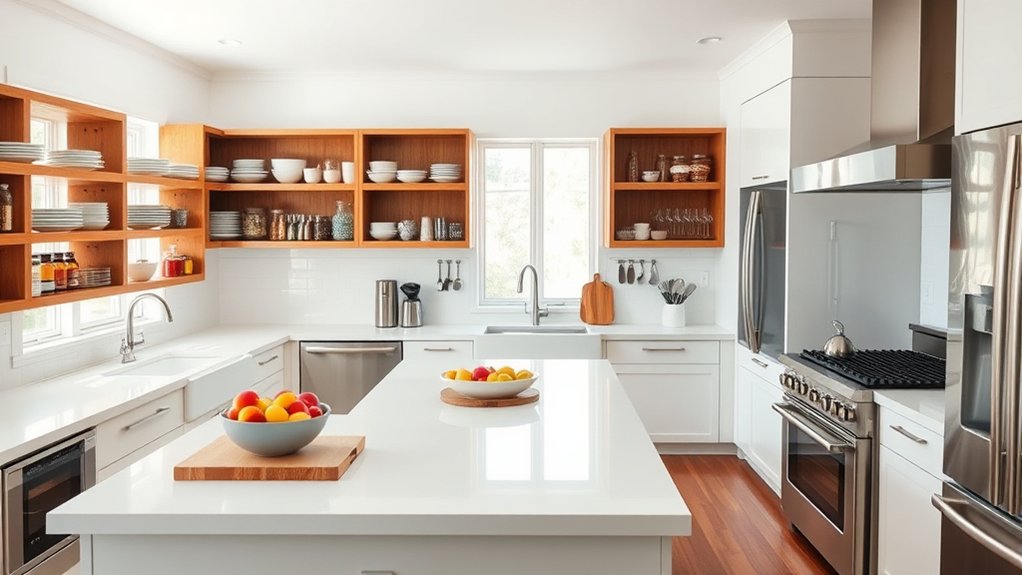
Maximizing storage in your kitchen often requires thinking outside the box to make the most of every inch. Use vertical space by installing shelves or hanging racks for pots, pans, and utensils.
Magnetic strips on the wall can hold knives and metal tools, freeing up drawer space. Consider pull-out shelves or baskets inside cabinets to access items easily.
Over-the-door organizers work well for spices, cleaning supplies, or small gadgets. Utilize the insides of cabinet doors with hooks or small racks for measuring cups, oven mitts, or cutting boards.
Stackable containers and nesting bowls help save space on countertops or in cabinets. With clever solutions, you’ll create a more organized, functional kitchen that maximizes every available inch.
Organize Your Kitchen by Zones for Efficiency
Organizing your kitchen by zones can really boost your efficiency and make cooking more enjoyable. Grouping related items together helps minimize movement and saves you time.
Think about creating specific zones for different tasks like food prep, cooking, and cleanup. For example, your prep zone might include a cutting board, knives, and mixing bowls.
Your cooking zone could feature pots, pans, and utensils arranged for easy access while you cook. The cleanup area might hold trash cans, dish soap, and drying racks all together for quick cleanup.
Use Clear Containers and Labels for Food Storage
Using clear containers and labels for food storage can really boost your kitchen organization.
When you store items in see-through containers, you can quickly spot what’s inside without opening multiple packages, saving you time and cutting down clutter.
Pick uniform containers for a neat, cohesive look. Label each one with the contents and date to make sure you use everything before it expires, helping prevent waste.
Use a consistent font and clear labels so they’re easy to read. This system keeps your space clean and functional, making meal prep faster and easier.
Plus, it encourages you to keep your kitchen tidy since everything has its own spot. Overall, clear containers and labels create an organized, accessible environment that makes cooking simpler.
Arrange Drawers and Pantry Items for Easy Access
A well-arranged drawer or pantry can really make your kitchen run more smoothly. To do this, group similar items together—like baking supplies with baking, snacks with snacks, and spices with spices.
Use dividers or small containers to keep everything neat and prevent clutter. Place the things you use most often at the front for easy access, and tuck less-used items toward the back.
Visualize your space with ideas like storing everyday staples at eye level for quick grabbing, using clear containers so you can see what’s inside, and keeping small items like utensils or spice packets in dedicated sections.
This setup saves you time, cuts down on frustration, and keeps your kitchen tidy and functional. Proper organization makes cooking more efficient and enjoyable.
Maintain Your Organization With Regular Upkeep
To keep your kitchen organized, set aside time for routine cleaning and tidying up. Regularly check for clutter and remove anything you no longer need.
Replace worn or damaged items promptly. Staying consistent with these steps helps your space stay functional and clutter-free.
Schedule Routine Cleaning
Sticking to a regular cleaning schedule is key to keeping your kitchen organized. When you set specific times for cleaning, you avoid messes piling up and clutter taking over.
Each routine session helps keep surfaces spotless, appliances fresh, and countertops clear. To make it easier, try these simple tasks:
- Wipe down counters and stove after each meal to keep grime at bay
- Empty the trash and recycling to prevent odors and overflow
- Clean out the fridge weekly, discarding expired items and wiping shelves
Check for Clutter
Regularly checking for clutter keeps your kitchen organized and prevents chaos from creeping back in. Set aside a few minutes weekly to evaluate your counters, drawers, and shelves. Look for items that are out of place or no longer needed, and put them away or discard them.
Clear off your countertops, leaving only essentials like the coffee maker or fruit bowl. This quick assessment helps you spot messes early before they pile up. Keep a designated bin or box for items to donate or recycle.
Staying consistent with these checks prevents buildup and keeps your kitchen functional. A clutter-free space not only looks better but also makes cooking and cleaning more efficient. Regular upkeep guarantees your organized kitchen stays that way long-term.
Replace Worn Items
Inspect your kitchen tools and gadgets periodically to catch signs of wear and tear early. Worn items can compromise safety and efficiency in your space. When you notice dull knives, cracked cutting boards, or malfunctioning appliances, it’s time to replace them.
Visualize tossing out dull, rusted knives that struggle to cut, broken or warped measuring cups, and faulty blender parts that leak or don’t work. Replacing these items keeps your kitchen safe and functional. It also prevents damage to other tools and avoids food contamination.
Regularly upgrading worn-out equipment guarantees your workspace remains organized and efficient. Don’t wait until minor issues become major problems. Stay proactive and keep your kitchen running smoothly with fresh, reliable tools.
Incorporate Smart Storage Tools and Accessories
To maximize space and efficiency in your kitchen, incorporating smart storage tools and accessories is a game-changer. Use stackable containers to save cabinet space and keep ingredients fresh.
Install pull-out shelves or drawers for easy access to pots, pans, and utensils. Magnetic strips hold knives securely, freeing up drawer space and keeping knives safe.
Consider tiered shelves or lazy Susans to make the most of corner cabinets. These simple upgrades can really make a difference in how organized and functional your kitchen feels.
Troubleshoot Common Kitchen Clutter Problems
Clutter in the kitchen can quickly derail your organization efforts, making it hard to find what you need and adding unnecessary stress. To troubleshoot common clutter problems, start by figuring out where the mess is coming from.
For example, items piling up on countertops, disorganized drawers, or unopened packages can all be culprits. Once you know the main issues, try simple solutions like clearing countertops daily and storing items properly.
Regularly sort through drawers to toss outdated utensils or expired food. Using labeled containers can also help keep pantry items neat and easy to find. Small steps like these can make a big difference in keeping your kitchen tidy.
Frequently Asked Questions
How Often Should I Reassess My Kitchen Organization?
You should reassess your kitchen organization every few months or whenever you notice clutter piling up or things becoming hard to find. Regular check-ins help you see what’s working and what isn’t, making it easier to make adjustments.
If you’ve recently added new appliances or cookware, take some time to reorganize. Staying proactive keeps your kitchen functional, efficient, and clutter-free, so it continues to serve your needs effectively.
What Are Eco-Friendly Options for Kitchen Waste Disposal?
You can choose to compost biodegradable waste and set up a compost bin in your backyard. It’s an easy way to turn kitchen scraps into nutrient-rich soil.
Use recycling bins for paper, plastic, and glass, and make sure they’re clearly labeled so everyone knows what goes where.
Think about investing in a food waste disposer to safely break down organic scraps, reducing mess and odor.
Also, opt for eco-friendly trash bags made from biodegradable materials — it’s better for the environment.
How Can I Prevent Clutter From Accumulating Again?
You can easily prevent clutter from piling up again by establishing simple routines.
It’s ironic how just putting things back in their designated spots and decluttering regularly can save you hours of frustration later.
Make a habit of tidying as you go, avoid hoarding duplicates, and use storage solutions that make sense.
Consistency is key. If you stay on top of it, your kitchen stays organized without much effort.
Which Storage Solutions Work Best for Small Kitchens?
Opt for vertical storage like wall-mounted shelves and hanging racks to make the most of space in your small kitchen. Use stackable containers and drawer dividers to keep items organized and easy to find.
Think about installing magnetic strips for knives and metal utensils. Under-cabinet hooks are great for hanging pots and pans without taking up extra space.
Compact, multi-purpose furniture and clear containers also help maximize every inch. These solutions keep your kitchen tidy and functional without creating clutter.
How Do I Involve Family Members in Maintaining Organization?
Getting your family on board is key to keeping your kitchen organized. You can start by involving them in the process, asking for their input, and assigning specific tasks like tidying up after meals or putting away dishes.
Make it fun and teamwork-oriented so it doesn’t feel like a chore. Remember, a shared effort keeps the kitchen running smoothly, and soon everyone will be pitching in without a second thought.
Conclusion
Think of your kitchen as a vibrant garden. With regular pruning and careful tending, it flourishes and becomes a sanctuary of order and ease.
By tackling clutter and organizing thoughtfully, you create a space where everything has its place. Your daily tasks will bloom effortlessly in such a well-kept environment.
Keep up with your maintenance, and your kitchen will remain a lush, inviting oasis. It will be ready to serve up delicious moments and memories every day.
Organizing your kitchen isn’t just about neatness—it’s about making your time there more joyful and stress-free. Embrace these tips to turn your kitchen into a true haven.