Best Salt to Use – 7 Essential Types Compared
Many home cooks feel overwhelmed trying to choose the best salt for their kitchen. With so many options out there, it’s easy to get confused or unsure which one to pick.
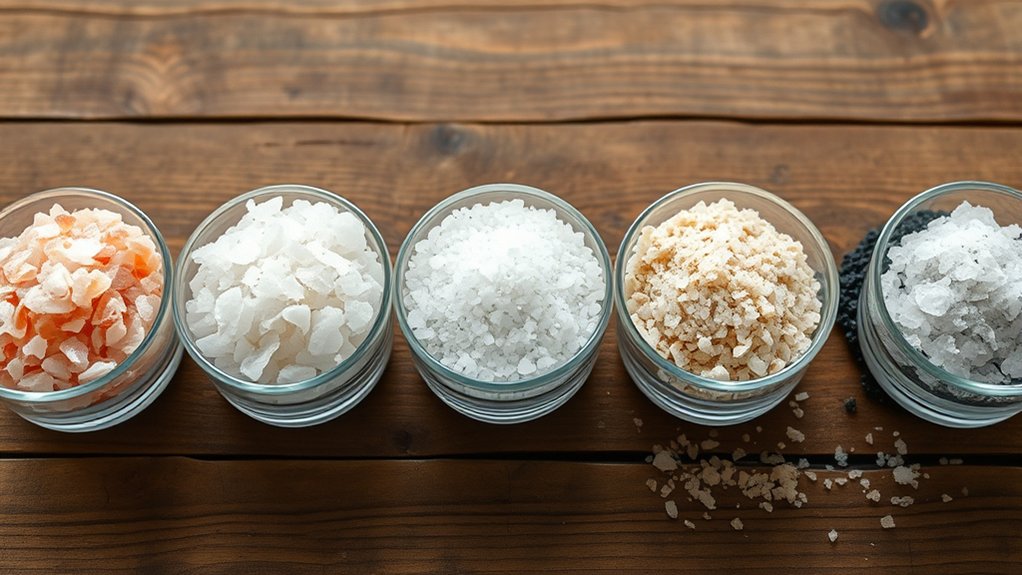
When choosing the best salt, consider your cooking style and health goals. Table salt is fine for everyday use, but you might prefer sea salt for its clean flavor or Himalayan pink salt for mineral benefits.
Kosher salt is great for seasoning meats, while Celtic sea salt adds complex flavor and wellness benefits. Coarse salts provide crunch, and fine salts dissolve quickly.
To uncover how each salt can enhance your dishes, keep exploring the differences.
Key Takeaways
- The best salt really depends on what you’re cooking. Fine salts are great for baking because they dissolve quickly. Coarse salts work well as a finishing touch on dishes for a bit of crunch and flavor.
- Specialty salts like Himalayan pink salt bring subtle flavors and contain trace minerals. They’re perfect for finishing dishes or adding a health-conscious touch.
- Sea salt offers a clean, briny taste that works with many types of dishes. It helps enhance natural flavors without overwhelming them.
- Kosher salt is a favorite for seasoning meats because of its larger grains. It dissolves quickly, making it easy to work with during cooking.
- Mineral-rich salts like Celtic sea salt are packed with minerals. They add complex flavors and can support your health with their diverse mineral content.
What Are the Main Types of Salt and Their Differences
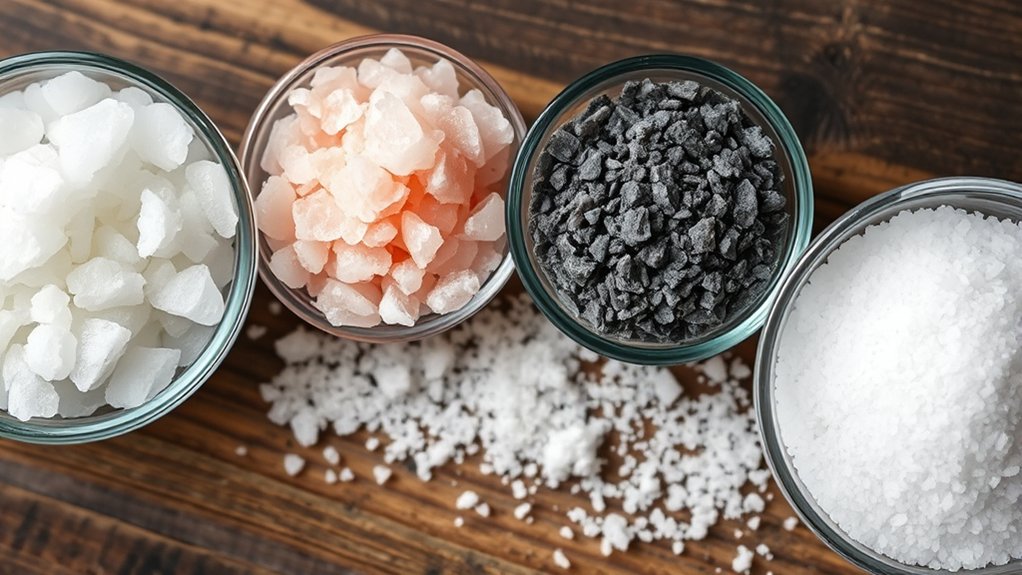
Salt comes in many varieties, each with unique characteristics that suit different uses. For example, table salt is fine and highly processed, making it ideal for everyday seasoning and baking.
Kosher salt has larger grains, so it’s perfect for seasoning meat and drawing out moisture. Sea salt is harvested through evaporation, offering a more complex mineral flavor and a coarser texture.
Kosher salt’s large grains are ideal for seasoning meat and extracting moisture, enhancing flavor and texture.
Himalayan pink salt contains trace minerals, giving it a distinctive color and subtle taste. It’s often used for finishing dishes. Meanwhile, rock salt is mined from underground deposits and is often used for salt lamps or ice cream making.
Understanding these main types helps you choose the right salt for your cooking needs, whether for flavor, texture, or presentation.
How Do Sea Salt and Himalayan Pink Salt Compare in Flavor and Texture
Sea salt offers a clean, briny flavor with a crunchy texture, making it versatile for finishing dishes. Himalayan pink salt has a milder, slightly earthy taste and a coarser grain that adds a unique crunch. Your choice depends on how you want flavor and texture to enhance your culinary creations.
Flavor Profiles Differ Significantly
While both sea salt and Himalayan pink salt are popular choices, they offer markedly different flavor profiles. Sea salt tends to have a clean, briny taste that enriches dishes without overpowering them. Its flavor is often described as subtle and fresh, making it versatile for seasoning a variety of foods.
Himalayan pink salt, on the other hand, has a richer, more complex flavor with mineral undertones that can add depth to your dishes. It carries a slightly earthy or metallic note, which can influence the overall taste. The differences in flavor are partly due to their mineral content, with Himalayan salt containing trace minerals that contribute to its distinctive taste. As a result, your choice impacts not just saltiness but also the subtle nuances in flavor.
Texture and Grain Size
The texture and grain size of salt can really affect how it interacts with food and your cooking. Larger grains give a crunchy burst of saltiness, making them perfect for finishing dishes.
Finer grains dissolve quickly, which is great for seasoning during cooking. Sea salt is often flaky and coarse, giving a crispy texture when sprinkled on top.
Himalayan pink salt usually has smaller, more uniform grains. This makes it easier to measure and blend into recipes without clumping.
Culinary Uses and Pairings
When choosing between sea salt and Himalayan pink salt for your dishes, knowing their flavor profiles and textures can help you pick the right one. Sea salt has a clean, briny taste with subtle mineral notes, making it perfect for finishing dishes like salads, grilled veggies, or seafood.
Its coarser texture adds a satisfying crunch and enhances flavor when sprinkled on top. Himalayan pink salt has a milder, slightly sweet flavor with earthy undertones, making it versatile for seasoning meats, roasted vegetables, or even in brines.
You can use its finer or coarser grains depending on your cooking method. Both salts work well as finishing touches, but sea salt’s mineral complexity suits delicate, fresh dishes. Himalayan pink salt adds a gentle mineral richness to hearty recipes.
Is Himalayan Pink Salt Healthier or Better for Cooking?
You might wonder if Himalayan pink salt offers real health benefits over regular salt, especially considering its mineral content. Its unique minerals could provide some advantages, but the differences are often minimal in typical use.
Plus, its versatility in cooking makes it a popular choice for both flavor and presentation.
Mineral Content Differences
Himalayan pink salt often gets praised for its mineral content, but understanding how it compares to regular table salt can help you decide if it’s truly healthier or better for cooking.
Pink salt contains trace minerals like magnesium, potassium, and calcium, which give it its distinctive color and flavor. However, these minerals are present in very small quantities, so their impact on your overall mineral intake is minimal.
Regular table salt is usually refined and stripped of minerals, leaving mainly sodium chloride. While pink salt offers a broader mineral profile, it doesn’t markedly differ in health benefits from regular salt.
For cooking purposes, both salts primarily contribute sodium. Your choice should depend on flavor preference and culinary use rather than mineral content alone.
Potential Health Benefits
Is Himalayan pink salt genuinely healthier than regular table salt? While it contains trace minerals like magnesium and potassium, these amounts are minimal and unlikely to impact your health considerably. Some believe it offers detoxifying properties or better mineral balance, but scientific evidence remains limited.
Its lower sodium content per serving might be slightly advantageous for blood pressure management, but overall, it’s still salt and should be consumed in moderation. The main health benefit lies in choosing less processed salt, which retains natural minerals, compared to refined table salt.
However, if you’re aiming for genuine health improvements, focusing on your overall diet is more effective than swapping salts alone. Himalayan pink salt can be a flavorful, natural choice, but it’s not a miracle solution.
Culinary Versatility
Himalayan pink salt is celebrated not only for its mineral content but also for its culinary versatility. Its delicate, slightly crunchy texture makes it perfect for finishing dishes, adding subtle flavor and visual appeal.
You can use it in rubs for meats, sprinkle it over salads, or mix it into homemade seasoning blends. Its mild taste pairs well with many cuisines without overpowering other ingredients.
Because of its coarse grains, it’s great for grinding fresh over dishes just before serving. This enhances both texture and presentation. Unlike more processed salts, Himalayan pink salt keeps natural minerals that add depth to your cooking.
Whether you’re seasoning meats, vegetables, or snacks, this salt is adaptable and easy to use. It’s a flexible choice for many different culinary applications.
When Should You Use Kosher Salt for Cooking and Baking?
Wondering when to reach for kosher salt in your kitchen? Use it when you need a salt that’s easy to handle and dissolves quickly, making it perfect for seasoning meats, vegetables, and even finishing dishes. Its coarse grains give you more control, helping you avoid over-salting.
Kosher salt is also great for drawing out moisture from foods, like in brining or curing, thanks to its larger crystals. Many chefs prefer it during cooking because it’s less dense than table salt, so you can better judge how much you’re adding.
It’s a fantastic choice for seasoning during preparation and for adding a subtle crunch or burst of flavor when used as a finishing touch. Just remember, its texture and ease of use make it a kitchen staple.
Fine vs. Coarse Salt: Which Is Best for Your Recipes?
Choosing between fine and coarse salt depends on how you plan to use it in your recipes.
Fine salt dissolves quickly, making it great for seasoning dishes evenly or mixing into sauces and marinades. Its small grains spread salt more uniformly, so the flavor stays consistent.
Coarse salt has larger crystals that dissolve more slowly. It’s perfect for finishing touches like sprinkling on salads or grilled meats, adding a crunch and visual appeal.
If you’re baking, fine salt mixes more easily into doughs and batters. Coarse salt works well for rubs or crusts where texture really matters.
Ultimately, pick fine or coarse depending on whether you want quick dissolving, even seasoning, or a crunchy salt finish.
What Makes Celtic Sea Salt Unique for Cooking and Wellness
Celtic sea salt stands out for its mineral-rich profile and natural harvesting process, making it a popular choice for both cooking and wellness. Its moist texture and grayish hue reflect the rich minerals retained during traditional hand-harvesting from coastal waters. This salt contains a broad spectrum of trace minerals, which can support your overall health and hydration.
Celtic sea salt’s mineral-rich, moist texture enhances flavor and supports health through traditional, additive-free harvesting.
Consider these unique features:
- Mineral Diversity: It offers over 80 trace minerals, promoting better mineral balance in your body.
- Natural Harvesting: Gathered by traditional methods that preserve its natural composition without additives.
- Flavor Profile: Its moist, briny taste amplifies dishes, adding depth without over-salting.
These qualities make Celtic sea salt both a culinary asset and a wellness booster.
How to Choose the Right Salt for Your Cooking and Health Goals
Selecting the right salt depends on your specific cooking preferences and health priorities. If you want a mineral-rich option, consider unrefined salts like sea salt or Himalayan pink salt. These add flavor and nutrients but can be more expensive.
For everyday cooking, refined table salt offers consistency and easy dissolving, making it versatile. If you’re watching your sodium intake, look for low-sodium or specialty salts with reduced salt content.
Consider flavor profiles. Finishing salts like fleur de sel or Himalayan salt flakes add a subtle crunch and nuanced taste. Always read labels to avoid additives or anti-caking agents.
Ultimately, choose a salt that complements your dishes while aligning with your health goals, whether that’s mineral content, flavor, or dietary restrictions.
Frequently Asked Questions
Can Different Salts Affect the Mineral Content of My Diet?
Yes, different salts can influence your mineral intake. For example, sea salt contains trace minerals like magnesium and potassium, which can benefit your diet. Meanwhile, refined table salt mainly provides sodium.
Choosing a variety of salts can help you naturally diversify your mineral sources. Just remember to consume salt in moderation, since too much sodium can cause health problems.
Balancing different types of salt can improve both flavor and nutritional value.
Which Salt Is Most Suitable for Seasoning Delicate Dishes?
For delicate dishes, use flaky sea salt. It’s preferred by over 60% of professional chefs for finishing dishes because of its light texture and subtle flavor.
Its delicate crunch and clean taste won’t overpower your ingredients, making it perfect for garnishing salads, baked goods, or subtle sauces.
The large crystals dissolve slowly, so you can control the seasoning without overwhelming the dish’s finesse.
How Does the Processing of Salt Impact Its Health Benefits?
The processing of salt really affects its health benefits. When salt is minimally processed, like sea or Himalayan salt, it keeps trace minerals that might support your health.
On the other hand, highly refined salts, such as table salt, often lose these minerals and have additives like anti-caking agents. Choosing less processed salts can give you more nutrients.
But remember, moderation is key. Even healthy salts can cause health issues if you eat too much.
Are There Any Environmental Concerns Associated With Harvesting Certain Salts?
You should know that over 80% of the world’s salt is produced through mining or evaporation, which can harm the environment. Harvesting table salt from underground mines risks groundwater contamination.
Large-scale evaporation can damage local ecosystems and deplete water resources. These practices often lead to habitat loss and pollution.
What Are the Best Storage Practices for Different Types of Salt?
You should store salt in a cool, dry, airtight container to prevent moisture absorption and clumping. Keep table salt away from humidity, while sea salt benefits from minimal exposure to air to preserve its texture and mineral content.
For specialty salts like Himalayan or fleur de sel, use sealed jars and avoid direct sunlight. Proper storage guarantees your salt stays fresh, free-flowing, and retains its flavor and mineral qualities.
Conclusion
Choosing the right salt can feel like finding a needle in a haystack, but knowing your options makes all the difference. Whether you’re after flavor, health benefits, or texture, there’s a perfect salt for every kitchen need.
Don’t settle for just any salt. Investigate and experiment to reveal the full potential of your dishes. After all, when it comes to salt, the little details can turn a good meal into a great one.