How Many Ounces of Egg White Are in One Egg?
Many people struggle with figuring out exactly how much egg white is in a single egg, especially when precision matters for recipes or nutrition tracking.
You’re not alone—getting the right measurement can be tricky, but it’s definitely doable with a little guidance.
A typical large egg contains about 1 to 1.25 ounces of egg white, which most recipes use as a standard.
If you’re working with extra-large eggs, expect around 1.4 to 1.6 ounces.
Smaller eggs like quails only have about 0.3 to 0.4 ounces.
To guarantee perfect results, it’s helpful to measure accurately, especially if you’re aiming for precise nutrition or baking consistency.
Keep going to uncover more tips on measuring and adjusting egg whites effectively.
Key Takeaways
- A typical large egg contains about 1 to 1.25 ounces of egg white.
- Extra-large eggs usually have 1.4 to 1.6 ounces of egg white.
- Duck eggs contain approximately 1.7 to 2.0 ounces of egg white.
- Quail eggs have roughly 0.3 to 0.4 ounces of egg white.
- Using a digital scale provides the most accurate measurement of egg white weight.
How Much Egg White Is in a Typical Large Egg?
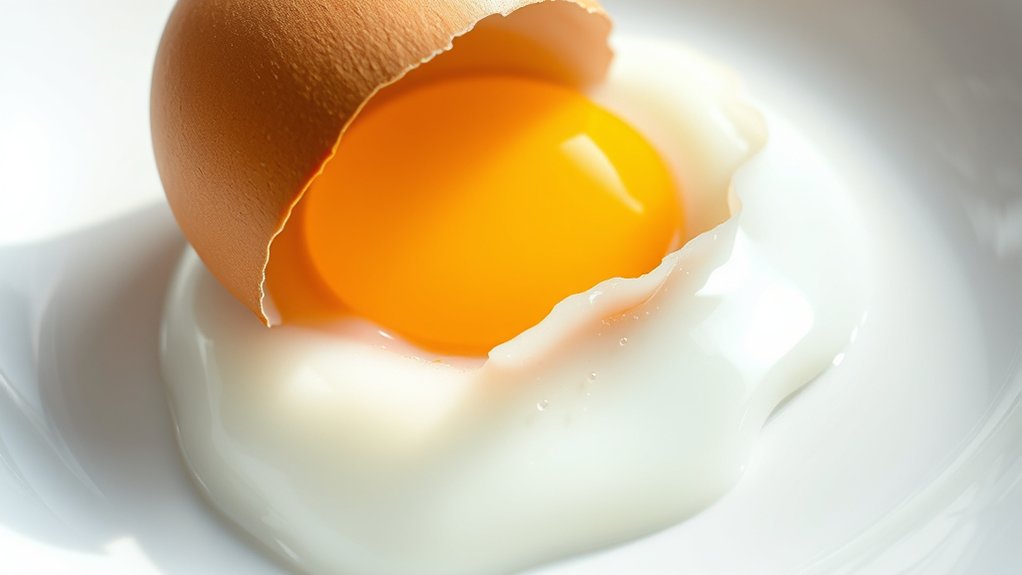
A typical large egg contains about 1 to 1.25 ounces of egg white. When you crack open a large egg, most of the clear, viscous liquid you see is egg white.
This part is mostly protein, with minimal fat and carbs. The exact amount can vary slightly depending on the egg’s age and the hen’s diet, but generally, you can expect around one ounce of egg white per large egg.
If you’re measuring for a recipe or preparing a specific dish, knowing this helps you estimate how much egg white you’ll need or have leftover. Keep in mind that the egg white is the same in most large eggs, making it a reliable measurement for cooking and baking purposes.
Egg White Amounts by Egg Size and Type
Egg white amounts vary depending on the egg’s size and type, so your recipe results can differ.
Larger eggs tend to have more egg white, while different breeds or organic eggs may produce slightly different volumes.
Knowing these variations helps you measure accurately for your cooking or baking needs.
Egg Size Variations
The size of an egg really affects how much egg white it has. Bigger eggs contain more white, while smaller ones have less.
Here’s a quick breakdown of how egg size influences egg white quantities:
- Small eggs, like peewee or small, have about 2-3 tablespoons of egg white.
- Medium eggs, which are large, usually have around 3-4 tablespoons.
- Large eggs typically contain about 4-5 tablespoons.
- Extra-large and jumbo eggs can have 5-6 or more tablespoons of egg white.
White Volume by Type
Across different egg types and sizes, the amount of egg white you can expect varies quite a bit. For example, hen eggs produce the standard white volume, while specialty eggs like duck or quail eggs have different amounts.
Typically, large hen eggs contain about 3 to 4 tablespoons of egg white. Duck eggs tend to have slightly more, and quail eggs less. Here’s a quick comparison:
| Egg Type | Typical White Volume (oz) |
|---|---|
| Large Hen | 1.1 – 1.4 |
| Extra Large | 1.4 – 1.6 |
| Duck | 1.7 – 2.0 |
| Quail | 0.3 – 0.4 |
Knowing these differences helps you measure accurately for recipes or nutritional needs.
How to Measure Egg Whites Perfectly for Your Recipes
To measure egg whites accurately, start by using clear measuring tools so you can see the exact amount. Carefully separate the eggs to avoid yolk contamination, which can affect your measurement.
For the most precision, weigh the egg whites instead of relying solely on volume. This is especially helpful in recipes that need exact proportions.
Use Clear Measuring Tools
Using clear measuring tools is essential for accurately measuring egg whites in your recipes. Transparent measuring cups or liquid measuring spoons let you see the exact amount, which helps reduce errors.
To get the best results, use a liquid measuring cup for precise volume, especially when measuring larger quantities. Fill the cup or spoon to the desired line, making sure it’s at eye level for accuracy.
Avoid guessing by overfilling or underfilling—just use the measurement lines as your guide. If needed, measure multiple times to ensure consistency, especially when working with delicate recipes.
Separate Eggs Carefully
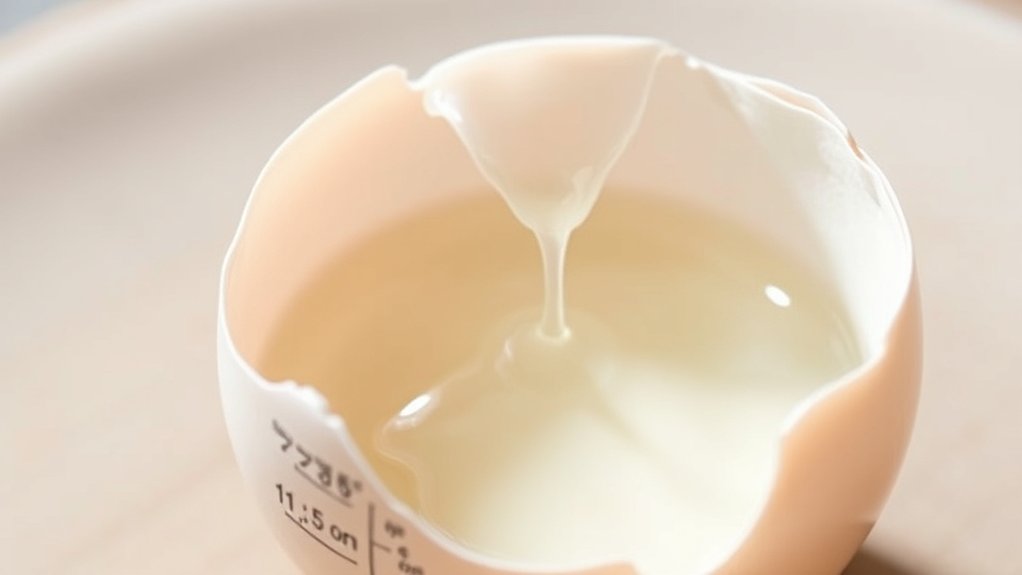
Careful separation of eggs guarantees you get pure egg whites without any yolk contamination, which is essential for accurate measurement. To do this, crack the egg gently on a flat surface, then hold it over a bowl. Use your fingers or an eggshell half to transfer the egg white into the bowl, avoiding contact with the yolk.
If any yolk slips in, remove it immediately with a clean spoon or shell piece. Work slowly and steadily to prevent breaking the yolk prematurely. Keep the yolk separate if you’re only measuring egg whites.
Using a steady hand and clean tools guarantees you won’t accidentally add yolk, which could throw off your measurement and affect your recipe’s consistency. Precision here makes all the difference in your final dish.
Weigh for Accuracy
Measuring egg whites by weight is more accurate than using volume, especially when recipes need precise proportions. For the best results, follow these steps:
- Use a digital kitchen scale for precise measurement.
- Crack the egg carefully, avoiding excess shell or yolk contamination.
- Place a small bowl or container on the scale and tare it to zero.
- Pour the egg white into the container until you reach the desired weight.
This method helps ensure consistency, especially in baking or recipes that require exact egg white amounts. Weighing avoids the variability of volume measurements and gives you confidence in your results every time. Precision in measuring is key to perfecting your culinary creations.
Why Exact Egg White Measurements Matter for Cooking and Nutrition
Accurately measuring egg whites is key because even small changes can really affect your cooking or baking results. Using the right amount helps ensure your recipes turn out just as you want, whether you’re making fluffy meringues or dense cakes.
Getting the measurement right also matters for nutrition. Egg whites are low in calories but high in protein. Overestimating can make your dish too protein-heavy or moist, changing the texture and flavor.
On the other hand, underestimating might lead to a dry or weakly structured dish. Sticking to precise measurements helps you balance ingredients and get consistent results every time.
Whether you’re on a specific diet or just want reliable outcomes, measuring egg whites accurately makes a big difference in both your cooking success and health benefits.
Common Mistakes When Measuring Egg Whites: and How to Avoid Them
Many people make common mistakes when measuring egg whites, which can throw off your recipes and affect the final result. First, avoid using the shell as a measuring tool because it’s inaccurate.
Second, don’t forget to separate the egg carefully to prevent yolk contamination, which can change the volume of egg whites. Third, resist overfilling your measuring cups; too much liquid can skew your measurements.
Fourth, never estimate by eye. Always use a proper measuring cup for accuracy. Also, verify the egg whites are at room temperature if the recipe calls for it, as cold whites can be denser and less accurately measured.
How Egg White Quantities Vary in Baking and Cooking
Egg white quantities can vary greatly depending on the recipe and cooking method, which can affect the final result if you don’t adjust correctly. In baking, some recipes like meringues or soufflés need exact amounts for stability and fluffiness, so even small differences matter.
When making smoothies or omelets, using more or fewer egg whites can change the flavor and texture. You might need to tweak other ingredients to get it just right. For baked goods like cakes or muffins, inconsistent egg white amounts can influence how well they rise and how moist they turn out.
Also, cook time and temperature might need to be adjusted based on how much egg white you’re using. Knowing these variations helps you adapt recipes so you get the perfect result, whether you’re baking a delicate dessert or whipping up a quick breakfast.
Using Egg White Measurements for Meal Prep Success
When prepping meals ahead of time, knowing exactly how much egg white you’re using can really help with consistency and portion control. Accurate measurements make it easier to hit your nutritional goals and cut down on waste.
To get the most out of your meal prep, try using a kitchen scale to measure egg whites precisely, especially when preparing multiple servings at once. Store the egg whites in airtight containers to keep them fresh for several days.
Don’t forget to label your containers with the weight or number of eggs used. This makes it super easy to grab the right amount later. Incorporate the measured egg whites into recipes for breakfasts, smoothies, or omelets to ensure each meal has the perfect portion.
Adjusting Recipes Based on Egg White Quantities
Adjusting recipes based on egg white quantities means you’ll need to tweak other ingredients to keep the right texture and flavor. If you use more or less egg whites than the recipe calls for, adjust the liquids accordingly.
For example, using fewer egg whites might make baked goods less moist, so you can add a bit of milk or water to compensate. On the other hand, extra egg whites can make things wetter, so reduce liquids slightly to avoid a dense or gummy texture.
You might also need to adjust dry ingredients like flour or sugar to balance the structure and sweetness. Always taste and test as you go to make sure your dish keeps its intended consistency and flavor despite the changes.
Frequently Asked Questions About Egg White Measurements
Understanding how much egg white you get from a single egg can help you make precise adjustments in your recipes. If you’re wondering about common measurements, here are some FAQs:
1. How many ounces of egg white are in one large egg?
Typically, about 1 to 1.1 ounces of egg white.
2. Can I use egg white from a carton instead of fresh eggs?
Yes, but check the label for liquid egg whites’ weight per serving.
3. How do I measure egg whites accurately?
Use a kitchen scale or measuring cup for precise measurement.
4. Is there a difference between yolk and white measurements?
Yes, yolks are heavier; whites are usually about half the weight of the entire egg.
Knowing these details helps guarantee your recipes turn out perfect every time.
Frequently Asked Questions
Can I Substitute Egg Whites With Egg Substitutes in Recipes?
Yes, you can swap egg whites with egg substitutes in recipes. These substitutes are usually made from plant proteins, starches, or other ingredients that mimic egg whites’ binding and leavening abilities.
Just keep in mind that the texture and taste might be a little different. It’s a good idea to follow the instructions on the substitute package for the best results.
Adjust your recipe as needed, and in most baked goods and dishes, you’ll get great results using egg substitutes.
How Do Refrigerated Egg Whites Compare to Fresh Ones?
Refrigerated egg whites are quite similar to fresh ones in terms of quality and safety, but they might be a little less fresh and could have a different texture. Always check the expiration date and give them a sniff before using.
They tend to whip up just as well for recipes like meringues or omelets. If you store them properly in an airtight container, refrigerated egg whites can last up to 4 days.
Are There Differences in Egg White Measurements for Organic Eggs?
Yes, organic eggs may have slightly different egg white measurements compared to conventional eggs, but the difference is usually small. Factors like hen diet and size can affect the egg’s composition.
Typically, organic eggs still have about 1 to 1.5 ounces of egg white per egg. You probably won’t notice much difference when measuring, but for recipes that need precision, it’s best to weigh your egg whites if accuracy is important.
What Tools Are Best for Measuring Egg Whites Accurately?
Think of measuring egg whites like catching a falling star—precise and delicate. A liquid measuring cup is your best bet, especially one with ounce markings, so you can see exactly how much you’re pouring.
For even more accuracy, try using a digital kitchen scale to weigh the egg whites directly. Both tools help you measure with confidence, making sure your recipes turn out just right.
Whether you’re making meringue or adding egg whites to smoothies, these tools will help you get the perfect amount every time.
How Does Cooking Temperature Affect Egg White Measurements?
Cooking temperature doesn’t change the actual measurement of egg whites, but it does affect their volume and texture.
Higher temperatures cause egg whites to expand as they cook, making them look larger temporarily. Lower temperatures help preserve their original volume.
For accurate measurements, it’s best to measure raw egg whites before cooking.
Keep in mind that overcooking can cause moisture loss, which may slightly reduce their weight and volume.
Conclusion
Knowing how many ounces of egg white are in one egg helps you master your recipes and avoid kitchen mishaps. Whether you’re whipping up meringue or adding a splash to your smoothie, precise measurements can make all the difference. They’re the secret ingredient that can turn a good dish into a culinary masterpiece.
So, measure carefully and trust your instincts. With this knowledge of how many ounces of egg white are in one egg, you’ll become a kitchen legend in no time!