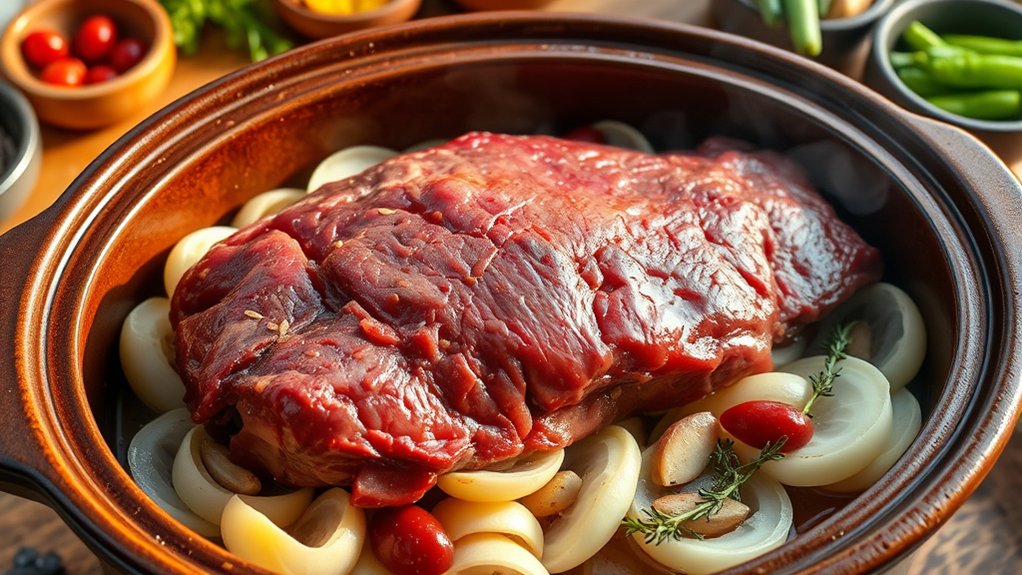
How to Cook Beef Tongue in a Crock Pot in 7 Easy Steps
Many people find cooking beef tongue at home a bit intimidating, but you’re not alone. The process can seem daunting, especially if you’re not sure where to start.
To cook beef tongue in a crock pot, start by selecting a fresh, firm tongue with bright color and blanch it in boiling water to remove the outer skin.
Season it with herbs, garlic, onion, and spices like cumin or paprika, then place it in the slow cooker covered with water or broth.
Cook on low for 6-8 hours until tender, checking for softness.
For tips on perfect results and serving ideas, keep exploring further.
Key Takeaways
- Select and thoroughly clean fresh beef tongue. Blanch it to loosen the skin, then peel off the tough outer layer.
- Season the tongue with herbs, garlic, onion, and optional marinades for extra flavor.
- Place the tongue in the Crock Pot, cover it with water or broth, and cook on low for 6-8 hours until it’s tender.
- Check the tenderness by inserting a fork or doing a bite test. If it’s not quite there, cook it a bit longer.
- Once done, slice the tongue thinly. Serve with your favorite sides or sauces.
- Don’t forget to store leftovers properly so they stay fresh for later.
How to Select and Prepare Beef Tongue for Slow Cooking
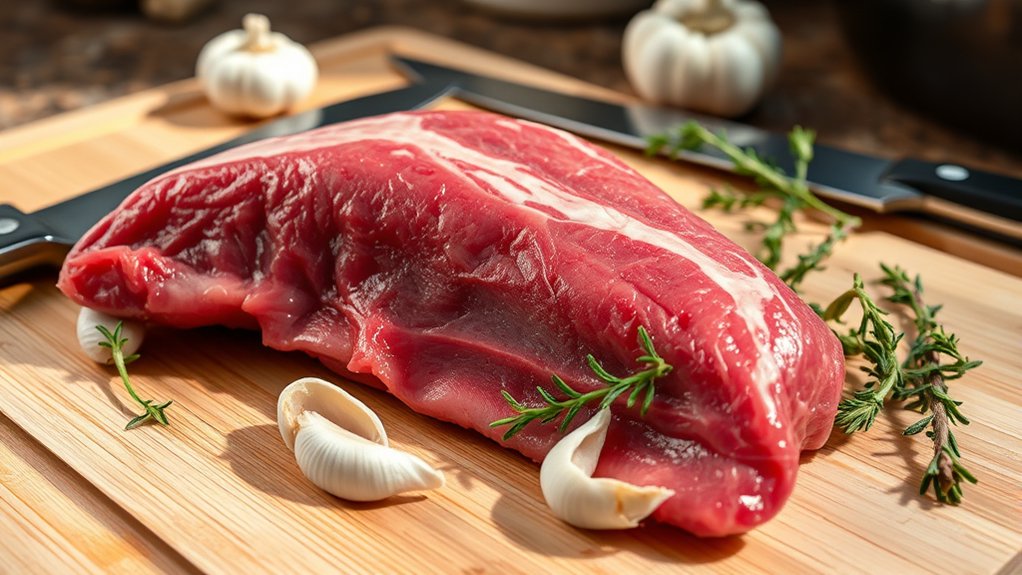
Choosing a fresh beef tongue is key to a flavorful slow-cooked dish. Start by inspecting the tongue for a bright, even color—deep pink or reddish hues are ideal. Avoid any with a dull appearance, strong odor, or slimy texture.
Select a fresh, bright-colored beef tongue for the best flavor and quality.
When selecting, check for firmness; it should feel firm and slightly elastic. Before cooking, thoroughly rinse the tongue under cold water to remove any surface debris.
Next, you’ll need to peel the tough outer layer, which is easiest after blanching. Boil the tongue briefly in water for about 10 minutes, then transfer it to cold water to cool.
Once cooled, peel off the leathery skin, revealing the tender meat inside. Proper preparation guarantees your slow-cooked beef tongue will be tender, flavorful, and easy to enjoy.
Best Seasonings and Flavors for Beef Tongue
To bring out the rich, beefy flavor of tongue, choosing the right seasonings is key. Classic herbs like thyme, bay leaves, and rosemary add depth, while garlic and onion give it savory notes that boost the natural taste.
For a warm touch, cumin and smoked paprika work really well, adding a subtle smoky flavor. Don’t forget salt and freshly ground black pepper to season everything evenly.
You can also add a splash of soy sauce or Worcestershire sauce for extra umami richness. If you want a bit of brightness, try lemon zest or vinegar—it brightens up the dish nicely.
These seasonings complement the beef tongue without overpowering it, making each bite flavorful and tender.
How to Cook Beef Tongue in a Slow Cooker
Cooking beef tongue in a slow cooker is simple and gives you tender, flavorful meat with little hassle. First, rinse the tongue under cold water and pat it dry.
Place it in your slow cooker and add enough water or broth to cover the meat. Toss in your favorite seasonings like onion, garlic, bay leaves, and herbs.
Set the slow cooker to low and let it cook for about 6 to 8 hours. The slow cooker will gently break down the connective tissue, making the tongue tender.
Once it’s cooked, leave it in the liquid for a few minutes before removing it. This helps keep it moist and flavorful.
Now you’re ready to peel and serve, or prepare it further however you like.
How to Check If Your Beef Tongue Is Tender
Ever wonder how to tell if your beef tongue is tender enough? The best way is to use a fork or knife to test its texture. If it slides in easily without resistance, it’s tender. If you meet resistance, give it more cooking time.
Here’s a quick guide:
| Test Method | What to Feel For | Result |
|---|---|---|
| Fork or Knife | Easy insertion and twist | Tender and ready to serve |
| Press with Finger | Slight softness | Perfectly cooked |
| Bite Test | Juicy and soft | Done and delicious |
Use these methods to guarantee your beef tongue is just right—tender, flavorful, and ready to enjoy!
Serving Ideas: Enjoying Your Cooked Beef Tongue
Once your beef tongue is cooked, slice it thin and serve it with your favorite sides.
You might want to pair it with traditional accompaniments like pickled vegetables or tortillas.
Or get creative with fresh herbs and vibrant garnishes to make it even more flavorful.
These ideas can really enhance your dish and make every bite more enjoyable.
Slicing and Serving Tips
After your beef tongue has cooled slightly, place it on a cutting board and use a sharp knife to slice it into thin, even pieces. For the best presentation, aim for slices about ¼ inch thick.
Serve immediately or let the slices rest in a warm place. You can also reheat slices gently if needed. Consider arranging the slices on a platter for a neat look.
To add variety, try serving with different sauces like chimichurri or horseradish. Pair with fresh herbs or sliced vegetables for extra flavor.
Here’s a quick guide:
| Slicing Technique | Serving Style | Additional Suggestions |
|---|---|---|
| Thin, even slices | Plated with sauce | Garnish with herbs |
| Slightly thicker | Cold or warm | Serve with bread |
| Uniform slices | As part of a platter | Add pickles or onions |
| Crosswise cuts | For tacos | Include salsa |
| Diagonally for presentation | Sandwich filling | Use colorful garnishes |
Traditional Accompaniments
To truly enjoy your cooked beef tongue, pairing it with traditional accompaniments boosts its rich flavor and tender texture. Classic sides like boiled potatoes or creamy mashed potatoes complement the meat’s richness.
Fresh, tangy pickles or a simple chimichurri sauce add brightness and balance. Warm tortillas or crusty bread make for satisfying, hearty bites.
These accompaniments not only enhance the flavor but also provide a comforting, familiar experience that highlights the tongue’s unique qualities. Choosing traditional sides connects you to culinary heritage and lets the beef tongue shine as the star of your meal.
With these simple, time-honored pairings, you’ll enjoy a well-rounded, satisfying dish that celebrates classic flavors and textures.
Creative Garnish Ideas
Adding creative garnishes and serving ideas can really elevate your beef tongue from hearty to unforgettable. Try slicing the tongue thin and topping it with a vibrant chimichurri sauce or a tangy salsa verde to bring in freshness and color.
Fresh herbs like cilantro, parsley, or thinly sliced green onions brighten up the dish. For a touch of elegance, serve with pickled vegetables or a drizzle of flavorful aioli.
You can also add toasted nuts or crispy shallots for some nice texture contrast. Consider serving the beef tongue with warm tortillas or crusty bread so guests can make their own wraps or sandwiches.
These garnishes not only make the presentation pop but also add layers of flavor, making every bite more exciting.
Common Problems When Cooking Beef Tongue and How to Fix Them
Cooking beef tongue can sometimes lead to common problems like tough texture, uneven cooking, or lingering odors. To fix these issues, start by properly preparing the tongue—trimming excess fat and peeling the outer layer helps improve texture.
Using enough liquid and cooking on low heat ensures even tenderness. If odors are strong, rinse the tongue thoroughly and add aromatic herbs or spices to mask them.
Avoid overcooking, which can make the meat tough. Proper preparation minimizes chewy bites and boosts flavor. Consistent low and slow cooking guarantees tender results. Adding aromatics helps eliminate strong odors and enriches the taste.
FAQs About Cooking Beef Tongue in a Crock Pot
Wondering how to get the perfect tender beef tongue? You’ll want to follow best practices for preparation, timing, and flavoring to guarantee excellent results.
Let’s answer some common questions about cooking beef tongue in a crock pot to help you succeed.
Cooking Time Tips
For tender, flavorful beef tongue, most recipes recommend cooking it in a Crock Pot for about 6 to 8 hours on low. This guarantees the meat becomes soft without overcooking. Keep in mind, larger tongues may need closer to 8 hours, while smaller ones might be ready around 6 hours.
To check doneness, insert a fork; it should slide in easily. If it’s still firm, give it more time. Avoid opening the lid frequently, as this releases heat and extends cooking time. Remember, patience is key—rushing can result in a tough texture.
Cooking times can vary based on the size of the tongue and your specific slow cooker. Using a meat thermometer to confirm proper tenderness is helpful.
Resting the meat for a few minutes after cooking boosts flavor and texture.
Preparation Best Practices
Proper preparation sets the foundation for a perfectly cooked beef tongue in your Crock Pot. Begin by rinsing the tongue thoroughly under cold water to remove any debris.
Next, place it in a large pot of boiling water and let it simmer for about 10 minutes. This helps loosen the skin. After boiling, peel off the tough outer layer using your fingers or a knife.
Trim off any excess fat or connective tissue. For added flavor, consider marinating the tongue in an acidic mixture like vinegar or citrus juice for a few hours before cooking.
Always pat the tongue dry before placing it in the Crock Pot. Properly prepared, your beef tongue will cook evenly, resulting in tender, flavorful meat.
Flavor Enhancements
Adding the right flavors can make your beef tongue truly stand out. To boost its rich, beefy taste, try using bold seasonings and aromatics.
Spices like cumin, paprika, or chili powder add depth, while fresh herbs such as bay leaves, thyme, or parsley brighten the dish. Acidic ingredients like vinegar or citrus juice help tenderize and balance the richness.
Don’t forget to incorporate garlic and onion for a savory foundation. Marinate the beef tongue beforehand to infuse flavor and tenderize.
Adding a splash of vinegar or citrus gives it brightness, and layering herbs and spices creates complexity. These simple tweaks turn a basic cook into a flavorful, memorable meal.
Frequently Asked Questions
Can I Freeze Raw Beef Tongue Before Cooking?
Yes, you can freeze raw beef tongue before cooking. Wrap it tightly in plastic wrap or aluminum foil to prevent freezer burn, then place it in a sealed plastic bag or airtight container. Label it with the date and freeze for up to 3-6 months.
When you’re ready to cook, thaw it in the refrigerator overnight. Freezing helps preserve freshness and makes handling easier when you’re preparing your dish.
How Long Can Cooked Beef Tongue Be Stored in the Refrigerator?
You can store cooked beef tongue in the refrigerator for up to 3 to 4 days.
Make sure to keep it in an airtight container or tightly wrap it with plastic wrap or foil to prevent it from drying out or absorbing other odors.
When you’re ready to eat it, reheat thoroughly to an internal temperature of 165°F.
Always check for any signs of spoilage before consuming.
Is Beef Tongue Suitable for Meal Prep or Batch Cooking?
Beef tongue is like a hidden treasure, perfect for meal prep and batch cooking. You can cook it in large portions and store it for later, making your week easier.
Its tender texture and rich flavor hold up well in the fridge or freezer, giving you versatile, nutritious meals. Preparing it in advance saves time and effort.
This turns a culinary gem into your go-to ingredient for flavorful dishes throughout the week.
What Are Common Substitutes for Beef Tongue in Recipes?
You can substitute beef tongue with other cuts of meat that offer similar texture and flavor. Popular options include beef brisket, chuck roast, or oxtail. These cuts become tender with slow cooking and provide rich, meaty flavors.
If you prefer a leaner option, try using beef cheeks or even certain cuts of pork, like pork cheeks or pork shoulder. These also develop a delicious, melt-in-your-mouth consistency when cooked slowly.
Are There Any Health Benefits Associated With Eating Beef Tongue?
Yes, eating beef tongue offers health benefits. It’s rich in high-quality protein, which helps with muscle growth and repair.
It also provides essential nutrients like zinc, iron, and B vitamins, which boost your immune system and energy levels.
Moreover, beef tongue contains healthy fats that promote brain health. Including it in your diet can be a nutritious choice, especially when prepared healthily, helping you meet your nutritional needs effectively.
Conclusion
Cooking beef tongue in a crock pot is a rewarding experience that transforms this hearty cut into a tender, flavorful dish. Just remember, patience is key—slow and steady wins the race.
With the right preparation, seasonings, and a little care, you’ll enjoy a delicious meal that’s totally worth the effort. So go ahead, give it a try, and savor the fruits of your labor.
After all, good things come to those who wait, especially when cooking beef tongue in a crock pot.