How Much Sodium Is in Corned Beef?
Many people struggle with managing their sodium intake, especially when it comes to favorite foods like corned beef. If you’re trying to watch your salt, you’re not alone—navigating processed meats can be tricky.
Corned beef typically contains between 800 and 1,200 milligrams of sodium in a 3-ounce serving, which can make up a substantial part of your daily salt intake.
Processed versions, like canned corned beef, often have higher sodium levels, while fresh or deli-style options usually have less.
If you want to enjoy corned beef without exceeding your sodium goals, it’s helpful to choose low-sodium varieties and watch your portion sizes.
There’s more to uncover on managing salt intake.
Key Takeaways
- A 3-ounce serving of corned beef contains approximately 800 to 1,200 mg of sodium.
- Canned corned beef usually has more sodium than fresh or deli-style options.
- The high salt content comes from curing methods that use salt and preservatives.
- If you’re watching your sodium intake, low-sodium versions are available. Rinsing canned corned beef can also help reduce the salt.
- Keep in mind that eating corned beef can add up quickly and contribute significantly to your daily sodium limits.
How Much Sodium Is in Corned Beef?
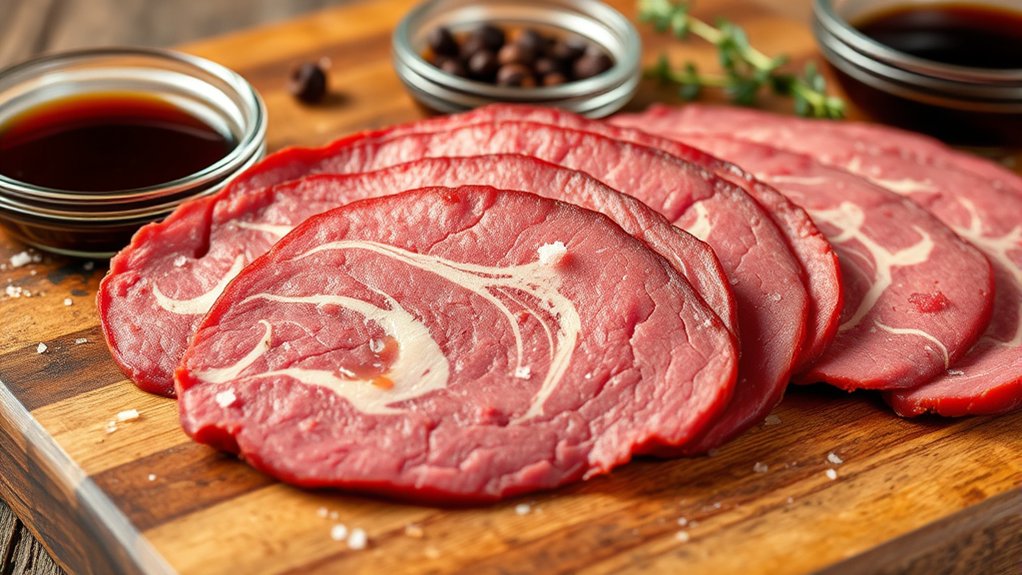
Have you ever wondered how much sodium is in corned beef? On average, a 3-ounce serving contains about 800 to 1,200 milligrams of sodium. That’s roughly 35-50% of the recommended daily intake for most adults.
A 3-ounce serving of corned beef contains 800 to 1,200 mg of sodium, nearly half the daily recommended intake.
The high sodium content comes from the curing process, which uses salt and preservatives to flavor and preserve the meat. If you’re watching your salt intake, this amount can add up quickly, especially if you eat it regularly.
Processed corned beef tends to have more sodium than homemade versions, which you can control more easily. Reading labels helps you compare brands and pick options with lower sodium levels.
Keep in mind, moderation is key to enjoying corned beef without exceeding your daily salt limit.
Do Different Types of Corned Beef Have Varying Sodium Levels?
Do different types of corned beef vary greatly in their sodium content? Yes, they can. Canned corned beef often has higher sodium levels because it’s preserved with salt and additives to extend shelf life.
In contrast, fresh or deli-style corned beef usually contains less sodium, especially if it’s labeled low-sodium or reduced-salt. Some brands also offer pre-cooked or pre-seasoned options that tend to have more salt to improve flavor.
If you’re watching your sodium intake, it’s important to read nutrition labels carefully. The curing process and added ingredients can greatly influence the salt content.
How Does Processing Affect Corned Beef’s Salt Content?
Processing methods really affect the salt content in corned beef since each step can add or remove sodium. The curing process, for example, involves soaking the beef in a salt-based brine, which significantly boosts its sodium levels.
The longer the beef stays in the brine, the more salt it absorbs. But if you rinse the beef after curing or use shorter curing times, you can cut down on the sodium content. After curing, cooking methods also play a role.
Rinsing or shortening curing time reduces corned beef’s sodium content significantly.
Boiling or simmering can help leach out some salt, but they rarely remove all the sodium. Commercially processed corned beef might also have added preservatives or flavorings that contain salt, increasing the sodium content even more.
If you’re trying to watch your salt intake, look for products labeled as low-sodium or consider rinsing the beef before cooking to wash away some of the surface salt.
Why Is Too Much Sodium in Corned Beef a Health Concern?
Consuming too much sodium in corned beef can significantly increase your risk of health problems like high blood pressure, heart disease, and stroke.
Excess sodium causes your body to hold onto water, which raises blood volume and puts more pressure on your arteries. Over time, this can damage blood vessel walls and lead to cardiovascular issues.
Eating too much sodium also affects your kidneys and can increase the risk of osteoporosis. If you eat processed meats like corned beef often, you’re more likely to face these health concerns.
Cutting back on sodium helps keep your blood pressure in check and supports heart health. Being mindful of how much sodium you consume is key to preventing chronic health conditions and living a longer, healthier life.
How to Choose Low-Sodium Corned Beef Options
Choosing low-sodium corned beef options can significantly reduce your sodium intake without sacrificing flavor. Start by reading labels carefully; look for products labeled “low-sodium” or “reduced salt.”
Fresh, unsalted or minimally salted corned beef is often available at specialty stores or butcher shops, so ask for these options. Consider rinsing canned or pre-packaged corned beef before cooking to wash away excess salt.
Furthermore, compare brands to find those with lower sodium content. Opting for smaller portions can also help control your salt intake.
Keep in mind that some brands may use salt substitutes or different curing techniques. These can be healthier choices.
Tips to Cook Corned Beef With Less Salt
To cook corned beef with less salt, start by rinsing the meat thoroughly under cold water before cooking. This helps wash away surface salt and reduces the overall sodium content.
Next, consider using low-sodium broth or water instead of salted liquids when boiling or simmering the meat. This adds flavor without extra salt.
Use low-sodium broth or water to enhance flavor without adding extra salt during cooking.
Add herbs and spices like garlic, pepper, bay leaves, or mustard seeds to naturally boost flavor, so you don’t have to rely on salt.
Limit seasoning during cooking and taste the meat before adding any additional salt or salty condiments. Adjust seasonings gradually to avoid over-salting.
Following these steps lets you enjoy corned beef with less sodium while still keeping great flavor.
Canned vs. Fresh Corned Beef: Which Has Less Salt?
Have you ever wondered which type of corned beef has less salt—canned or fresh? Generally, canned corned beef tends to have higher sodium levels because it’s preserved in salt and brine to extend its shelf life.
The canning process involves adding salt to help prevent bacterial growth, so canned versions are often more sodium-dense. Fresh corned beef usually has less salt at first, but it’s often pre-brined or seasoned, which can raise the sodium content.
If you’re trying to cut back on salt, fresh corned beef might be the better choice. Especially if you prepare it yourself and control how much salt you add.
Always check labels or ask your butcher to make sure you’re choosing the lower-sodium option.
How to Read Labels and Spot Sodium in Corned Beef
When you read labels on corned beef, look for the sodium content listed clearly in milligrams.
Recognize sodium labels by checking for terms like “salt,” “sodium,” or “preservatives” in the ingredients.
Comparing different brands helps you choose options with lower sodium levels to suit your dietary needs.
Identifying Sodium Content
Ever wonder how to quickly identify the sodium content in corned beef? It’s easier than you think. First, check the nutrition label—sodium is usually listed in milligrams (mg).
Next, look for the serving size. Knowing this helps you understand the sodium per portion. Then, scan the ingredients list for words like “salt,” “sodium,” or “preservatives,” which show added sodium.
Keep in mind that high sodium levels are often hidden in processed meats, so reading labels carefully is key. By focusing on the nutrition facts and ingredients, you can make smarter choices and control your sodium intake.
Recognizing Sodium Labels
Wondering how to quickly spot sodium on a corned beef label? Look for the Nutrition Facts panel. Sodium content is usually listed in milligrams per serving. Focus on the “Sodium” line—it’s often highlighted or bolded for easy identification.
Pay attention to the serving size, as sodium amounts are based on it. Some labels also include a percentage of the daily recommended limit. If so, compare this to your dietary needs.
Ingredients lists can also hint at high sodium, especially if words like “salt,” “sodium nitrate,” or “preservatives” appear frequently. Becoming familiar with these labels helps you identify high-sodium products at a glance.
With practice, you’ll quickly distinguish which corned beef options fit your health goals.
Comparing Different Brands
Comparing different brands of corned beef means taking a close look at their labels to see how much sodium they contain. It’s important to do this carefully to understand your intake.
Start by checking the sodium amount per serving, rather than just looking at the total package. This gives you a better idea of what you’ll actually be eating.
Look for labels that say “low sodium” or “reduced sodium.” These options usually have much less salt compared to regular versions.
Pay attention to the ingredients list, too. Sometimes sodium is hidden under words like “salt-cured” or “preserved with salt,” so it’s worth reading carefully.
Easy Ways to Enjoy Corned Beef With Less Sodium
You can cut down on sodium by rinsing corned beef before cooking to wash away some of the salt.
Opting for low-sodium versions whenever possible also helps you enjoy the dish with less salt.
These simple steps make it easier to savor corned beef while controlling your sodium intake.
Rinse Before Cooking
Rinsing corned beef before cooking is a simple step that can significantly cut down its sodium content. By rinsing, you wash away some of the surface salt, helping lower your overall sodium intake.
To get the most benefit, follow these easy tips:
- Place the corned beef in cold water and soak it for 10-15 minutes.
- Gently agitate the meat to loosen surface salt.
- Drain the water and repeat the rinsing once or twice if needed.
This quick step doesn’t take much effort but can make a noticeable difference in sodium levels. Keep in mind, rinsing won’t remove all the salt, but it’s a simple way to enjoy corned beef with less sodium without losing flavor.
Choose Low-Sodium Options
Opting for low-sodium corned beef is one of the best ways to enjoy this popular dish without too much salt. Many stores now offer reduced-sodium versions that still pack a lot of flavor.
When you’re shopping, check labels carefully. Look for products labeled “low-sodium” or “reduced salt.” You can also buy fresh corned beef and prepare it yourself to control how much salt goes in.
Some brands use alternative flavorings or herbs to make the meat tasty without extra sodium. Incorporating herbs, spices, or citrus can boost flavor naturally and healthily.
Using these low-sodium options helps you enjoy corned beef while keeping your salt intake in check. It’s a great way to savor the flavor without sacrificing your health.
What Are the Daily Sodium Limits and How Does Corned Beef Fit In?
Understanding your daily sodium intake is key to staying healthy, especially since too much salt can lead to high blood pressure and other problems. The American Heart Association suggests no more than 2,300 milligrams of sodium each day, with a target of 1,500 milligrams for most adults.
Corned beef is usually high in sodium and can quickly push you over these limits. To keep your intake in check:
- Check food labels to see how much sodium is in what you’re eating.
- Watch your portion sizes, especially for salty foods like corned beef.
- Include fresh, low-sodium options in your meals to balance things out.
Frequently Asked Questions
Can Homemade Corned Beef Be Made With Less Salt?
Yes, you can make homemade corned beef with less salt. Just reduce the amount of salt in your brine or seasoning mix, and choose low-sodium ingredients when you can.
Soaking the beef in water after curing can also help remove some of the excess salt. Keep in mind that using less salt might change the flavor and curing time.
You might need to tweak your recipe a bit to get the taste and texture just right.
Does the Sodium Content Vary by Brand or Region?
Yes, the sodium content varies by brand and region, like different strokes for different folks. Some brands pack a salt punch, while others keep it lighter.
Regional recipes also influence salt levels, reflecting local taste preferences and traditions. Always check labels if you’re watching your salt intake, because even within the same product, sodium amounts can differ widely.
It’s important to read the nutrition facts carefully to stay informed.
How Does Soaking Corned Beef Affect Its Sodium Level?
Soaking corned beef helps reduce its sodium content considerably. When you submerge it in water, the salt dissolves and leaches out of the meat, especially if you soak it for several hours or overnight.
Changing the water multiple times improves this effect. Keep in mind, though, that soaking can also wash away some flavor, so you might want to adjust seasonings or brine before cooking to maintain taste.
Are There Natural Alternatives to Salt for Flavoring Corned Beef?
You can use herbs like bay leaves or spices such as black peppercorns as natural flavor boosters.
For example, a home cook replaced salt with garlic, onion, and thyme in their corned beef recipe, creating a tasty dish with less sodium.
These options enhance flavor without adding extra salt, so you can enjoy rich tastes while keeping your sodium intake lower.
What Are the Health Risks of Consuming High-Sodium Corned Beef Regularly?
Consuming high-sodium corned beef regularly can raise your risk of high blood pressure, heart disease, and stroke. Too much salt causes your body to hold onto water, which puts extra stress on your heart and arteries.
Over time, this can also lead to kidney problems and osteoporosis. To stay healthy, it’s best to enjoy corned beef in moderation and balance your diet with low-sodium options and plenty of fruits and vegetables.
Conclusion
So, next time you chow down on corned beef, remember it’s basically salty enough to make your arteries sing. Choosing low-sodium options and reading labels might not turn your meal into a health miracle, but hey, it’s better than turning your heart into a sodium swamp.
After all, who needs taste buds when you can have a lifetime supply of low-sodium bliss? Enjoy smarter bites—your ticker will thank you for it!