How Many Calories Are in Beef Broth?
Many people looking to enjoy flavorful meals often wonder about the calorie content of common ingredients like beef broth. If you’re trying to watch your calorie intake but still want that rich taste, you’re not alone.
Beef broth is a low-calorie liquid, usually containing between 15 and 20 calories per cup when homemade. Store-bought options can range from 10 to 40 calories, depending on added ingredients like oils or noodles.
Your choice and how you prepare it—using leaner cuts or limiting extras—can affect the calorie content.
Want to uncover more tips on selecting and using beef broth in a calorie-conscious diet? Keep exploring for helpful details.
Key Takeaways
- Homemade beef broth usually has about 10 to 20 calories per cup.
- Store-bought versions can range from 10 to 40 calories per cup, depending on what’s added.
- The calorie count really depends on the fat content of the beef used and how it’s cooked.
- If you add oils, noodles, or starchy vegetables, that will boost the calories.
- Opting for low-sodium or reduced-fat options can help keep your calorie intake lower.
How Many Calories Are in Beef Broth?
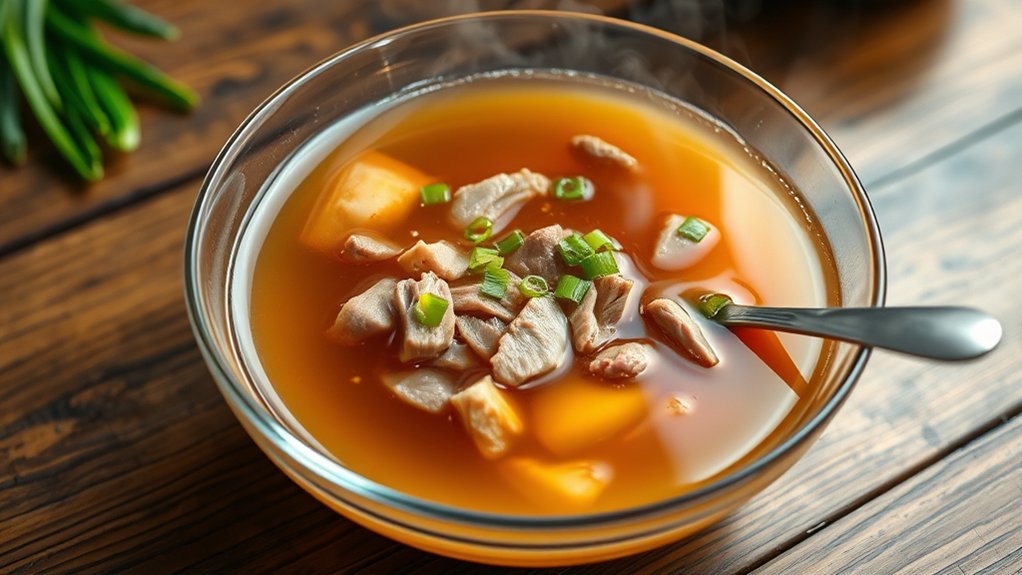
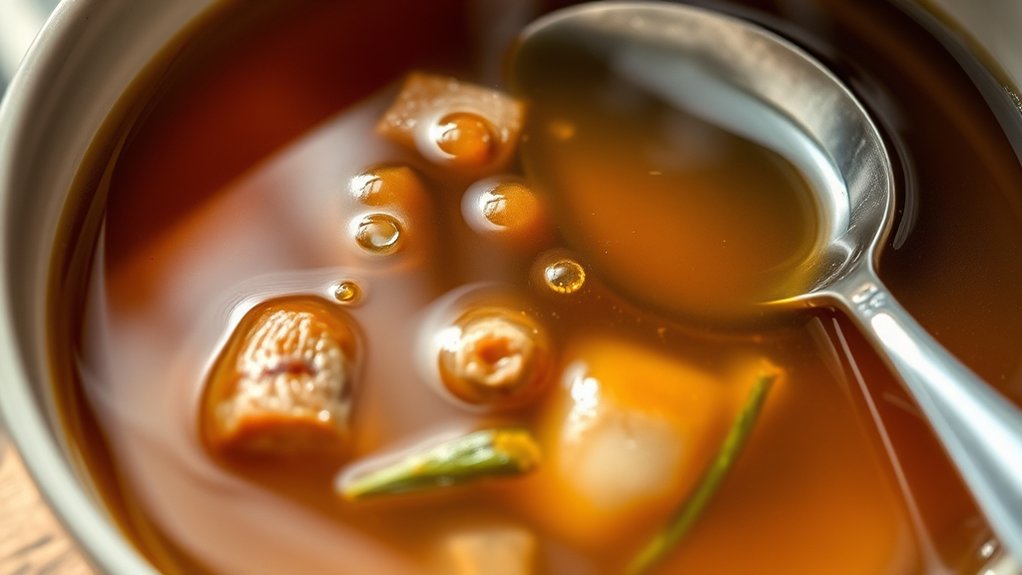
Curious about how many calories are in beef broth? On average, a cup of plain, homemade beef broth has around 15 to 20 calories.
Store-bought varieties can vary a bit depending on added ingredients like salt or preservatives, but they usually stay within this range. Beef broth is low in calories because it’s mostly water, with small amounts of beef fat, collagen, and minerals.
If you’re watching your calorie intake, beef broth makes a great savory base for soups or stews without adding many calories. Just keep in mind that added ingredients like oils, vegetables, or noodles can bump up the total calorie count of your dish.
What Factors Affect Beef Broth Calories?
Several factors influence the calorie content of beef broth, so it’s important to consider how it’s prepared and what ingredients are added.
First, the type of beef used can make a difference—fattier cuts have more calories than leaner ones. Second, the cooking process matters; simmering longer can release more nutrients and fat, which can raise the calorie count.
Third, added ingredients like oils, butter, or starchy vegetables can also boost calories. Fourth, whether you buy store-bought broth or make it at home can affect the calorie content, since pre-made versions often contain preservatives and flavorings that add calories.
Being mindful of these factors helps you estimate the calorie content better and make healthier choices.
How Do Ingredients and Preparation Methods Change Beef Broth Calories?
Ingredients and preparation methods greatly influence the calorie content of beef broth. Using fatty cuts of beef or adding extra oil during cooking increases calories because of higher fat content.
Adding vegetables like onions, carrots, or celery boosts flavor without significantly increasing calories. However, starchy vegetables can raise the calorie count a bit.
The way you prepare the broth also matters. Simmering bones and meat for a long time extracts more nutrients and calories, especially from marrow and connective tissues.
Straining the broth removes solids that contain some calories, but the liquid still holds flavor and fats.
Ultimately, choosing leaner ingredients, controlling added fats, and simmering carefully help keep beef broth lower in calories while still tasting great.
Homemade vs Store-Bought Beef Broth: Which Is Calorie-Friendlier?
When comparing homemade and store-bought beef broth, the calorie content can vary quite a bit depending on how each is made. Usually, homemade broth is lower in calories because you control the ingredients and skip added preservatives or high-sodium flavorings.
Store-bought versions often have added salt, flavor enhancers, and sometimes fats, which can bump up their calorie count. So, the calories can be higher compared to homemade options.
Here are some key points:
- Homemade broth typically has about 10-20 calories per cup, depending on what you use.
- Store-bought broth ranges from 10 to 40 calories per cup, often higher because of additives.
- Low-sodium or reduced-fat store-bought options tend to be closer in calories to homemade.
- Checking labels can help you pick the calorie-friendly option that fits your diet.
Tips for Choosing Low-Calorie Beef Broth
To choose low-calorie beef broth, start by reading labels carefully because many store-bought options can contain added sodium, fats, and flavor boosters that increase calorie content. Look for broths labeled “reduced-sodium” or “low-fat,” which typically have fewer calories.
Check the nutrition facts for calorie counts per serving to compare brands easily. Opt for broths with minimal ingredients—ideally just beef, water, and natural seasonings. Avoid varieties with added sugars, preservatives, or artificial flavorings, as these can raise calorie levels.
Consider making your own beef broth at home. This way, you can control the ingredients and avoid unnecessary calories. By paying attention to labels and ingredient lists, you can select a beef broth that fits your calorie-conscious goals.
How to Incorporate Beef Broth Into a Calorie-Conscious Diet
To include beef broth in your calorie-conscious diet, start by choosing low-calorie options that add flavor without extra calories. Use broth as a base for soups and stews to keep meals light.
Be mindful of portion sizes to avoid overeating. These strategies help you enjoy beef broth while staying within your calorie goals.
Choosing Low-Calorie Options
Choosing low-calorie options can really help you enjoy beef broth without piling on calories. Focus on smarter choices that boost flavor without adding extra calories.
Opt for homemade or low-sodium broth, which usually has fewer calories than store-bought kinds. Use small amounts of broth as a flavor enhancer instead of making it the main ingredient.
Add herbs and spices like garlic, thyme, or pepper to bring out flavor without extra calories. Incorporate vegetables like mushrooms or spinach to boost both flavor and nutrition without adding many calories.
Using Broth as a Base
Using beef broth as a base in your meals is a great way to add rich flavor without piling on extra calories. Try cooking grains like rice or quinoa with broth instead of water to give them more depth.
It also works perfectly as a foundation for soups and stews, boosting flavor without relying on heavy sauces or creams. You can use broth for sautéing vegetables or proteins too, which makes dishes tastier without adding extra fat or calories.
Just keep portions moderate—about a cup or two of broth per serving is enough to enhance flavor without overdoing calories. Store homemade or store-bought broth in your pantry or fridge for quick, flavorful meals.
Using broth as a base keeps your dishes tasty and satisfying while supporting your calorie-conscious goals.
Portion Control Strategies
Sticking to proper portion sizes is key when including beef broth in your meals, especially if you’re watching your calorie intake. Controlling portions helps you enjoy the flavor without excess calories.
To do this effectively, measure your broth with a measuring cup or spoon before adding it to dishes. Use small bowls or cups to serve portions, making it easier to limit intake.
Keep track of how much broth you consume daily to stay within your calorie goals. Incorporate broth into recipes that naturally divide into serving sizes, like soups or stews, to avoid over-pouring.
These strategies help you enjoy beef broth’s flavor while maintaining a calorie-conscious diet. Proper portion control guarantees you stay on track without sacrificing taste.
Frequently Asked Questions
Does Adding Vegetables Increase Beef Broth Calorie Content?
Yes, adding vegetables can increase beef broth’s calorie content, but usually only a little. Most vegetables like carrots, onions, or celery are low in calories, so they don’t add much.
If you add starchy vegetables like potatoes or peas, the calories will go up more noticeably. Overall, vegetables boost flavor and nutrients without raising calories too much, making your beef broth more nutritious and satisfying.
Are There Low-Sodium Beef Broth Options With Fewer Calories?
Yes, there are low-sodium beef broth options with fewer calories. Think of them as a light breeze in your culinary storm—still flavorful without the extra salt and calories.
You can find these options in most grocery stores, often labeled as “low-sodium” or “reduced-sodium.” They’re perfect if you want to enjoy beef broth’s richness while keeping your sodium and calorie intake in check.
How Does the Fat Content in Beef Broth Vary by Brand?
The fat content in beef broth varies widely by brand, depending on how it’s made. Some brands use more marrow and fat, which means higher fat levels, while others are leaner with minimal fat.
Always check the nutrition label to compare brands. If you’re looking for lower fat options, go for broths labeled “lean” or “low-fat.”
You might also consider making your own at home to control the fat content precisely.
Can Beef Broth Be Part of a Ketogenic Diet?
Yes, beef broth can be part of a ketogenic diet. It’s usually low in carbs and calories, so it’s a good choice to help maintain ketosis.
You can add it to soups, stews, or use it as a flavorful base for many meals. Just keep an eye out for added ingredients or high-sugar varieties.
Stick with plain, unsweetened beef broth to keep your carb intake low and support your keto goals.
What Are Some Creative Low-Calorie Uses for Beef Broth?
You can get creative with beef broth by making flavorful soups, stews, or risottos as a base. It’s great for cooking grains or vegetables, adding lots of flavor without many calories.
Try using it in marinades or as a cooking liquid for proteins to boost taste without extra calories. It’s a versatile, low-calorie ingredient for many dishes.
You can even freeze beef broth in ice cube trays for quick, low-calorie flavor boosts in future recipes. It’s a handy way to add depth to your meals without extra calories.
Conclusion
Think of beef broth like a versatile canvas. You can turn it into a light, nourishing soup or a rich, hearty stew.
By paying attention to ingredients and preparation, you control the calories, just like an artist chooses their colors.
Remember, even small tweaks like opting for homemade broth can make a big difference.
So, welcome your culinary creativity and make beef broth work for your health goals. Knowing how many calories are in beef broth helps you make smarter choices—it’s your masterpiece in the making.