How Do You Cook Steak on a Non-Stick Pan?
Cooking steak on a non-stick pan might seem simple, but many people struggle to get that perfect sear and juicy inside. If you’re tired of uneven cooking or sticking messes, you’re not alone.
Mastering the art of pan-seared steak can really elevate your home cooking game.
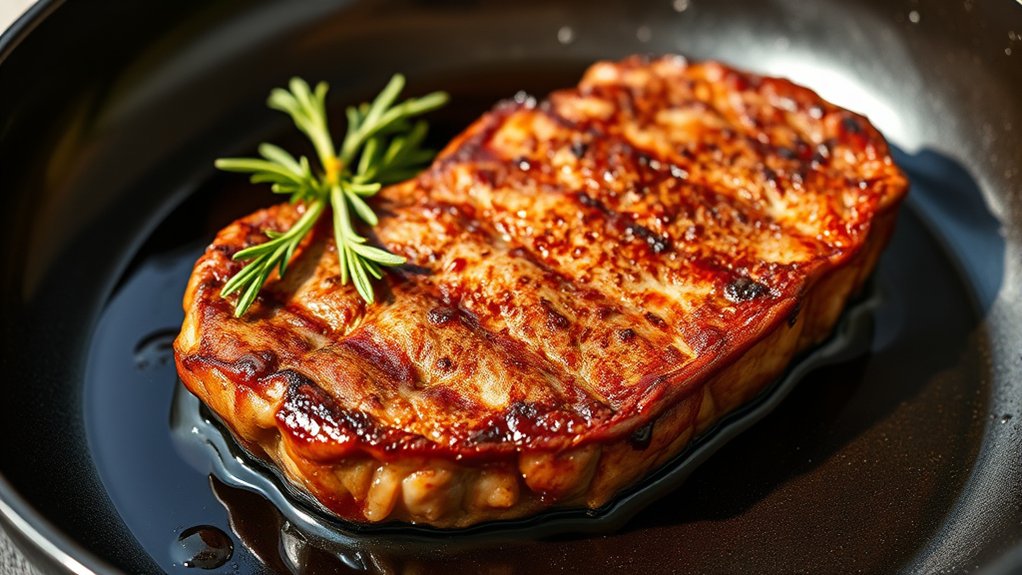
To cook steak on a non-stick pan, start by preheating it over medium heat until it’s hot enough to shimmer when you add oil.
Season your steak generously, pat it dry, and let it rest for 15 minutes.
Add oil with a high smoke point, then place the steak in the pan.
Cook for 2-7 minutes per side, depending on your preferred doneness.
Remember to rest the steak afterward to keep it juicy.
Keep going to uncover more helpful tips!
Key Takeaways
- Preheat the non-stick pan over medium heat until it’s shimmering. Once hot, add a little oil and then place your steak in the pan.
- Choose a good quality cut like ribeye or sirloin. Season it generously with salt and pepper, and let it rest for a few minutes before cooking. This helps the flavors develop and the meat to cook evenly.
- Use a high smoke point oil like canola, grapeseed, or avocado oil. Cook the steak at around 375°F to 400°F for a nice sear.
- Flip the steak only when it naturally releases from the pan and has formed a crust. Avoid flipping it too often; give each side enough time to develop that perfect sear.
- Once cooked to your desired doneness, let the steak rest for 5 to 10 minutes. This helps retain the juices and makes the meat more tender and flavorful.
Why Does Steak Stick to Non-Stick Pans, and How Can You Fix It?
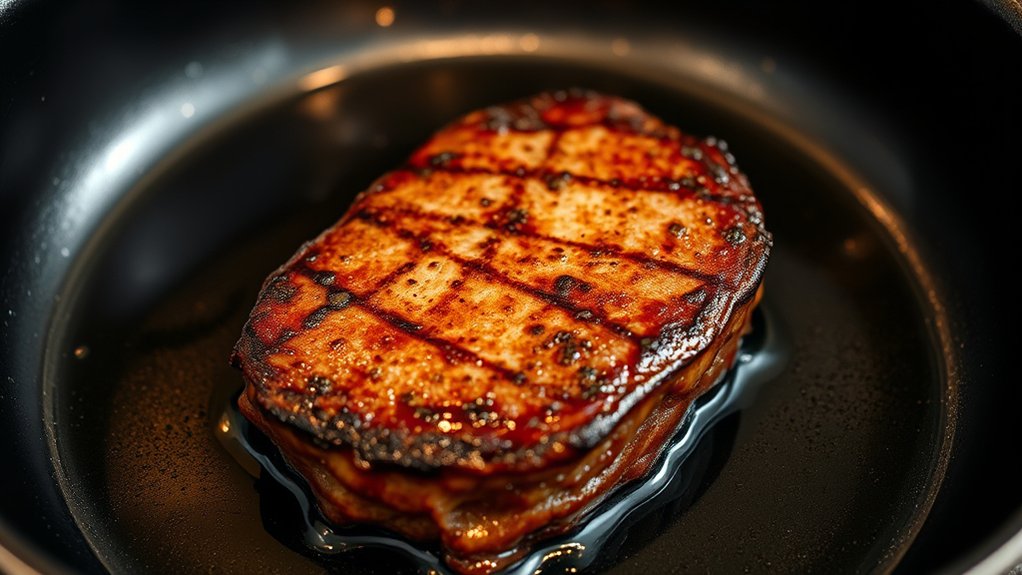
Have you ever wondered why your steak sometimes sticks to a non-stick pan? It’s frustrating, but it often happens because the pan isn’t hot enough when you add the meat.
Non-stick surfaces work best when they’re properly heated, creating a barrier that helps prevent sticking. If the pan is cold, the steak can stick and tear when you try to flip it.
Adding too little oil or not letting the pan heat up evenly can also cause sticking. To fix this, preheat your pan over medium heat for a few minutes before adding oil or the steak.
Make sure the oil shimmers before placing the meat. This way, the steak will sear quickly and release easily, giving you a beautifully cooked piece without sticking.
How to Choose the Best Cut of Steak for Pan-Searing
Choosing the right cut of steak is key to getting a perfect pan-sear. For a tender, flavorful result, go for cuts like ribeye, sirloin, or filet mignon. These cuts have good marbling and are naturally tender.
They sear well and develop a delicious crust without needing a long cooking time. If you prefer a leaner option, sirloin or tenderloin can work, but you’ll need to cook them carefully to avoid drying out.
Avoid very thick or tough cuts like brisket or flank steak for quick searing, as they can turn out chewy. Also, think about thickness—around 1 to 1.5 inches is ideal for a good sear and juicy inside.
Choosing the right cut makes all the difference in ensuring your pan-seared steak is flavorful, tender, and cooked just right.
How to Season and Rest Your Steak for Better Results
Season your steak generously with salt and pepper, making sure to cover all sides for even flavor.
After cooking, let the steak rest for a few minutes to lock in juices and keep it tender.
Proper seasoning and resting really make a noticeable difference in taste and texture.
Proper Seasoning Techniques
To achieve a perfectly flavorful steak, proper seasoning is essential before cooking. Start by patting your steak dry to guarantee even seasoning.
Generously sprinkle salt on all sides. This helps amplify flavor and tenderize the meat. You can also add freshly ground black pepper, which adds a subtle heat, or other spices like garlic powder or paprika for extra depth.
Press the seasonings into the meat gently so they stick well. Avoid over-seasoning, as too much salt can overpower the natural flavor.
Let the steak sit for at least 15 minutes after seasoning. This allows the salt to penetrate and helps develop a richer taste and better crust when cooking.
Proper seasoning sets the foundation for a delicious, well-balanced steak.
Resting for Juiciness
After cooking your steak, resting it is key to locking in the juices and making it super tender. It gives the muscle fibers a chance to reabsorb moisture, so every bite is juicy and flavorful.
Just place your steak on a plate or cutting board and loosely cover it with foil for about 5-10 minutes. During this time, the juices will evenly redistribute.
| Resting Time | Effect |
|---|---|
| 5 minutes | Slight juice redistribution |
| 10 minutes | Maximum tenderness and juiciness |
| 15 minutes | Slight loss of warmth, more juicy |
Resting is a simple step that really boosts your steak’s texture and flavor.
What Temperature Should Your Non-Stick Pan Be for Searing?
Have you ever wondered what temperature your non-stick pan should be for a perfect sear? Ideally, you want it around medium-high heat, roughly 375°F to 400°F.
This range helps the pan heat quickly and evenly, creating the perfect environment for browning the steak’s surface. If the pan isn’t hot enough, the meat will stick and won’t develop that rich crust.
Too hot, and you risk burning the surface before the inside is cooked properly. To check, sprinkle a few drops of water on the pan; they should sizzle and evaporate immediately.
Using an infrared thermometer can give you precise readings, but in most cases, preheating on medium-high and adjusting as needed works just fine.
How to Get a Perfect Sear on Your Steak
Achieving a perfect sear starts with making sure your pan is at the right temperature and your steak is properly prepared. Pat your steak dry with paper towels to remove excess moisture, which helps get that crispy crust.
Season generously with salt and pepper just before cooking. Salt draws out moisture at first but then helps with browning. Make sure your pan is hot—around 400°F—before adding the steak.
Place the steak gently in the pan, avoiding crowding, and let it cook undisturbed for a few minutes. Resist the urge to move it around. This allows the surface to form a caramelized crust.
Flip only once and cook until the other side develops a similar sear. Proper timing and patience are key to a beautifully seared, flavorful steak.
How Long Should You Cook Steak on a Non-Stick Pan for Different Doneness Levels
Cooking time on a non-stick pan varies depending on how you like your steak. For rare, cook for about 2-3 minutes per side, aiming for an internal temperature of 120°F.
Cook steak 2-3 minutes per side for rare; use a thermometer to ensure perfect doneness.
For medium-rare, cook for 3-4 minutes per side, reaching around 130°F. Medium cooks in 4-5 minutes per side, hitting 140°F.
Well-done takes about 6-7 minutes per side, with an internal temperature of 160°F or higher. Keep in mind, thicker steaks need more time, thinner cuts less.
Use a meat thermometer to verify accuracy rather than relying solely on time. Rest the steak for a few minutes after cooking to allow juices to settle.
Adjust your cooking times based on steak thickness and your preferred level of doneness.
When and How to Use Oil or Butter for the Best Sear
To get the best sear on your steak, it’s essential to use oil or butter at the right moment and in the right way. Start by heating your non-stick pan over medium-high heat.
Once hot, add a small amount of oil with a high smoke point, like canola or vegetable oil. For butter, wait until the oil is shimmering before adding it to prevent burning. This helps create a crisp, golden crust.
Use oil or butter just before placing the steak in the pan. Avoid adding too much—just a thin coat works best. For butter, consider adding it towards the end for flavor.
Control the heat to prevent burning and ensure proper searing. This way, you’ll achieve a perfect crust without risking burnt butter or oil.
How to Flip and Handle Your Steak Safely on a Non-Stick Pan
Gently lift the steak with tongs or a spatula when it’s time to flip, making sure you don’t tear the meat or scratch your non-stick surface. Use a smooth, steady motion to avoid damaging the pan or disturbing the sear.
If the steak sticks slightly, give it a moment; it will release naturally when ready. Keep your grip firm but gentle, and avoid pressing down on the meat, which can cause juices to escape.
Allow the steak to release naturally; avoid pressing down to keep juices intact.
Turn the steak quickly to prevent heat loss, and ensure your spatula or tongs are dry to prevent slipping. Handle the steak carefully throughout cooking to keep its shape and protect your non-stick surface.
Proper handling helps ensure even cooking and a beautiful sear without damage.
Why Resting Your Steak Matters and How to Do It Properly
Once you’ve flipped and handled your steak carefully to get that perfect sear, resting it helps the juices spread out evenly through the meat. This step is key for a tender, flavorful steak. If you cut into it right away, all those juices will escape, making your steak dry.
Resting helps lock in moisture, so each bite stays juicy and satisfying. To do it the right way, follow these simple tips:
- Let the steak rest for about 5 minutes for small cuts, up to 10 minutes for larger ones.
- Place it on a plate or cutting board and loosely tent it with foil.
- Don’t press down on the meat during resting—that can squeeze out the juices.
- Use a timer to keep track; patience really makes a difference.
Common Mistakes When Cooking Steak on a Non-Stick Pan: And How to Avoid Them
Cooking steak on a non-stick pan might seem easy, but there are some common mistakes that can mess things up. One big mistake is overcrowding the pan, which drops the temperature and causes steaming instead of a nice sear.
Another mistake is flipping the steak too often. Turning it only once or twice helps develop a good crust. Using cold steak straight from the fridge can also lead to uneven cooking, so let it sit at room temperature first.
Lastly, not preheating the pan enough is a problem. Make sure the pan is hot before adding the steak to get that perfect sear. Following these tips can help you cook steak perfectly on a non-stick pan.
Frequently Asked Questions About Cooking Steak on a Non-Stick Pan
Have questions about cooking steak on a non-stick pan? You’re not alone. Many wonder about ideal temperatures, cooking times, and seasoning tips. Here are common questions answered:
Can I cook a rare steak in a non-stick pan? Yes, just sear it quickly on high heat and then finish with lower heat.
Should I add oil before cooking? Yes, use a small amount of oil to prevent sticking and boost flavor.
How do I know when my steak is done? Use a meat thermometer or check for the desired firmness.
Is it safe to use metal utensils? No, stick to silicone or wooden tools to avoid scratching the non-stick surface.
These tips help you cook steak perfectly without damaging your pan or sacrificing flavor.
Frequently Asked Questions
Can I Cook Frozen Steak on a Non-Stick Pan?
Yes, you can cook frozen steak on a non-stick pan. Start by preheating the pan over medium heat, then place the frozen steak directly in the pan.
Sear each side for a few minutes to develop a crust, then lower the heat to cook through. Keep the steak covered to retain heat, and use a meat thermometer to ensure it reaches your desired doneness.
Adjust the cooking time as needed to get it just right.
How Do I Prevent Smoke When Cooking Steak on Non-Stick?
Think of avoiding smoke as keeping a fire from getting out of control. To prevent smoke, make sure your pan is preheated but not overheating—medium-high heat works best.
Use a small amount of oil with a high smoke point, like avocado or canola oil. Keep the kitchen well-ventilated, and avoid overcrowding the pan.
These steps help you cook your steak perfectly without setting off the smoke alarm.
Is It Safe to Use Metal Utensils on Non-Stick Pans for Steak?
Using metal utensils on non-stick pans isn’t recommended because they can scratch and damage the coating.
Instead, use wooden, silicone, or plastic utensils to protect your pan’s surface. This helps keep your non-stick pan in good shape.
If you need to flip or move your steak, choose these gentler options. That way, your pan lasts longer and cooks your steaks evenly.
What Side Dishes Pair Best With Pan-Seared Steak?
Imagine your plate as a grand canvas, with your pan-seared steak as the bold centerpiece. Pair it with roasted garlic mashed potatoes for warmth, symbolizing comfort and tradition.
Add a vibrant green salad with balsamic vinaigrette for freshness and balance, like harmony in a masterpiece. Grilled asparagus or caramelized onions also work beautifully, adding depth and a touch of elegance.
These side dishes enhance your steak, creating a symphony of flavors and textures.
How Do I Store Leftover Cooked Steak Properly?
You store leftover cooked steak by letting it cool to room temperature. Then, wrap it tightly in aluminum foil or place it in an airtight container.
Make sure to put it in the fridge within two hours of cooking to stop bacteria from growing. If you want to keep it longer, freezing is a good option.
When you’re ready to eat it again, reheat the steak gently. This helps prevent it from drying out, whether you use a microwave or an oven.
Conclusion
Cooking steak on a non-stick pan is like conducting a delicate dance—you need the right moves, timing, and temperature. With a little practice, you’ll master the art of searing a perfect steak without sticking or overcooking.
Remember, patience and attention to detail turn a simple pan into a stage for culinary success. So, get ready to wow your taste buds and impress your friends—your perfect steak performance on a non-stick pan starts now!