How Long Will Beef Broth Keep in the Fridge?
Many home cooks struggle with figuring out how long beef broth stays fresh in the fridge. You’re not alone—keeping track of leftovers can be tricky, and nobody wants to waste good ingredients.
You can typically keep beef broth in the fridge for 3 to 4 days before it risks spoiling. Store it in an airtight container and keep your fridge at or below 40°F (4°C) for the best results.
Pay attention to smell, appearance, and texture—signs of spoilage include sour odors, mold, or a slimy surface.
To extend its freshness, consider freezing and follow proper storage tips.
Keep exploring for more detailed guidance on keeping your broth safe and tasty.
Key Takeaways
- Homemade or opened beef broth usually stays good for about 3 to 4 days in the fridge.
- Make sure to store it in an airtight container at or below 40°F (4°C).
Before using, check for any signs of spoilage like a sour smell, mold, or discoloration.
If you notice any of these, it’s best to toss it out.
Keeping the broth properly stored and maintaining a consistent temperature helps it stay fresh longer.
If you don’t plan to use it within that time, consider freezing it instead.
How Long Can You Keep Beef Broth in the Fridge?
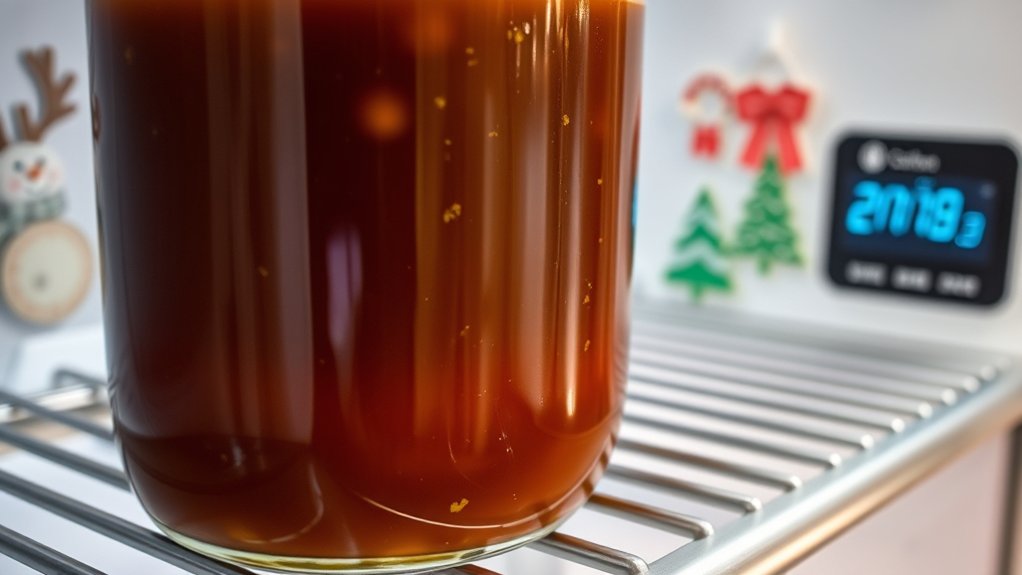
Wondering how long you can keep beef broth in the fridge? Typically, homemade or opened store-bought beef broth stays good for about 3 to 4 days when stored properly in an airtight container.
Homemade or opened beef broth lasts 3 to 4 days in the fridge when stored properly.
Make sure your fridge is at or below 40°F (4°C) to keep it fresh. If you don’t plan to use it within that timeframe, consider freezing the broth for longer storage.
Always label the container with the date you opened or made the broth so you can keep track of its freshness. Keep in mind that the broth’s quality may decline over time, even if it doesn’t spoil yet.
When in doubt, smell and inspect the broth before using it.
Signs Your Beef Broth Has Gone Bad
If your beef broth smells off or has an unusual odor, it’s a clear sign it’s gone bad.
You should also watch out for visible mold or any strange discoloration on the surface.
When in doubt, it’s safest to discard it to avoid any health risks.
Unusual Odor Detection
Noticing an unusual odor is one of the clearest signs that beef broth has gone bad. If it smells sour, rancid, or off in any way, don’t ignore it.
Fresh beef broth should have a savory, meaty aroma. When it starts to spoil, the smell often becomes sharp, sour, or ammonia-like.
Sometimes, it might develop a strange, yeasty, or fermented scent. Trust your nose—if the smell is unfamiliar or unpleasant, it’s best to discard the broth.
Keep in mind, odors can be subtle at first, so if anything seems off, err on the side of caution. A strong, abnormal smell indicates bacterial growth or spoilage, making the broth unsafe to consume.
Always prioritize your health and discard broth that smells suspicious.
Visible Mold Presence
Visible mold is a clear sign that beef broth has gone bad and should be thrown out. If you see mold, don’t take any chances—discard it right away. Mold looks like fuzzy or slimy patches on the surface, often in green, white, or black.
You might notice fuzzy or velvety spots that stand out against the broth’s color. Unusual discoloration, like green or black patches, is also a clue. Sometimes, a slimy or sticky film will develop on top.
If you see any of these signs, the broth is unsafe to drink. Mold means bacteria and contamination are present, so it’s best to toss it to avoid health risks. Always trust your eyes—mold is a warning sign that shouldn’t be ignored.
How to Store Beef Broth Properly for Freshness
To keep your beef broth fresh, always store it in airtight containers to prevent air exposure.
Make sure your fridge maintains a consistent temperature to slow down spoilage.
Proper storage practices like these help preserve the broth’s flavor and safety.
Use Airtight Containers
Using airtight containers is key to keeping beef broth fresh and full of flavor. They block air exposure, which slows down bacteria growth and helps prevent spoilage.
When picking containers, keep these tips in mind: Choose ones with tight-sealing lids to avoid air leaks. Use glass or BPA-free plastic that won’t absorb odors or stains. And leave about an inch of space at the top for expansion as the broth cools.
Store at Consistent Temperature
Storing beef broth at a consistent temperature is key to keeping it fresh and avoiding spoilage. Fluctuating temps let bacteria grow faster, which can ruin your broth.
Keep your fridge between 35°F and 40°F to store it properly. Avoid leaving broth out at room temperature or somewhere warm. Staying cold slows bacteria growth, helping preserve flavor and quality.
Use a fridge thermometer to check the temperature regularly. Keeping it steady makes a big difference in how long your broth stays good.
What’s the Best Refrigerator Temperature for Beef Broth?
Maintaining the right refrigerator temperature is key to keeping beef broth fresh and safe. The perfect temperature is around 40°F (4°C) or just a bit lower. This helps prevent bacterial growth and spoilage.
Keeping your beef broth at around 40°F prevents bacteria and spoilage.
Make sure your fridge has a reliable thermometer to monitor the temperature. Here are three tips to keep your beef broth in top shape:
- Set your fridge between 37°F and 40°F for the best preservation.
- Avoid temperature swings by not opening the door too often.
- Place beef broth on the middle or top shelf, away from the door, where temperatures stay more stable.
How Long Does Homemade Beef Broth Last in the Fridge?
Homemade beef broth typically stays fresh in the fridge for about 3 to 4 days. To keep it at its best, store it in an airtight container and make sure your fridge is at the right temperature.
Always let the broth cool to room temperature before refrigerating. This helps prevent bacteria from growing. If you notice any off smell, mold, or a change in color or texture, it’s best to discard it right away.
Using clean utensils each time you serve from the broth can prevent contamination. If you want to keep it longer, try freezing it in smaller portions. This extends its shelf life and makes it easier to use later.
Keep track of when you made it so you know how long it’s been in your fridge. Proper storage helps preserve both the flavor and safety of your broth.
How Long Is Store-Bought Beef Broth Good After Opening?
Ever wonder how long store-bought beef broth stays safe after you open it? Once opened, it’s best to use it within 4 to 6 days if you keep it in the fridge.
To keep it fresh, store the broth in an airtight container to prevent contamination. Keep it on the middle or top shelf where temperatures are more consistent.
Store in an airtight container on the middle or top shelf for consistent refrigeration and freshness.
Always check for signs of spoilage before using. Look out for an off smell, discoloration, or mold. If you see any of these, discard the broth right away.
While refrigeration slows bacterial growth, it doesn’t stop it entirely. Proper storage and using the broth within a few days help ensure it stays safe and tasty.
Tips for Freezing Beef Broth to Keep It Fresh Longer
Freezing beef broth is a great way to extend its shelf life and always have it ready for cooking. To keep it fresh longer, make sure to let the broth cool completely before freezing.
Use airtight containers or freezer-safe bags, leaving some space at the top for expansion. Label each container with the date so you can keep track of freshness.
For quick use, try freezing the broth in ice cube trays. Once frozen, transfer the cubes to a sealed bag. This way, you can thaw only what you need.
Avoid overfilling containers to prevent spills or cracks. Store the broth in the coldest part of your freezer, ideally at 0°F (-18°C).
Properly stored, beef broth can last up to 6 months, maintaining its flavor and quality until you’re ready to use it.
Frequently Asked Questions
Can I Reuse Leftover Beef Broth for Cooking Later?
Yes, you can reuse leftover beef broth for cooking later. Just store it in an airtight container in the fridge and use it within 3 to 4 days for the best quality and safety.
Before using, give it a smell and taste to make sure it hasn’t gone bad. Reheating thoroughly will help kill any bacteria.
Reusing broth adds a rich flavor to soups, stews, or gravies, making your dishes more flavorful and saving you money.
Does Adding Salt Extend Beef Broth’s Shelf Life?
Adding salt to beef broth doesn’t greatly extend its shelf life. Salt can slow bacterial growth a little, but it’s not a true preservative on its own.
To keep your broth safe longer, focus on storing it properly in airtight containers and refrigerating it quickly.
If you notice any bad smells, discoloration, or mold, it’s best to toss it out.
Good handling and proper storage are your best bets for keeping broth fresh and safe.
How Does Temperature Fluctuation Affect Beef Broth Preservation?
Imagine a gentle breeze cooling a simmering pot. Temperature fluctuations can cause your beef broth to spoil faster. When the fridge’s temperature rises or drops unpredictably, bacteria thrive or freeze, compromising freshness.
You can see this as the broth’s surface shimmering unevenly. Keep your fridge steady at around 40°F (4°C), and you’ll preserve your broth longer. This helps prevent spoilage caused by these unwanted temperature swings.
Is It Safe to Consume Beef Broth After the Expiration Date?
You shouldn’t consume beef broth past its expiration date, as it may pose health risks. Even if it smells and looks okay, bacteria could have grown, leading to potential food poisoning.
Always check for signs of spoilage, like a sour smell, slimy texture, or unusual color. When in doubt, it’s safest to discard it.
To avoid waste, try to consume or freeze it before the expiration date.
What’s the Best Way to Thaw Frozen Beef Broth?
Think of your frozen beef broth as a treasure waiting to be uncovered. The best way to thaw it is in the fridge overnight, allowing a slow, safe process that preserves flavor and safety.
Alternatively, for quicker results, use the microwave’s defrost setting, but be sure to cook it immediately afterward. Avoid thawing at room temperature, as this risks bacteria growth.
Patience guarantees your broth stays fresh and tasty.
Conclusion
So, if you’re not careful, your beef broth could turn into a science experiment faster than you can say “spoiled!”
Keep it in the fridge at the right temperature, use it within the recommended time, and store it properly. Otherwise, you risk facing a fridge full of foul-smelling sludge.
Treat your broth like liquid gold because when it goes bad, it’s an even worse mess than a tornado in your kitchen!