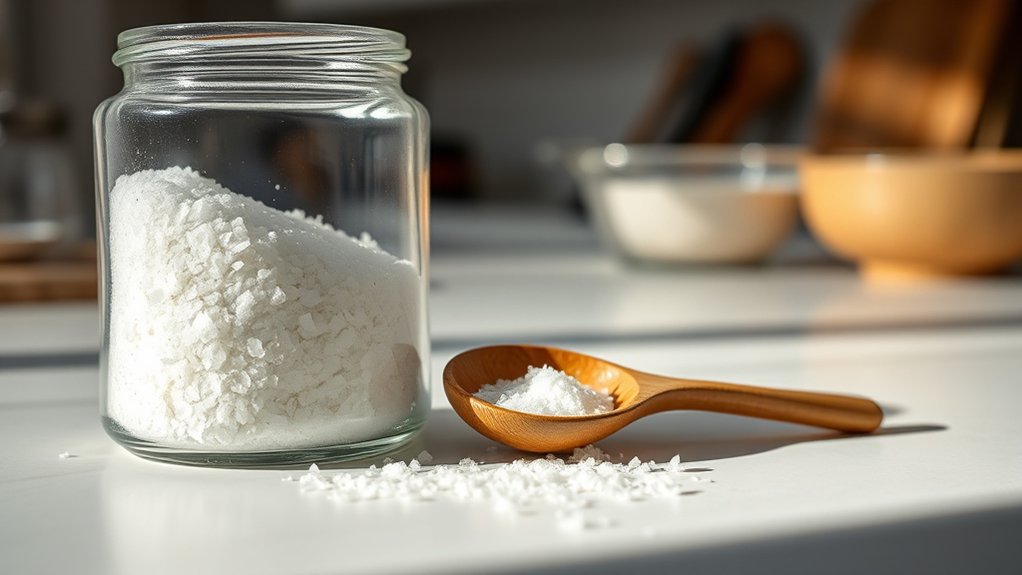
7 Tips to Use Kosher Salt Instead of Canning Salt Safely
Many home canners know the frustration of finding the right salt for their recipes. You’re not alone—navigating the differences between canning salt and other types can be tricky.
To safely use kosher salt instead of canning salt, start by choosing fine-grain, additive-free varieties for better dissolving. Adjust your measurements—about 1.5 teaspoons of kosher salt equals 1 teaspoon canning salt—and weigh if possible for accuracy.
Always dissolve kosher salt in warm liquids early in cooking, stirring well to prevent crystals.
Store it properly in a cool, dry place and avoid strong odors.
If you keep these tips in mind, you’ll improve your canning results and flavor.
Key Takeaways
- Adjust measurements by about 1.5 times when swapping kosher salt for canning salt. This helps you get the right level of saltiness in your recipes.
- Make sure to dissolve the kosher salt completely in warm or hot water early on. This ensures even mixing and keeps everything safe.
- Use finer-grain kosher salt if you want more control over measurement. It dissolves faster and makes the process easier.
- Always taste your mixture after dissolving the salt. Adjust the seasoning as needed to reach your desired flavor safely.
- Keep your kosher salt in a dry, airtight container. Store it away from moisture and strong odors to keep it fresh during canning.
Can You Safely Use Kosher Salt for Canning?
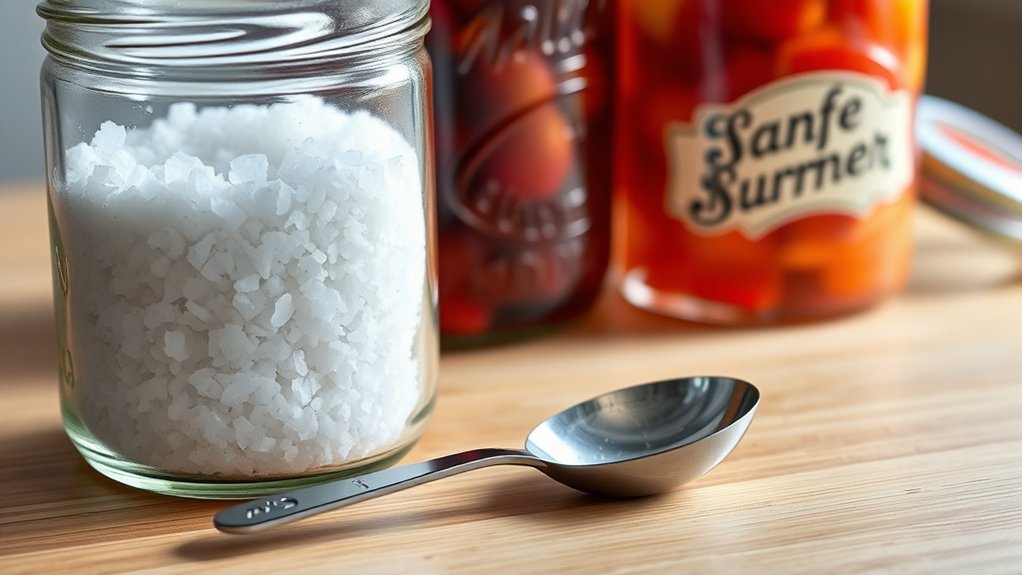
Is it safe to use kosher salt for canning? Generally, it’s not recommended.
Kosher salt has a different grain size and texture compared to canning salt, which can affect your measurements and the safety of the preserved food. Canning salt is specifically processed to dissolve easily and uniformly, reducing the risk of uneven salinity that might lead to spoilage or bacteria growth.
Kosher salt’s coarse crystals may not dissolve completely, creating inconsistent salt levels. This inconsistency can compromise the safety and quality of your canned goods.
It’s always best to stick with canning salt for preserving foods, ensuring precise salinity and safety standards. Using the appropriate salt type helps prevent spoilage and keeps your canned foods safe to eat.
How Does Kosher Salt Differ From Canning Salt?
Kosher salt and canning salt mainly differ in grain size and texture. Kosher salt has larger, coarser grains, while canning salt is finer.
Their mineral content and additives also vary, which can impact flavor and processing. This is something to keep in mind depending on your needs.
Knowing these differences can help you choose the best salt for your canning projects.
Grain Size and Texture
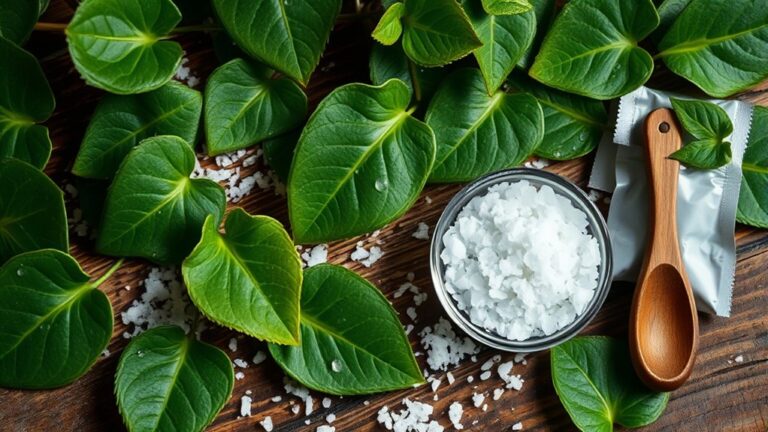
Because of their different grain sizes, kosher salt and canning salt have distinct textures that can affect your cooking and measuring. Kosher salt has larger, coarser grains, making it easy to pinch, sprinkle, or distribute evenly over foods.
Its texture allows for quick dissolution, which is helpful when seasoning dishes. Canning salt, on the other hand, has much finer grains, similar to table salt, making it more compact and denser.
This means a teaspoon of canning salt weighs more than a teaspoon of kosher salt, which can lead to inaccuracies if you’re substituting blindly. When swapping, always consider the grain size to adjust your measurements accordingly.
Using the right texture guarantees consistent seasoning and prevents over- or under-salting your recipes.
Mineral Content and Additives
While both kosher salt and canning salt are mainly made of sodium chloride, they differ a lot in their mineral content and additives. Kosher salt is usually less processed and contains trace minerals that can affect flavor and texture.
It often includes natural minerals like magnesium and calcium, which can give it a slightly different taste. Canning salt, on the other hand, is refined to remove impurities and usually has anti-caking agents to prevent clumping.
These additives can impact how the salt dissolves and interacts with food. So, if you’re substituting one for the other, keep in mind that the mineral content and additives might change the flavor or how it dissolves during processing.
Always check the labels to see what’s in your salt so you know exactly what you’re using.
How to Choose the Best Kosher Salt for Canning
When choosing kosher salt for canning, pay attention to grain size because larger crystals can be harder to dissolve evenly.
Look for options that are additive-free to ensure your preserved foods stay pure and safe.
Picking the right type helps you achieve consistent salting and better overall results.
Grain Size Variations
Choosing the right kosher salt for canning starts with understanding its grain size. Different sizes affect how much salt you use and how evenly it dissolves.
Fine grains are small and dissolve quickly, making them easier to measure precisely. Coarse grains are larger and may take longer to dissolve but can add texture.
Medium grains strike a balance between the two, offering versatility and are a common choice. When selecting salt, think about your recipe and what you prefer.
Here’s a quick comparison:
| Grain Size | Dissolution Rate | Best Use |
|---|---|---|
| Fine | Fast | Precise measurements, quick dissolving |
| Medium | Moderate | Versatile, popular choice |
| Coarse | Slow | Textured results, longer dissolution |
Choose the grain size that best fits your canning needs for the best results.
Additive-Free Options
Opting for additive-free kosher salt ensures you’re using a pure, natural product that won’t introduce unwanted chemicals or preservatives into your canned goods. When choosing kosher salt for canning, look for labels that specify “additive-free” or “no anti-caking agents.”
These options help keep your food natural and free from unnecessary additives that could affect flavor or safety. To make the best choice, check ingredient lists carefully for any additives or anti-caking agents.
Choose coarse or flake varieties, which are less likely to contain additives. It’s also a good idea to buy from reputable brands known for purity and quality standards.
Choosing additive-free salt helps maintain the integrity of your canned foods while ensuring safety and natural flavor.
Adjusting Your Measurements When Using Kosher Salt
Kosher salt has a coarser grain and a different density than canning salt, so you’ll need to adjust your measurements carefully.
Typically, kosher salt is less dense, meaning a tablespoon weighs less than a tablespoon of canning salt. To substitute accurately, use more kosher salt by volume—about 1.5 times the amount called for with canning salt.
For example, if a recipe calls for one teaspoon of canning salt, use about 1.5 teaspoons of kosher salt. Or, for precision, weigh the salts to ensure proper salinity.
Keep in mind that the coarser texture might also affect how quickly the salt dissolves. Stir well and taste as you go to adjust the seasoning.
How Kosher Salt Affects Canning: Flavor, Texture, and Preservation
Because kosher salt has a coarser texture and different mineral content, it can influence the flavor, texture, and preservation of your canned goods. It’s important to understand how it interacts with your recipes.
Its larger grains may result in a less uniform salt distribution, which can affect the overall taste. The mineral content can subtly change the flavor, sometimes adding a mineral-rich note that’s different from traditional canning salt.
The coarser texture impacts how quickly the salt dissolves, which can influence preservation. Keep these points in mind:
- Flavor profile: Kosher salt can give a milder or differently nuanced taste.
- Texture: Larger grains may lead to a slightly crunchier or uneven texture.
- Preservation: Differences in solubility might affect how well it preserves your produce.
Tips for Dissolving Kosher Salt Properly in Canning Recipes
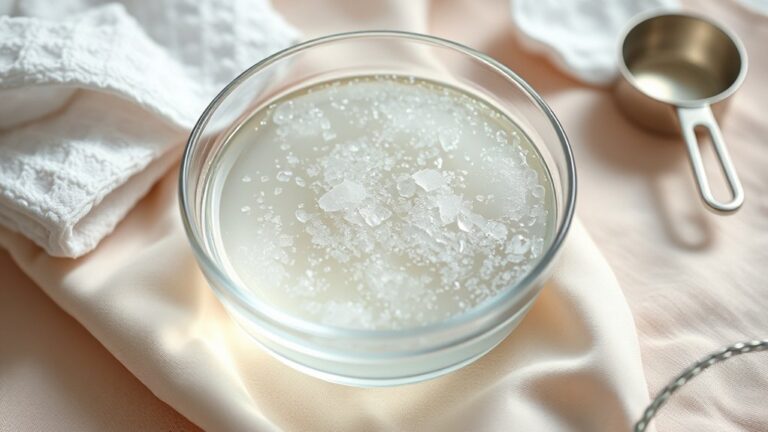
To guarantee your kosher salt dissolves properly in canning recipes, it’s best to add it early and give it enough time to fully incorporate with the other ingredients.
Start by dissolving the salt in warm or hot water before adding it to your mixture. Stir continuously to help break down the salt crystals quickly.
If you’re working with a thick or dense mixture, consider dissolving the salt separately in a small amount of hot liquid. Then, combine it with the rest of your ingredients.
Avoid adding kosher salt directly to cold liquids, as it may not dissolve completely and could lead to uneven seasoning.
Patience is key—allow the mixture to sit for a few minutes after adding the salt to ensure thorough dissolution.
Troubleshooting Common Issues When Using Kosher Salt in Canning
When using kosher salt in canning, you might run into issues like uneven seasoning or crystals that don’t dissolve. These problems can happen if you’re not careful about how you add the salt.
To avoid them, measure carefully and add the salt gradually. Stir well during cooking to help it spread evenly. If crystals stay undissolved, turn up the heat slightly and keep stirring—they’ll dissolve faster.
Using warm or hot liquids makes salt dissolve more effectively. Stir frequently during processing to prevent the salt from settling. Also, adjust the amount of salt based on your taste and the size of the crystals.
Frequently Asked Questions
Can Kosher Salt Impact the Acidity Levels in Canned Foods?
Kosher salt can impact the acidity levels in canned foods because it doesn’t have the same chemical properties as canning salt, which is usually pure sodium chloride.
While it mainly affects flavor and texture, using kosher salt might slightly change the pH. This could potentially influence preservation.
To stay safe, stick to recommended canning salts or make sure your recipe accounts for any differences in salt type.
Is Kosher Salt Approved by Food Safety Authorities for Canning?
Kosher salt isn’t officially approved by food safety authorities for canning. While many home canners use it for seasoning, it lacks the precise salt content and preservative qualities found in canning salt, which is specifically processed for safety.
Using kosher salt can lead to inconsistent results or safety issues. To guarantee your canned foods are safe, stick with canning salt or follow trusted recipes and guidelines.
How Does the Grain Size of Kosher Salt Affect Its Use in Canning?
The grain size of kosher salt really influences how you use it in canning. Larger grains mean you’ll need more salt to get the same level of salinity as finer canning salt, which can change your recipe’s results.
To keep things consistent, it’s best to measure by weight rather than volume. If needed, you can grind the salt to a finer texture to make it easier to measure accurately.
Always test your salt concentration to make sure your food is safely preserved and tastes just right.
Can Using Kosher Salt Alter the Shelf Life of Canned Products?
Using kosher salt instead of canning salt can affect the shelf life of your canned products. Kosher salt’s larger grains mean you might add more salt by volume, which can change the preservative levels.
This could lead to less effective preservation and increase the risk of spoilage over time. To keep things safe and ensure your food lasts, measure carefully, maybe use a scale for accuracy, and stick to the recommended salt amounts for canning.
Are There Specific Types of Kosher Salt Better Suited for Canning Purposes?
Think of choosing kosher salt for canning as selecting a trusted guide on a journey. Not all kosher salts are created equal; look for fine-grain varieties labeled “pickling” or “canning” to guarantee proper dissolving and preservation.
Coarse salts may leave residues, risking spoilage. So, pick a fine, pure kosher salt, and you’ll navigate your canning process safely, keeping your preserved foods fresh and secure.
Conclusion
So, next time you’re in a pinch and out of canning salt, remember that kosher salt can be a safe substitute if you adjust your measurements carefully.
Just like finding that unexpected jar in your pantry, using kosher salt might surprise you with great flavor and texture.
With a little attention, you’ll master the swap effortlessly. Who knew that a simple kitchen coincidence could make your canning process smoother and more flavorful?
And when it comes to canning salt, knowing how to use kosher salt safely can be a real game-changer in your kitchen.