How to Smoke Beef Brisket in an Electric Smoker in 10 Easy Steps
Many barbecue lovers dream of smoking the perfect beef brisket at home but get overwhelmed by the process. You’re not alone—smoking brisket can seem intimidating, especially if you’re new to electric smokers.
But don’t worry, with the right steps, you’ll be serving up tender, smoky brisket in no time.
To smoke beef brisket in your electric smoker, start by selecting a well-marbled brisket and preparing it with a dry rub or marinade.
Set up your smoker at 225-250°F, add wood chips, and place the brisket inside.
Maintain steady temperature and smoke, then wrap the brisket once it reaches the right internal temperature.
Allow it to rest, slice against the grain, and serve.
For detailed tips on each step, stay with us to uncover the full guide.
Key Takeaways
- Select a well-marbled, whole packer brisket and prepare it with trimming, scoring, dry brining, and bringing to room temperature.
- Apply a flavorful dry rub or marinade. Let it sit for a while so it can really soak in those flavors before you start smoking.
- Set up your electric smoker with water and quality wood chips. Preheat it to a steady 225-250°F.
- Keep an eye on the temperature and smoke levels as you go. When the brisket is done resting, wrap it up to keep those juices locked in.
- Check the internal temperature, aiming for 195-205°F. Rest the brisket for about 30 minutes.
- Finally, slice against the grain for tender, juicy results that everyone will love.
Choosing the Right Brisket and Electric Smoker
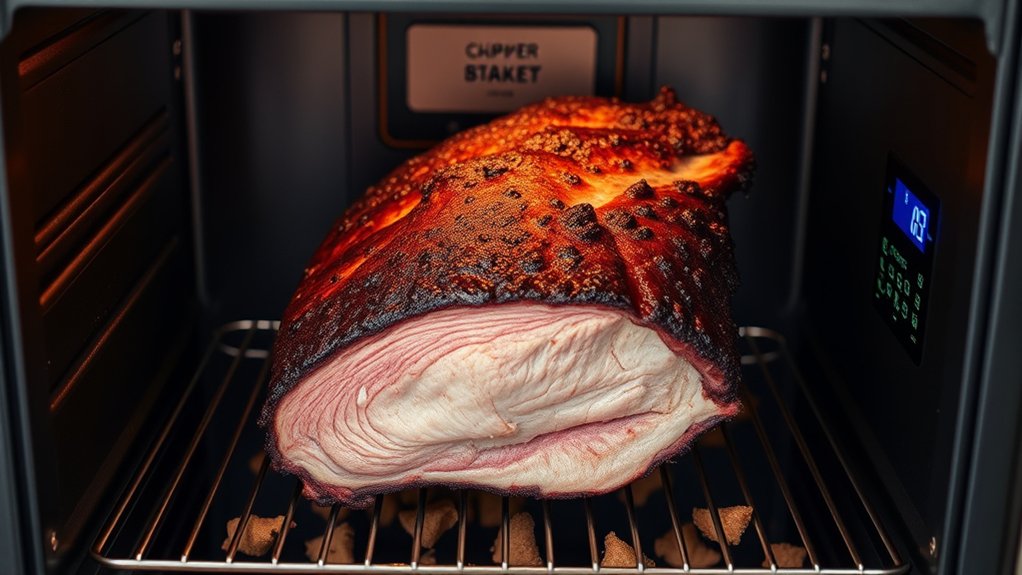
Selecting the right brisket is key to getting a tender, flavorful smoke. You want a cut with good marbling because the fat melts during cooking, keeping the meat moist and adding flavor.
Look for a whole packer brisket, which includes both the flat and point cuts. This gives you more options for trimming and cooking, making your results more versatile.
When choosing your electric smoker, prioritize one with adjustable temperature controls, good insulation, and a reliable heating element.
A larger capacity is helpful if you plan to smoke bigger cuts or multiple pieces.
Read reviews to find models that maintain consistent temperatures and have easy-to-use features.
The right combination of quality brisket and a dependable electric smoker is the foundation for a successful smoke.
Preparing Your Brisket for Smoking
Before you start smoking, take the time to prepare your brisket properly. This step ensures your meat turns out tender and full of flavor.
First, trim excess fat—remove about a quarter-inch layer to prevent greasiness and help the smoke penetrate evenly.
Next, score the surface with small incisions. This allows seasonings to seep in better and enhances flavor.
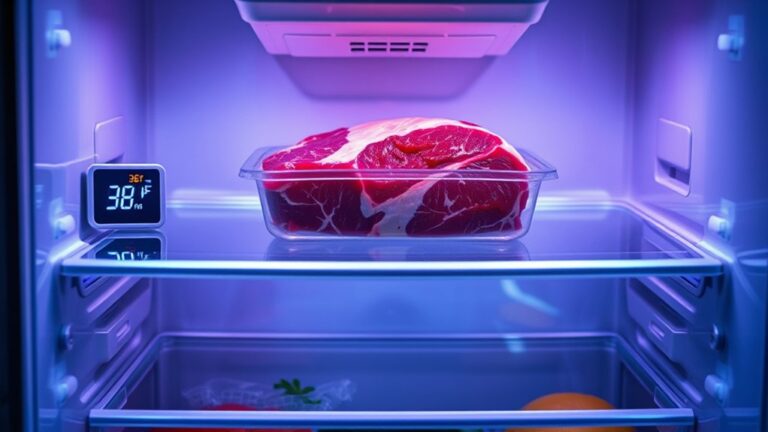
Then, dry brine your brisket by patting it dry and letting it sit uncovered in the fridge for a few hours or overnight. This step boosts flavor and keeps the meat moist.
Finally, bring the brisket to room temperature before smoking. This promotes even cooking and better texture.
Here’s what to focus on:
- Trim excess fat
- Score the surface
- Dry brine in the fridge
- Rest at room temperature
Selecting the Best Dry Rub and Marinade
Choosing the right dry rub and marinade can really make a difference in how your brisket turns out. A good dry rub boosts flavor and creates a savory crust, so pick a blend with salt, pepper, paprika, garlic powder, and cumin for a classic taste.
You can also add sugar for sweetness or chili powder if you like some heat. Marinades help tenderize the meat and boost flavor, so go for a mix of acid like vinegar or citrus juice, oil, and herbs or spices.
Marinate your brisket for at least a few hours or overnight to get the most flavor absorption. Feel free to experiment with different spice combos and marinades to find what suits your taste best.
The right seasoning guarantees a flavorful, juicy, and tender smoked brisket.
Setting Up Your Electric Smoker for Perfect Results
Once you’ve prepared your brisket with the perfect dry rub or marinade, setting up your electric smoker correctly ensures those flavors turn into tender, smoky perfection. Start by placing your smoker on a stable surface in a well-ventilated area.
Fill the water pan if your model has one; this helps keep moisture in during the cook. Next, load your smoker with quality wood chips or chunks, choosing flavors like hickory or mesquite for the best smoky taste.
Fill the water pan to maintain moisture and add quality wood chips for rich, smoky flavor.
Finally, turn on your smoker and set it to the recommended initial temperature, usually between 225°F and 250°F. Focus on a few key steps: make sure the power source is reliable and plugged in securely.
Position the water pan correctly for even moisture distribution. Load the wood chips properly for consistent smoke. And preheat the smoker before placing your brisket inside.
Controlling Temperature and Smoke During Your Brisket Smoke
Controlling the temperature and smoke levels during your brisket smoke is key to getting tender, flavorful meat. Keeping the heat steady prevents drying out or undercooking, while consistent smoke adds rich flavor.
Use your electric smoker’s controls to set the temperature between 225°F and 250°F. Watch the smoke output—too much can make the meat bitter, too little won’t give enough flavor.
Adjust vents or add wood chips as needed to maintain the right balance. Here’s a quick emotional guide to help you stay confident:
| Temperature Control | Smoke Balance | Outcome |
|---|---|---|
| Keep heat steady | Keep smoke steady | Juicy, tender meat |
| Avoid fluctuations | Use moderate smoke | Rich, smoky flavor |
| Be patient | Follow proper timing | Perfect crust |
How Long to Smoke Your Brisket for Tenderness
The ideal smoking time for tender brisket varies based on size and temperature, but usually falls between 1.5 to 2 hours per pound.
Things like the thickness of the meat, how steady your smoker stays at temperature, and how well-done you want it all matter.
Keeping an eye on the internal temperature is key to getting that perfect, melt-in-your-mouth tenderness.
Ideal Smoking Duration
Understanding the ideal smoking duration is key to getting tender, flavorful brisket. Usually, you want to smoke your brisket for about 1 to 1.5 hours per pound at 225°F.
This slow process helps break down connective tissues, making the meat juicy and tender. Keep an eye on the internal temperature; it should hit around 195°F to 205°F for the best results.
To stay on track, remember these key points:
- Smoke for roughly 1 to 1.5 hours per pound.
- Keep your smoker steady at 225°F.
- Regularly check the internal temperature.
- Total smoking time can range from 8 to 16 hours depending on the size.
Follow these guidelines for perfectly smoked brisket every time.
Factors Influencing Tenderness
Several factors influence how long you should smoke your brisket to get it just right. The size and thickness of the meat are key because bigger, thicker cuts take more time to break down connective tissues and become tender.
The quality of the brisket also matters. Higher-quality meat with good marbling tends to smoke more evenly and quickly, making your job a little easier. The temperature you smoke at is important too; lower and slower heat helps convert collagen into gelatin, which keeps the brisket juicy and tender.
Humidity levels and your choice of seasonings can affect how well the meat retains moisture. Ultimately, it’s best to keep an eye on the internal temperature rather than just relying on time. Patience and paying attention to these factors will help you achieve that perfect, melt-in-your-mouth brisket.
Wrapping and Resting Your Brisket for Maximum Juiciness
Wrapping your brisket correctly helps lock in moisture and keeps it tender. Resting the meat allows the juices to redistribute, making every bite juicy and flavorful.
Using the right techniques during wrapping and resting really boosts the tenderness and juiciness of your smoked brisket. It’s all about keeping that meat juicy and flavorful from start to finish.
Properly Wrap the Brisket
Once your brisket reaches the desired internal temperature, it’s important to wrap it tightly to lock in moisture and continue cooking evenly. Proper wrapping helps keep the juices inside and prevents the meat from drying out.
To do this effectively, use heavy-duty aluminum foil or butcher paper for a tight seal. Place the brisket on a large sheet, then fold the edges over completely.
Make sure there are no gaps so steam and moisture stay trapped inside. Return the wrapped brisket to the smoker, keeping the temperature steady.
Wrapping at the right time and sealing it well helps maximize tenderness and juiciness. This step is crucial for that melt-in-your-mouth texture everyone loves.
Rest Time Importance
After you take the brisket out of the smoker, resting is really important for keeping it juicy. It gives the juices a chance to move around and settle, so they don’t all spill out when you cut.
Wrap the brisket loosely in foil or a clean towel to help keep it warm and moist while it rests. About 30 minutes is a good rule of thumb for this.
Resting breaks down the muscle fibers, making the meat more tender and juicy. If you skip this step, the juices might escape, and your brisket could end up dry and less flavorful.
Be patient and resist the urge to cut into it right away. Proper resting ensures every slice stays moist and tasty, making your brisket much more enjoyable.
Juiciness Preservation Techniques
To lock in the brisket’s natural juices and make sure every bite stays moist, focusing on proper wrapping and resting techniques really helps. Wrapping your brisket during the final stages keeps moisture in and prevents it from drying out.
Resting is just as important. Letting the wrapped brisket sit for at least 30 minutes allows the juices to redistribute, making each slice tender and flavorful.
Here are four key tips:
- Wrap the brisket tightly in aluminum foil or butcher paper once it hits the right internal temperature.
- Rest it for at least 30 minutes before slicing.
- Keep the wrapped brisket in a warm spot or a cooler to maintain its temperature during resting.
- Slice against the grain to maximize tenderness and juiciness.
Checking for Doneness and Ensuring Juicy, Tender Meat
How can you tell when your brisket is perfectly cooked and still juicy? The key is checking its internal temperature and texture. Aim for 195-205°F (90-96°C); at this range, collagen breaks down and the meat becomes tender.
Use a probe thermometer for accuracy. When done, the brisket should feel soft yet still have some firmness. Resting the meat for at least 30 minutes helps juices redistribute, making it tender and juicy.
| Indicator | Description |
|---|---|
| Internal Temperature | 195-205°F (90-96°C) for tenderness |
| Feel Test | Slightly soft but not mushy |
| Juiciness | Juices visible when sliced |
| Rest Time | Rest for 30+ minutes before slicing |
Slicing and Serving Your Smoked Brisket
Once your brisket has rested and cooled slightly, it’s time to get it ready for slicing and serving. Proper slicing guarantees each piece stays juicy and tender.
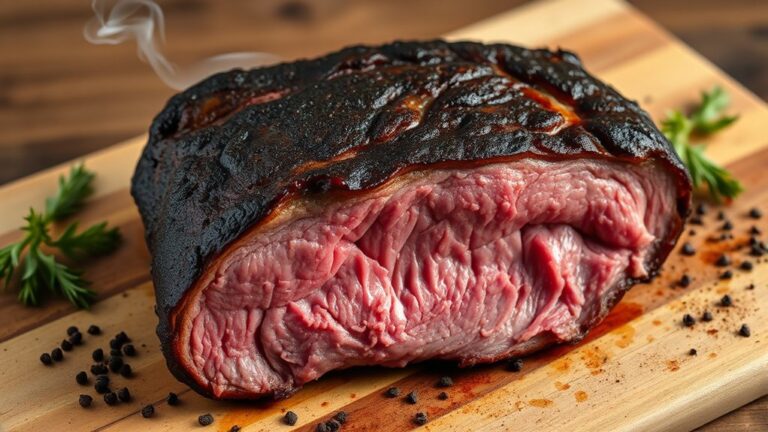
First, place the brisket on a clean cutting board. Then, identify the grain—look for the lines of muscle fibers.
Next, slice against the grain for maximum tenderness. Cut into thick or thin slices depending on your preference. Use a sharp carving knife to make clean cuts.
Be careful not to press down too hard, so you don’t squeeze out the juices. Arrange the slices on a platter or serve directly from the cutting board.
Proper slicing improves texture and flavor, giving everyone a perfect bite. Enjoy your smoked brisket with your favorite sides and sauces!
Troubleshooting Common Brisket Smoking Problems
Even with careful preparation, you might run into some common problems when smoking brisket. One issue is the meat turning out tough, usually from cooking at too high a temperature or for too short a time.
To fix this, lower the heat and give the brisket more time to break down slowly. If your brisket becomes dry, it’s probably overcooked or cooked too quickly. Wrapping it in foil or butcher paper during the cook can help keep it moist.
A stall, where the temperature stops rising, is normal but frustrating. Just be patient—this is common. If your smoke flavor is weak, check that your wood chips or pellets are producing enough smoke.
Also, avoid opening the lid too often, because that releases smoke and heat, which can weaken the flavor.
Frequently Asked Questions
Can I Use a Frozen Brisket for Smoking?
Yes, you can smoke a frozen brisket, but it’s not the best way to go. You’ll need to give yourself extra time—about 1.5 times longer than if it were thawed.
Keep your smoker steady at around 225°F, and use a meat thermometer to check when it’s done. For the best results, it’s better to thaw the brisket in the fridge overnight before smoking.
Thawing ensures even cooking and helps you get tender, flavorful meat.
How Do I Prevent the Brisket From Drying Out?
To prevent your brisket from drying out, keep the smoker’s temperature steady and maintain moisture. Wrapping the brisket in foil or butcher paper during smoking helps lock in juices, especially after it hits the stall.
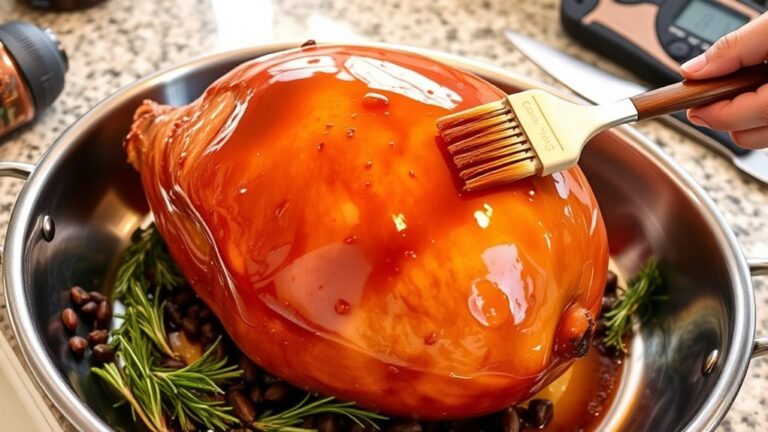
You can also place a water pan in the smoker to add humidity, which helps keep the meat moist. Basting the brisket occasionally with juices or a marinade is another good way to add moisture.
Finally, let the brisket rest for at least 15 minutes before slicing. This allows the juices to redistribute, making your brisket tender and juicy.
What Wood Chips Are Best for Electric Smokers?
You should use hardwoods like hickory, oak, or mesquite for electric smokers, as they provide strong, rich flavors that complement beef brisket.
If you prefer a milder taste, try fruit woods like apple or cherry. Soak your wood chips in water for about 30 minutes before adding them to prevent burning.
This helps ensure consistent smoke production, which enhances your brisket’s flavor without overpowering it.
Should I Trim Excess Fat Before Smoking?
Yes, you should trim excess fat before smoking. Removing the thick layer of fat helps the smoke penetrate the meat better and prevents excessive flare-ups.
Trim off any hard, thick fat caps or silverskin, but leave a thin layer for moisture and flavor. This balance guarantees your brisket stays juicy without being overly greasy.
The result is a more tender, flavorful finished product.
How Do I Store Leftover Smoked Brisket Properly?
Leftover smoked brisket is like a treasure chest waiting to be reopened. Wrap it tightly in aluminum foil or put it in an airtight container to keep the moisture in.
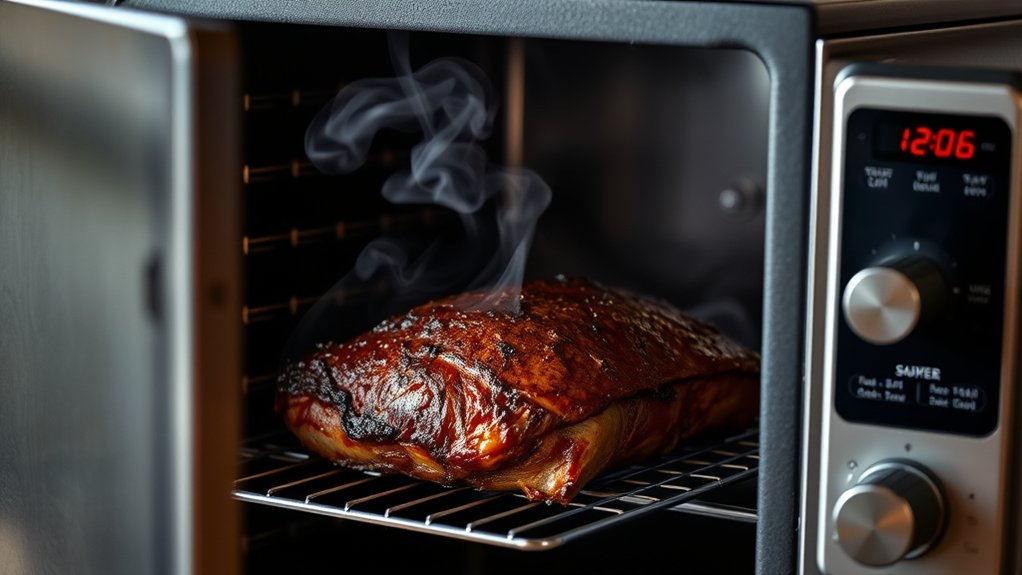
Store it in the refrigerator for up to 3-4 days or in the freezer for 2-3 months. To reheat, warm it slowly in the oven or microwave.
Enjoy your smoky goodness again, just like the first bite.
Conclusion
So, you’ve mastered the art of smoking brisket in your electric smoker—who knew it could be so simple? Now, enjoy your juicy, smoky masterpiece and maybe impress some friends with your newfound skills.
Just remember, even the best brisket can’t save a BBQ party if you forget the sides. Ironically, the real trick isn’t just the smoke, it’s knowing when to stop.
Happy smoking! And with your new skills, you’re all set to make some truly amazing smoked beef brisket in your electric smoker.