Ideal Freezer Temp for Food Safety?
Many people struggle with keeping their food fresh and safe in the freezer. It’s easy to wonder if you’re doing everything right or if your food might be at risk. You’re not alone—proper freezer temperature is a common concern.
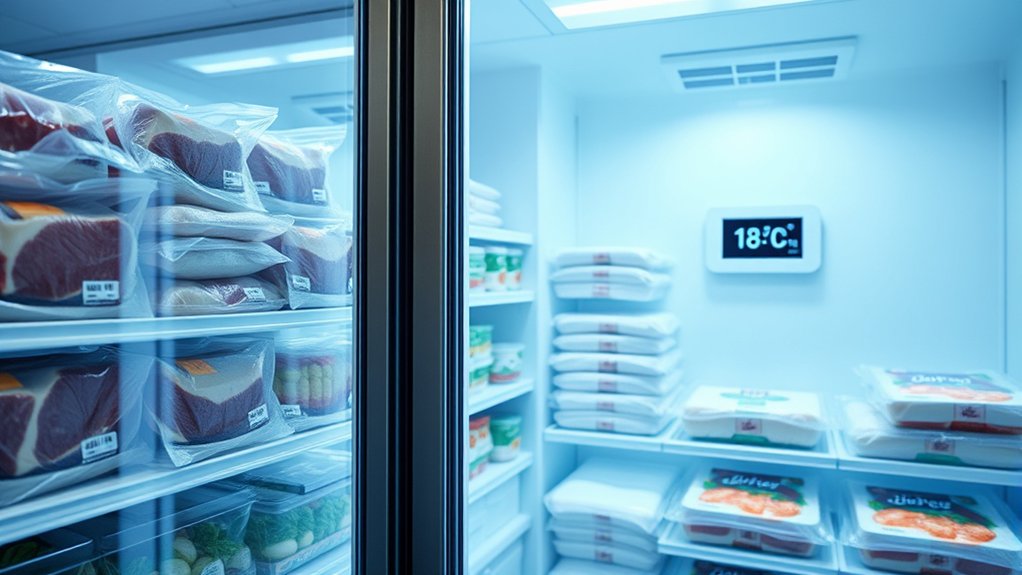
To guarantee food safety, keep your freezer at 0°F (-18°C) or lower. This temperature prevents bacteria growth, maintains food quality, and stops freezer burn.
Use a thermometer to check if your freezer stays steady, adjusting the thermostat if needed. Avoid frequent opening and monitor for frost buildup or strange odors, which can indicate temperature issues.
Staying on top of these tips helps keep your food fresh longer. There’s more useful advice if you continue exploring.
Key Takeaways
- Keep the freezer at 0°F (-18°C) or lower for the best food safety.
- Maintaining a consistent temperature helps prevent bacteria growth and keeps your food fresh.
- It’s a good idea to use a thermometer to check the temperature regularly and make adjustments as needed.
- If you notice frost buildup or uneven ice, it might mean the temperature is fluctuating, so you’ll want to fix that.
- Properly organizing your freezer and using airtight containers can also help keep food safe and prevent spoilage.
What Is the Ideal Freezer Temperature for Food Safety?
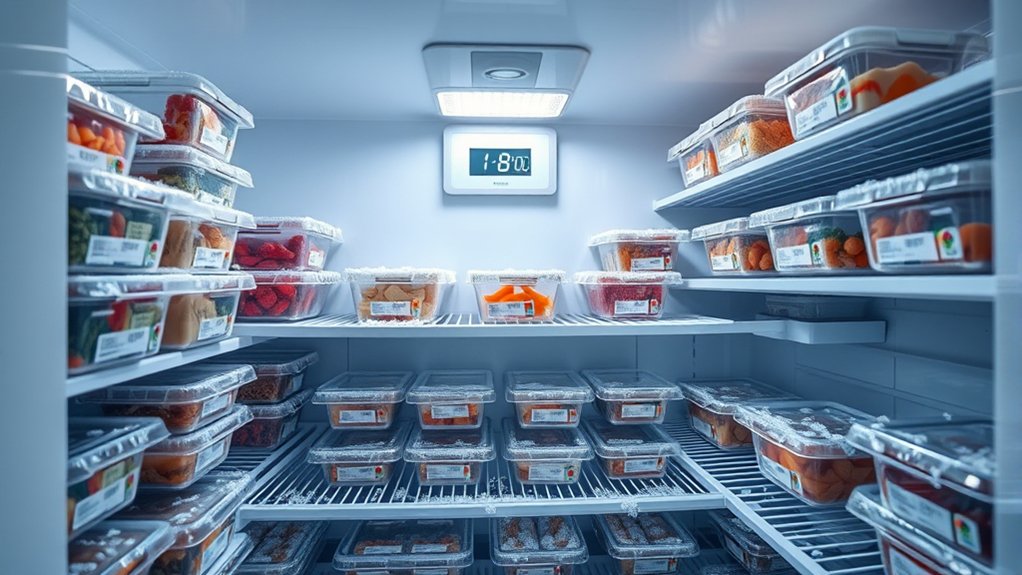
Ever wondered what temperature keeps your frozen food safe? The answer is simple: keep your freezer at 0°F (-18°C). This is the perfect temperature to stop bacteria from growing and make sure your food stays safe to eat.
Keep your freezer at 0°F (-18°C) to prevent bacteria growth and keep your food safe and fresh.
When your freezer stays at this temperature, it prevents most bacteria from multiplying, helping to preserve the quality and safety of your groceries. If the temperature rises above 0°F, your food could thaw and refreeze, which can harm both safety and texture.
Use a reliable thermometer to check your freezer regularly. Keeping it at 0°F isn’t just about safety; it also helps prevent food spoilage and freezer burn.
Consistently maintaining this temperature ensures your frozen foods stay fresh, safe, and ready whenever you need them.
Why Keeping Your Freezer at the Right Temperature Matters
Maintaining the correct freezer temperature is key to keeping your food fresh and safe. When your freezer is at the right temperature, you can prevent bacteria growth, freezer burn, and keep flavors and textures just right.
If it’s too warm, your perishable items can spoil quickly, which increases the risk of foodborne illnesses. On the other hand, if it’s too cold, it can cause frost buildup and waste energy.
Keeping your freezer at the proper temperature also helps you save money by reducing food waste and lowering energy bills. It’s a simple way to protect your food and your wallet.
How to Check and Adjust Your Freezer Temperature Easily
Checking and adjusting your freezer temperature is pretty simple and important for keeping your food fresh. First, put a freezer thermometer in the middle of your freezer to get an accurate reading. Wait at least 24 hours before checking the temperature again.
If it’s above 0°F (-18°C), turn the thermostat dial, usually inside the freezer or on the control panel, to a colder setting. If it’s too cold, just turn the dial to a warmer setting. Try to avoid changing the temperature too often to keep things steady.
After making an adjustment, wait another 24 hours and then check the thermometer again. Keeping the right temperature helps prevent spoilage and freezer burn, so your food stays safe and fresh longer.
Common Freezer Temperature Mistakes to Avoid
Many people set their freezer temperature too high or too low, which can affect food safety and energy use.
Ignoring temperature changes can lead to uneven cooling and food spoilage.
To keep everything running smoothly, it’s important to check and adjust your freezer settings regularly.
Setting Incorrect Temperature Levels
Setting the wrong temperature levels is a common mistake that can compromise your freezer’s efficiency and the safety of your stored food. If it’s too warm, bacteria can grow, risking foodborne illnesses. If it’s too cold, you might waste energy or cause freezer burn.
To avoid this, verify your freezer stays around 0°F (-18°C). Be mindful of these common errors:
- Setting the temperature too high or too low
- Forgetting to regularly check and adjust settings
- Relying on outdated or inaccurate thermometers
- Ignoring signs of temperature fluctuations or frost buildup
Keeping your freezer at the correct temperature helps maintain food quality, reduces energy costs, and prevents spoilage. Regularly monitoring and adjusting your freezer’s temperature is key to safe, efficient operation.
Ignoring Temperature Fluctuations
Ignoring temperature fluctuations can lead to inconsistent freezer performance and compromise your stored food’s safety. When you don’t monitor or address changes in temperature, your freezer might warm up or cool down unexpectedly.
These fluctuations can cause food to thaw slightly and refreeze, which impacts texture and quality. More importantly, it creates an environment where bacteria can grow if temperatures rise above safe levels.
You might not notice small changes if you rely only on a freezer’s built-in thermometer. To prevent this, regularly check your freezer’s temperature and keep it steady around 0°F (-18°C).
Avoid leaving the door open for long periods or overloading the freezer, as these actions can cause temperature swings. Consistent monitoring helps keep your food safe and maintains ideal freezing conditions.
Tips for Maintaining the Correct Freezer Temperature
Maintaining the correct freezer temperature is essential to keep your food safe and preserve its quality. To do this effectively, regularly check your freezer’s temperature with a reliable thermometer.
Keep the dial or control set to around 0°F (-18°C), which is ideal for food safety. Avoid overloading your freezer, as this can restrict airflow and cause uneven cooling.
Keep the door closed as much as possible to prevent temperature fluctuations. Furthermore, periodically defrost your freezer if it isn’t frost-free to maintain efficiency.
Lastly, organize your food so that air can circulate freely, ensuring even cooling throughout. By following these simple tips, you’ll help your freezer operate at the best temperature, keeping your food safe and fresh longer.
How to Know If Your Freezer Is Too Hot or Too Cold?
You can tell if your freezer is too hot or cold by watching for signs like frost buildup or thawed food. These clues can help you catch problems early.
Using a freezer thermometer gives you an accurate reading, so you know if adjustments are needed. It takes the guesswork out of temperature checking.
Keeping your freezer organized also makes it easier to spot temperature issues quickly. Plus, it helps your food stay fresh longer.
Signs of Temperature Fluctuations
When your freezer’s temperature shifts outside the ideal range, it often shows subtle signs that you can notice if you’re attentive. You might see frost buildup or ice crystals forming unevenly, which indicates temperature inconsistencies.
Food may develop a strange odor, or you might notice ice crystals on items that shouldn’t have them. Changes in food texture, like freezer burn or thawed areas, also signal fluctuations.
Moreover, if your freezer runs constantly or cycles on and off unexpectedly, it’s a sign the temperature isn’t stable. Keep an eye out for excess frost or ice buildup, uneven or rapid freezer burn, unusual odors from stored food, and frequent cycling or nonstop running.
These signs suggest temperature fluctuations that could compromise your food’s safety and quality.
Using a Freezer Thermometer
To accurately determine if your freezer is too hot or too cold, a reliable freezer thermometer is essential. Place the thermometer in the center of the freezer, away from walls or door openings, for an accurate reading.
Wait at least 8 hours or overnight before checking the temperature. Confirm the thermometer is calibrated correctly; some models require manual adjustment.
Once you get a reading, compare it to the recommended temperature of 0°F (-18°C). If it’s higher, your freezer isn’t cold enough; if it’s lower, it’s too cold. Regularly monitoring the temperature helps you adjust your settings and guarantees food stays safe and properly frozen.
This simple step can prevent spoilage and foodborne illnesses.
Proper Freezer Organization
Proper freezer organization is key to keeping your food safe and at the right temperature. When your freezer is well-organized, you can spot any temperature issues before they impact your food quality.
Keep similar items together and avoid overstuffing, which can block airflow. Regularly check the temperature with a thermometer to catch any deviations early.
Make sure vents aren’t blocked by frozen items so cold air can circulate properly. Label and date your food to help use older items first and prevent spoilage.
Keep an eye out for signs of temperature problems like frost buildup or freezer burn. By maintaining a tidy, organized freezer, you’ll help keep your food fresh longer and at the correct temperature.
Frequently Asked Questions
How Often Should I Check My Freezer Temperature?
You should check your freezer temperature at least once a month to make sure it stays at or below 0°F (-18°C). Regular checks help you catch any fluctuations early, which can prevent food from spoiling and keep everything safe.
Use a reliable thermometer, and it’s a good idea to keep a log of your readings so you can track any changes over time. If you notice the temperature rising, troubleshoot your freezer right away to keep your food safe and stored properly.
What Are Signs My Freezer Temperature Is Incorrect?
You’ll notice your freezer temperature might be off if your frozen foods develop ice crystals or freezer burn, or if they start to thaw and then refreeze.
Frost buildup on the walls, unusual condensation, or a compressor that runs constantly can also be signs of trouble.
If your ice cream softens quickly or your frozen veggies aren’t as firm as they should be, it’s time to check and adjust the temperature.
Regularly monitoring your freezer helps keep your food safe and fresh.
Does Freezer Temperature Affect Food Quality?
Yes, freezer temperature really impacts food quality. When your freezer isn’t cold enough, big ice crystals form and can mess up the texture of meats and veggies, leading to freezer burn.
On the other hand, if it’s too cold, it can cause freezing injuries on delicate items. Keeping the right temperature helps your food stay fresh, keeps its flavor, and preserves its texture.
This also helps prevent spoilage and reduces waste. Be sure to check your freezer’s temperature regularly so your food stays at its best.
Can a Freezer Be Too Cold for Safe Storage?
Yes, your freezer can be too cold, like a winter that’s too harsh, risking freezer burn and damaging your food’s texture and flavor. Keep it around 0°F (-18°C) to preserve freshness safely.
If it gets too cold, you might waste energy or cause freezer burn; if it’s too warm, bacteria can thrive. Think of your freezer as a delicate balance—maintain the right temperature to protect your food’s safety and quality.
What Tools Are Best for Measuring Freezer Temperature?
You should use a digital or dial thermometer designed for freezers to measure the temperature accurately. Place the thermometer in the center of the freezer, away from walls or door areas for the best reading.
Digital thermometers often provide quick, precise results, making them a great choice. Regularly checking your freezer’s temperature guarantees food stays safe and maintains quality.
This helps you avoid spoilage or health risks and keeps everything running smoothly.
Conclusion
Keeping your freezer at the right temperature isn’t just about quality—it’s about safety too. Bacteria can multiply rapidly at temperatures above 40°F, which increases your risk of foodborne illness.
Regularly checking and adjusting your freezer helps ensure your food stays both safe and fresh. Those small temperature mistakes can add up, so it’s worth paying attention.
Stay vigilant and maintain the ideal freezer temperature. Knowing the proper setting gives you peace of mind that your frozen foods are safe to eat.