What Is a Lean Cut of Beef and How Do You Cook It?
Are you tired of cooking beef that ends up tough and flavorless? Many people struggle with choosing the right cuts and methods to get juicy, tender results.
If you’re looking for healthier options that don’t sacrifice taste, understanding lean cuts of beef can make all the difference.
A lean cut of beef has less fat and marbling, making it a healthier choice for high-protein meals. Popular options include sirloin, tenderloin, and round steaks, which cook best with quick, high-heat methods like grilling, broiling, or pan-searing to keep them tender and juicy.
Avoid slow cooking, which can make these cuts tough.
Using marinades or seasoning enhances flavor, and resting the meat helps lock in juices.
Keep exploring to uncover more tips and delicious recipes.
Key Takeaways
- Lean cuts of beef have less fat and marbling, offering high-quality protein and supporting health goals.
- Common lean cuts include sirloin, tenderloin, and round steaks. Less common options are eye of round and top round.
- Quick, high-heat methods like grilling, broiling, and pan-searing are best for preserving moisture and tenderness.
- Avoid overcooking and slow-cooking methods to prevent toughness. Aim for medium-rare to medium doneness for the best results.
- Rest the meat for 5-10 minutes after cooking. This helps retain juices and enhances flavor and texture.
What Is a Lean Cut of Beef and Why Does It Matter?
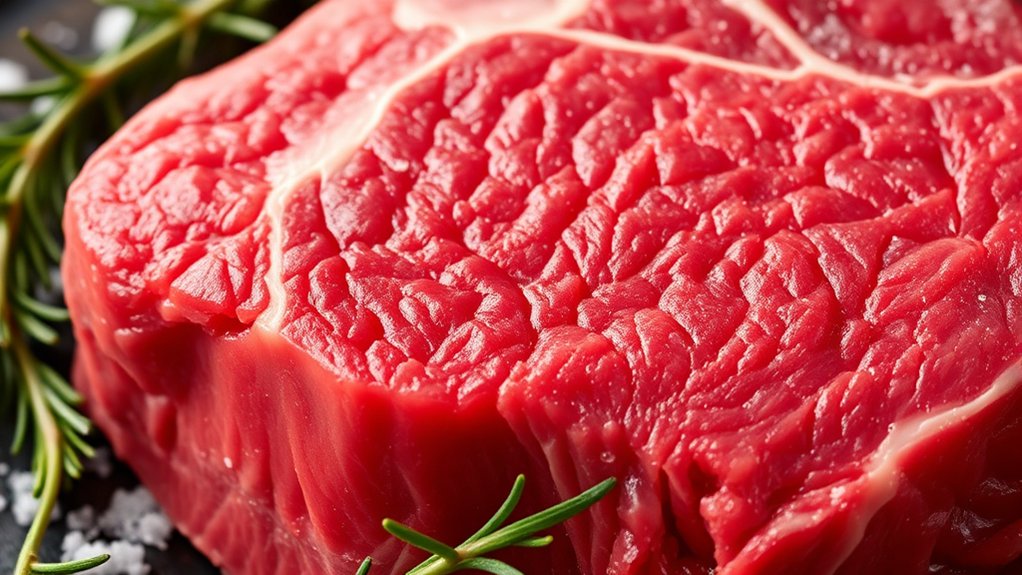
A lean cut of beef is a piece of meat that has less fat compared to other cuts. It’s a healthier choice if you want to cut down on fat intake. These cuts usually have less marbling, so you get high-quality protein without extra calories from fat.
Choosing lean beef can help you manage your weight, lower your cholesterol, and support heart health. It’s especially helpful if you’re on a specific diet or trying to eat more nutritious foods.
Knowing what qualifies as lean beef makes it easier to make smart choices at the grocery store or when eating out. By understanding the importance of lean cuts, you can enjoy tasty meals while sticking to your health goals.
Which Lean Beef Cuts Should You Know About?
You should familiarize yourself with common lean cuts like sirloin and tenderloin, which are easy to find and versatile.
But don’t overlook less common options like round or flank steak, which can be just as healthy with the right preparation.
Knowing these choices helps you make smarter, leaner meals without sacrificing flavor.
Common Lean Cuts
When choosing lean beef cuts, knowing which options are low in fat but still flavorful can make a big difference in your meals. Common lean cuts include sirloin, tenderloin, and round steaks.
Sirloin is versatile and tender, making it great for grilling or broiling. Tenderloin, often called filet mignon, is one of the leanest and is perfect for quick, high-heat cooking.
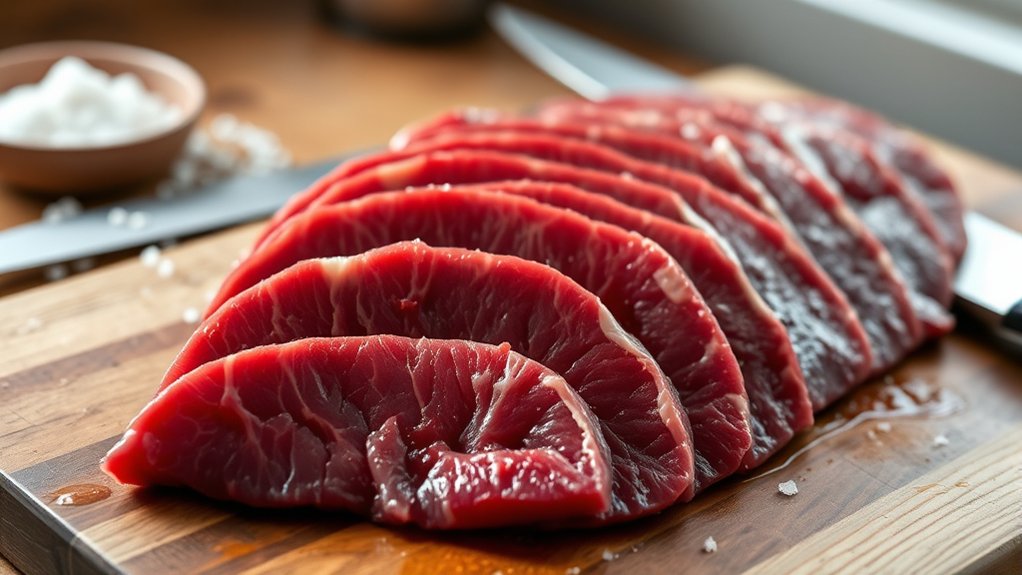
Round cuts like top round or eye of round are lean and budget-friendly but can be tougher. Slicing thin or slow-cooking helps tenderize them. Flank steak is another lean option, ideal for marinating and grilling.
These cuts offer a good balance of flavor and health benefits, making them popular choices for healthier beef dishes.
Less Common Options
Beyond the common options like sirloin and tenderloin, there are lesser-known lean cuts that can add variety to your beef dishes. Cuts like eye of round, top round, and bottom round are often overlooked but are incredibly lean and versatile.
These cuts work well for roasting, pot roasting, or thin slicing for stir-fries and sandwiches. Moreover, brisket flats and beef shank offer unique flavors with proper slow cooking, making them excellent for stews and braises.
While they may require a bit more preparation or cooking time, they’re budget-friendly options that deliver lean protein. Investigating these lesser-known cuts can diversify your meals and help you uncover new textures and flavors while maintaining a focus on health.
How Can You Spot Lean Beef When Shopping?
Wondering how to identify lean beef at the grocery store? Look for cuts labeled “lean” or “extra lean” on the packaging.
Check the nutrition label for the fat percentage; aim for options with less than 10 grams of total fat per serving.
Bright red meat usually indicates freshness, but don’t rely solely on color—fat marbling can be misleading. Focus on visible fat instead.
Lean cuts have minimal surface fat and little to no marbling within the meat. You can also ask your butcher for recommendations on lean cuts like sirloin or round.
Finally, pay attention to the cut’s name, as certain labels are associated with leaner options. By combining these tips, you’ll easily spot healthier, leaner beef choices.
What Are the Best Ways to Cook Lean Beef?
Curious about the best ways to cook lean beef? You’ll want to focus on methods that prevent drying out and keep the meat moist.
Quick, high-heat techniques like grilling, broiling, or pan-searing work really well because they cook the meat fast and lock in juices. Stir-frying is another good option, letting you cook small pieces quickly over high heat.
Braising or slow-cooking lean beef isn’t ideal because these methods can make the meat tough if not done carefully. When cooking lean cuts, don’t overcook—aim for medium-rare to medium depending on the cut.
Using a marinade or a little oil helps keep the meat moist. After cooking, rest the beef so the juices have time to redistribute, giving you a tender bite.
How Can You Keep Lean Beef Juicy and Tender?
How can you guarantee lean beef stays juicy and tender? The secret is to avoid overcooking it since lean cuts have less fat to keep them moist. Use a meat thermometer to cook to the right internal temperature—about 130°F for medium-rare or 140°F for medium.
Marinate the beef beforehand to add moisture and flavor, especially if you’re grilling or broiling. Let the meat rest for a few minutes after cooking so the juices can redistribute throughout.
Searing the beef quickly over high heat helps lock in moisture, while finishing with a lower heat prevents it from drying out.
What Common Mistakes Should You Avoid When Cooking Lean Beef?
One common mistake is overcooking lean beef, which makes it dry and tough.
You should also avoid skipping the step of letting the meat rest after cooking, as this helps retain juices.
Paying attention to these details guarantees your beef stays juicy and flavorful.
Overcooking Leads Dryness
Overcooking lean beef is a common mistake that quickly turns it into a dry, tough dish. Since lean cuts have less fat, they lose moisture faster when cooked too long.
When you cook beef beyond the right temperature, the muscle fibers tighten and squeeze out moisture, resulting in dryness. To avoid this, keep a close eye on the internal temperature with a meat thermometer.
For most lean cuts, aim for medium-rare to medium doneness—about 130-140°F. Remove the beef from heat as soon as it reaches the target temperature to prevent carryover cooking.
Resting the meat briefly after cooking helps retain juices, but overcooking beforehand is what causes dryness. Stay attentive, and you’ll enjoy tender, flavorful lean beef every time.
Ignoring Proper Resting
Even if you cook lean beef perfectly, neglecting to let it rest can cause it to lose juicy flavor and moisture. When you cut into the meat right after cooking, the juices escape, leaving it dry and less flavorful.
Resting allows the muscle fibers to reabsorb and redistribute moisture, making the meat tender and juicy. To do this, remove the beef from heat and cover it loosely with foil for about 5-10 minutes, depending on the cut’s size.
Skipping this step might seem quick, but it sacrifices quality. Resting is essential for a balanced texture and flavor. Take the time to let your lean beef rest before slicing, and you’ll enjoy a more succulent, flavorful meal.
How Can Seasonings and Marinades Boost Lean Beef Flavor?
Have you ever wondered how to make lean beef taste richer and more flavorful? Seasonings and marinades are your best allies. They can turn a bland cut into a juicy, flavorful meal.
Here are three ways to boost its flavor:
- Use bold spices like garlic, paprika, or cumin to add depth.
- Marinate the beef in a mix of acid (like vinegar or citrus) and herbs to tenderize and infuse flavor.
- Add salt and a splash of soy sauce or Worcestershire for umami richness.
Letting the beef sit with these seasonings for at least 30 minutes allows the flavors to penetrate. This simple step makes lean beef more delicious without adding extra fat or calories.
How Do You Cook Lean Beef for Grilling, Roasting, and Pan-Searing?
To get the best results, you need to understand how to cook lean beef properly for each method.
For grilling, controlling the temperature guarantees it stays juicy.
For roasting, aim for tenderness.
And for pan-searing, focus on quick, flavorful searing.
Mastering these techniques helps you enjoy lean beef at its best.
Grilling: Proper Temperature Control
Mastering proper temperature control is essential when cooking lean beef on the grill, in the oven, or on the stovetop. To guarantee a perfect cook, keep these tips in mind:
- Preheat your grill to high heat for searing, then lower the temperature to medium or medium-high to finish cooking.
- Use a meat thermometer to check the internal temperature. Aim for 125°F for rare, 135°F for medium, and 145°F for medium-well.
- Let the beef rest for 5-10 minutes after cooking. This helps juices redistribute and prevents dryness.
Controlling your heat prevents overcooking and dryness, especially with lean cuts. Keep a close eye on the temperature, and you’ll achieve a tender, flavorful result every time.
Roasting: Juicy and Tender
Cooking lean beef through roasting takes some care with temperature and timing to keep it juicy and tender. Preheat your oven to a moderate 325°F to 350°F to cook evenly without drying out the meat.
Use a meat thermometer to check the internal temperature—aim for 135°F for medium-rare or 145°F for medium. Rest the roast for at least 10 minutes after removing it from the oven so the juices can redistribute, making it more tender.
Keep the roast uncovered or loosely covered with foil to prevent moisture loss. Be careful not to overcook, as that can make lean cuts tough. Proper seasoning and slow, steady cooking help lock in moisture, resulting in a juicy, flavorful roast that shows off the tenderness of lean beef.
Pan-Searing: Quick and Flavorful
When you want a quick, flavorful way to prepare lean beef, pan-searing is a great choice. It locks in juices and creates a crispy, caramelized crust that enhances the beef’s natural flavor.
First, preheat your pan over medium-high heat until it’s hot. Add a bit of oil with a high smoke point like canola or avocado oil. Pat the beef dry so it sears properly and doesn’t steam.
Cook the beef for 2 to 4 minutes per side, depending on thickness. You’re aiming for a golden-brown crust and the right internal temperature for your preferred doneness.
When and How Should You Rest Lean Beef for the Best Results?
Have you ever wondered the best time to rest your lean beef after cooking? Resting helps the juices redistribute, making each bite moist and flavorful.
For lean cuts, aim to rest the meat for about 5 to 10 minutes after removing it from heat. Use foil loosely tented over the meat to keep it warm without steaming.
This step is really important because lean beef has less fat to hold in moisture. Resting prevents it from drying out and keeps it tender.
During this time, the meat’s internal temperature stabilizes, resulting in even doneness.
Avoid cutting into the beef right after cooking, as this releases juices that could make the meat dry.
Proper resting guarantees tender, juicy, and delicious lean beef with every bite.
Healthy Recipes Using Lean Cuts of Beef
Incorporating lean cuts of beef into your diet is a smart way to enjoy hearty, satisfying meals without excess fat. You can create healthy, flavorful dishes that fit into your wellness goals. Here are three ideas to get you started:
- Beef and Vegetable Stir-Fry: Use lean sirloin strips with colorful vegetables and a light soy sauce for a quick, nutrient-packed meal.
- Stuffed Bell Peppers: Fill halved peppers with lean ground beef, brown rice, and herbs, then bake for a nutritious, satisfying dinner.
- Beef Lettuce Wraps: Sauté lean ground beef with garlic and spices, then serve in crisp lettuce leaves for a low-carb, fresh option.
These recipes are simple, delicious, and perfect for maintaining a healthy diet.
Frequently Asked Questions
Are Lean Cuts of Beef Suitable for Low-Fat Diets?
Yes, lean cuts of beef are suitable for low-fat diets because they have less fat and fewer calories than fattier cuts. You can enjoy these meats without sacrificing your dietary goals.
Just remember to trim visible fat and choose healthier cooking methods like grilling, broiling, or baking.
Incorporating lean beef into your meals gives you protein and essential nutrients while supporting your low-fat eating plan.
How Does Cooking Time Differ for Lean Versus Fatty Beef Cuts?
Cooking times for lean beef cuts are usually shorter than for fattier cuts because they contain less fat and can dry out quickly.
You should cook lean cuts at medium heat and keep a close eye on the internal temperature to prevent overcooking.
For example, steaks like sirloin need about 4-6 minutes per side for medium-rare, while fattier cuts like brisket take longer and need slower cooking to become tender and flavorful.
Can Lean Beef Be Cooked Using Slow-Cooking Methods?
Think of lean beef as a delicate whisper, needing gentle care. Yes, you can cook it using slow methods, but you need to be cautious.
Low and slow helps break down the muscle fibers without drying it out, keeping it tender and flavorful. Use moist heat, like broth or a slow cooker, to tenderize and preserve its subtle texture.
Patience turns this tender whisper into a savory melody.
What Are the Best Internal Temperatures for Lean Beef?
You should aim for an internal temperature of 125°F for rare, 135°F for medium-rare, 145°F for medium, 155°F for medium-well, and 160°F for well-done when cooking lean beef.
Use a meat thermometer to guarantee accuracy, especially since lean cuts can dry out quickly if overcooked. It’s a good idea to remove the meat from heat slightly before reaching your target temperature.
Keep in mind, the meat continues to cook while resting, so taking it off a bit early helps keep it juicy and tender.
How Do Portion Sizes Impact the Healthiness of Lean Beef?
Portion sizes really affect how healthy lean beef is for you. Eating smaller portions means you cut down on calories and saturated fat, making it easier to keep a balanced diet.
On the other hand, larger servings can lead to overeating, which might increase your risk for weight gain and health problems. By managing your portion sizes, you can enjoy the benefits of lean beef without consuming too many calories or fat.
This way, you’re supporting your overall health goals while still getting to enjoy tasty, nutritious lean beef.
Conclusion
Think of lean beef as a blank canvas, ready for your culinary artistry. With the right cuts and techniques, you can craft dishes that are both healthy and flavorful.
Each method you choose, whether grilling, roasting, or pan-searing, adds a different stroke of perfection. Resting the meat is like letting a story settle, making every bite better.
Adopt these tips, and your cooking journey becomes a masterpiece, especially when working with lean cuts of beef. It’s all about highlighting their flavor while keeping it healthy.