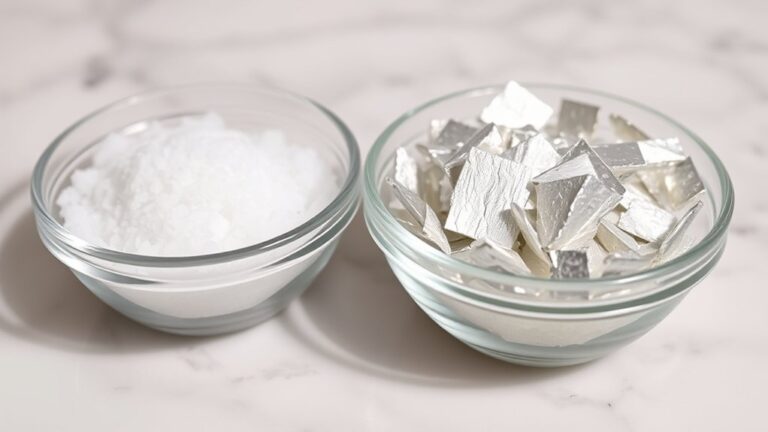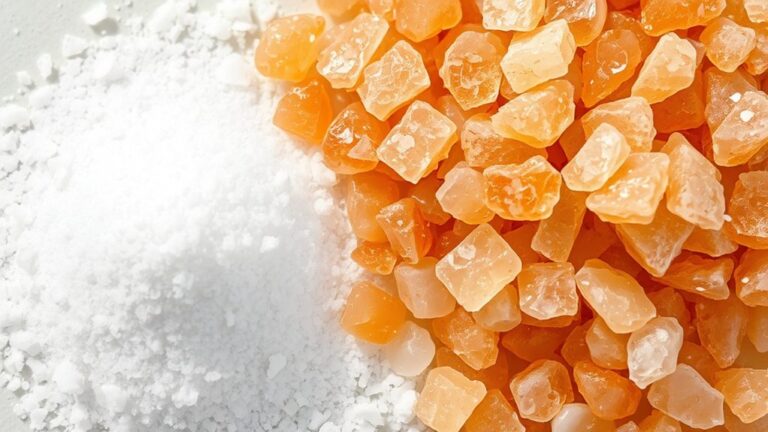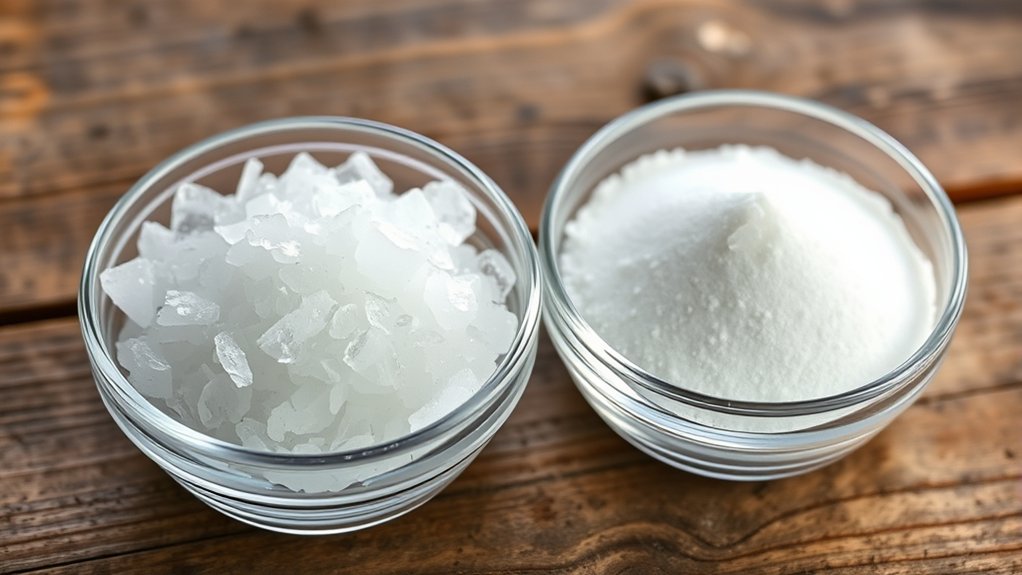
Is Sea Salt the Same as Epsom Salt?
Many people struggle with choosing the right type of salt or bath additive for their needs.
Whether you’re looking to enhance your cooking or unwind after a long day, the options can be confusing. You’re not alone in wondering if sea salt and Epsom salt are the same.
No, sea salt and Epsom salt are not the same. Sea salt is made from evaporated seawater and mainly contains sodium chloride. It’s used in cooking and for flavor.
Epsom salt is magnesium sulfate, often used in baths to relax muscles and reduce inflammation.
They have different compositions and uses, so you can’t substitute one for the other in most cases.
Keep exploring if you want to uncover which might be better for your needs.
Key Takeaways
- Sea salt is mainly sodium chloride, while Epsom salt is magnesium sulfate. They are chemically different substances.
- Sea salt is often used in cooking and for seasoning your food. Epsom salt, on the other hand, is mostly used for baths and helping with muscle relief.
- Their sources are different too. Sea salt comes from evaporated seawater, while Epsom salt is mined from mineral deposits underground.
- When it comes to health benefits, sea salt can help with hydration. Epsom salt is known for relieving muscle soreness and tension.
- They are not interchangeable because each one serves specific purposes. Whether for culinary use or wellness, it’s important to use them appropriately.
What Are Sea Salt and Epsom Salt? An Easy Explanation
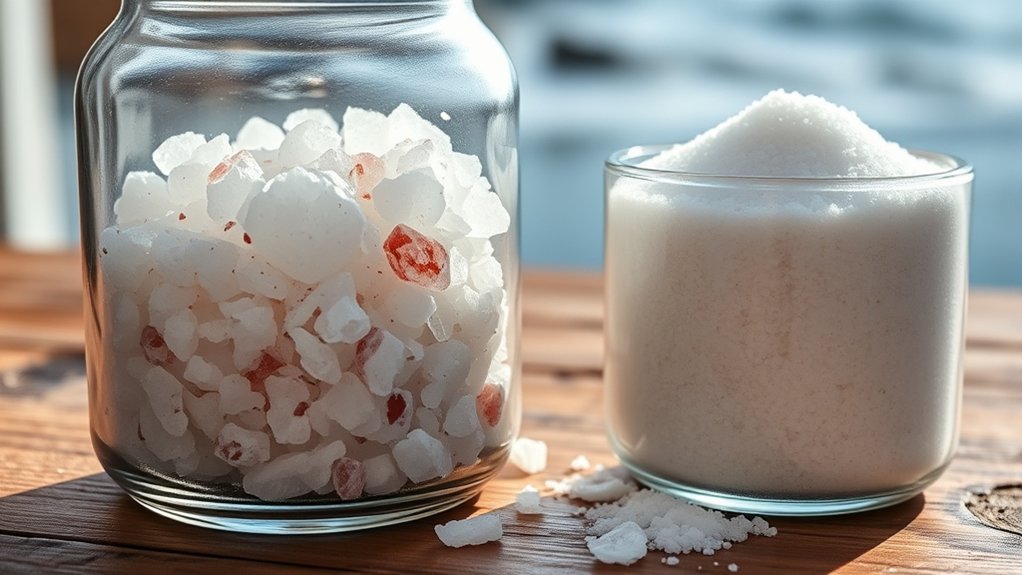
Sea salt and Epsom salt are two popular types of salts used for cooking, bathing, and health purposes, but they are quite different in composition.
Sea salt is made from evaporated seawater and contains minerals like magnesium, calcium, and potassium, which give it a natural flavor and texture.
Sea salt is derived from evaporated seawater, rich in minerals that enhance flavor and texture.
It’s often used in cooking or as a finishing touch on dishes.
Epsom salt, on the other hand, is made of magnesium sulfate. It doesn’t come from the sea but is produced through a mineral extraction process.
Epsom salt is mainly used in baths to soothe muscles, relieve soreness, and promote relaxation.
While both are called “salt,” they serve different purposes and have distinct properties that make each suitable for specific uses.
How Are Sea Salt and Epsom Salt Made? Their Origins and Production
You might be surprised to learn that sea salt is obtained by evaporating seawater, often through natural sunlight and wind. Epsom salt, on the other hand, is made by mining mineral-rich deposits or creating it through chemical processes.
The origins of sea salt are usually coastal, relying on specific geographic conditions. Epsom salt sources are typically inland mineral deposits or produced synthetically.
Understanding these production methods and sources helps explain how each salt type differs in composition and use.
Production Methods and Processes
Epsom salt and sea salt come from different natural sources and are made through different processes. Epsom salt is mined from mineral-rich deposits underground, formed through geological processes. Once extracted, it’s purified and crystallized into the fine, granular product you see in stores.
Sea salt, on the other hand, is harvested directly from seawater by evaporation. Farmers collect seawater in shallow ponds and let the sun and wind do the work, leaving behind salt crystals. These are then harvested, rinsed, and sometimes refined, but often keep trace minerals that give sea salt its distinctive flavor.
The main difference is how they form: Epsom salt is a mineral compound mined from deposits, while sea salt is a natural product from evaporated seawater.
Geographic Origins and Sources
Have you ever wondered where sea salt and Epsom salt come from? Sea salt is made by evaporating seawater, usually collected from ocean coasts or salt flats around the world, like the Mediterranean or the Atlantic.
The mineral content of sea salt varies depending on where it’s from, giving each type its own unique qualities. Epsom salt, on the other hand, is mined from underground deposits that formed over millions of years.
These deposits come from ancient seas that evaporated long ago, leaving behind concentrated magnesium sulfate. Epsom salt is mainly sourced from specific sedimentary deposits in places like the United States, the UK, and Canada.
Main Components and Composition Differences of Sea Salt and Epsom Salt
You’ll notice that sea salt and Epsom salt are quite different in their chemical makeup.
Sea salt mainly contains sodium and chloride, which give it that familiar salty flavor.
On the other hand, Epsom salt is mostly magnesium sulfate, which has a different mineral profile.
Knowing these differences helps explain how each salt is used for different purposes.
Chemical Composition Variances
Although both sea salt and Epsom salt are popular for their therapeutic and culinary uses, their main components differ greatly. Sea salt is mainly made up of sodium chloride, with trace minerals like magnesium, calcium, and potassium naturally present.
Its chemical formula is NaCl, and it’s harvested from seawater through evaporation. Epsom salt, on the other hand, is magnesium sulfate heptahydrate, with the formula MgSO₄·7H₂O.
Epsom salt contains magnesium, sulfur, and oxygen but lacks sodium. These differences mean that sea salt’s composition is dominated by chloride ions, while Epsom salt provides magnesium and sulfate ions.
This fundamental variance affects how each salt interacts with your body and in different applications. It makes their chemical compositions distinct and purpose-specific.
Main Mineral Differences
The main mineral differences between sea salt and Epsom salt come from their unique chemical makeup. Sea salt mainly contains sodium chloride, along with trace minerals like magnesium, calcium, and potassium, which give it a natural flavor and color.
In contrast, Epsom salt is made of magnesium sulfate. It has a different mineral profile that focuses on magnesium and sulfur. These minerals serve different purposes: sea salt helps with electrolyte balance, while Epsom salt is often used for muscle relaxation and soothing baths.
You’ll notice that sea salt’s composition is more complex, with multiple minerals contributing to its taste and appearance. Epsom salt’s simpler structure highlights magnesium and sulfate, making it ideal for therapeutic and cosmetic uses.
Common Uses of Sea Salt and Epsom Salt in Cooking, Beauty, and Wellness
Both sea salt and Epsom salt are widely used in cooking, beauty routines, and wellness practices, but they serve different purposes. You might sprinkle sea salt on dishes for flavor or add Epsom salt to your bath for relaxation.
In beauty, sea salt is often used in exfoliants or facial scrubs, while Epsom salt is popular for bath soaks that soothe skin and reduce inflammation. Here’s a quick comparison:
| Use Area | Sea Salt | Epsom Salt |
|---|---|---|
| Cooking | Enhances flavor and seasoning | Not typical, but sometimes used in recipes |
| Beauty | Exfoliates skin and in facial scrubs | Used for bath soaks and softening skin |
| Wellness | Less common | Great for muscle relaxation and detoxing |
| Texture | Coarse grains or fine | Crystals, available in fine or coarse |
| Benefits | Adds minerals and flavor | Eases soreness and relaxes muscles |
Can You Use Sea Salt Instead of Epsom Salt? When and Why It Matters
While sea salt and Epsom salt are both popular in wellness routines, they aren’t interchangeable in most cases. Sea salt contains minerals and sodium but lacks the magnesium found in Epsom salt.
If you’re soaking to relax sore muscles or boost magnesium levels, sea salt won’t provide the same benefits. Using sea salt instead of Epsom salt may work for flavor or skin exfoliation, but it won’t effectively soothe muscle aches or improve magnesium absorption.
The choice matters when your goal is specific, like muscle recovery or magnesium supplementation. In those cases, Epsom salt is the better option. Always consider what you want to achieve before substituting, since their different compositions serve different purposes.
How to Choose the Right Salt for Your Needs: Sea Salt vs. Epsom Salt
Deciding between sea salt and Epsom salt depends on your specific wellness goals. If you’re looking to improve flavor and mineral intake, sea salt is your best choice. It contains trace minerals and adds a natural, crunchy texture to dishes.
However, if you’re aiming for muscle relaxation or skin soothing, Epsom salt is more suitable. Its magnesium sulfate helps reduce inflammation and ease muscle tension.
Epsom salt promotes muscle relaxation and soothes skin with its magnesium sulfate content.
Think about how you plan to use the salt—whether for cooking or therapeutic purposes—before making a decision. Also, consider any skin sensitivities or health conditions that might influence your choice.
Ultimately, understanding the unique properties of each salt helps you pick the right one for your needs, whether for cooking, bathing, or wellness routines.
Frequently Asked Questions
Are There Any Health Risks Associated With Using Sea Salt or Epsom Salt?
Yes, there are some health risks associated with using sea salt or Epsom salt. If you have sensitive skin or allergies, they might cause irritation or allergic reactions.
Overusing Epsom salt in baths can lead to dehydration or electrolyte imbalance, especially if you have kidney problems or heart conditions. Always follow the recommended dosages.
It’s a good idea to talk to a healthcare professional if you’re pregnant, nursing, or have underlying health issues before using these salts.
Can Epsom Salt Help Relieve Muscle Pain More Effectively Than Sea Salt?
They say “a stitch in time saves nine,” and when it comes to muscle pain, Epsom salt often does the trick. It contains magnesium sulfate, which can penetrate your skin to relax muscles and reduce inflammation more effectively than sea salt.
Sea salt mainly helps with mineral replenishment and skin health. But if you’re looking for targeted muscle relief, Epsom salt is usually the better choice.
Is Sea Salt or Epsom Salt Better for Skincare Routines?
Epsom salt is better for skincare routines because it contains magnesium sulfate, which helps soothe skin, reduce inflammation, and exfoliate dead cells.
Sea salt, on the other hand, is rich in minerals like magnesium, calcium, and potassium, making it good for detoxifying and cleansing skin.
For a relaxing bath, Epsom salt is your best bet, but sea salt can boost mineral absorption and improve skin texture.
Are There Environmental Impacts From Producing Sea Salt Versus Epsom Salt?
Yes, there are environmental impacts from producing both sea salt and Epsom salt, but it’s ironic how you might think one’s greener. Sea salt harvesting can harm marine ecosystems through overfishing and habitat disruption.
Epsom salt’s extraction from mineral-rich brine involves energy-intensive processes. So, while both have impacts, choosing sustainably sourced options helps lessen your environmental footprint.
It’s a reminder that even natural products aren’t without consequences.
Can I Use Sea Salt as a Substitute for Epsom Salt in Baths?
You can use sea salt as a substitute for Epsom salt in baths, but remember they have different compositions. Epsom salt contains magnesium sulfate, which helps relax muscles and ease soreness.
Sea salt mainly provides minerals and might not give you the same benefits. If you’re looking for muscle relaxation, Epsom salt is more effective.
That said, sea salt can still offer a relaxing, mineral-rich bath experience. It’s a good alternative if you don’t have Epsom salt on hand.
Conclusion
In the end, think of sea salt and Epsom salt as two dancers in the grand ballroom of wellness—each with its own rhythm and style.
While they may share the stage in some routines, they’re not interchangeable partners. Knowing their unique moves helps you pick the perfect one for your health and beauty dance.
So, choose wisely, and let your salt selection lead you to a more harmonious, vibrant lifestyle.
Remember, sea salt and Epsom salt are different, and understanding that difference is key to making the best choice for your needs.