Safe Ways to Dispose of Kitchen Knives
Many people struggle with safely disposing of kitchen knives, especially when they’re no longer safe to use. It’s a common concern, and you’re not alone in wanting to handle this responsibly.
To safely dispose of kitchen knives, first identify if they’re no longer safe by checking for chips, cracks, rust, or dullness.
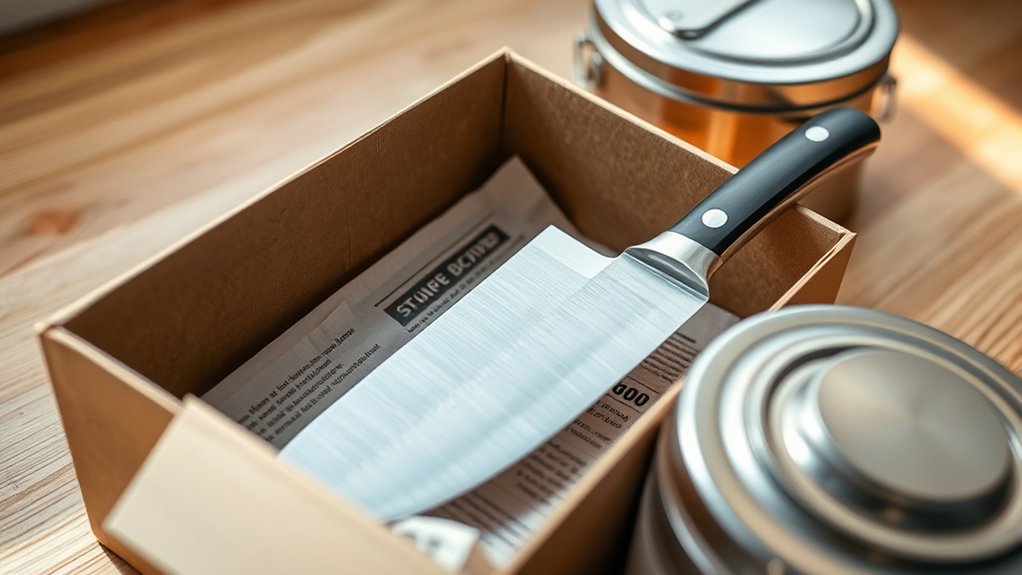
Wrap the blades carefully with heavy-duty tape, thick newspaper, or place them in a puncture-proof container, ensuring the sharp edges are fully covered.
Label the container clearly and secure it tightly before disposal.
For more eco-friendly options and tips on protecting waste handlers, keep exploring ways to dispose of knives safely.
Key Takeaways
- Wrap knives securely with blade guards, thick tape, or heavy-duty newspaper to prevent injuries during handling and transport.
- Place the wrapped knives in puncture-proof, labeled containers like metal cans or hard plastic bins for safe disposal.
- Use designated sharps disposal containers or take them to local hazardous waste facilities to ensure proper disposal.
- If the knives are still safe to use, consider donating or recycling them through community programs, metal recyclers, or art projects.
- Be sure to check your local waste management guidelines for approved disposal methods and drop-off locations for sharp kitchen tools.
How to Tell When a Kitchen Knife Is No Longer Safe to Use
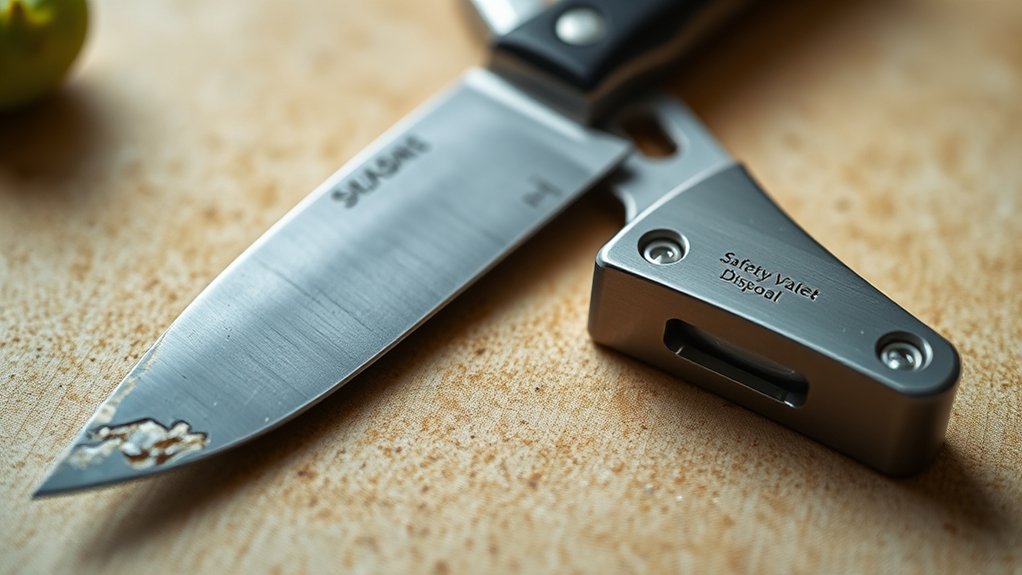
How can you tell if your kitchen knife is no longer safe to use? First, check the blade for chips, cracks, or significant dullness. If the edge is dull, you’ll struggle to cut properly, which increases the risk of slips and injuries.
Feel the handle—if it’s loose, cracked, or broken, the knife isn’t secure in your hand. Examine the full length of the blade for rust, corrosion, or discoloration, which can weaken its structure.
Also, pay attention to how it performs during use. If it’s not slicing smoothly or requires excessive force, it’s probably time to retire the knife. Using a damaged or dull knife can lead to accidents, so spot these signs early and consider proper disposal or replacement.
How to Safely Wrap or Protect Knives for Disposal
To keep yourself safe, you should protect the knife’s blade before disposal. Using blade guards or covers is the most secure method, ensuring the sharp edge is contained.
If you don’t have a cover, wrapping the knife with heavy material like thick cardboard or duct tape can prevent accidental cuts. This simple step helps keep everyone safe until proper disposal.
Using Blade Guards or Covers
Using blade guards or covers is one of the safest ways to protect yourself and others when disposing of a kitchen knife. These covers shield the sharp blade, reducing the risk of accidental cuts during handling or transportation.
To use a blade guard properly, slide it securely over the entire blade, making sure no exposed edges are left. For extra safety, pick a sturdy and durable cover made specifically for knives.
When it’s time to dispose of the knife, keep the covered blade in a strong container like a cardboard box or heavy-duty plastic bin to prevent punctures or injuries.
Always handle the knife carefully when putting on or removing the guard. Using blade guards or covers helps minimize hazards and makes the disposal process safer for everyone involved.
Wrapping With Heavy Material
Wrapping a kitchen knife with heavy material is a simple but effective way to protect yourself and sanitation workers during disposal. Use thick, durable materials like cardboard, bubble wrap, or old cloth to securely cover the blade.
Make sure the wrapping is tight and completely encloses the sharp edge. This helps prevent accidental cuts and keeps everyone safe during transport. Secure the wrapping with tape so it doesn’t unravel.
Taking this small step shows respect for those handling waste and reduces the risk of injury. Remember, safety is a shared responsibility that benefits everyone involved.
How to Properly Dispose of Small, Broken, or Dull Kitchen Knives
When you’re getting rid of small, broken, or dull knives, it’s important to make sure the sharp edges are secured so you don’t get hurt.
Place them in a sturdy container that won’t break or leak. Be sure to label and seal it clearly.
This way, you can throw them away safely without risking injury to yourself or sanitation workers.
Wrap Sharp Edges Securely
Because small, broken, or dull knives can still pose a safety risk, it’s important to secure their sharp edges before disposal. Wrapping the blade prevents accidental cuts and keeps waste handlers safe.
To do this effectively, cover the blade with heavy-duty tape or duct tape, making sure it’s fully covered. You can also wrap the blade with thick layers of newspaper or cardboard for extra protection.
Another option is to use a thick cloth or rag to completely cover the blade, then secure it with rubber bands. Once wrapped, place the knife in a sturdy, puncture-proof container or a cardboard box.
Finally, clearly label the package as “Sharp Items” to alert waste collectors. These steps help minimize injury risks and ensure safe disposal.
Always double-check that the blade is securely wrapped before discarding.
Use Sturdy Containers
Using a sturdy container is essential for safely disposing of small, broken, or dull kitchen knives. Choose a thick, puncture-resistant container like a metal can or a hard plastic bin with a secure lid. Avoid flimsy boxes or bags that can tear or collapse.
Place your knives directly into the container, making sure they’re fully covered and won’t puncture through the sides. If possible, add a layer of packing material, like cardboard or newspaper, to prevent movement.
Seal the container tightly after disposal to prevent accidental exposure. Keep it out of reach of children and pets until it’s ready for proper disposal.
Using a durable container minimizes the risk of cuts and accidents during handling and guarantees safe, responsible disposal.
Label and Seal Properly
Labeling and sealing your container correctly guarantees that anyone handling the disposal knows what’s inside and minimizes the risk of injury. Clear labels alert others to the contents, especially if they’re sharp, broken, or dull. Use a permanent marker to write “Broken Knives” or “Sharps” on the container.
Seal the lid tightly to prevent accidental spills or exposure. Consider wrapping blades in cardboard or tape before placing them inside, then label the package as “Sharp Objects.” Keep your container in a safe, designated area away from children or pets.
Regularly check that the seal remains secure. Proper labeling and sealing make disposal safer for everyone involved and help confirm that the knives are handled correctly during pickup or disposal.
Recycling and Repurposing Kitchen Knives When Possible
Recycling and repurposing kitchen knives can be a practical way to reduce waste and give old tools new life. If your knives are still in good shape but no longer fit your needs, consider donating them to community centers, culinary schools, or charity organizations.
Some metal recyclers accept knives; just make sure they’re properly cleaned and labeled. For a creative touch, repurpose old knives into garden tools, like plant markers or small shovels, by sharpening and cleaning them thoroughly.
You can also turn knife blades into art or jewelry by welding or attaching them to other materials. Always handle blades carefully during repurposing to avoid injury.
Recycling or reusing your knives not only cuts down on waste but also extends their usefulness beyond the kitchen.
How to Use a Knife Disposal Container or Sharps Box
To safely dispose of your knives, start by choosing the right container—one that’s sturdy, leak-proof, and clearly labeled for sharps.
Next, carefully prepare your knives by cleaning and wrapping their blades to prevent injury.
Finally, follow proper disposal procedures by securely placing the knives into the container and sealing it before recycling or discarding.
Choosing the Right Container
Choosing the right container is essential for safely disposing of your used kitchen knives. You want a container that’s sturdy, secure, and easy to handle.
Look for one made of durable plastic or metal with a tight-fitting lid to prevent accidental openings. It should have a wide opening for easy insertion and a secure closure to prevent spills.
Make sure the container is clearly labeled as holding sharp objects to alert others. Consider a container with a reinforced structure to withstand punctures.
In addition, check if it’s compatible with your local disposal guidelines. Always choose a container designed specifically for sharps or knives rather than repurposing household items.
This guarantees safety and minimizes the risk of injury during disposal or handling.
Properly Preparing Knives
Before placing your knives into a disposal container or sharps box, it’s important to prepare them properly to prevent injuries and ensure safe handling. Start by thoroughly cleaning the knife to remove any food residue or grease.
Once dry, carefully cover the blade with protective tape or wrap it in thick newspaper or cardboard. This helps reduce the risk of accidental cuts during handling or disposal. If possible, use a dedicated blade guard or sheath for extra safety.
Handle the knife by the handle to avoid contact with the sharp edge. Always work slowly and deliberately to minimize accidents. Properly prepared knives are safer to transport, which reduces injury risks for you and waste handlers.
Taking these steps helps ensure a safer disposal process for everyone involved.
Safe Disposal Procedures
When disposing of a prepared knife, carefully place it into a designated disposal container or sharps box made for sharp objects. Make sure the container is puncture-proof and clearly labeled.
Always handle the knife by the handle, avoiding contact with the blade to prevent injury. Securely close the lid or latch once the knife is inside to prevent accidental exposure.
Keep the container in a safe, accessible spot until it’s full or disposal is needed. Follow your local rules for disposal or recycling when you’re ready.
Regularly check the container for damage or leaks. Never put loose knives in trash bins, and avoid overfilling the container to stay safe. Proper disposal keeps everyone safe when handling waste.
Where and How to Dispose of Knives at Special Waste Facilities
To properly dispose of knives at special waste facilities, locate a designated drop-off site that accepts sharp kitchen tools. Check with your local waste management authority or visit their website to find approved disposal locations.
Some facilities have specific containers or bins marked for sharps or knives, so look for signage. When you go, wrap the blade securely with thick cardboard or the original packaging and tape it firmly to prevent accidents.
Never leave knives loose in a bin or bag. Bring your wrapped knives directly to the designated container, following any instructions provided.
This process guarantees your safety and that of waste handlers. Always confirm the facility’s accepted items and disposal procedures beforehand to avoid any issues.
Tips for Selling or Donating Used Kitchen Knives Responsibly
If you’re thinking about selling or donating your used kitchen knives, it’s important to do so responsibly to ensure safety and proper handling. First, make sure the knives are clean and in good condition.
Next, honestly describe the knives’ type and condition to avoid any misunderstandings. When selling, look for reputable online marketplaces or local shops that follow safety standards.
For donations, reach out to charities or community kitchens that accept kitchen tools. Always pack the knives securely to prevent injuries during transport.
Be sure to remove any personal markings or labels that might cause confusion. Finally, check with the recipient about their policies on accepting used cutlery to make sure they’re willing to take them.
What Not to Do When Disposing of Kitchen Knives
Disposing of kitchen knives improperly can lead to serious injuries or environmental hazards. Avoid these common mistakes to stay safe:
| Do Not Do | Why Not To Do |
|---|---|
| Toss knives in trash without wrapping | Sharp blades can cut sanitation workers or damage waste equipment. |
| Leave knives exposed in recycling bins | Exposed blades pose risks to anyone handling recyclables. |
| Discard broken knives loosely | Broken blades can cause cuts or injuries in landfills. |
| Use inappropriate containers | Using unsuitable containers increases the chance of accidents. |
Always wrap blades securely, use sturdy containers, and follow proper disposal procedures. Ignoring these steps can result in accidents, injuries, or environmental harm. Proper disposal protects both you and the community.
Eco-Friendly Disposal Options for Kitchen Knives
Proper disposal of kitchen knives not only keeps your home safe but also benefits the environment. When you choose eco-friendly options, you help reduce waste and promote recycling efforts.
One effective method is recycling blades through local scrap metal programs, ensuring they’re processed responsibly. You can also consider repurposing knives by donating them to community workshops or art projects.
Another option is to use specialized knife-sharpening or recycling services that accept old blades. If disposal is unavoidable, wrap knives securely in newspaper or old cloth before discarding in designated waste bins.
Some areas offer hazardous waste collection days where you can drop off blades safely. These choices help minimize environmental impact while keeping everyone safe from injury.
Protecting Waste Handlers and Community Safety During Knife Disposal
To protect waste handlers and ensure community safety, handle and dispose of knives carefully. Wrap blades securely in thick cardboard, bubble wrap, or cloth to prevent injuries.
Be sure to clearly label the package as “sharp” so handlers are aware. Use designated sharps disposal containers if available, and never toss loose knives into trash bins.
It’s a good idea to communicate with waste services about your disposal methods. This helps guarantee proper handling and reduces the risk of accidents.
| Precaution | Explanation |
|---|---|
| Use secure wrapping | Prevents accidental cuts during handling |
| Label packages | Alerts waste handlers to handle with care |
| Avoid loose knives | Reduces risk of injury in trash collection |
| Consult local disposal rules | Confirms compliance and safety |
| Handle with gloves | Adds an extra layer of protection during disposal |
Alternative Ways to Upcycle or Sharpen Old Kitchen Knives
Once you’ve safely disposed of old or damaged knives, think about giving those unused blades a new purpose instead of tossing them away. You can upcycle or sharpen them to make them last longer and be more useful.
To sharpen, use a sharpening stone or honing rod to keep the edge sharp. For upcycling, get creative with your old knives by turning them into tools or art.
Sharpen with a stone or honing rod, then get creative transforming old knives into tools or art.
Here are some ideas: Turn a blade into a plant label or garden marker. Use the handle to create a unique wall hook. Convert a blade into a craft or woodworking tool.
You can also repurpose the metal for jewelry or decorative art. Or embed a blade into a custom knife display or shadow box. There are plenty of ways to breathe new life into those old knives!
Common Mistakes to Avoid When Disposing of Kitchen Knives
Disposing of kitchen knives improperly can be dangerous, so it’s important to avoid common mistakes that could cause injury or harm the environment. One mistake is throwing knives into the regular trash without protecting the blades, which can cut sanitation workers. Always wrap blades securely with thick tape or use a designated knife container.
Another mistake is trying to recycle knives that are made of metal or glass, as this can damage recycling equipment. Never leave a knife unprotected in the trash. Also, avoid sharpening or disposing of knives in ways that can harm the environment, like burning them.
Instead, follow proper disposal methods such as taking knives to a recycling or hazardous waste facility. Being cautious and informed helps keep everyone safe and prevents unnecessary risks.
Frequently Asked Questions
Are There Specific Disposal Regulations for Commercial Kitchens?
Yes, there are specific regulations for commercial kitchens. You need to follow local waste disposal laws, which often require you to wrap knives securely in thick cardboard or protective material to prevent injuries.
Some areas may mandate disposal through licensed sharps disposal services or special collection points. Always check with your local health department or waste management authority to guarantee compliance and safety when disposing of knives.
How Do I Identify if a Knife Contains Hazardous Materials?
You should check if the knife has any labels or markings indicating hazardous materials, such as certain coatings or alloys.
If it’s an older or specialized knife, look for information from the manufacturer or safety data sheets.
Check for signs of contamination, corrosion, or unusual discoloration.
If you’re unsure, contact your local waste management authority or a hazardous waste specialist.
They can help determine if the knife contains hazardous substances before disposal.
Can I Donate Knives With Minor Rust or Cosmetic Damage?
You shouldn’t donate knives with minor rust or cosmetic damage. These issues can pose safety risks to others and might be rejected by donation centers.
Instead, try cleaning the rust thoroughly or refurbishing the blade if possible. If the damage is too extensive, it’s better to dispose of the knife responsibly.
You can do this through a metal recycling facility or a hazardous waste collection event to ensure everyone’s safety.
What Community Programs Support Safe Knife Disposal?
Think of community programs as the lighthouse guiding you safely through the storm of disposal. Local waste management services often run special drop-off days or provide dedicated bins for sharp objects like knives.
Some recycling centers accept metal blades, but you should call ahead. Check your city’s website or contact your local waste authority to find these programs. Think of them as your safety net catching sharp hazards before they cause harm.
How Often Should I Replace My Kitchen Knives for Safety?
You should replace your kitchen knives every 5 to 10 years, depending on how often you use them and their quality.
Check your knives regularly for dullness, chips, or any damage. If they become hard to cut with or show signs of wear, it’s time to replace them.
Using damaged or dull knives can lead to accidents, so changing them on time makes your kitchen safer.
Keep an eye on their condition and swap them out promptly to prevent injuries.
Conclusion
Disposing of kitchen knives safely is essential, just like handling glass—careful and deliberate. Recognizing when a knife is no longer safe is the first step. Wrap it properly to prevent injuries and consider eco-friendly options when possible.
You protect yourself and your community by avoiding shortcuts. Recycling or upcycling knives can be a great choice if your local programs accept them. These methods help reduce waste and are better for the environment.
With these tips, you’ll keep your kitchen safe and your waste disposal smooth. Stay cautious and handle knives like a pro. Proper disposal is key to keeping everyone safe and your space clutter-free.