7 Essential Steps to Build Your Dream Outdoor Kitchen
Trying to build your dream outdoor kitchen can feel overwhelming. You’re not alone—many people struggle with where to start or what to prioritize.
But don’t worry, with a clear plan, you’ll be able to create a space that’s both functional and stylish.
To build your dream outdoor kitchen, start by defining your goals and setting a realistic budget.
Next, choose a convenient location with proper access to utilities.
Design the space for good flow and efficient use, placing appliances and seating thoughtfully.
Use durable materials suited for outdoor conditions to guarantee longevity.
Plan your lighting, power, and plumbing carefully, and obtain necessary permits before starting construction.
If you keep these steps in mind, you’ll create a perfect space that reflects your style and needs.
Key Takeaways
- Define your goals, budget, and desired features. This will help guide your planning and prevent overspending.
- Choose a strategic location that has proper utilities like water and electricity. Think about sun, wind, and flow to make your space comfortable.
- Design an efficient layout that allows easy movement between the grill, prep area, and seating. This makes the space more functional and enjoyable.
- Select durable, weatherproof appliances and materials that can withstand outdoor conditions. This way, your kitchen stays looking great for years.
- Plan lighting, electrical outlets, and ambiance elements. These details help create a space that’s both functional and inviting.
Define Your Goals and Budget for an Outdoor Kitchen
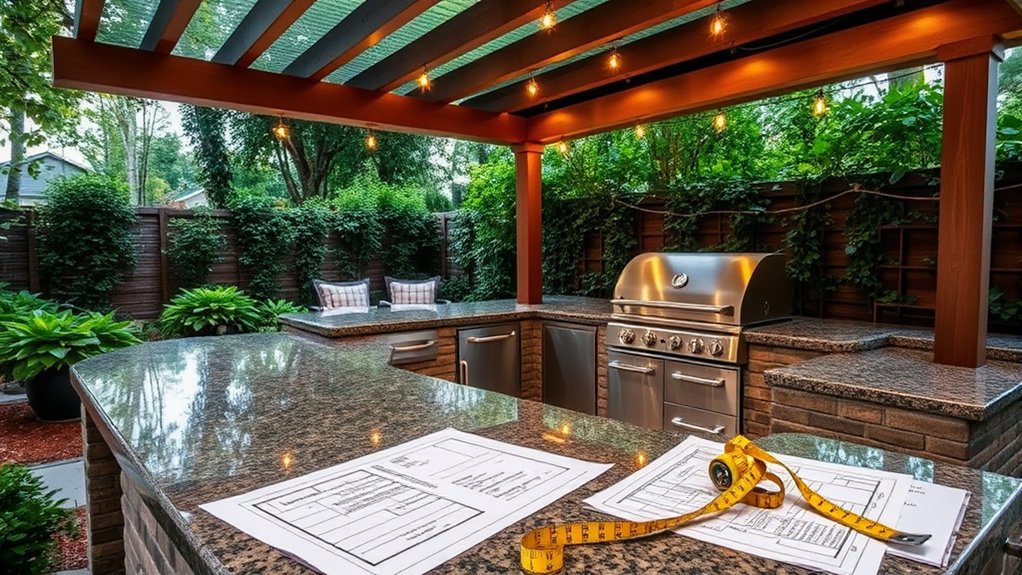
Before jumping into the design and features of your outdoor kitchen, it’s important to define your goals and set a realistic budget. Think about what you want to achieve—are you looking for a simple grilling station or a full outdoor living space? Knowing your priorities helps you figure out the scope of your project.
Next, establish a budget that matches your goals. Consider costs for appliances, materials, and installation. Be honest about what you can afford and include a contingency fund for unexpected expenses.
Setting clear goals and a budget early on helps prevent overspending and guides your decisions throughout the process. It ensures you create a functional, enjoyable space that fits your financial situation and outdoor living needs.
Pick the Best Location and Layout for Your Space
Choosing the right location and layout for your outdoor kitchen is key to making it both functional and fun. You want a space that’s easy to reach, preferably near your back door and ready with utilities like water and electricity.
Think about sun, wind, and shade to keep things comfortable while cooking and hanging out. You’ll also want to consider how people will move around to avoid congestion.
Position your main cooking and prep areas for quick access, but leave plenty of space for seating and dining. Safety is important, so avoid placing it near the pool or busy pathways.
A good layout minimizes unnecessary steps, making your outdoor kitchen more practical and inviting. The right spot and setup will set the stage for a fantastic outdoor cooking experience.
Design Your Outdoor Kitchen for Function and Flow
Once you’ve chosen the right location and layout, the next step is designing your outdoor kitchen for smooth function and effortless flow. Think about how you’ll move between the grill, prep area, and sink.
Place frequently used items within easy reach to avoid unnecessary steps. Make sure there’s enough space for multiple people to gather comfortably without feeling crowded.
Keep essentials within arm’s reach and ensure ample space for guests to gather comfortably.
Create a logical sequence—prep, cook, serve—so tasks flow naturally. Use clear pathways and keep clutter to a minimum.
Consider where you’ll put storage, work surfaces, and seating to make the space both practical and cohesive. Good design boosts efficiency and makes your outdoor kitchen fun to use.
Every cookout will feel seamless and stress-free with thoughtful planning and layout.
Choose Durable Appliances and Materials
Selecting appliances and materials that can withstand the elements is essential for a long-lasting outdoor kitchen. You want items that resist rust, corrosion, and weather damage. Consider:
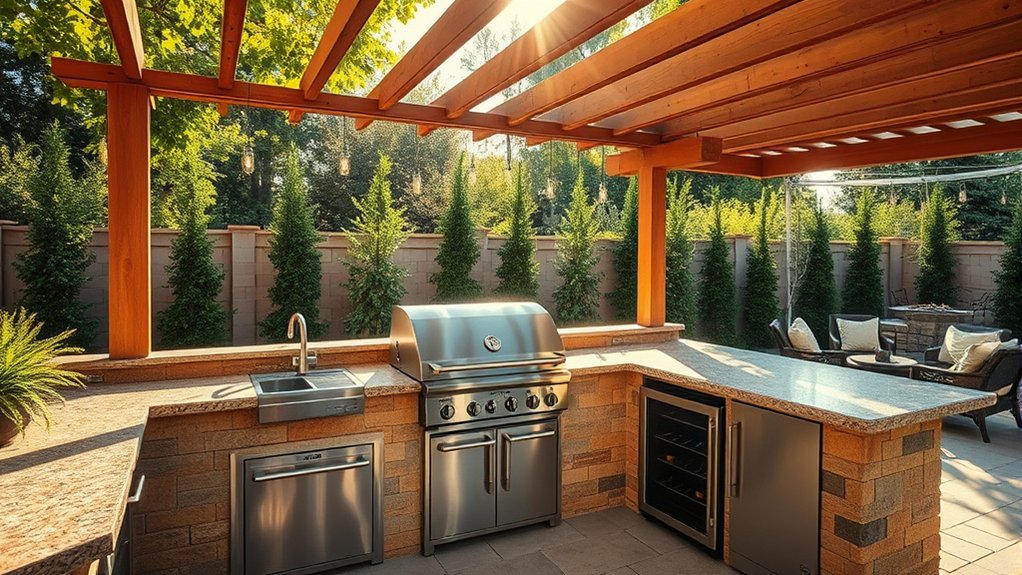
- Stainless steel appliances, which resist rust and look sleek.
- Weatherproof cabinetry made from composite or treated wood.
- Stone or concrete countertops that handle heat and moisture.
- Weather-resistant lighting fixtures designed for outdoor use.
These choices guarantee durability and longevity, even in harsh conditions. Focus on materials specifically designed for outdoor environments to prevent frequent replacements. Properly selecting these elements helps you create a functional, attractive space that endures season after season.
When you choose the right appliances and materials, maintenance becomes easier, and your outdoor kitchen remains a beautiful, practical extension of your home.
Plan Lighting, Power, and Plumbing for Convenience
To guarantee your outdoor kitchen is both functional and convenient, you need to carefully plan your lighting, power, and plumbing needs. Start by mapping out lighting that ensures good visibility for cooking and entertaining after dark. Consider installing task lighting under cabinets and ambient lights for atmosphere.
Next, plan your electrical outlets strategically for appliances, chargers, and accessories. Make sure they’re weatherproof and easily accessible. For plumbing, position your sink and water supply for easy access and proper drainage.
Use outdoor-rated fixtures and materials to withstand the elements. Proper planning prevents future headaches, improves usability, and boosts safety. Incorporate these elements thoughtfully to create a seamless, efficient outdoor kitchen that meets all your needs and enhances your outdoor experience.
Get Permits and Prepare Your Site for Construction
Before you start building, you’ll need to get the necessary permits from your local authorities to make sure everything is up to code.
Next, clear and level your construction site to create a safe, stable foundation.
Taking these steps now will help your project run smoothly and avoid costly delays later.
Obtain Necessary Permits
Securing the necessary permits is a crucial first step before starting your outdoor kitchen project. Without proper approval, you risk fines, delays, or having to dismantle your work.
To get started, contact your local building department to identify what permits you need. Then, submit detailed plans and diagrams of your outdoor kitchen for approval.
Schedule inspections to verify everything meets safety and zoning codes. Make sure to obtain official permits before you begin construction.
These steps ensure your project complies with legal standards and helps you avoid future issues. Remember, each municipality has specific rules, so stay in touch with local authorities.
Getting the right permits protects your investment and keeps your outdoor kitchen project on track.
Prepare Construction Site
Start by gathering all the necessary permits and making sure your construction site is ready for work. Clear the area of any debris, plants, or obstacles that could slow you down.
Check for underground utilities like gas, water, or electrical lines, and contact local authorities if needed. Level the ground to create a stable foundation and mark out your outdoor kitchen layout.
If needed, think about adding drainage solutions or reinforcing the surface for heavy equipment. Make sure the site has easy access for delivery trucks and construction crews.
Properly preparing your site helps minimize delays and safety risks. Once the area is cleared, leveled, and marked, you’re all set to start construction with confidence.
Build and Personalize Your Outdoor Kitchen
When building and personalizing your outdoor kitchen, choosing durable materials is key. This helps ensure it can handle weather and regular use without issues.
Don’t forget to add your personal touch with colors, finishes, and design details. That way, the space truly reflects your style and feels inviting.
Finally, planning the layout and flow carefully makes cooking more efficient and socializing easier. It’s all about creating a space that works for you.
Choose Durable Materials
Choosing durable materials is key to making sure your outdoor kitchen can handle the weather and still look great over time. You want materials that stand up to rain, sun, and everyday wear.
For countertops and walls, consider stone or brick. These materials are tough and resistant to the elements. Stainless steel appliances and fixtures are also a good choice because they won’t rust and are easy to clean.
Concrete makes an excellent flooring option since it’s durable, slip-resistant, and built to last. For outdoor furniture, look at teak or synthetic decking because they resist moisture and decay, making them perfect for outdoor use.
Incorporate Personal Style
Adding personal touches helps transform a durable outdoor kitchen into a space that truly feels like your own. Choose colors, finishes, and decorative elements that reflect your style, whether that’s sleek modern, rustic, or eclectic.
Incorporate unique lighting to set the mood and add character. String lights, lanterns, or built-in fixtures work well to create the right ambiance.
Personalize your space with accessories like outdoor rugs, artwork, or potted plants that resonate with your taste. These small details make your kitchen feel inviting and unique.
Include functional elements that match your lifestyle, such as a wine fridge, spice racks, or customized cabinetry. They make your outdoor kitchen both practical and stylish.
Optimize Layout and Flow
Designing an efficient layout and flow is key to creating a functional outdoor kitchen that feels natural to use. The goal is to minimize movement and make tasks easier. Start by placing the grill at the center for easy access.
Next, position the prep station nearby so you can grab ingredients quickly. Consider placing the sink close to the cooking area for simple cleanup. Arrange seating to face the cooking zone, which encourages socializing.
Make sure there’s enough counter space between appliances for prep work. Keep storage within reach for utensils, spices, and tools. This setup reduces unnecessary steps, improves efficiency, and makes outdoor cooking seamless and fun.
Prioritizing flow helps create a space that’s both practical and inviting.
Frequently Asked Questions
How Can I Maximize Small Outdoor Kitchen Spaces Effectively?
To make the most of small outdoor kitchen spaces, focus on multifunctional furniture and compact appliances. This helps save room while keeping everything you need close at hand.
Utilize vertical storage options like wall-mounted shelves or hanging hooks to clear up counter space. It keeps things organized and leaves more room for cooking and socializing.
Go for a minimalistic design with a streamlined layout. Light colors can help make the area feel more spacious and inviting.
Keep clutter to a minimum and only include essentials. With thoughtful planning, you can create a cozy, functional outdoor kitchen that’s perfect for entertaining without feeling cramped.
What Are the Latest Trends in Outdoor Kitchen Designs?
You’ll find that incorporating multi-functional appliances is a top trend, with 65% of homeowners opting for built-in grills and prep stations.
Modern outdoor kitchens emphasize seamless integration of technology, like smart lighting and weatherproof audio systems.
You’re also seeing a shift toward natural materials such as stone and wood, creating a warm, inviting vibe.
These trends make your outdoor space more stylish, functional, and perfect for entertaining year-round.
How Do I Maintain Outdoor Appliances in Harsh Weather?
To keep outdoor appliances in good shape during harsh weather, make sure to clean them regularly to prevent dirt and rust from building up. Cover grills and other equipment with weatherproof covers when you’re not using them, especially during storms or winter.
Protect electrical parts with waterproof sealants and do seasonal inspections to catch and fix any damage early. Storing removable parts indoors during extreme weather can also help extend their lifespan and keep them in great condition.
What Safety Features Should I Consider for My Outdoor Kitchen?
You should prioritize safety features like a sturdy, weather-resistant enclosure to keep the elements and curious critters out.
Fire-resistant surfaces are also important to prevent accidental fires. Proper ventilation helps avoid dangerous buildup of fumes.
Installing GFCI outlets is vital to prevent electrical shocks, and non-slip flooring reduces slips and falls.
Remember, neglecting safety is like inviting disaster, so don’t skimp on these essential features.
Enjoy your outdoor kitchen worry-free by making safety a top priority.
How Can I Incorporate Eco-Friendly and Sustainable Materials?
You can incorporate eco-friendly materials by choosing sustainably sourced wood for cabinetry and countertops. Using recycled metal or glass for decorative elements is also a great option.
Select energy-efficient appliances to reduce your overall energy footprint. Opt for biodegradable or low-impact finishes, and consider locally available materials to cut down on transportation emissions.
Incorporate plants that thrive in your climate for natural shading and air purification. Lastly, plan for long-lasting, durable options that minimize waste and reduce the need for frequent replacements.
Conclusion
Now that you know the essential steps, you’re ready to turn your outdoor space into a culinary haven. Imagine designing a cozy patio with a built-in grill and mini-fridge, perfect for summer gatherings.
By carefully planning and personalizing your outdoor kitchen, you’ll create a space that’s both functional and inviting.
With patience and attention to detail, your dream outdoor kitchen will become the heart of your backyard for years to come.