7 Key Differences Between Angus Beef and Regular Beef
Many meat lovers struggle with choosing the best beef for their meals, especially when trying to find a cut that’s consistently high quality. You’re not alone—navigating the options can be confusing, and you want something that’s flavorful, tender, and worth your money.
That’s where Angus beef comes in as a top choice for those seeking premium quality.
Angus beef stands out from regular beef because it’s subject to strict breeding and origin standards, ensuring consistent quality. It’s more tender, thanks to fine marbling that melts during cooking and improves flavor.
You’ll notice its rich taste and juicy texture, often priced higher due to its premium quality.
Look for clear labeling and certification to identify authentic Angus.
Keep exploring to uncover more tips on selecting and enjoying the best Angus beef for your meals.
Key Takeaways
- Angus beef has to meet strict breed and origin standards. This helps make sure you’re getting consistent quality and authentic lineage.
- It’s known for its superior marbling and tenderness, which means richer flavor and juiciness in every bite.
- Because of its premium quality, branding, and reputation, it usually costs more than regular beef.
- Authentic Angus is easy to spot. It’s typically black and comes with certification labels to verify its quality.
- Proper aging and handling without stress can really boost its flavor and overall meat quality.
What Sets Angus Beef Apart in Quality and Origin?
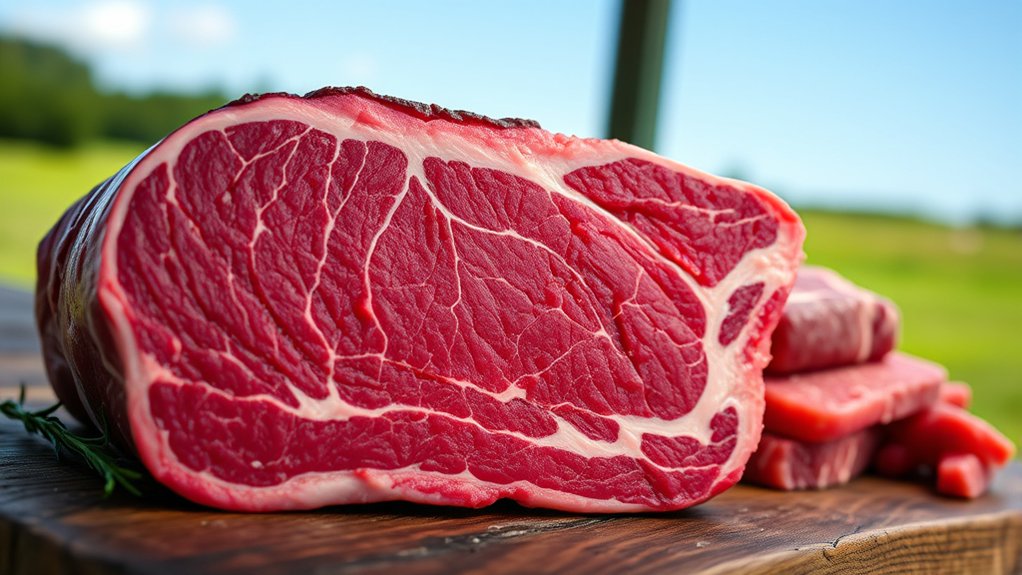
Angus beef stands out mainly because of its strict breeding and origin standards. When you choose Angus, you’re selecting cattle that meet specific criteria, like being purebred or mostly Angus. These standards help ensure consistent quality and characteristics.
The Aberdeen Angus breed started in Scotland and has been carefully bred for decades to keep its desirable traits. Farmers and producers follow strict guidelines to qualify for Angus branding, focusing on quality over quantity. This strict adherence to origin and breeding standards guarantees that the beef comes from cattle with reliable, high-quality genetics.
As a result, Angus beef is known for its dependable origin, giving you confidence in its consistency and overall quality.
Why Is Angus Beef Usually More Tender and Marbled?
The secret to its tenderness and marbling lies in the cattle’s genetics and the way they’re raised. Angus cattle are bred for specific traits that improve meat quality, including tenderness and fat distribution. Their genetics promote muscle development with fine marbling, giving the beef a juicy, rich texture.
Plus, their ideal diet and stress-free environment help maintain these qualities. You’ll notice consistent marbling due to refined genetics and better fat distribution for moist, flavorful meat.
Selective breeding focuses on tenderness, and proper aging practices help preserve quality. Careful handling also minimizes stress, which helps preserve the meat’s integrity.
All these factors work together to produce beef that’s more tender, juicy, and flavorful. That’s why Angus is a top choice for meat lovers.
How Do Marbling and Fat Content Differ in Angus and Regular Beef?
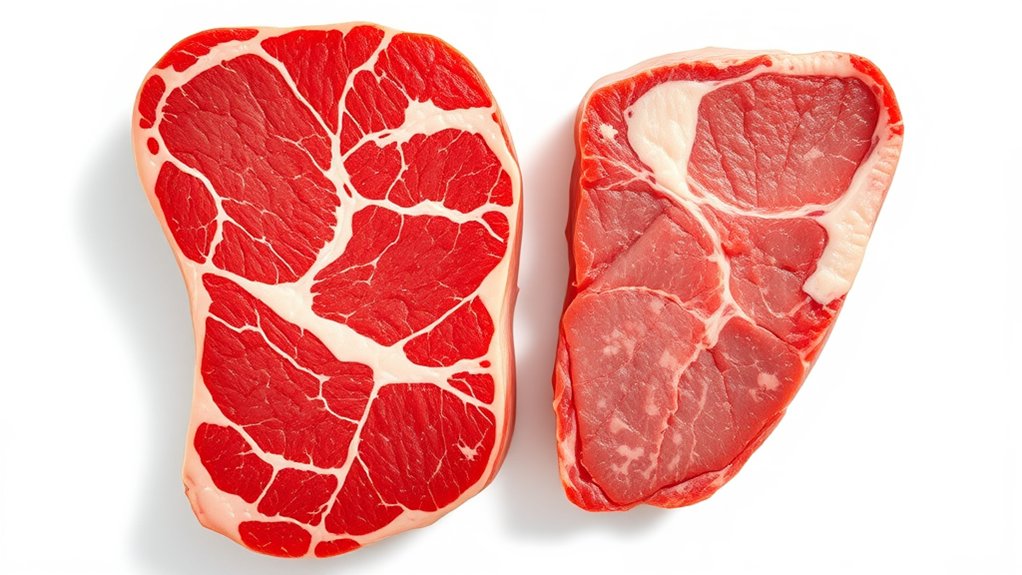
While both Angus and regular beef can vary in marbling and fat content, Angus beef generally has more consistent and finer marbling throughout the meat. This means you’ll see thin streaks of fat evenly dispersed within the muscle fibers, which boosts flavor and tenderness.
Regular beef, on the other hand, often features more uneven marbling, with larger fat deposits that can be less integrated. Angus cattle are bred for higher fat distribution, so their meat tends to have a richer, more uniform fat content.
This consistent marbling not only enhances taste but also guarantees a juicier bite. In contrast, the fat content in regular beef varies more, which can result in a less uniform eating experience.
What Makes Angus Beef So Flavorful and Juicy?
You’ll notice that Angus beef is exceptionally juicy and flavorful, mainly because of its higher marbling that melts during cooking. This marbling not only adds richness but also makes the meat more tender.
Plus, breed-specific traits give Angus beef a unique taste that really sets it apart from regular beef. It’s those little differences that make all the difference.
Marbling Enhances Juiciness
Marbling, the intramuscular fat found within Angus beef, plays an essential role in making the meat more flavorful and juicy. When you cook it, this fat melts and seeps into the muscle fibers, keeping the meat tender and moist.
This process improves the overall eating experience, making each bite rich and satisfying. The more marbling there is, the better the meat retains moisture and flavor during cooking.
You’ll notice that well-marbled Angus beef tends to be more succulent and flavorful, even if cooked to slightly higher temperatures. It adds to the meat’s tenderness and creates a richer flavor profile.
Marbling also keeps the meat moist during cooking and melts smoothly, boosting juiciness. Overall, it contributes to a luxurious eating experience that’s hard to beat.
Breed-Specific Flavor Profiles
The unique flavor and juiciness of Angus beef come from its breed-specific traits, which influence more than just marbling. Angus cattle tend to have higher levels of intramuscular fat and specific muscle fiber types, making the meat richer and more tender.
Their genetics give Angus beef a stronger aroma and a buttery, smooth mouthfeel that you might not find in regular beef. To see what makes Angus stand out, check out this comparison:
| Trait | Angus Beef | Regular Beef | Impact on Flavor |
|---|---|---|---|
| Marbling | High | Variable | Juiciness and richness |
| Fat Composition | More intramuscular fat | Less | Adds flavor depth |
| Muscle Fiber Type | Fine, slow-twitch fibers | Coarser fibers | Tenderness and aroma |
| Breed Characteristics | Known for genetic quality | Varies by breed | Consistent flavor profile |
| Overall Taste | Rich, buttery, full-bodied | Less intense | Memorable and distinctive |
How Do Price and Value Compare for Angus and Regular Beef?
You’ll notice that Angus beef generally costs more than regular beef, but it often offers better flavor and tenderness.
While the higher price may seem steep, many consider it a worthwhile investment for quality.
Ultimately, you’ll need to decide if the improved taste and texture justify the extra expense.
Price Differences Explained
While Angus beef often costs more at the store, it’s helpful to understand how that price relates to its perceived value. The higher price usually reflects better marbling, tenderness, and flavor, which many people find worth the extra money.
But it’s not just about quality — branding and reputation also play a big role in pricing. You might see Angus beef priced higher than regular beef, but that doesn’t always mean it tastes better or is healthier for everyone.
To make a smart choice, keep these points in mind:
- Angus beef tends to have better marbling, which enhances flavor.
- The premium price covers better breeding and care.
- Regular beef is often more budget-friendly.
- Local or organic labels can add to the cost.
- Your personal taste preferences are key to deciding what’s best for you.
Value for Money
Although Angus beef often costs more upfront, it doesn’t always guarantee better value for your money. The higher price reflects quality, marbling, and tenderness, but these benefits might not justify the extra cost for everyone.
If you prioritize flavor and juiciness, Angus can be a worthwhile investment, especially for special occasions. However, regular beef can offer good taste and quality at a lower price, making it a more economical choice for everyday meals.
Consider how often you’ll cook and your budget when deciding. If you value premium texture and flavor, Angus may provide better overall satisfaction.
But if you’re looking for affordability and decent quality, regular beef can deliver good value without breaking the bank.
Best Ways to Cook and Use Angus Beef for Maximum Flavor
To reveal the full flavor of Angus beef, it’s important to choose cooking methods that highlight its tenderness and rich marbling. For steaks, grilling or pan-searing over high heat creates a beautifully caramelized crust while keeping the inside juicy.
Roasting is great for larger cuts like prime rib or brisket, as it allows the meat to cook evenly and stay tender. For ground Angus beef, browning it in a skillet works well for burgers or sauces, enhancing the flavor.
To get the most out of your beef, let it rest after cooking. This helps keep it juicy and full of flavor.
- Grill for a smoky, charred exterior
- Pan-sear for a quick, flavorful crust
- Roast slowly for tenderness
- Broil for a crisp top
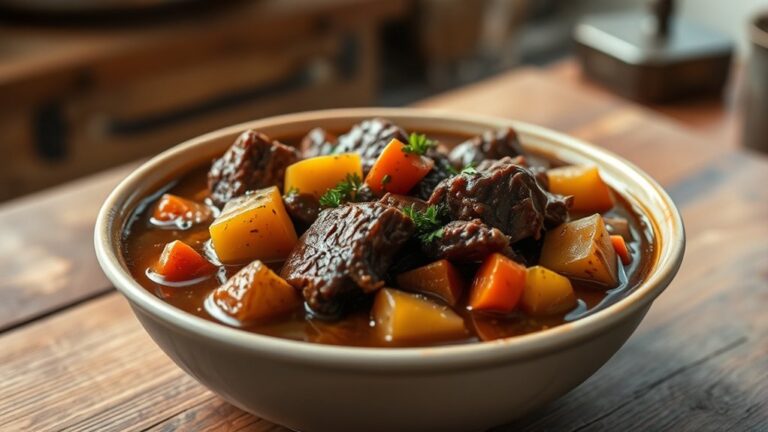
- Use in stews for depth of flavor
How to Spot Authentic Angus Beef at the Store?
Wondering how to identify genuine Angus beef at the store? Look for the official USDA Choice or Prime labels, which often indicate higher quality.
Authentic Angus beef usually features a black hide or packaging with “100% Angus” or similar branding. Check the label for certification seals from Angus organizations like the American Angus Association.
Good quality Angus beef will have a rich, deep red color and firm marbling throughout. Avoid packages with excessive liquid or dull, pale meat, which may suggest lower quality.
Trust reputable sources or specialty meat counters that clearly advertise Angus beef. By paying attention to labels, color, marbling, and packaging, you can confidently select authentic Angus beef that guarantees superior flavor and tenderness.
Frequently Asked Questions
Is Angus Beef Healthier Than Regular Beef?
Yes, Angus beef is generally healthier than regular beef because it tends to have more marbling, which means better flavor and tenderness. It can also be lower in overall fat if properly trimmed.
The higher fat content can provide more omega-3 and omega-6 fatty acids, which are good for your heart. But remember, portion control is key—even healthier beef should be eaten in moderation.
Are There Different Grades Within Angus Beef?
Yes, there are different grades within Angus beef, and they can surprise you. You might think all Angus is top-tier, but grading varies based on marbling, maturity, and overall quality.
Prime Angus is the highest grade, offering rich flavor and tenderness. Lower grades like Choice still provide good quality but have less marbling.
Knowing these grades helps you choose the perfect cut for your meal. It can really elevate your dining experience.
How Does Angus Beef Compare to Other Premium Beef Types?
You’ll find that Angus beef often stands out among other premium beef types because of its consistent marbling, tenderness, and flavor.
Compared to wagyu or Kobe, Angus tends to be more affordable but still offers excellent quality.
While wagyu has higher fat content and a richer taste, Angus provides a balanced, juicy bite.
Can Non-Angus Cattle Produce Similar Quality Beef?
Yes, non-Angus cattle can produce high-quality beef, but it’s like searching for a needle in a haystack. While Angus is known for marbling and tenderness, other breeds like Hereford or Wagyu can also deliver top-notch meat if raised well and managed properly.
It really depends on genetics, diet, and care. So, don’t dismiss other breeds—they might surprise you with their tasty, juicy cuts.
What Are the Environmental Impacts of Angus Versus Regular Beef?
You might find that Angus beef, often raised on specialized, sustainable farms, can have a lower environmental impact because of more efficient feed conversion and better meat yield.
On the other hand, regular beef from various breeds may need more resources and produce higher greenhouse gases.
Choosing Angus can support practices that might help reduce your carbon footprint.
But remember, environmental impacts really depend on farming methods, so look for sustainably raised options no matter the breed.
Conclusion
Now that you know what sets Angus beef apart, you can confidently choose quality over quantity. Think of Angus as a treasure chest of flavor—rich, tender, and wonderfully marbled.
When shopping, look for authentic labels to make sure you’re getting the real deal. With the right cooking techniques, you’ll unlock its full potential and turn meals into memorable feasts.
Trust your eye and palate to savor the best Angus beef offers, elevating every bite to a gourmet experience.