Kosher Salt Vs Sea Salt – 7 Key Differences
Many home cooks and chefs alike often find themselves puzzled when choosing between different types of salt. You’re not alone—navigating the options can be confusing, especially when every salt claims to be the best. Understanding these differences can make a real impact on your cooking.
Kosher salt and sea salt differ mainly in sourcing, texture, flavor, and uses. Kosher salt is mined or evaporated from salt deposits, has large coarse grains, and a clean taste, making it ideal for seasoning meats.
Sea salt comes from evaporated seawater, with finer or flaky grains, offering a mineral-rich, briny flavor perfect for finishing dishes.
They also vary in cost and additives.
Want to explore more about how these differences affect your cooking?
Key Takeaways
- Kosher salt has large, coarse grains, while sea salt can range from fine to coarse. This difference affects both texture and how quickly they dissolve.
- Kosher salt offers a clean, straightforward flavor. On the other hand, sea salt contains trace minerals that give it more complex, briny notes.
- Kosher salt is typically used for seasoning food and removing moisture. Sea salt is often chosen for finishing dishes and garnishing.
- Kosher salt tends to be more affordable and is widely available. Sea salt is usually more expensive and is often marketed as a specialty product.
- The way each salt is produced influences its flavor and texture. Sea salt is often made through artisan, limited-batch processes that add unique characteristics.
What Are the Main Differences Between Kosher Salt and Sea Salt?
Have you ever wondered what sets kosher salt apart from sea salt? The main difference is in how they’re sourced and processed.
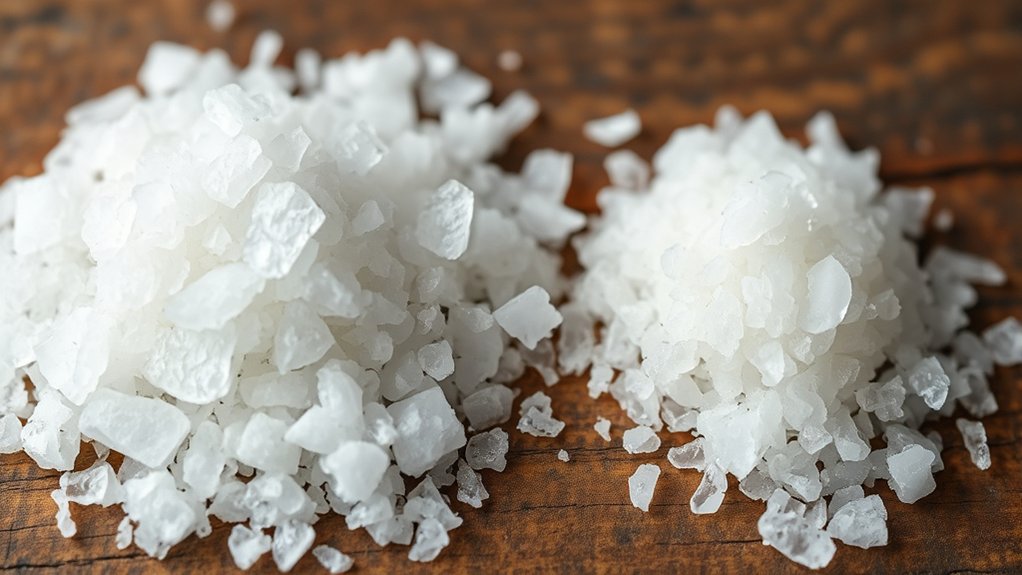
Kosher salt is made from mined rock salt or evaporated salt. It’s usually coarse and flaky. It’s often used for koshering meat because its large crystals help draw out blood.
Kosher salt is coarse, flaky, and ideal for koshering meat to draw out blood.
Sea salt, on the other hand, is harvested from evaporated seawater. It retains trace minerals from the ocean, which gives it a more complex flavor. Its crystals can range from coarse to fine depending on how it’s processed.
While both salts are natural, kosher salt usually contains no additives. Sea salt may have trace minerals that influence its taste.
These fundamental differences affect their texture, flavor, and how you might use them in cooking.
How Do Texture and Grain Size Vary?
The texture and grain size of kosher salt and sea salt can vary a lot, affecting how they feel and behave in the kitchen.
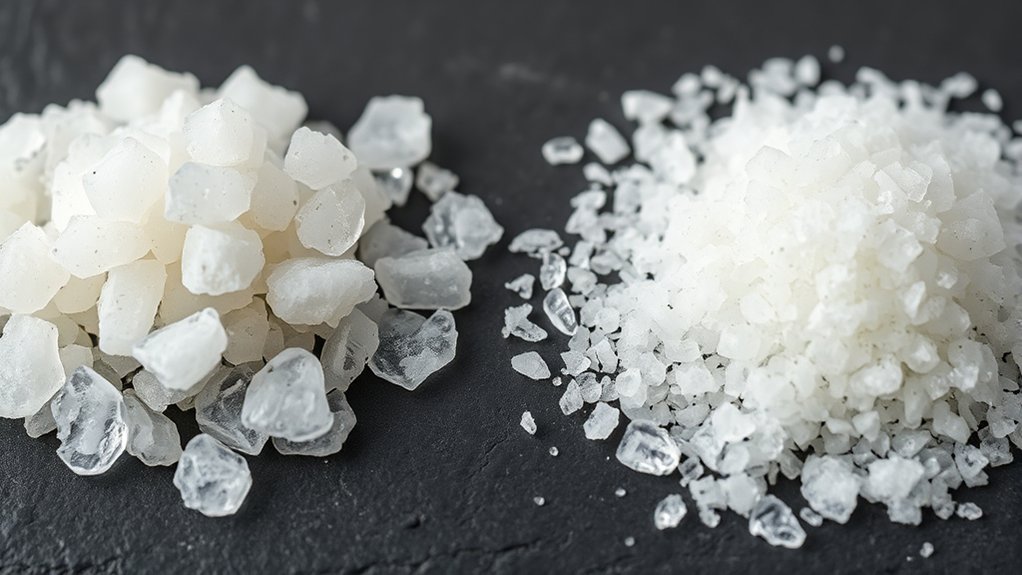
Kosher salt usually has large, coarse grains that feel gritty and crunchy when you sprinkle it. Sea salt can range from fine to coarse grains, often with a flaky or crystalline texture.
This difference influences how quickly each dissolves and how evenly they spread on food. When handling kosher salt, you’ll notice its chunky grains give a more robust feel, making it great for seasoning meats.
Sea salt’s smaller or irregular grains create a light crunch or flaky texture. These variations not only affect appearance but also how you measure and sprinkle the salts during cooking.
Which Salt Is Better for Cooking and Seasoning?
When choosing between kosher salt and sea salt for cooking and seasoning, think about how their flavors and textures will affect your dishes. Kosher salt’s larger grains make it easy to control and spread evenly.
Sea salt’s finer grains can enhance subtle flavors and add a delicate touch. The best choice really depends on what you need for your recipes and the textures you prefer.
Flavor Profile Differences
While both kosher salt and sea salt add saltiness to dishes, they bring different flavor profiles that can influence your cooking choices. Kosher salt has a clean, straightforward taste that lets the natural flavors of ingredients shine through. Its purity means it doesn’t overpower other seasonings.
Sea salt, on the other hand, often contains trace minerals that add subtle, complex nuances. It gives your food a slightly briny, mineral-rich flavor that can enhance the overall taste, especially when used as a finishing touch.
Imagine a flaky sea salt melting on roasted vegetables, adding a burst of mineral richness. Picture kosher salt’s crisp, clean bite that elevates grilled meats. Envision the subtle oceanic hints from sea salt improving seafood dishes.
Texture and Grain Size
Texture and grain size play an essential role in how you use kosher salt and sea salt in your cooking. Kosher salt typically has larger, flaky grains that dissolve slowly, making it perfect for seasoning meats and drawing out moisture. Its coarse texture gives you better control when seasoning by hand.
Sea salt, on the other hand, varies from fine to coarse grains but generally has a finer, more uniform texture. Fine sea salt dissolves quickly, making it great for finishing dishes or adjusting seasoning at the table.
Coarse sea salt offers a crunchy texture and can be used for salt-crusting or adding visual interest to dishes. Your choice depends on the application—coarse salts give more control and texture, while finer salts blend smoothly into food.
Culinary Versatility
Both kosher salt and sea salt bring unique strengths to your cooking and seasoning routines, making them versatile tools in the kitchen. Kosher salt’s coarse grains are great for sprinkling over dishes, enhancing flavor quickly. Its larger crystals dissolve slowly, so you can better control seasoning during cooking.
Sea salt offers a range of textures and mineral flavors that can really elevate finishing touches. It’s perfect for garnishing salads, roasted veggies, or even adding crunch to baked goods. Plus, its delicate crystals dissolve faster, making it ideal for recipes that need quick seasoning.
Whether you’re seasoning a steak, finishing a salad, or baking, both salts can adapt to various culinary tasks. They add texture, flavor, and visual appeal to your dishes—crystals crunching between your teeth, melting seamlessly into sauces and marinades, and enhancing the look of plated dishes.
What Are the Flavor Differences Between Kosher and Sea Salt?
You’ll notice that sea salt often has a more pronounced mineral taste compared to kosher salt’s cleaner, milder flavor. The mineral content in sea salt gives it a unique profile and adds subtle complexity to your dishes.
In contrast, kosher salt’s simpler flavor makes it a versatile choice for seasoning without overpowering other ingredients.
Flavor Intensity and Profile
Kosher salt and sea salt differ quite a bit in their flavor intensity and profile, which can really impact how your dishes taste. Kosher salt offers a clean, straightforward flavor with a mild saltiness that doesn’t overpower other ingredients.
Sea salt, on the other hand, often has a more complex taste, with subtle mineral notes that add depth. Its flavor can range from briny and oceanic to slightly sweet, depending on where it comes from.
Imagine biting into a crisp piece of sea salt and tasting the mineral-rich ocean breeze. Picture kosher salt dissolving smoothly, leaving a pure, clean saltiness on your palate.
Envision sea salt’s layered, nuanced flavors enhancing both savory and sweet recipes.
Mineral Content Influence
The mineral content in sea salt greatly influences its flavor, often giving it a more complex and layered taste compared to kosher salt. These trace minerals, such as magnesium, calcium, and potassium, add subtle nuances that enhance the overall flavor.
When you use sea salt, you’ll notice a slight bitterness or mineral tang, which can deepen the taste of dishes. Kosher salt, on the other hand, is usually more refined and contains fewer minerals, resulting in a cleaner, more neutral flavor.
This difference means sea salt can provide a richer, more nuanced experience, especially when finishing dishes or seasoning ingredients directly. Your choice depends on whether you prefer the mineral-driven complexity of sea salt or the straightforward purity of kosher salt.
When Should You Use Kosher Salt Versus Sea Salt in Recipes?
Deciding when to use kosher salt or sea salt often depends on your recipe’s specific needs. If you want a clean, straightforward salt flavor with easy-to-control granules, kosher salt is your best bet.
It’s perfect for seasoning meats, brining, or rimming glasses because it dissolves quickly and offers consistent saltiness. Sea salt, on the other hand, really shines when used as a finishing touch to dishes.
It adds a delicate crunch and subtle mineral notes. Sprinkle it over grilled vegetables, salads, or baked goods for extra texture and flavor.
Imagine a flaky crust of sea salt on a fresh baguette, coarse kosher salt crystals glistening on roasted chicken, or fine sea salt sprinkled over a vibrant salad for a finishing touch.
Choose based on the texture, flavor, and purpose you want for your dish.
How Do Sodium Content and Additives Compare?
Sodium content and additives vary a lot between kosher salt and sea salt, affecting health and flavor. Kosher salt usually has slightly less sodium by volume because of its larger crystals, which don’t pack as tightly.
Sea salt can sometimes have higher sodium levels per teaspoon. Additives are different too; kosher salt generally has no additives, making it a purer option. Some sea salts include anti-caking agents or preservatives.
These additives can influence flavor, sometimes adding subtle mineral notes. If you’re watching your sodium intake, it’s a good idea to read labels and understand crystal size. Choosing between them depends on your health needs and flavor preferences, but always check for added ingredients on the packaging.
What Are the Cost and Availability Differences?
Cost and availability are big factors when choosing between kosher salt and sea salt. Generally, kosher salt is more affordable and easier to find because it’s produced in large quantities and has a longer shelf life.
You’ll usually see it in most grocery stores without much trouble. Sea salt, on the other hand, can be more expensive because it’s often harvested in smaller batches and marketed as a specialty item.
Its unique textures and flavors make it popular among chefs and home cooks who are willing to spend a bit more. Visualize the difference: a large, easy-to-find container of coarse kosher salt on grocery store shelves, small artisan jars of flaky sea salt in gourmet sections, and the occasional premium price tag on artisanal sea salts reflecting their limited production.
Frequently Asked Questions
Can I Substitute Kosher Salt With Sea Salt in Recipes?
Yes, you can substitute sea salt for kosher salt in recipes. Just keep in mind that sea salt grains are usually smaller and denser, so you might need to use slightly less.
To get the right saltiness, start with a bit less and taste as you go. Adjust the amount based on your preference, and your dish should turn out just as flavorful.
Does Mineral Content Differ Significantly Between Kosher and Sea Salt?
Sure, the mineral content does differ greatly—if you’re into mineral charts more than flavor.
Kosher salt is mostly pure sodium chloride with minimal minerals, while sea salt contains trace minerals like magnesium and calcium.
This gives sea salt a slightly different taste and texture. So, if you want a mineral-rich experience, sea salt’s your go-to.
Otherwise, kosher salt’s clean, simple saltiness will do the trick. Either way, your taste buds are winning.
Are There Health Benefits Associated With Sea Salt Over Kosher Salt?
Yes, there are some health benefits to sea salt over kosher salt. Sea salt contains trace minerals like magnesium, calcium, and potassium, which can support your overall health and electrolyte balance. It’s less processed, so it retains more natural minerals.
However, both salts have similar sodium levels, so consuming them in moderation is key. Incorporating sea salt might offer minor mineral advantages, but it’s not a significant health game-changer.
How Do Kosher and Sea Salts Impact Food Preservation?
You can think of salt as the unsung hero of food preservation. Both kosher and sea salts help extend shelf life by drawing moisture out of foods and stopping bacteria from growing.
Kosher salt’s coarse grains make it easy to spread evenly on meats, which is great for preserving and flavoring. Sea salt’s mineral content can add subtle flavor layers, making your preserved foods taste even better.
Your choice depends on the texture and flavor profile you want, but both salts play an essential role in keeping food fresh longer.
Which Salt Is More Environmentally Sustainable to Produce?
Sea salt is generally more environmentally sustainable to produce because it relies on natural evaporation processes without extensive mining or refining, reducing energy use and habitat disruption.
Kosher salt involves mining or processing, which can have a higher environmental footprint. When you choose sea salt, you’re supporting a method that often uses less energy and impacts ecosystems less.
Conclusion
Understanding the differences between kosher salt and sea salt helps you choose the right one for your culinary needs.
Whether you prefer the coarse crunch of kosher or the delicate mineral notes of sea salt, each brings its own unique flavor and texture to the table.
Like a well-tuned orchestra, selecting the right salt can elevate your dishes from ordinary to extraordinary.
Choosing between kosher salt and sea salt can turn everyday cooking into a symphony of taste.