How to Cook Beef Rump Roast in the Oven in 7 Simple Steps
Many home cooks find themselves frustrated when trying to cook a perfect beef rump roast — it’s easy to end up with a tough, undercooked, or overcooked piece of meat.
You’re not alone; getting that tender, flavorful roast just right can be tricky, especially if you’re new to roasting.
To cook a beef rump roast in the oven in 7 simple steps, start by selecting a quality piece and letting it sit at room temperature.
Season generously with herbs and spices, then roast at 325°F, cooking about 20 minutes per pound until it reaches your preferred doneness.
Rest the meat before carving, ensuring juices stay inside.
For detailed tips on preparation, roasting, and serving, continue exploring these easy methods to perfect your roast.
Key Takeaways
- Select a high-quality beef rump roast and let it come to room temperature before you start cooking.
- Generously season the roast with salt, pepper, herbs, and spices. Then, let it sit for about 30 minutes to really boost the flavor.
- Preheat your oven to 325°F. Place the roast in the oven and cook for roughly 20 minutes per pound. Keep an eye on the internal temperature as it cooks.
- Use a meat thermometer to check the temperature. Pull the roast out when it’s just a bit below your desired doneness. Let it rest for a few minutes before carving.
- Serve your beef rump roast with your favorite sides and garnishes. Pair it with drinks that complement the meal for a complete dining experience.
How to Prepare Your Beef Rump Roast Before Cooking
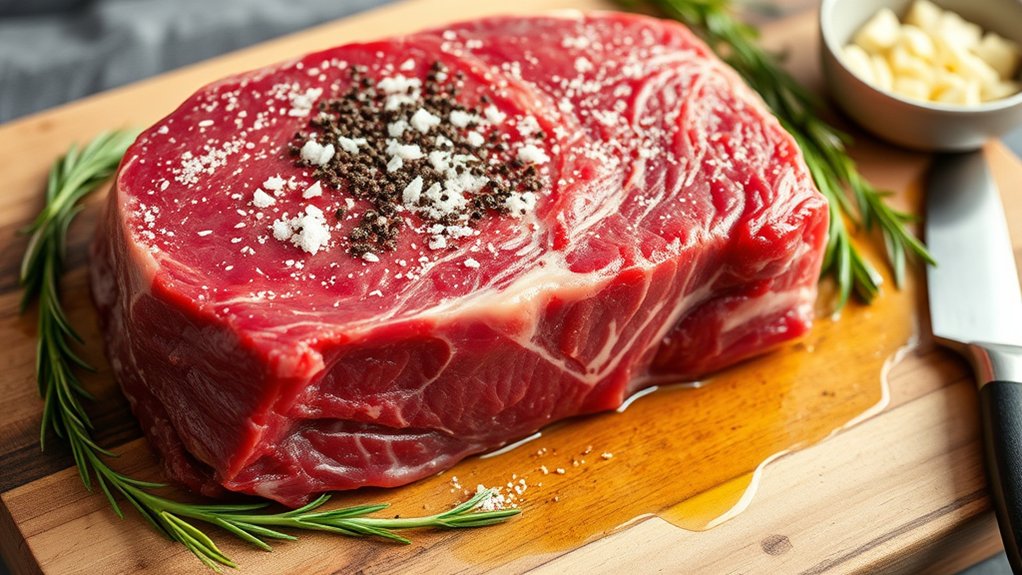
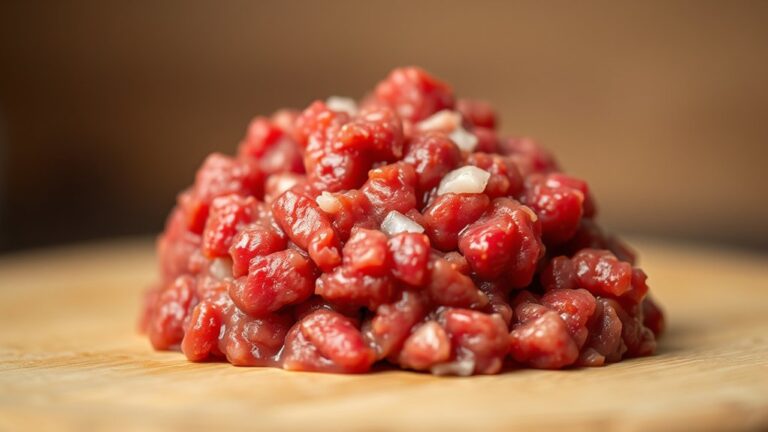
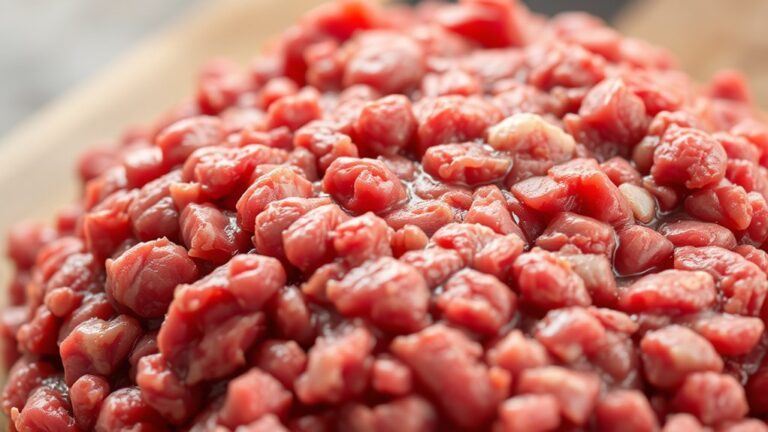
Before cooking your beef rump roast, you need to prepare it properly. Start by taking it out of the refrigerator about 30 minutes before cooking. This helps it come to room temperature, which ensures even cooking.
Pat the meat dry with paper towels to remove excess moisture. This helps create a good sear and develop flavor. Trim any excess fat or silver skin, but leave some fat for moisture and taste.
Pat the meat dry to enhance searing and flavor; trim excess fat but keep some for moisture.
If your roast has a thick layer of fat, lightly score it to help render the fat during cooking. Check for any bones or connective tissue that might need removal.
Proper preparation helps the meat cook evenly and develop a better texture. These steps set a solid foundation for a tender, flavorful beef rump roast.
How to Season Beef Rump for Maximum Flavor
To make your beef rump roast burst with flavor, start by generously seasoning it with salt and freshly ground black pepper. Salt enhances the beef’s natural taste and helps tenderize the meat, so don’t hold back.
For extra depth, try adding garlic powder, onion powder, and a pinch of paprika for a hint of smokiness. You can also toss in dried herbs like thyme, rosemary, or oregano to bring in some aromatic complexity.
Rub the seasonings evenly all over the meat, pressing them into the surface to help them stick. If you have the time, let the seasoned beef sit uncovered in the fridge for 30 minutes to an hour. This helps the flavors penetrate better.
What Oven Temperature and Cooking Time Work Best
To get the best results, set your oven to around 350°F (175°C) for a tender, juicy roast.
Cook it for about 20 minutes per pound, but keep in mind that roast size and how you like it will affect the timing.
Adjustments might be needed based on your specific cut and how your oven performs.
Optimal Cooking Temperature
Achieving the perfect doneness for your beef rump roast depends on setting the right oven temperature and sticking to an appropriate cooking time. For a tender, juicy roast, preheat your oven to 325°F (163°C). This moderate temperature allows the meat to cook evenly without drying out.
If you prefer a more well-done roast, you can raise the temperature slightly, but avoid going over 350°F (177°C). Higher temperatures risk tougher meat and uneven results.
Keep in mind, cooking at too high a temperature can lead to dryness. Use a meat thermometer to monitor the internal temperature, aiming for about 135°F (57°C) for medium-rare or 145°F (63°C) for medium.
Proper temperature control guarantees your beef rump roast turns out flavorful, tender, and cooked to your liking.
Ideal Cooking Duration
For a perfectly cooked beef rump roast, cook it at 325°F (163°C) for about 20 minutes per pound. This temperature helps the meat cook evenly and stay moist.
If you like your roast medium-rare, take it out when the internal temperature hits 135°F (57°C). For medium, aim for 145°F (63°C). Use a reliable meat thermometer to check.
Keep in mind that bigger roasts may need a little extra time, while smaller cuts cook faster. Rest the meat for 10-15 minutes after removing it from the oven to let the juices settle.
Following these tips will help ensure your beef rump roast is tender, juicy, and cooked just the way you like it.
Factors Influencing Timing
The oven temperature you choose really affects how quickly and evenly your beef rump roast cooks. Higher temps like 425°F cook it faster but can dry out the meat or burn the outside.
Lower temps such as 325°F let the roast cook more slowly and evenly, giving you tender, juicy results. The size and thickness of your roast also matter—bigger or thicker cuts need more time.
Your preferred level of doneness—rare, medium, or well-done—also influences cooking time. Always use a meat thermometer to check the internal temperature instead of just relying on time.
Adjust your oven temperature and cooking time based on these factors to get that perfect roast.
How to Roast Beef Rump for Juicy, Tender Results
To roast beef rump for juicy, tender results, start by bringing the meat to room temperature. This helps it cook evenly and prevents dryness.
Pat the roast dry with paper towels to promote browning. Then, season generously with salt, pepper, and your favorite herbs or spices.
Pat the roast dry with paper towels, then season generously for perfect browning and flavor.
Preheat your oven to 375°F (190°C). Place the roast on a rack in a roasting pan to allow air circulation.
Roast uncovered, using a meat thermometer to monitor the internal temperature. For medium-rare, aim for about 135°F (57°C); for medium, 145°F (63°C).
Remove the roast when it’s about 5°F (3°C) below your target temperature, as it will continue to cook while resting. This method guarantees a juicy, tender beef rump every time.
How to Rest and Carve Your Roast for the Best Presentation
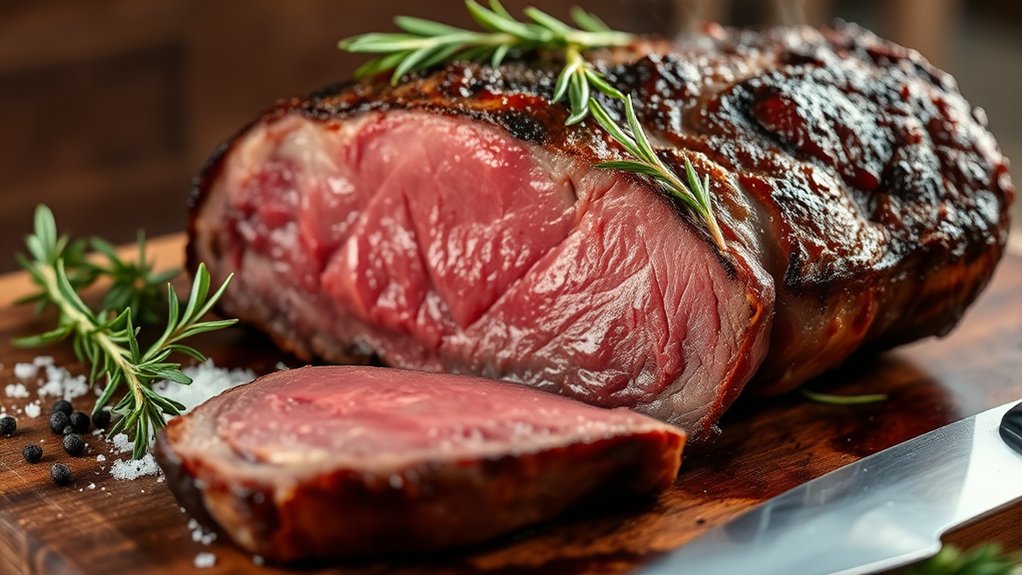
Allow the roast to rest for at least 15 minutes before carving to ensure maximum juiciness and flavor. During this time, tent it loosely with foil to keep it warm.
Resting lets the juices redistribute throughout the meat, so they don’t spill out when you cut. When carving, use a sharp knife for clean slices.
Hold the roast steady with a fork, and carve against the grain for tender, easy-to-eat pieces. Aim for slices about 1/4 to 1/2 inch thick, depending on your preference.
Arrange the slices neatly on a serving platter to create an appealing presentation. Proper resting and carving not only improve flavor and texture but also make your beef rump roast look impressive when served.
Troubleshooting Common Problems When Roasting Beef Rump
If your roast turns out tougher than expected, it’s often because of common roasting mistakes or overcooking.
Monitoring the temperature carefully can make a big difference.
Avoid overexposing the beef to heat, which can lead to dryness and toughness. Recognizing these issues early helps you get tender, flavorful beef every time.
Common Roasting Mistakes
One of the most common mistakes when roasting beef rump is not letting the meat rest before carving. Resting helps the juices spread out, keeping the meat moist and flavorful.
If you carve too soon, those juices will escape, making your roast dry and tough. Another mistake is cooking the meat at too high a temperature, which can burn the outside while the inside stays undercooked.
Overcooking is also a common problem. Use a meat thermometer to make sure you reach your preferred level of doneness. Finally, skipping proper seasoning can leave your roast bland.
Be sure to season generously before roasting, and consider marinating for extra flavor. Avoid these mistakes to get a juicy, tender, and flavorful beef rump roast.
Preventing Tough Meat
Many common roasting mistakes can lead to tough, chewy beef rump. To prevent this, focus on these key tips:
- Don’t overcook it. Use a meat thermometer and aim for an internal temperature of about 135-140°F for medium-rare.
- Rest the meat for at least 10 minutes after roasting. This helps juices redistribute, keeping the meat tender.
- Slice against the grain. This shortens muscle fibers and makes each bite easier to chew.
Also, avoid starting with high heat. Instead, roast at a moderate temperature to gently cook the meat and preserve its tenderness.
Proper preparation and timing are key for a juicy, tender beef rump.
Tips for Serving and Pairing Your Roast to Impress
When it’s time to serve your beef rump roast, presentation and pairing can really elevate the whole meal. Slice the roast against the grain for tender, even pieces, and arrange them neatly on a warm platter.
Slice against the grain and arrange neatly for tender, eye-catching presentation.
Garnish with fresh herbs like parsley or thyme to add a splash of color and aroma. For sides, hearty vegetables like roasted potatoes, green beans, or a crisp salad pair beautifully with the rich beef.
Pair your roast with bold red wines like Cabernet Sauvignon or Malbec, which stand up to the meat’s flavor. Keep your serving dishes simple and elegant to let the main course shine.
With thoughtful presentation and well-chosen pairings, you’ll impress your guests and turn a straightforward roast into a memorable dining experience.
Frequently Asked Questions
Can I Cook Beef Rump Roast in a Slow Cooker Instead of the Oven?
Yes, you can cook a beef rump roast in a slow cooker instead of the oven. Just season the roast and add vegetables if you like.
Place it in the slow cooker, cover, and cook on low for 6-8 hours or until the meat is tender. This method guarantees a juicy, flavorful roast with minimal effort.
It’s perfect for a comforting, hands-off meal. You’ll get a delicious result without much fuss.
What Are Alternative Seasonings for a Different Flavor Profile?
Did you know that herbs and spices can boost a dish’s flavor by over 50%? For a different flavor profile, try using rosemary, thyme, or sage for a herby touch.
You could also add smoked paprika or cumin for a smoky or earthy flavor. Don’t hesitate to experiment with garlic powder, onion powder, or even a splash of soy sauce to add depth and complexity to your rump roast.
How Do I Store Leftovers Safely?
You should store leftovers in an airtight container or resealable plastic bag to keep them fresh. Let the beef cool to room temperature before refrigerating, ideally within two hours of cooking.
Keep the temperature at 40°F (4°C) or below. Consume leftovers within 3 to 4 days, or freeze them for longer storage.
When reheating, make sure the beef reaches an internal temperature of 165°F (74°C) for safety.
Is It Necessary to Use a Meat Thermometer?
Yes, using a meat thermometer is highly recommended when cooking a beef rump roast. It helps you reach the perfect internal temperature for safety and your desired doneness.
This prevents undercooking or overcooking, so your meat turns out just right. Simply insert the thermometer into the thickest part of the roast, wait for the reading, and take out the meat once it hits your target temperature.
This simple step ensures a juicy, tender result every time, making your cooking more precise and confident.
Can I Cook Beef Rump Roast From Frozen?
Yes, you can cook a beef rump roast from frozen, but you’ll need to make some adjustments.
Add extra cooking time—about 1.5 times the usual—so it cooks evenly all the way through. Using a meat thermometer is the safest way to check that it reaches an internal temperature of 145°F.
Be patient because frozen meat takes longer to cook, and try to avoid opening the oven often, as that can lower the temperature and extend cooking time.
Conclusion
Now that you’ve mastered the simple steps to roasting beef rump, you’re all set to create a juicy, flavorful centerpiece. Imagine slicing into that perfectly cooked, tender meat—can you see the juices glistening in each slice?
With a little patience and attention, you’ll impress everyone at the table. So, why not turn your kitchen into a gourmet restaurant today? Your delicious, homemade beef rump roast is just a few steps away!