What Part of the Cow Does Beef Bacon Come From?
Many people love the taste of beef bacon but often wonder where it comes from on the cow. If you’re curious about its origins, you’re not alone—knowing more about the cuts can make your culinary choices even more satisfying.
Beef bacon comes from the brisket or navel area of the cow, both known for their rich fat content and flavor ideal for curing and smoking. The brisket, located on the lower chest, provides a good balance of meat and fat, while the navel area is tender and fatty, perfect for bacon.
These cuts, along with others like the short plate and skirt, contribute to its juicy, flavorful qualities. To learn more about selecting and preparing beef bacon, keep exploring.
Key Takeaways
– Beef bacon is mainly made from the brisket or navel area of the cow.
The brisket is located on the lower chest, making it a great choice for curing and smoking.
The navel, which is part of the plate section, is known for its rich fat and tenderness.
Other cuts like the shank and plate can also be used for beef bacon.
These cuts are picked because of their fat content and texture, which are perfect for curing and smoking.
Where Does Beef Bacon Come From on the Cow?
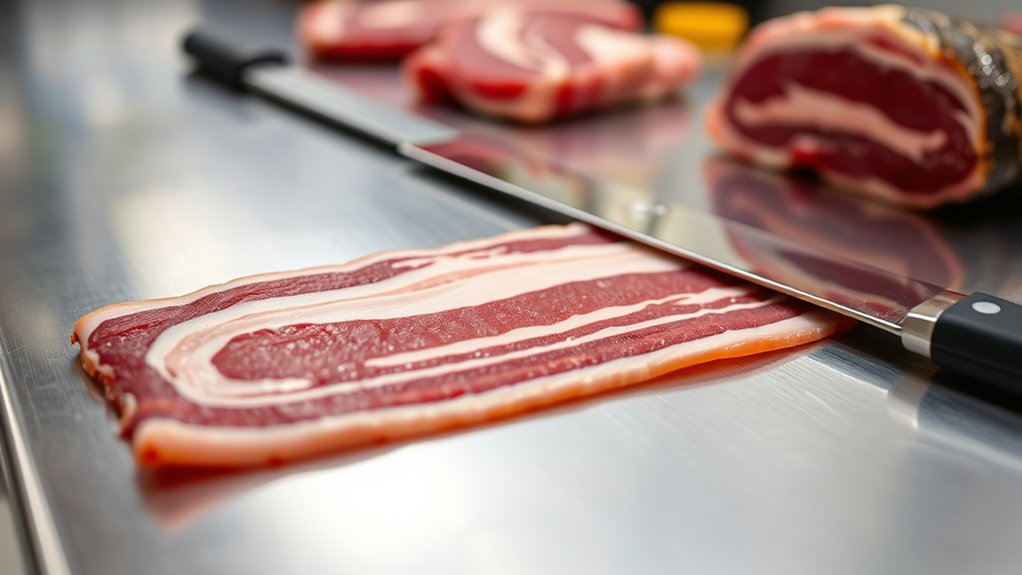
Beef bacon typically comes from the brisket or navel area of the cow. These parts are known for their rich marbling and connective tissue, which help create the flavorful, fatty slices you enjoy.
The brisket is located on the lower chest, near the front legs. It’s often used for slow cooking or smoking.
The brisket is found on the lower chest, close to the front legs, ideal for slow cooking or smoking.
The navel, or plate, is situated beneath the ribcage. It’s famous for its fatty, tender qualities.
Both cuts are well-suited for curing and smoking, giving beef bacon its distinctive taste. When you buy beef bacon, you’re usually getting slices from these muscular, fatty regions that provide the right balance of meat and fat for that crispy yet juicy texture.
What Are the Main Cuts Used for Beef Bacon?
The main cuts used for beef bacon come from specific areas of the cow that have the right balance of fat and meat for curing and smoking. Usually, these cuts are found in the brisket, shank, or plate sections.
These areas have enough marbling to give beef bacon its rich flavor and tender texture, while still being firm enough to withstand curing. The brisket is popular because it offers a good mix of fat and meat, making it ideal for slicing into bacon strips.
The shank and plate provide similar qualities, with enough fat to enhance flavor and moisture. These cuts are processed into beef bacon through curing, smoking, and slicing, resulting in a tasty, smoky product that’s perfect for breakfast or sandwiches.
Why Is the Navel Area Suitable for Beef Bacon?
Because of its high fat content and firm texture, the navel area is especially great for beef bacon. The fat marbling helps create a rich, flavorful bacon with a satisfying chew.
Its firmness makes it easy to slice and ensures even curing, which simplifies the preparation process. Plus, this area has a good balance of muscle and fat, so the bacon stays juicy and tender when cooked.
Here’s a quick look at why the navel works so well:
| Benefit | Explanation |
|---|---|
| High Fat Content | Adds flavor and keeps the bacon moist during cooking. |
| Firm Texture | Ensures easy slicing and even cooking. |
| Balanced Composition | Helps maintain juiciness without becoming greasy. |
| Consistent Quality | Produces uniform bacon pieces. |
| Ideal Size for Curing | Great for curing and smoking processes. |
Are the Chuck or Round Used for Beef Bacon?
When choosing between the chuck and round for beef bacon, you consider their cut locations and typical uses. The chuck offers a richer flavor with a slightly fattier texture, while the round tends to be leaner and firmer.
These differences impact both the taste and how the meat holds together during cooking. So, your choice depends on what kind of beef bacon you prefer.
Cut Locations and Uses
You might wonder whether the chuck or round cuts are used for beef bacon, as each comes from different parts of the cow with distinct characteristics. Typically, beef bacon is made from the chuck, which is located near the shoulder.
This cut has more fat marbling, making it ideal for curing and smoking, which gives the bacon a flavorful, tender quality. The round, from the rear leg, is leaner and less suited for bacon because it doesn’t have the necessary fat for the traditional texture and flavor.
The chuck’s higher fat content helps create the rich, smoky taste you expect from beef bacon. Chefs often prefer the chuck because its balance of meat and fat results in a more satisfying, bacon-like experience.
Flavor Profiles of Cuts
The flavor profiles of beef bacon cuts vary greatly, influencing the overall taste experience. If you’re choosing between chuck and round, you’ll notice distinct differences.
Chuck tends to have a richer, beefier flavor with more marbling, which adds depth and juiciness to the bacon. Its fattier nature improves the savory taste, making each bite more indulgent.
Round, on the other hand, offers a leaner profile with a cleaner, slightly milder beef flavor. It’s less greasy and can be a good option if you prefer a subtler taste.
The cut’s natural flavor is shaped by its fat content, so your choice will impact the richness and intensity of your beef bacon. Ultimately, your preference for boldness versus leaner flavor guides your selection.
Texture Differences in Meat
Choosing between chuck and round for beef bacon really changes the texture. Chuck comes from the shoulder, so it’s more marbled and tender with a bit of chewiness. That fat helps make it juicier and more forgiving when cooked.
Round is leaner and from the rear leg. It tends to be firmer and a bit tougher, so you need to cook it carefully to avoid dryness. When making beef bacon, chuck’s softer, fattier qualities give it a smoother, bacon-like feel.
Round gives a leaner, denser bite. It’s appealing if you prefer a leaner option, but it might need extra moisture or marinating to get tender enough. Your choice really affects how each bite feels.
How Do the Short Plate and Skirt Make Beef Bacon?
The short plate provides the marbling that keeps beef bacon juicy and flavorful during curing and smoking.
The skirt adds a desirable texture, giving the bacon its chewiness and bite.
Together, these cuts undergo curing and smoking to develop the rich, savory taste you enjoy.
Short Plate’s Marbling Role
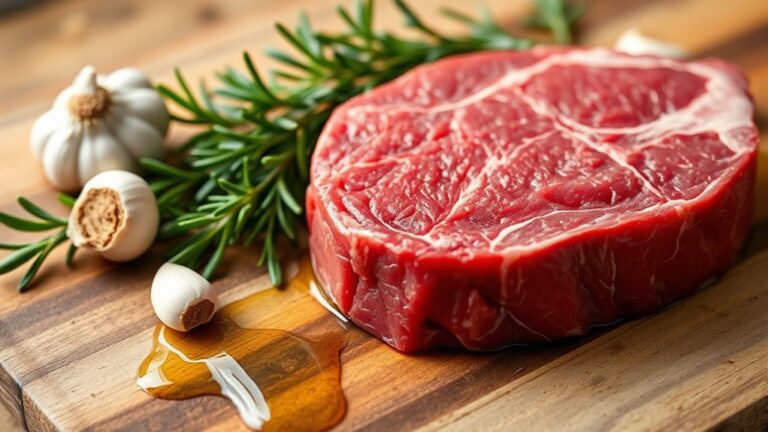
Marbling plays an essential role in transforming the short plate into flavorful beef bacon, as the intramuscular fat adds moisture and richness during curing and cooking. The marbling in the short plate provides a balance of fat and lean meat, ensuring the bacon stays juicy and tender.
This intramuscular fat melts during cooking, enhancing flavor and creating a melt-in-your-mouth texture. Without enough marbling, the beef bacon can turn out dry and less flavorful.
The fat also helps distribute seasonings evenly, making each slice savory. The short plate’s natural marbling makes it perfect for beef bacon, giving it that richness and succulence that set it apart from other cuts.
Thanks to this intramuscular fat, your beef bacon will be more satisfying and packed with flavor.
Skirt’s Textural Contribution
While marbling affects the juiciness and flavor of beef bacon, the texture of the cut itself also matters a lot. The skirt, known for its fibrous and slightly chewy feel, adds a unique mouthfeel to the bacon.
Its long muscle fibers give each bite a meaty chew, balancing tenderness with a hearty bite. Because it’s naturally tough, proper curing and slicing help tenderize it.
The fibrous structure also keeps the bacon intact during cooking, preventing it from becoming greasy or falling apart. Overall, the skirt’s texture gives the bacon a robust chewiness that makes it more satisfying.
It adds a rustic, characteristic appeal, enhancing the overall experience of eating beef bacon.
Curing and Smoking Process
Curing and smoking turn the short plate and skirt into flavorful beef bacon by locking in moisture and adding smoky depth. This process boosts their natural flavors and creates the signature taste of beef bacon.
During curing, you apply a mixture of salt, sugar, and spices that soak into the meat, preserving it and enhancing the flavor. Smoking then introduces smoke from burning wood, infusing the meat with a rich, smoky aroma.
To understand the process better, consider:
- Curing: Salt and spice rubs are applied, and the meat rests to absorb flavors.
- Smoking: The meat is exposed to smoke at controlled temperatures for hours.
- Finishing: The bacon is cooled, sliced, and prepared for packaging or cooking.
Is the Belly Used for Beef Bacon?
Is the belly used for beef bacon? Yes, it is. Like pork bacon, beef bacon often comes from the cow’s brisket or belly area. The belly has plenty of fat, which adds flavor and makes the bacon tender.
While pork belly is more common for traditional bacon, beef belly is becoming more popular for those wanting a beef alternative. The beef belly is carefully trimmed and cured to make beef bacon with a rich, savory flavor.
Its marbling helps keep the bacon juicy and flavorful when cooked. Not all beef bacon is from the belly, but it’s a top choice because of its texture and fat content. This makes it perfect for crispy, delicious bacon.
How Are Beef Bacon Cuts Prepared by Butchers?
When butchers prepare beef bacon, they start by selecting the right cuts that will give the best flavor and texture.
Then, they cure the meat with a mixture of salts and spices to enhance flavor and preservation.
After curing, they smoke the meat to develop a rich, smoky taste.
These steps help ensure your beef bacon is flavorful, tender, and well-preserved.
Selecting the Right Cuts
Butchers carefully select specific cuts of beef that are best suited for making bacon, focusing on areas with the right balance of fat and lean. These cuts often come from parts of the cow with consistent marbling, which guarantees flavor and tenderness.
When choosing beef for bacon, they look for a good fat-to-lean ratio to achieve flavor and moisture. They also check for even marbling throughout the cut to ensure consistent quality.
Cuts that are easy to slice into thin, uniform strips are preferred. Common choices include the beef plate, brisket, or flank.
Butchers trim away excess connective tissue and shape the meat into strips or slabs suitable for curing and smoking. This careful selection process guarantees the final product delivers the taste and texture you expect from beef bacon.
Curing and Smoking Processes
To turn beef cuts into flavorful bacon, you start with curing. A mix of salt, sugar, and spices is rubbed onto the meat to draw out moisture and preserve it. This curing can take anywhere from a few hours to several days, depending on the flavor and texture you want.
Once cured, rinse the beef and let it dry. Then comes smoking, which adds depth and richness. Hang the meat in a smoker at a controlled temperature so the smoke can seep in and develop those complex flavors.
Some butchers opt for cold-smoking for a more delicate taste. After smoking, cool the beef bacon, slice it up, and it’s ready to package or use in your recipes. These steps help ensure your beef bacon is flavorful, tender, and free of preservatives.
What Factors Affect Beef Bacon’s Flavor and Texture?
Several key factors influence the flavor and texture of beef bacon, shaping its overall quality and appeal. First, the cut of beef you choose matters because different muscles have varying fat content and tenderness, which affect mouthfeel.
Second, the curing process plays a crucial role. How long you cure the meat and what ingredients you use impact the flavor depth and saltiness.
Third, the cooking method and duration greatly influence texture. Slow cooking tends to make it tender, while high heat can create a crispy exterior.
Keep these in mind:
- The specific beef cut used
- Curing time and ingredients
- Cooking technique and temperature
How Does Marbling Influence Beef Bacon Quality?
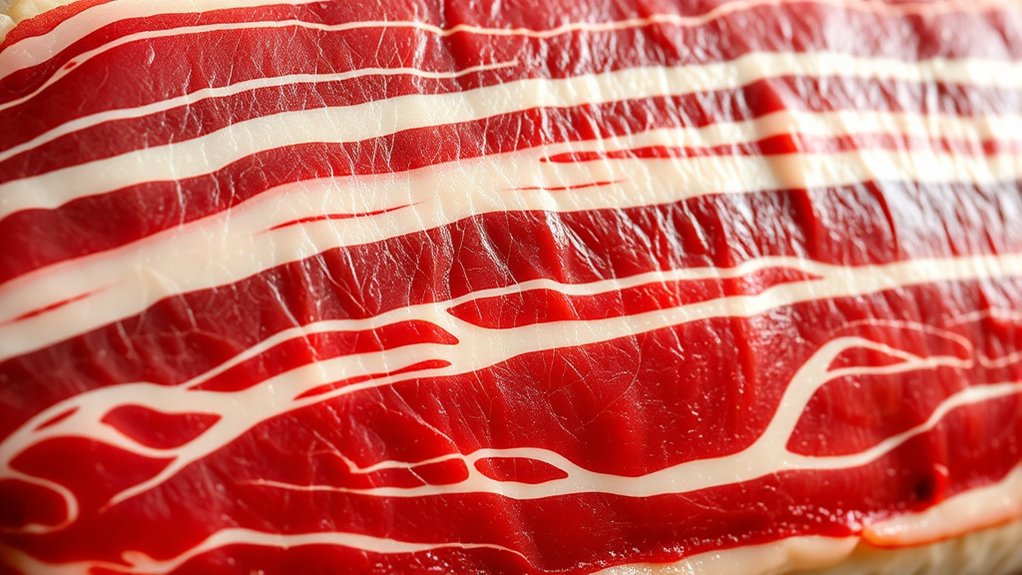
Marbling, which is the distribution of intramuscular fat within beef, is a key factor in determining beef bacon quality. When marbling is high, it usually means more flavor, juiciness, and tenderness, making your bacon more enjoyable.
Well-marbled beef has fat that melts during cooking, boosting taste and moisture. On the other hand, leaner cuts tend to be drier and less flavorful. The amount and spread of marbling can vary between different cuts and cattle breeds, affecting the final quality.
Here’s a quick comparison to help you understand:
| Marbling Level | Impact on Beef Bacon | Flavor & Juiciness | Texture | Best for |
|---|---|---|---|---|
| Low | Less flavor, dry | Firm, chewy | Drier | Leaner options |
| Moderate | Balanced, tender | Juicy, flavorful | Slightly tender | Everyday use |
| High | Rich, indulgent | Very juicy, tender | Softer | Premium cuts |
Proper marbling ensures your beef bacon is flavorful and succulent.
How Can You Identify Good Beef Bacon at the Market?
When shopping for beef bacon, knowing what to look for can make all the difference in choosing a high-quality product.
First, check the color. Look for a deep pink or red hue with some marbling, which indicates freshness and good flavor.
Next, examine the texture. It should be firm and slightly moist, not slimy or dry.
Read the label carefully too. Choose products with minimal additives and clear sourcing information.
Finally, smell the bacon. It should have a clean, meaty aroma without any sour or off-putting odors.
How Does Beef Bacon Compare to Pork Bacon?
Beef bacon offers a distinct alternative to traditional pork bacon, with notable differences in flavor, texture, and health considerations. It tends to have a richer, deeper taste, often described as more robust and meaty.
The texture is usually denser and chewier, which some people prefer for its hearty feel. In terms of health, beef bacon generally contains less fat and calories than pork bacon, making it a slightly leaner choice, though this can vary based on preparation.
Furthermore, beef bacon is a good source of protein and iron. While pork bacon is more familiar and commonly available, beef bacon appeals to those seeking a different flavor profile or dietary preference.
What Are Tips for Cooking and Enjoying Beef Bacon?
To get the best results when cooking beef bacon, start by selecting high-quality slices and preparing them with patience. Proper preparation guarantees even cooking and better flavor. When cooking beef bacon, keep these tips in mind:
- Cook on medium heat: This prevents burning and slowly renders the fat, making the bacon crispy and flavorful.
- Use a wire rack: Place the slices on a rack to let excess fat drip away and help them become crispier.
- Drain excess grease: After cooking, put the bacon on paper towels to absorb extra fat and keep it crispy.
Enjoy beef bacon as a snack, in sandwiches, or crumbled over salads. Feel free to try different cooking methods to find your favorite way to enjoy its rich, savory taste.
Frequently Asked Questions
Is Beef Bacon Made From the Same Part as Pork Bacon?
No, beef bacon isn’t made from the same part as pork bacon. Pork bacon comes from the pork belly, while beef bacon is usually made from cuts like beef belly, brisket, or navel.
These cuts tend to be fattier, which gives the bacon its rich, smoky flavor. You’ll notice beef bacon has a different texture and taste, but it’s a great alternative if you’re after a similar smoky, crispy experience.
Can Different Cow Breeds Affect Beef Bacon Flavor?
Think of different cow breeds as artists with unique palettes—each brings subtle variations to beef bacon’s flavor. Yes, breed influences taste, with some providing richer, fattier profiles, while others yield leaner, milder flavors.
You’ll notice that breed differences can improve your culinary experience, making each bite distinct. So, if you’re seeking a specific flavor, choosing a particular breed can be like selecting the perfect brush for your masterpiece.
How Does Aging Impact Beef Bacon Quality?
Aging enhances beef bacon’s flavor and tenderness by allowing enzymes to break down muscle fibers, giving it a richer taste.
If you go for dry aging, you’ll notice a more concentrated, nutty flavor. Wet aging, on the other hand, keeps the bacon juicier and milder.
Proper aging also reduces moisture, which improves the texture.
Are There Regional Variations in Beef Bacon Cuts?
Yes, there are regional variations in beef bacon cuts. In some areas, you’ll find beef bacon made from brisket, which offers a rich, fatty flavor. In others, it comes from the sirloin or plate, giving you leaner options.
These differences influence taste and texture. So depending on where you are, you might notice different cuts and preparations. Exploring regional styles really shows how versatile beef bacon can be.
What Are Common Health Differences Between Beef and Pork Bacon?
You might think beef bacon’s healthier, but surprise—it’s often higher in fat and calories than pork bacon.
While beef bacon contains more protein, it can also have more saturated fat, which isn’t great for your heart.
Pork bacon, on the other hand, tends to be fattier but sometimes less calorie-dense.
Either way, moderation is key. So, enjoy your bacon treats, but don’t forget to balance them with veggies!
Conclusion
Now that you know where beef bacon comes from and what makes it special, you’re ready to savor this flavorful twist on a classic. Think of it as a hidden treasure from the cow’s belly, offering a smoky, savory kick that’s just waiting to jazz up your breakfast or sandwich.
So go ahead, delve into the rich world of beef bacon. Your taste buds will thank you for the delicious adventure. It’s a unique treat from the cow’s belly that adds a whole new level of flavor to your meals.