7 Effective Ways to Get Rid of Kitchen Ants Fast
Dealing with kitchen ants is a common frustration many homeowners face. You’re not alone if tiny intruders have taken over your space; it can be really unsettling.
Luckily, there are simple and effective ways to get rid of them quickly and keep your kitchen pest-free.
To get rid of kitchen ants fast, start by finding and sealing their entry points with caulk or weather stripping. Follow their trails using a flashlight, then spray vinegar, lemon juice, or natural repellents like peppermint oil along those paths.
Use commercial baits or traps for a more effective solution, and keep your kitchen clean, dry, and store food in airtight containers.
For stubborn infestations, extra prevention tips are essential—discover more proven methods to keep ants out permanently.
Key Takeaways
- Identify and eliminate ant trails and entry points using natural repellents like vinegar, lemon juice, or peppermint oil. Spray these along their paths and around entry areas to keep ants away.
- Seal cracks, gaps, and holes around walls, floors, and appliances. This stops ants from sneaking into your kitchen in the first place.
- Use commercial bait stations and gels to attract ants and kill them at their source. Place these where you notice ant activity for the best results.
- Keep your kitchen super clean. Wipe down surfaces regularly and store food in airtight containers. This reduces the temptation for ants to stick around.
- Remove moisture, clutter, and food debris. Creating a less attractive environment makes it harder for ants to settle in your kitchen.
How Do Ants Usually Enter Your Kitchen?
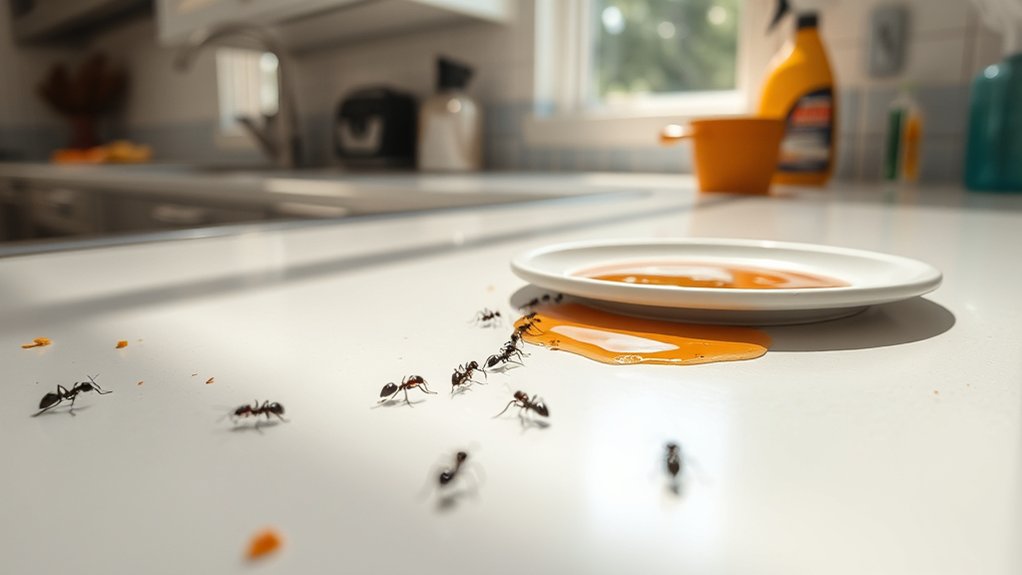
Ants often find their way into your kitchen through tiny cracks, gaps, and holes in walls, floors, or around windows and doors. They’re tiny but persistent, slipping through even the smallest openings.
You might notice them near baseboards, behind appliances, or along window frames, especially where seals aren’t tight. Food crumbs, spills, or uncovered containers attract them, so they follow scent trails from their entry points.
Sometimes, they come in through vents or utility gaps, especially if the weather pushes them indoors. Keeping an eye on these potential entry spots is key. Seal cracks and holes with caulk or weather stripping to block their access.
Regular cleaning and proper food storage also help prevent ants from finding their way inside in the first place.
How Can You Find and Follow Ant Trails?
Wondering how to locate the source of a pesky ant invasion? To find their trail, watch where the ants are most active. Follow their movement, especially during warmer parts of the day, and note the lines they form.
Look for tiny, often faint, pathways on kitchen surfaces, along walls, or under appliances. Ants usually follow the same route repeatedly, so tracking their trail can lead you to their entry point or nest.
Track faint ant trails on surfaces and under appliances to find their entry point and stop the invasion.
Use a flashlight if needed to see faint trails more clearly. Once you identify the trail, you’ll better understand how they’re entering and moving around your kitchen.
This knowledge is key to effectively targeting the source and stopping the infestation at its root.
What Are the Best Natural Remedies to Get Rid of Kitchen Ants?
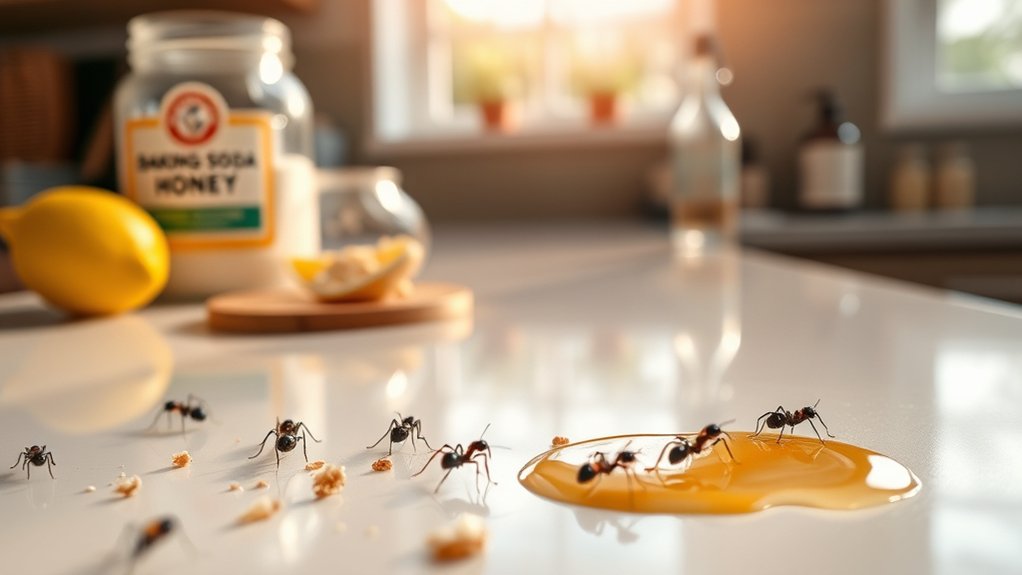
Once you’ve identified their trails and entry points, you can start tackling the problem with natural remedies that are both effective and safe. These solutions target ants without harmful chemicals, making your kitchen safer. Some of the best options include:
Spraying a mixture of vinegar and water along ant trails and entry points is a simple and effective way to deter them.
Using lemon juice can also disrupt their scent trails and keep them from returning.
Applying cinnamon, peppermint oil, or tea tree oil near entry points can help repel ants naturally.
You can also sprinkle baby powder or chalk to block their paths and discourage their movement.
Placing cucumber peels or bay leaves in areas where ants are active can act as natural repellents.
These remedies work by confusing or repelling ants, encouraging them to leave your kitchen naturally.
Regular application and consistent monitoring will help ensure ants don’t come back.
Which Commercial Baits and Traps Work Best for Ant Control?
Looking for effective commercial bait and trap options to control ants? The best products contain slow-acting attractants that ants carry back to their colony, ensuring long-term elimination.
Gel baits like Terro Liquid Ant Bait and Combat Max Ant Killing Gel are popular because they attract different ant species and are easy to place near trails.
Gel baits like Terro and Combat Max attract diverse ant species and are simple to place near trails.
Bait stations such as Advion Ant Gel and Rescue! Ant Bait Stations offer a mess-free solution that’s great for indoor use.
For outdoor control, consider bait stations designed to withstand weather, like Spectracide Ant Shield.
Traps like Black Flag ant traps or Terro T3000 are also effective for quick catches.
Choose products suited to your ant species and follow application instructions carefully for the best results.
How to Clean and Seal Your Kitchen to Keep Ants Out
After setting up effective baits and traps, keeping your kitchen clean and sealed is the next important step to prevent ants. Regularly wipe down countertops, sweep floors, and clean up crumbs right away. Store food in airtight containers to block easy access.
Make sure to seal cracks and gaps around windows, doors, and baseboards with caulk or weatherstripping. This keeps ants from finding entry points into your home. Also, clean under appliances and remove hidden debris where ants might hide.
To boost your efforts, consider sealing gaps around pipes and electrical outlets. Fix any leaks that attract ants with moisture. Regularly clear out pantry clutter and use door sweeps on exterior doors.
Finally, keep your kitchen dry and clutter-free. These simple steps make your space less inviting to ants and help keep them out for good.
Long-Term Tips to Prevent Future Ant Infestations
To prevent future ant problems, make sure to seal all entry points around your kitchen. This helps block their access before they even get inside.
Keeping your surfaces clean and free of crumbs also makes your space less attractive to ants. A tidy kitchen is less inviting for them.
These simple steps can go a long way in keeping your kitchen ant-free over the long term. Just a little effort now can save you headaches later.
Seal Entry Points
Sealing entry points is a key step in stopping future ant invasions by blocking their access to your home. Carefully check your walls, foundation, doors, and windows for tiny cracks or holes.
Use caulk or weatherstripping to seal these gaps, making it harder for ants to get inside. Pay special attention to areas around utility lines, vents, and pipes, as they often serve as hidden entry routes.
Fill cracks in the foundation or walls and seal gaps around door and window frames. Cover vents with fine mesh screens to keep ants out.
Use door sweeps to block gaps at the bottom of doors and apply weatherstripping to doors and windows for an extra barrier. Sealing these points helps reduce the chances of ants sneaking in and setting up a nest.
Maintain Clean Surfaces
Keeping your kitchen surfaces clean is key to preventing future ant problems. Regularly wipe down counters, tables, and sinks to remove crumbs, spills, and food residue.
Ants are attracted to tiny traces of food, so staying vigilant is important. Use a mild, effective cleaner to wipe away scent trails that ants follow.
Avoid leaving dirty dishes out for long periods, and store food in sealed containers. Pay special attention to areas around the stove and trash cans, where crumbs and spills tend to gather.
Maintaining a tidy kitchen discourages ants from establishing a foothold. Consistent cleaning keeps your space hygienic and reduces the scents that attract ants inside.
This simple habit is crucial for long-term ant prevention and keeping your kitchen pest-free.
When Should You Call Pest Control for Severe Ant Problems?
Have you noticed ants coming back even after trying to get rid of them? If yes, it’s probably time to call in pest control. Consider reaching out if:
- The ant problem is spreading over a big area and keeps growing
- Store-bought treatments aren’t working after several tries
- The ants are getting into your home’s foundation or walls
- You see signs of hidden nests, like large mounds or unexplained damage
- The problem has lasted for weeks without any improvement
Severe ant issues need expert help to find hidden nests and apply targeted treatments. Ignoring it can lead to ongoing infestations and possible damage. When your efforts don’t work, calling pest control is the best way to get a safe and effective fix.
Frequently Asked Questions
How Long Does It Take for Natural Remedies to Work?
Natural remedies usually start working within a few days to a week. You might notice fewer ants and less activity as they begin to take effect.
But keep in mind, the exact time depends on how bad the infestation is and how consistently you apply the remedies.
To speed things up, make sure your kitchen stays clean, seal up entry points, and reapply the solutions when needed.
Patience and persistence are key for natural methods to work well.
Are There Environmentally Friendly Ways to Eliminate Ants?
Yes, environmentally friendly methods do exist. You can sprinkle cinnamon, coffee grounds, or cayenne pepper along ant trails, which serve as natural repellents.
Vinegar solution disrupts their scent trails without harming the environment. Diatomaceous earth, a non-toxic powder, dehydrates ants on contact.
These options are gentle but effective, helping you protect your home without using harmful chemicals, all while respecting nature.
Can Kitchen Ants Be Harmful to Health?
Yes, kitchen ants can be harmful to your health. They can carry bacteria, mold, and other germs from dirty surfaces or trash, contaminating your food and utensils. This increases the risk of food poisoning and infections.
Plus, some people might have allergic reactions or skin irritation from ant bites or contact. To keep yourself safe, it’s best to get rid of ants quickly and keep your kitchen clean and sealed.
What’s the Cost Comparison Between DIY and Professional Treatment?
Imagine a tiny army invading your kitchen. DIY methods usually cost between $10 and $50, covering traps, sprays, and natural remedies.
On the other hand, professional treatments can range from $100 to $300, offering faster, more thorough eradication.
While DIY saves money, professionals bring expertise and guarantee results. Decide based on your budget and how quickly you want peace restored.
Both options have their price and power. Choose what works best for you.
How Do I Prevent Ants From Returning After Treatment?
To prevent ants from returning after treatment, you should focus on eliminating their entry points and keeping your kitchen clean. Seal cracks and gaps around windows and doors, and store food in airtight containers.
Make sure to wipe down surfaces regularly to remove crumbs and spills. You can also try natural repellents like vinegar or lemon juice around entry points for extra protection.
Keep up these habits consistently, and you’ll greatly reduce the chances of ants coming back. It’s all about making your home less inviting for them.
Conclusion
Think of your kitchen as a fortress, and ants as unwelcome invaders trying to breach your defenses. By sealing entry points, staying vigilant, and using effective remedies, you’re building a sturdy wall against these tiny invaders.
Remember, each step you take is like planting a flag of victory. Keep your space clean and watchful, and soon, your kitchen will be a peaceful kingdom, free from the tiniest trespassers.
When it comes to getting rid of kitchen ants fast, these simple strategies can make all the difference. Stay consistent, and you’ll be ant-free in no time.
Victory is yours to claim with these effective methods for eliminating kitchen ants quickly and easily.