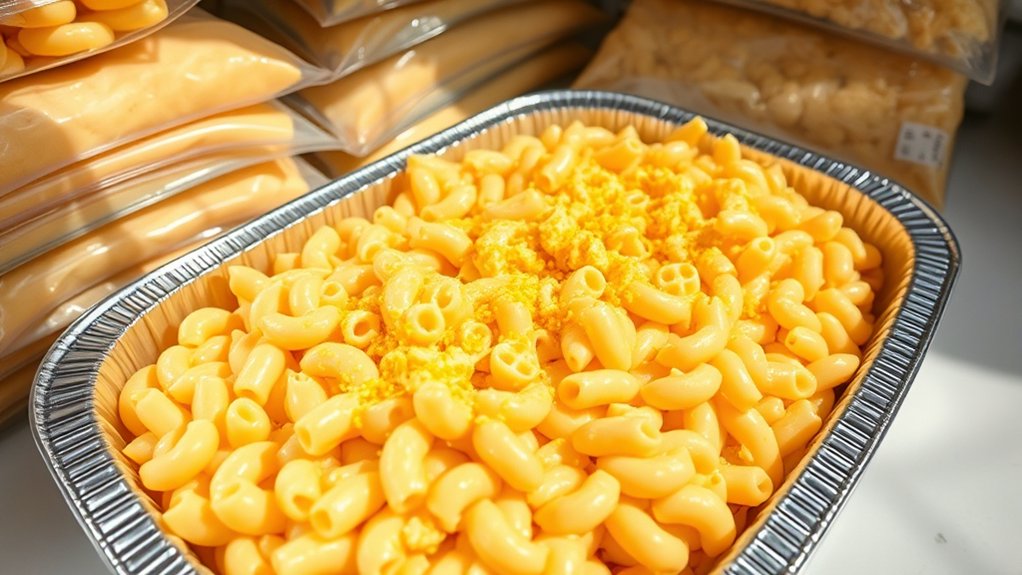
How You Can Freeze Mac and Cheese in an Aluminum Pan
Many of us love making a big batch of mac and cheese to enjoy later, but figuring out how to freeze it properly can feel overwhelming. You’re not alone—freezing and reheating without ruining that creamy texture is tricky.
Luckily, with a few simple tips, you can keep your mac and cheese fresh and delicious.
To freeze your mac and cheese in an aluminum pan, choose a heavy-gauge, oven-safe pan with at least 2-3 inches of depth for easy stacking and to prevent spills.
Let the dish cool completely, then cover it tightly with plastic wrap or aluminum foil, pressing directly onto the surface. For extra protection, wrap the entire pan in plastic or place it in a freezer bag.
Still curious? Keep going to learn essential tips for perfect freezing and reheating.
Key Takeaways
- Make sure the mac and cheese has cooled completely before covering and freezing it in the aluminum pan.
- Cover the dish tightly with plastic wrap or aluminum foil, pressing it directly onto the cheese surface.
- For extra protection, you can place the pan inside a resealable freezer bag or wrap it securely with additional plastic or foil.
- Don’t forget to label the pan with the date and contents. This helps you keep track of how long it’s been in the freezer.
- Store the pan in the coldest part of the freezer, away from the door and air vents, at 0°F (-18°C).
Picking the Best Aluminum Pan for Freezing Mac and Cheese
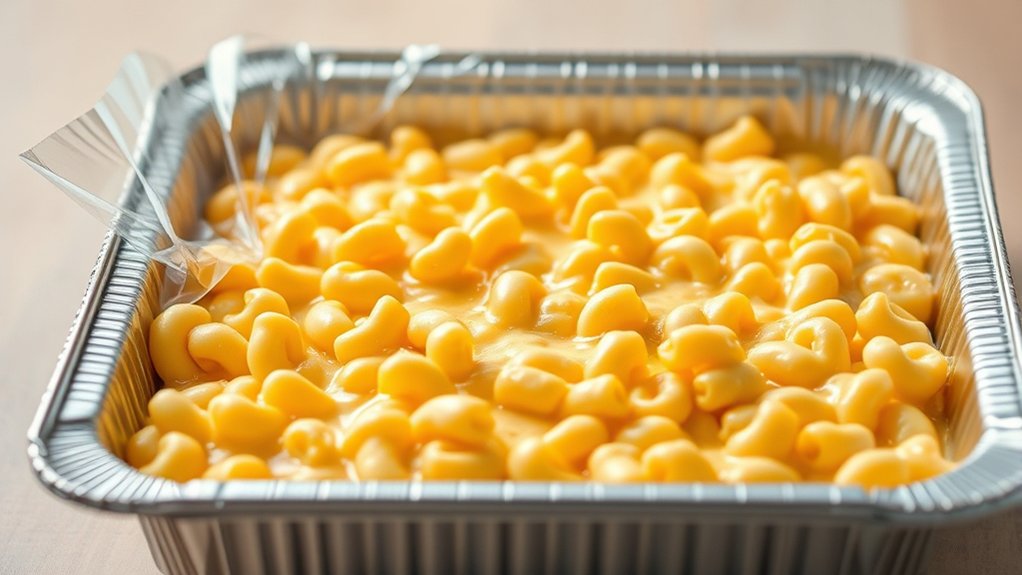
Choosing the right aluminum pan is essential for freezing mac and cheese effectively. You want a pan that conducts heat well and can withstand freezing temperatures without warping.
Look for a heavy-gauge aluminum pan, which resists bending and provides even heat distribution. Make sure the pan is deep enough to hold your portion without overflowing, with at least 2 to 3 inches of space at the top.
It should also be sturdy enough to handle stacking in the freezer. If you plan to reheat directly in the pan, verify it’s oven-safe. Avoid thin or lightweight pans, as they can crack or bend when frozen or heated.
Selecting the proper pan helps preserve texture and flavor while making the freezing and reheating process smooth.
Preparing Your Mac and Cheese for Freezing
Before freezing your mac and cheese, it’s important to prepare it properly to keep its texture and flavor. Let it cool slightly after cooking, but don’t let it sit out too long to prevent bacteria growth.
If you plan to freeze leftovers, consider making a slightly undercooked version. It will finish cooking during reheating, which helps prevent it from becoming mushy.
For a creamier texture, stir in a bit of cheese or milk before freezing. Avoid adding toppings like breadcrumbs or crispy bits at this stage, as they may become soggy.
Use a spoon or spatula to evenly distribute the cheese sauce. This helps preserve the flavor and prevents ice crystals from forming.
Properly prepped mac and cheese will reheat more evenly and taste just as delicious when you’re ready to enjoy it later.
Portioning and Cooling Mac and Cheese Before Freezing
Once your mac and cheese is ready, the next step is to portion it into manageable servings and cool it properly. Use a spoon or scoop to divide the dish into individual or family-sized portions, depending on what you need. This makes reheating easier and helps prevent waste.
Place each portion in separate containers or resealable bags, leaving some space for expansion if you’re freezing in bags. To cool quickly, spread out the portions on a baking sheet or tray so air can circulate around them.
This helps prevent bacterial growth and keeps the quality high. Avoid letting the hot mac and cheese sit at room temperature for too long—try to cool it within two hours of cooking. Proper portioning and cooling set you up for successful freezing and easy future meals.
How to Freeze Mac and Cheese in an Aluminum Pan
Freezing mac and cheese in an aluminum pan is simple and convenient, especially if you plan to reheat directly from the freezer.
First, let the dish cool completely to prevent condensation and ice crystals from forming.
Once cooled, cover the surface with plastic wrap or aluminum foil, making sure it touches the cheese to avoid freezer burn.
For extra protection, put the pan inside a large resealable freezer bag or wrap it tightly with more foil.
Don’t forget to label the pan with the date so you know how long it’s been frozen.
Aluminum pans are great for conduction, so they heat evenly when reheating.
Just ensure the dish is well covered to maintain quality and prevent freezer burn.
How to Cover and Wrap Mac and Cheese to Prevent Freezer Burn
To prevent freezer burn, you need to cover your mac and cheese properly. Using airtight containers keeps moisture in and air out, which helps preserve freshness.
Make sure to apply a proper wrap, like plastic wrap or aluminum foil, before sealing the container. This adds an extra layer of protection and keeps your dish safe in the freezer.
Use Airtight Containers
Choosing the right airtight container is key to keeping your mac and cheese fresh and free from freezer burn.
Look for containers that seal tightly to keep air out, which helps slow moisture loss and lock in flavor. Flexible silicone lids or containers with locking mechanisms work best.
Here’s a quick comparison to help you choose:
| Feature | Benefit |
|---|---|
| Tight seal | Keeps air out, preserving freshness |
| BPA-free material | Safe for storing food |
| Stackable design | Saves space in your freezer |
| Leak-proof | Prevents spills during storage |
| Clear sides | Lets you see what’s inside easily |
Using a proper container makes a big difference in how long your mac and cheese stays fresh. Always double-check the seal before freezing to keep everything secure.
This simple step helps maintain the texture and taste, saving you time and reducing waste later.
Apply Proper Wrapping
Before sealing your mac and cheese for the freezer, it’s important to cover it properly to prevent freezer burn. Use plastic wrap or aluminum foil to tightly cover the surface, making sure there are no air pockets.
For extra protection, consider double-wrapping—first with plastic wrap, then with foil—so the dish is fully insulated. Press the wrap firmly around the edges to eliminate gaps.
If you’re using an aluminum pan, let the wrap extend slightly over the sides, then secure it with a rubber band or tape. This extra layer helps keep moisture in and stops air from reaching the food.
Proper wrapping preserves flavor and texture and also helps extend the shelf life of your frozen mac and cheese.
How to Safely Thaw and Reheat Frozen Mac and Cheese in Aluminum
When thawing and reheating frozen mac and cheese in aluminum, it’s important to do so safely to prevent foodborne illnesses. First, plan ahead and transfer the frozen dish to the refrigerator for 24 hours. This gradual thawing helps reduce bacteria growth.
Second, avoid thawing at room temperature, as it encourages bacterial growth. Instead, always thaw in the fridge or use other safe methods.
Third, reheat the mac and cheese directly in the aluminum pan if it’s oven-safe, or transfer it to a microwave-safe dish. Make sure to reheat it until it’s hot all the way through.
Fourth, reheat until it reaches an internal temperature of 165°F (74°C). Stir occasionally to ensure even heating. Use a food thermometer for accuracy.
Common Mistakes to Avoid When Freezing Mac and Cheese
One common mistake is exposing your mac and cheese to air, which can cause freezer burn and ruin the texture.
You also need to use proper storage techniques, like airtight containers or wrapping tightly, to prevent spoilage.
Ignoring these steps can lead to poor quality and wasted food.
Air Exposure Risks
Air exposure is one of the biggest pitfalls when freezing mac and cheese, as it can lead to freezer burn and dry out the dish. To avoid this, make sure you tightly seal your container. Here are common mistakes to prevent:
- Leaving the dish uncovered or loosely wrapped
- Using flimsy or damaged plastic wrap
- Forgetting to squeeze out excess air before sealing
- Not using an airtight lid or container
These mistakes allow air to reach the food, causing dehydration and ice crystal formation. Proper sealing keeps moisture in and preserves the texture and flavor. Always double-check your packaging before placing it in the freezer to minimize air exposure risks and maintain your mac and cheese’s quality.
Improper Storage Techniques
Even if you’ve sealed your mac and cheese properly, improper storage techniques can still ruin its quality. Try not to leave it exposed to air for too long, since this can cause freezer burn and change its texture.
Don’t forget to label your container with the date. Without that, you might end up eating spoiled leftovers or wasting food. Using the wrong container, like flimsy plastic wrap or unvented lids, can lead to moisture buildup or freezer odors seeping in.
Stacking unwrapped or loosely covered dishes can cause uneven freezing and damage the surface of your dish. To keep the texture and flavor intact, always use airtight containers or heavy-duty foil. Store your mac and cheese on a stable shelf where it won’t get crushed or jostled.
Labeling and Storing Frozen Mac and Cheese for Maximum Freshness
Proper labeling and storage are key to keeping your frozen mac and cheese fresh. Clear labels help you identify what’s inside and the date, so you don’t end up wasting food.
Label and store your frozen mac and cheese properly to keep it fresh and avoid waste.
To keep it as fresh as possible, follow these steps:
- Write the date you froze it and the dish name on the container with a permanent marker.
- Use airtight packaging or wrap your aluminum pan tightly with plastic wrap or aluminum foil.
- Store the mac and cheese in the coldest part of your freezer, away from air vents or door openings.
- Keep the temperature steady at 0°F (-18°C) to prevent freezer burn and help preserve the texture.
Frequently Asked Questions
Can I Freeze Leftover Baked Mac and Cheese in an Aluminum Pan?
Yes, you can freeze leftover baked mac and cheese in an aluminum pan. First, let it cool completely to avoid freezer burn.
Cover the pan tightly with plastic wrap or aluminum foil, or transfer the leftovers to an airtight container if you prefer. Label it with the date, then put it in the freezer.
When you’re ready to eat it, thaw it in the fridge overnight and reheat thoroughly.
How Long Can I Store Mac and Cheese in the Freezer?
Think of your freezer as a time capsule, preserving memories and flavors.
You can store mac and cheese in the freezer for up to 2-3 months without losing quality.
After that, it might start to suffer in texture and taste. To keep it tasting fresh, store it in an airtight container or tightly wrap the aluminum pan.
When you’re ready to enjoy it, reheat thoroughly for a delicious meal.
Does Freezing Affect the Texture of Mac and Cheese?
Freezing can slightly change the texture of mac and cheese, making it a bit creamier or sometimes a little grainy. The pasta may become softer or slightly mushy after thawing, especially if it’s frozen for too long.
To keep the texture as good as possible, store it in airtight containers and reheat gently. Properly prepared, frozen mac and cheese still tastes great, just with a slightly different mouthfeel.
Can I Freeze Mac and Cheese With Added Ingredients Like Bacon or Vegetables?
Yes, you can freeze mac and cheese with bacon or vegetables. Imagine making a big batch with crispy bacon and mixed veggies, then freezing leftovers for later.
Just make sure you cool it thoroughly before freezing, and consider slightly undercooking vegetables to prevent mushiness. When reheating, add a splash of milk or cream to restore creaminess.
This way, your tasty additions stay flavorful and fresh after freezing.
Is It Safe to Reheat Frozen Mac and Cheese Directly From the Freezer?
Yes, you can reheat frozen mac and cheese directly from the freezer, but it’s best to do so safely. Use your microwave or stovetop, and make sure it reaches an internal temperature of 165°F (74°C).
Stir frequently to promote even heating, especially if you add toppings like bacon or vegetables. Let it sit briefly after reheating to allow the heat to distribute evenly, confirming it’s hot and safe to eat.
Conclusion
Freezing mac and cheese in an aluminum pan is simple when you follow a few key steps. Pick the right size pan, let the dish cool completely, and wrap it tightly to keep it fresh.
Proper cooling is essential to prevent ice crystals and maintain flavor. Make sure to cover the pan well with plastic wrap or aluminum foil before freezing.
With these tips, you’ll keep your homemade mac and cheese tasty and ready to enjoy anytime. Mastering the art of freezing and reheating ensures every bite tastes just as good as fresh.
So, why not give it a try? Freezing mac and cheese in an aluminum pan makes it easy to enjoy your favorite comfort food whenever cravings hit.