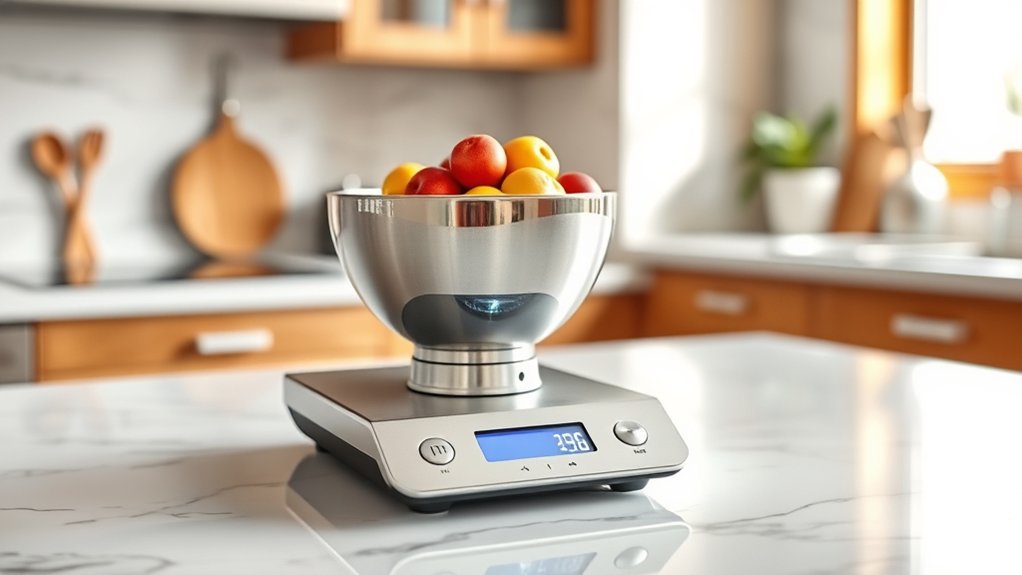
Kitchen Scale Basics: How to Use It for Accurate Weighing
Cooking and baking can be tricky, especially when precise measurements matter. Many people struggle with getting accurate readings from their kitchen scales, which can throw off your recipes and cause frustration. You’re not alone—mastering your scale is key to perfect results every time.
To use your kitchen scale accurately, start by placing it on a flat, stable surface. Turn it on and confirm it reads zero. Use the tare function to reset the scale after placing containers, so only the ingredients weigh.
Add ingredients slowly, especially powders and liquids, for precise measurement. Keep the scale clean and calibrated regularly for the best results.
If you’re interested, you can learn more tips for perfect weighing and how to troubleshoot common issues.
Key Takeaways
- Place the scale on a flat, stable surface before turning it on. This helps ensure you get accurate readings right from the start.
- Zero or tare the scale with the container first. This way, you’re only measuring the ingredients, not the weight of the container itself.
- Use the right measurement units, like grams or ounces, and stick to one for consistency. It makes your measurements more precise.
- When adding ingredients, do it slowly—especially powders and liquids. This helps prevent overloading and keeps your measurements accurate.
- Keep your scale calibrated regularly and clean it often. This way, debris won’t affect your measurements, and your scale stays in good shape.
How Does a Kitchen Scale Work? The Basics Explained
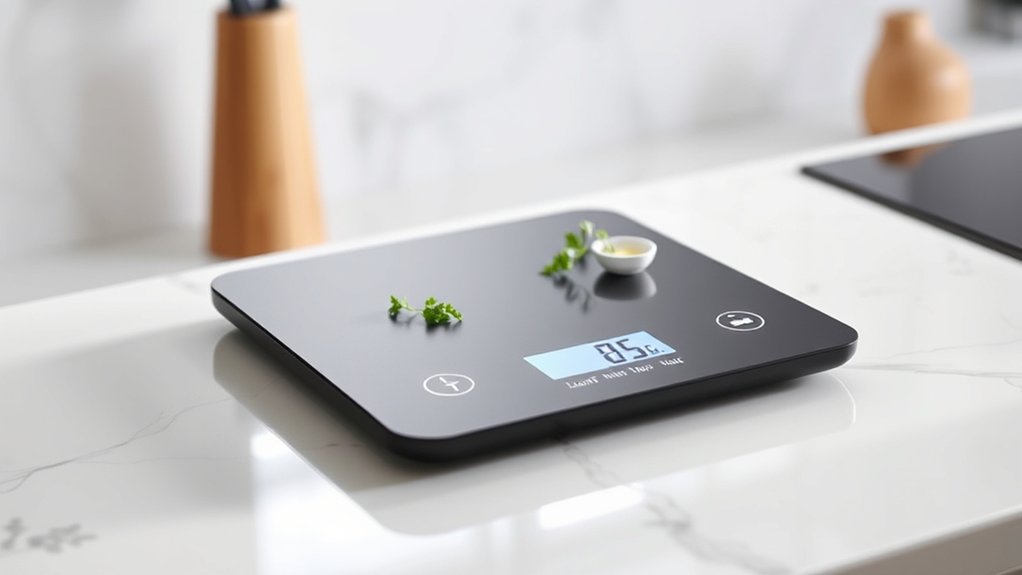
A kitchen scale works by measuring the weight of items placed on its surface. When you put an object on the scale, sensors inside detect the force from the item’s mass.
Most scales use load cells, which turn this force into an electrical signal. That signal then goes to a digital processor, which calculates the weight based on the sensor’s data.
The weight is displayed on a screen, usually in grams or ounces. Some scales have a tare function that lets you reset the display to zero after adding a container. This way, you can measure only the contents.
How to Choose the Right Kitchen Scale for Your Needs
Are you unsure how to pick the best kitchen scale for your cooking and baking needs? First, think about the types of measurements you need. Do you require precise small measurements or larger capacities?
Choosing the right kitchen scale depends on your measurement needs and cooking habits.
For baking, a digital scale with fine precision, like 0.1 grams, works great. If you often weigh bigger items, look for a scale with a higher maximum capacity.
Size is also important. Choose a compact one if space is limited, or go for a larger platform if you handle bigger ingredients.
Consider extra features like tare functions, unit conversions, or easy-to-clean surfaces.
Finally, decide between an analog or digital scale. Your choice should fit your cooking habits, how often you cook, and how precise you want to be.
How to Set Up and Calibrate Your Kitchen Scale Properly
Setting up and calibrating your kitchen scale the right way ensures you get accurate measurements every time. First, place your scale on a flat, stable surface. Turn it on and check that it shows zero or “0.”
If it doesn’t, follow the manufacturer’s instructions to reset or calibrate it. Some scales need a calibration weight, so check your user manual for guidance.
Regular calibration helps keep your measurements precise, especially after moving the scale or after long-term use. Here’s a quick reference:
| Step | Action | Purpose |
|---|---|---|
| 1 | Place on level surface | Stability |
| 2 | Turn on and wait for zero display | Accurate starting point |
| 3 | Use calibration weight if needed | Verify measurement accuracy |
| 4 | Recheck zero after calibration | Confirm proper setup |
| 5 | Store in a safe, stable spot | Maintain calibration integrity |
How to Zero or Tare Your Kitchen Scale for Accurate Measurements
To make sure your measurements are spot-on, you need to zero or tare your kitchen scale before weighing ingredients. This step ensures the scale only accounts for what you’re measuring, not any container or leftover weight.
To tare, just put your empty container on the scale and press the tare or zero button. The display should reset to zero, which means it’s subtracting the container’s weight.
When you add more ingredients later, wait for the readout to stabilize before noting the weight. Always tare the scale after changing containers or adding ingredients to keep your measurements accurate.
This simple step helps prevent errors from container weight and keeps your measurements consistent and precise every time.
How to Measure Different Ingredients With Your Kitchen Scale
When measuring solid ingredients, just place them on the scale and note the weight for accurate portions. It’s a simple way to make sure you’re using the right amount every time.
For liquids and oils, use a container and tare the scale before adding the liquid. This way, you can be confident you’re measuring precisely, without including the container’s weight.
Getting the hang of these techniques makes your cooking and baking more consistent and enjoyable.
Measuring Solid Ingredients Accurately
Measuring solid ingredients accurately is key for successful cooking and baking, and your kitchen scale makes this easy. Just place your container on the scale first, then tare or zero it out.
Add your ingredient slowly, watching the display until you reach the exact amount you need. Use the scale’s units switch if your recipe calls for grams or ounces.
For delicate ingredients like spices or small amounts, a precise scale is really helpful. Remember, consistency matters—accurate measurements lead to better flavors and textures.
| Ingredient | Measurement Tip |
|---|---|
| Flour | Spoon into the scale, level off |
| Sugar | Pour gently, avoid packing |
| Nuts | Chop before weighing |
| Spices | Use small containers |
| Butter or Margarine | Weigh in the wrapper |
Weighing Liquids and Oils
Because liquids and oils are fluid, weighing them with your kitchen scale needs a slightly different approach than solids. To measure liquids accurately, place a container on the scale and tare it to zero.
Then, slowly pour the liquid into the container until you reach the desired weight. Be careful not to overfill or rush, as spills can happen easily.
For oils, it helps to use a small measuring cup or a silicone spatula to transfer the oil precisely. If your scale doesn’t support weighing directly in a container, you can weigh the empty container first and subtract that weight later.
Always use a clean, dry container and handle liquids carefully to ensure accurate, mess-free measurements every time.
How to Measure Liquids and Powders Accurately on Your Scale
To guarantee accurate measurements of liquids and powders on your scale, it’s important to use the right techniques and tools. Always place your container directly on the scale and tare it before adding your ingredients.
For liquids, pour slowly and check the reading at eye level for accuracy. Use a clear, preferably glass, container to see the liquid level easily.
When measuring powders, scoop gently to avoid compacting or spilling, and level off with a flat edge to secure precision. Keep the scale on a flat, stable surface and avoid any drafts or vibrations that could sway the reading.
Consistency is key, so always follow the same method for reliable results. Proper technique guarantees your measurements are accurate every time.
Common Mistakes When Using a Kitchen Scale and How to Avoid Them
Even with the right techniques, common mistakes can throw off your measurements and lead to inconsistent results. One mistake is not zeroing or taring the scale before weighing. Always reset the scale to zero after placing your container or when switching between ingredients.
Another error is weighing ingredients directly on the scale without using a container, which can cause contamination or make cleanup harder. Make sure your scale is on a flat, stable surface to avoid inaccurate readings.
Overloading the scale past its maximum capacity can damage it or cause incorrect weights. Moreover, forgetting to account for the container’s weight or not double-checking measurements can lead to errors.
To avoid these pitfalls, always read the instructions, calibrate regularly, and double-check your measurements for precision.
How to Clean and Maintain Your Kitchen Scale for Longevity
Keeping your kitchen scale clean and well-maintained is key to getting accurate measurements and making it last longer. Just wipe the surface with a damp cloth to remove food residue and dust, and steer clear of harsh chemicals that could harm the device.
If your scale has a removable platform or bowl, wash it with mild soap and water. Be sure to dry it thoroughly before putting it back in place. Check the batteries now and then—if the display dims or readings seem off, it might be time for a replacement.
Store your scale in a dry, stable spot away from moisture and extreme temperatures. Avoid dropping or bumping it, since impacts can mess with its accuracy. With proper storage and gentle cleaning, your scale will stay precise and functional for years to come.
Tips for Using Your Kitchen Scale When Baking
Using your kitchen scale accurately during baking helps ensure your recipes turn out just right. Always place your scale on a flat, stable surface for the most accurate measurements.
Remember to tare or zero the scale after adding your container or bowl so you don’t include extra weight. Use the correct unit—grams or ounces—depending on your recipe.
For dry ingredients, lightly spoon them into your container to avoid packing, which can throw off your measurements. When weighing sticky or powdery ingredients, try using parchment paper or a silicone mat to prevent sticking.
Finally, double-check your measurements before mixing, especially for ingredients like flour and sugar. This helps you get consistent, delicious baked goods every time.
Troubleshooting Your Kitchen Scale: Fixing Inaccuracies
If your kitchen scale isn’t giving accurate measurements, it’s a good idea to troubleshoot before you start cooking. First, make sure the scale is on a flat, stable surface. An uneven or soft surface can cause incorrect readings.
Next, check if the scale is properly calibrated. Follow your manufacturer’s instructions to reset or recalibrate if needed. Dirt or debris on the weighing surface can also throw off results, so wipe it clean with a damp cloth.
Ensure your scale is calibrated correctly and keep the weighing surface clean for accurate measurements.
If the scale has been dropped or mishandled, internal sensors might be damaged. In that case, professional repair could be necessary. Also, ensure the batteries are fresh, as low power can lead to inaccuracies.
Regular cleaning and calibration of your scale will help keep it accurate. This way, you’ll get consistent results every time you cook or bake.
How to Incorporate Your Kitchen Scale Into Your Cooking Routine
To make your kitchen scale a useful part of your cooking, start by integrating it into each recipe step. Practice measuring ingredients consistently to improve your accuracy and results.
Over time, you’ll find that precise measurements become second nature, which will enhance your overall cooking experience.
Integrate With Recipe Steps
Integrating your kitchen scale into your recipe steps makes cooking more precise and consistent. To do this effectively, measure ingredients directly on the scale, following each step carefully. Tare the scale after each measurement to reset it for the next ingredient. Use the scale for small or tricky ingredients, like spices or liquids, to guarantee accuracy.
Keep your scale nearby so it’s easy to access during cooking. Double-check measurements before adding ingredients, especially when precision matters. This approach helps avoid errors and saves time during cleanup. Remember, incorporating the scale throughout your process keeps your measurements consistent.
Practice Consistent Measurements
Practicing consistent measurements with your kitchen scale ensures your recipes turn out reliably every time. Always weigh ingredients the same way, whether you’re using tare or zeroing the scale after each addition.
Stick to your preferred units of measurement, like grams or ounces, to keep things consistent. Develop a habit of measuring ingredients before adding them to your dish instead of estimating or eyeballing.
Keep your scale on a flat, stable surface to get accurate readings. If needed, record your measurements, especially for complex recipes.
Making precise weighing a routine helps minimize errors and improves your cooking results. Over time, this consistency will help you understand ingredient proportions and build your confidence in the kitchen.
Frequently Asked Questions
Can I Use My Kitchen Scale for Measuring Small Quantities Accurately?
Yes, you can use your kitchen scale to measure small quantities accurately, especially if it has a fine measurement precision like grams or ounces.
To get the best results, place a container on the scale, tare it to zero, and then add your ingredients slowly.
For very tiny amounts, think about using a scale with high sensitivity or a dedicated jewelry or precision scale for better accuracy.
What Are the Best Materials for a Durable Kitchen Scale?
Stainless steel is your best bet for a durable kitchen scale because it’s resistant to rust and corrosion. It makes up over 60% of professional-grade scales.
You’ll want a sturdy, thick platform, and stainless steel offers both strength and easy cleaning. Its longevity means you won’t have to replace your scale often, saving you money and frustration.
Plus, it withstands daily use without losing accuracy, ensuring consistent results every time.
How Do Temperature Changes Affect Weighing Accuracy?
Temperature changes can affect your kitchen scale’s accuracy by impacting its internal components and sensors. When it’s too hot or cold, materials may expand or contract, leading to small measurement errors.
To keep your readings accurate, store your scale in a stable environment away from direct heat, sunlight, or drafts. Let it sit at room temperature before using, especially if it’s been exposed to extreme temperatures.
Is It Safe to Weigh Hot or Sticky Ingredients on My Scale?
Yes, it’s generally safe to weigh hot or sticky ingredients, but just be careful. Hot foods can sometimes damage delicate electronic parts or give you inaccurate readings if they’re still steaming.
Sticky ingredients might cling or interfere with the scale’s sensors. To stay safe and get accurate measurements, let hot or sticky foods cool a bit first, or use a protective container.
This way, you avoid damaging your scale and make sure you’re always getting the best results.
Can I Weigh Multiple Ingredients Together Without Losing Accuracy?
Yes, you can weigh multiple ingredients together, but for the best accuracy, it’s better to weigh each item separately first if you can.
Use the tare function to subtract the weight of any containers or bowls.
Add ingredients gradually, making sure the scale reads zero after each addition.
This helps you get precise measurements, especially when you’re mixing ingredients for a recipe.
Just keep an eye on the weight limits to avoid any inaccuracies.
Conclusion
Using a kitchen scale can transform your cooking and baking, making measurements precise and your results consistent. Did you know that recipes with accurate ingredient weights are 30% more likely to turn out perfectly?
By understanding how to choose, calibrate, and maintain your scale, you’ll enjoy more reliable, delicious meals. Keep practicing these tips, and soon, using your kitchen scale will become second nature—helping you cook with confidence every time.