What Should My Freezer Temperature Be for Food Safety?
Many people struggle with keeping their food safe in the freezer without constantly worrying about spoilage or bacteria. It’s a common challenge, but don’t worry—you’re not alone. Ensuring your freezer is set just right can make a big difference.
To keep your food safe, set your freezer to 0°F (-18°C). This temperature slows down bacteria growth and helps prevent spoilage. Use a reliable thermometer to check regularly and adjust the setting if needed.
Avoid common mistakes like frequent door openings or overloading, which can cause temperature fluctuations. Regular maintenance is key, and if issues pop up, knowing how to troubleshoot can save your food.
Keep going to learn more tips and tricks.
Key Takeaways
- Keep your freezer at 0°F (-18°C) to ensure food stays safe and bacteria don’t grow.
- Use a reliable thermometer placed in a water-filled glass to get an accurate reading.
- Try not to open the door too often and avoid overpacking. Both can cause temperature fluctuations.
- Check for frost buildup, ice crystals, or strange odors. These can be signs of temperature problems.
- Regularly clean and maintain your freezer to keep it working well and your food fresh.
What Is the Ideal Freezer Temperature for Food Safety?
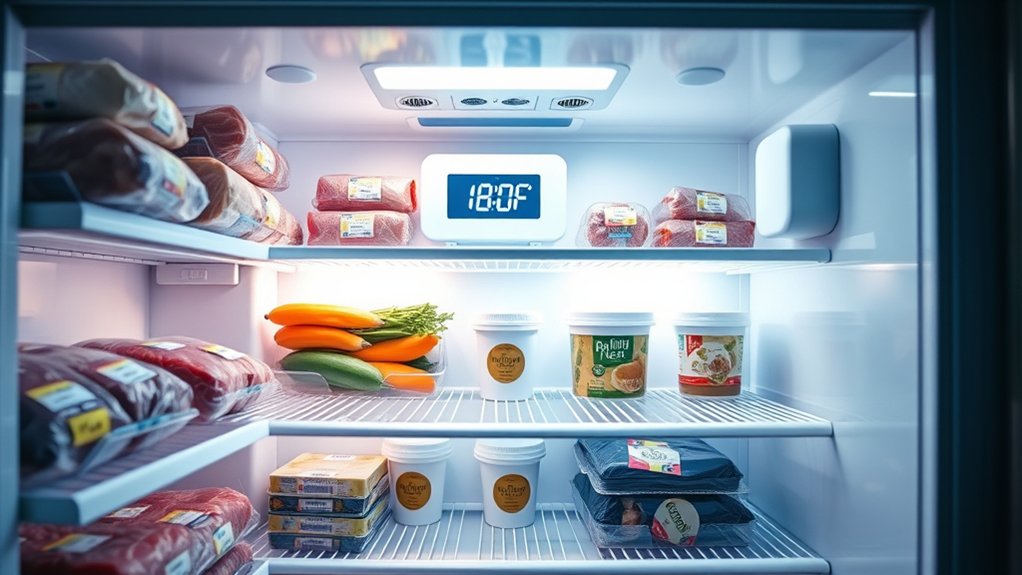
Maintaining the right freezer temperature is key to keeping your food safe and fresh. The ideal temp is 0°F (-18°C). At this level, bacteria and other harmful microbes slow down or stop, preventing spoilage and keeping your food safe.
Keep your freezer at 0°F (-18°C) to slow bacteria and keep food fresh and safe.
If your freezer is warmer than 0°F, bacteria can start to multiply, which raises the risk of foodborne illnesses. On the other hand, setting it colder doesn’t harm your food but can waste energy.
Keep your freezer steady at 0°F for the best preservation. Regularly check the temperature to catch any fluctuations early. This helps protect your food and extend its shelf life.
Staying within this temperature range is your best way to prevent spoilage and health risks.
How to Check and Set Your Freezer to the Right Temperature?
To keep your freezer at the right temperature, it’s important to regularly check and adjust the settings as needed. First, place a reliable thermometer in a glass of water and leave it in your freezer for a few hours.
Check the temperature reading; it should be around 0°F (-18°C). If it’s too high or low, find your freezer’s temperature control dial or digital settings.
Adjust the dial gradually, giving the freezer time to stabilize after each change. For digital models, follow the manufacturer’s instructions for setting the temperature.
Always verify with the thermometer after adjustments to confirm accuracy. Regular checks help prevent food spoilage and keep your freezer working effectively.
Common Mistakes That Lead to Cold or Warm Freezers?
You might accidentally cause your freezer to become too warm or too cold by setting the wrong temperature.
Opening the door too often or leaving it open for long periods disrupts the cold air balance.
Poor air circulation inside the freezer can also prevent it from maintaining a consistent temperature.
Incorrect Temperature Settings
Incorrect temperature settings are one of the most common mistakes that can cause your freezer to be either too cold or too warm. When your freezer is too cold, you risk damaging delicate foods and wasting energy. If it’s too warm, bacteria can grow, and food may spoil faster.
Many people set their freezer temperature without checking it regularly, assuming it’s correct. You might rely on the default setting or guesswork, but these can be inaccurate. Fluctuations can also happen if you don’t properly calibrate your thermometer.
To prevent these issues, always verify your freezer’s temperature with a reliable thermometer and adjust the settings accordingly. Consistently maintaining the right temperature helps guarantee your food stays safe, fresh, and properly preserved.
Frequent Door Openings
Frequent door openings can really mess with your freezer’s temperature. Every time you open the door, cold air escapes and warm air gets in, causing fluctuations.
These changes make the freezer work harder to keep a steady temperature, which uses more energy and can put your food at risk. If you open the door often or leave it open too long, the temperature can rise above safe levels, risking spoilage.
On the other hand, constant opening can cause the compressor to overwork, sometimes freezing contents too cold and damaging delicate items. To avoid this, plan ahead, open the door only when needed, and close it quickly.
Keeping door openings to a minimum helps keep the temperature stable and preserves the safety and quality of your stored food.
Poor Air Circulation
Poor air circulation inside the freezer can lead to temperature inconsistencies that compromise food safety. When air isn’t circulating properly, some areas may become too warm, risking spoilage, while others become too cold, which can cause freezer burn.
To keep temperatures even, avoid overpacking your freezer since this blocks airflow. Make sure vents are clear of obstructions and regularly check for ice buildup around fans. Proper organization helps prevent blocking airflow paths.
Don’t place hot foods directly into the freezer, as this can cause temperature fluctuations. Also, keep an eye out for frost buildup around fans and fix any issues promptly. Ignoring signs of malfunction can lead to inefficient cooling.
Monitoring your freezer’s temperature regularly is key to catching circulation problems early and keeping your food safe.
Best Practices for Maintaining Your Freezer’s Temperature
To keep your freezer at the right temperature, make sure to check it regularly with a thermometer.
Properly organizing your items helps air circulate evenly and prevents temperature fluctuations.
Regular Temperature Checks
Regularly checking your freezer’s temperature is essential to ensure food stays safe and fresh. Consistent monitoring helps catch temperature fluctuations early, preventing spoilage and foodborne illnesses.
Use a reliable thermometer placed inside the freezer, ideally near the center. Record the readings weekly to track stability over time. Checking at different times of the day can give a better picture of temperature consistency.
If you notice temperature spikes, adjust the thermostat or check for issues like door leaks or frost buildup. Keep a log to spot patterns and confirm your freezer is functioning properly. Regular checks also save energy and extend the appliance’s lifespan.
Use a digital or analog thermometer for accuracy, and make sure it’s calibrated correctly. Avoid opening the door unnecessarily during checks to prevent temperature changes. Address any issues immediately if temperatures go outside safe ranges.
Proper Freezer Organization
Organizing your freezer efficiently helps maintain consistent temperatures and keeps your food safe. Start by grouping similar items together, like meats, vegetables, and leftovers, so the temperature stays stable when you open the door.
Use clear containers or labeled bags so you can quickly see what’s inside without digging around. Keep the items you use most often toward the front for easy access and to minimize the time the door stays open.
Avoid overloading your freezer because too many items block air circulation and cause uneven cooling. Place heavier items on the bottom shelves to prevent crushing delicate foods.
Regularly check and remove expired or spoiled foods to keep airflow clear. Proper organization reduces temperature fluctuations and helps your freezer run efficiently, keeping your food fresh and safe.
How Freezer Temperature Affects Food Shelf Life and Safety
Freezer temperature plays a crucial role in maintaining food safety and extending shelf life. When your freezer is too warm, bacteria and molds can grow, risking spoilage and foodborne illnesses. Conversely, keeping it too cold can cause freezer burn and degrade food quality.
Proper temperature control slows enzyme activity and microbial growth, preserving texture, flavor, and nutrients. It also prevents the formation of large ice crystals that damage cell structures in foods.
Maintaining the right temperature helps you avoid unnecessary waste and guarantees your food remains safe to consume over time. It slows bacterial growth and inhibits spoilage, keeping your food fresh longer.
It preserves the texture and flavor of stored foods and prevents freezer burn and dehydration. Keeping the temperature right also helps maintain nutrient integrity in your foods.
Tools and Devices to Monitor Your Freezer Temperature
Monitoring your freezer temperature accurately is key to guaranteeing food stays safe and maintains quality. To do this effectively, use reliable tools like digital thermometers designed specifically for freezers. These devices give quick, precise readings so you can catch temperature fluctuations early.
You might also consider temperature loggers, which record data over time. They help you identify patterns or issues before they become serious. Some freezers come with built-in digital displays, but it’s best to verify their accuracy regularly with an independent thermometer.
For convenience, place the thermometer in the center of the freezer, avoiding contact with walls or containers. Regularly checking these tools guarantees your freezer stays at the proper temperature, preventing food spoilage and keeping safety a top priority.
Signs Your Freezer Temperature Is Off and What to Do?
Have you noticed any strange changes in your frozen foods? If yes, your freezer’s temperature might be off. Signs include ice crystals on food that shouldn’t have them, odd smells, or frozen items feeling softer than usual.
You might also see frost buildup or a layer of ice on the walls, which shows temperature fluctuations. If your freezer is noisy or the compressor runs nonstop, that could be a problem too.
To fix these issues, check your thermometer regularly for abnormal readings. Inspect for frost buildup or ice crystals and make sure your freezer isn’t overloaded or blocking vents.
Also, confirm that door seals are tight and not damaged. Adjust the thermostat if needed and keep an eye on it.
Addressing these signs quickly helps keep your food safe and prevents spoilage.
When to Call a Professional for Freezer Temperature Troubleshooting
While simple adjustments can often fix minor temperature issues, there are times when calling a professional is essential to confirm your freezer functions properly. If you’ve tried adjusting the thermostat, defrosting, or cleaning the coils without success, it’s time to seek expert help.
Persistent temperature fluctuations, unusual noises, or frequent cycling indicate a potential mechanical fault. If your freezer isn’t maintaining the correct temperature despite troubleshooting, a professional can diagnose issues like compressor problems, refrigerant leaks, or faulty thermostats.
Ignoring these signs can compromise food safety and lead to costly repairs. Don’t delay calling a technician if basic fixes don’t work or if you notice ongoing problems. Proper maintenance ensures your freezer keeps food safe and functions efficiently.
Frequently Asked Questions
How Often Should I Check My Freezer’s Temperature?
You should check your freezer’s temperature at least once a month to make sure it’s at a safe level.
Regular checks help you catch any problems early, preventing food from spoiling and reducing health risks.
Use a reliable thermometer placed inside the freezer, ideally near the center of the door.
Keep a record of your readings, and if the temperature goes above 0°F (-18°C), adjust the thermostat right away to stay safe.
Can a Power Outage Affect Freezer Temperature Safety?
Coincidences happen, and surprisingly, a power outage can indeed affect your freezer’s safety. When the power goes out, the temperature inside the freezer rises, which can put your food at risk.
You should check the freezer immediately after the power is restored, making sure it’s at or below 0°F (-18°C). If it’s warmer, follow food safety guidelines—discard perishable items if they’ve been above safe temperatures for more than two hours.
Staying vigilant helps prevent food spoilage and waste. It’s always better to be safe and check to keep your food safe.
What Foods Are Most Sensitive to Temperature Fluctuations?
You should know that seafood, meats, dairy, and ice cream are the most sensitive to temperature fluctuations. These foods can spoil quickly if they’re not kept cold enough, which can lead to foodborne illnesses.
When your freezer’s temperature rises, bacteria can grow rapidly, especially in these items. To keep them safe, make sure your freezer stays at or below 0°F (-18°C).
It’s also a good idea to check the temperature regularly to prevent spoilage and ensure your food stays fresh and safe.
Does the Type of Freezer Impact the Ideal Temperature Setting?
Yes, the type of freezer does affect the ideal temperature setting. For standard upright or chest freezers, aim for 0°F (-18°C) to keep food safe and maintain quality.
If you’re using a compact or portable freezer, check the manufacturer’s instructions. But generally, keeping it around 0°F is best.
Different freezers may have varied temperature controls, so it’s important to regularly monitor and adjust. This helps ensure your food stays properly frozen and safe.
Are There Specific Brands of Thermometers Recommended for Freezers?
Think of a good thermometer as your freezer’s trusty compass. Brands like Taylor, ThermoPro, and Habor are highly recommended because they’re accurate and durable.
Look for digital models with easy-to-read displays and quick-read capabilities. These thermometers act as your freezer’s health check, making sure everything stays frozen just right.
Investing in a reliable brand means you’re safeguarding your food and avoiding spoilage. It helps keep your kitchen running smoothly and hassle-free.
Conclusion
Keep your freezer’s temperature in check to prevent spoilage and guarantee safety. Regularly review, reset, and monitor to stay on top of your freezer’s performance.
Don’t wait when doubts come up—detect, diagnose, and deal with issues quickly. Staying vigilant helps safeguard your food, save space, and make storage easier.
Remember, consistent checks, correct settings, and caring cues create a cold, clean, and collision-free culinary corner. Keep it cool, keep it safe!
And importantly, aim for your freezer to stay at 0°F (-18°C) for optimal food safety.