Induction Vs Electric Range: 8 Key Differences
Are you tired of waiting forever for your stove to heat up or dealing with surfaces that stay hot long after cooking? You’re not alone—many people struggle with choosing the right stove for faster, safer, and more efficient cooking.
Induction ranges heat cookware directly using electromagnetic fields, making them faster, more precise, and safer since the surface stays cooler and spills are easy to clean.
Electric ranges rely on heated coils or glass surfaces, which take longer to heat and remain hot after use.
While induction models tend to cost more upfront, they can save money on energy bills and require less maintenance.
Want to find out which option better suits your cooking style? Keep exploring for more details.
Key Takeaways
- Induction ranges heat cookware directly through electromagnetic fields. This means they can heat up faster and give you more precise control over the temperature compared to electric ranges.
- They stay cooler and are safer to touch because they only heat the cookware, not the surface itself. Many models include automatic shut-off and pan detection features, which aren’t common with traditional hot electric coils.
- The upfront cost for induction ranges is higher. But in the long run, they can save energy and help reduce your overall operating expenses.
- Cleaning is easier on induction surfaces thanks to their smooth, spill-resistant design. Electric coils, on the other hand, can trap dirt and often need more maintenance to keep clean.
- Plus, modern induction cooktops usually have sleek touch controls and minimalist looks. They’re a stylish addition that fits well with contemporary kitchen styles.
How Do Induction and Electric Ranges Work?
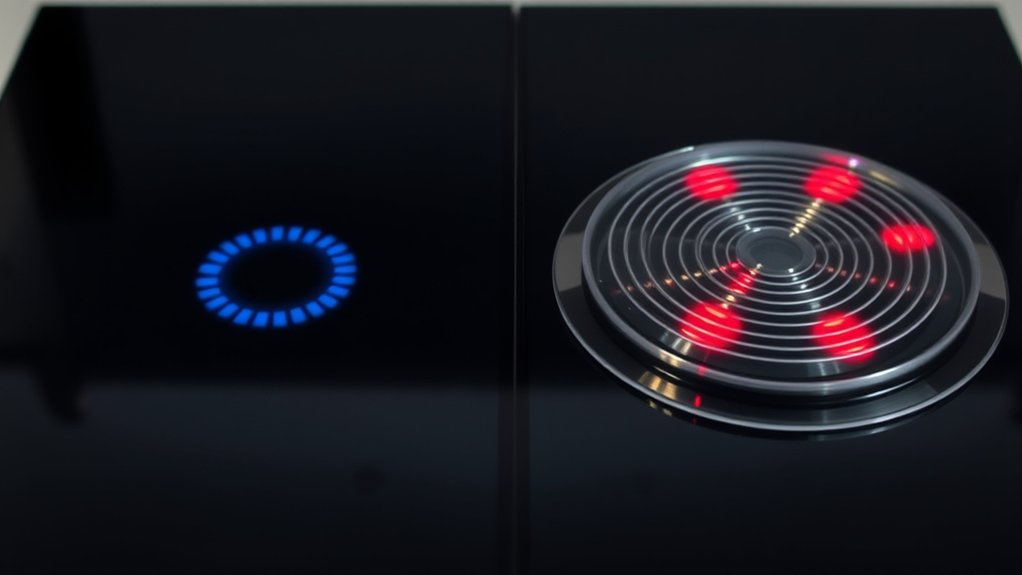
Although both induction and electric ranges use electricity to generate heat, they do so in different ways. An electric range heats up using electric coils or a glass-ceramic surface that warms when electricity flows through it.
You place your cookware directly on these heated surfaces, and heat transfers through conduction. Induction ranges, however, use electromagnetic fields to create heat.
When you turn on an induction cooktop, it generates an oscillating magnetic field that induces an electric current in ferrous cookware. This current heats the cookware directly, not the stove surface.
Because of this, induction ranges heat faster and more efficiently. The cooktop stays relatively cool since heat is generated within the cookware, not on the surface.
Which Cooks Faster: Induction or Electric?
You’ll notice that induction cooktops heat up faster than electric ranges because they transfer energy more efficiently.
This means your food cooks quicker and with less wasted energy.
Heating Speed Efficiency
With regard to heating speed, induction ranges typically outperform electric coils by a wide margin. Induction heats cookware directly through electromagnetic fields, allowing it to reach the desired temperature faster. You’ll notice boiling water or cooking sauces happen more quickly with induction, saving you valuable time in the kitchen.
Electric ranges, on the other hand, rely on heating elements that transfer heat to the cookware, which takes longer to reach the same temperature. The rapid response of induction means you can adjust heat levels instantly, giving you better control over your cooking.
Energy Transfer Rate
Induction ranges transfer energy to cookware much faster than traditional electric coils, making them generally quicker for cooking tasks. They generate heat directly in the cookware using electromagnetic fields, which leads to rapid heating and precise temperature control.
Electric ranges rely on heating elements that transfer heat through conduction. This results in slower response times compared to induction.
The difference in energy transfer efficiency affects how quickly food cooks. Induction heats up faster, while electric ranges take more time to reach the desired temperature.
Here’s a quick comparison of the key features:
| Feature | Induction | Electric |
|---|---|---|
| Heat Transfer Method | Electromagnetic induction | Resistive heating elements |
| Response Time | Faster, instant adjustments | Slower, heats gradually |
| Energy Efficiency | Higher due to direct transfer | Lower, heat loss occurs |
| Cooking Speed | Generally quicker | Usually slower |
Are Induction Ranges Safer Than Electric?
Are induction ranges truly safer than electric ones? Generally, yes. Induction cooktops only heat when a ferromagnetic pan is in contact, so the surface stays relatively cool. This lowers the risk of burns compared to traditional electric ranges, which stay hot even after cooking.
Plus, because induction heats directly in the pan, spills don’t burn onto the surface as easily. That makes cleanup safer and quicker. Electric ranges, on the other hand, often have exposed heating elements that stay hot longer, increasing burn risks.
Induction cooktops also have built-in safety features like auto shut-off and pan detection. These help minimize hazards during cooking. Overall, if safety matters most to you, induction ranges tend to offer a more secure cooking environment than standard electric ranges.
What Are the Costs of Buying and Operating?
While safety features can influence your choice, understanding the costs involved is just as important. Buying an induction range usually costs more upfront than an electric one, but it might save you money over time through efficiency.
Considering costs is key; induction ranges cost more initially but may save money through greater efficiency over time.
Operating costs vary based on energy rates and how much you use your stove. Induction ranges tend to use less electricity because they heat faster and transfer energy directly to cookware.
Electric ranges may have lower initial prices but can be be less efficient, which means higher energy bills. Keep in mind:
- Induction ranges are typically $500–$2,000 more initially
- Electric ranges generally cost less at first
- Your energy costs depend on local electricity rates
- Induction’s efficiency can help lower your monthly bills
- Maintenance costs are similar for both types
Balancing the purchase price and operating expenses will help you pick what’s best for your budget.
How Easy Is Installation and Maintenance?
Installing an induction range can be more straightforward if your kitchen already has compatible wiring and a suitable power supply, but it may require upgrades if your current setup isn’t compatible. Electric ranges often have similar installation processes, but induction models sometimes need dedicated circuits due to higher power demands.
Maintenance is generally simple for both; regular cleaning with a damp cloth keeps surfaces pristine. Induction cooktops have smooth glass surfaces, making them easy to wipe down, while electric ranges may have coil burners or glass tops that need occasional deep cleaning.
Induction units tend to have fewer moving parts and less wear and tear, resulting in lower maintenance over time. Overall, both types are manageable, but induction ranges might require some initial electrical upgrades.
Which Is More Energy Efficient: Induction or Electric?
When comparing energy efficiency between induction and electric ranges, the main difference is how each method heats your cookware. Induction heats directly through magnetic fields, making it faster and more precise. This means less energy gets wasted, and your food cooks quicker.
Electric ranges, on the other hand, rely on heating elements that transfer heat to your cookware. This process can lead to more energy loss and takes longer to heat up and cool down.
Here’s what you should keep in mind:
- Induction heats cookware directly, reducing energy waste.
- Electric ranges take longer to heat up and cool down.
- Induction offers faster cooking and boiling times.
- Electric ranges may use more energy over time.
How Do Aesthetics and User Experience Compare?
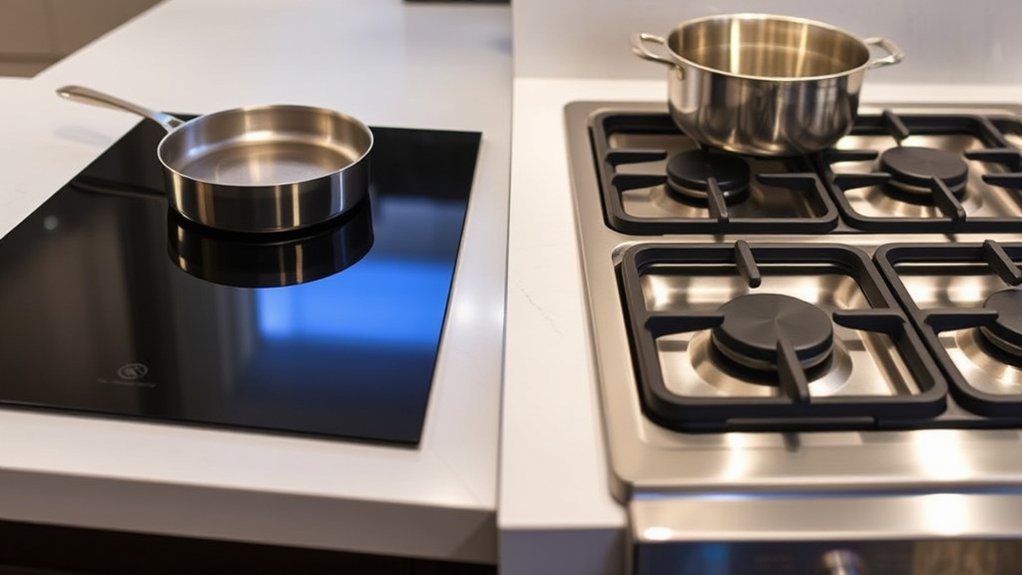
When comparing induction and electric ranges, you’ll notice differences in visual design. Induction models often look sleeker and more modern.
The touch control interface on both types offers a smooth user experience, but some find induction controls more responsive.
Cleaning is generally easier on induction surfaces because they stay flat and resist smudges, which enhances both looks and convenience.
Visual Design Appeal
The visual design appeal of induction and electric ranges plays a big role in how you see and use your kitchen appliances. Induction ranges usually have sleek, modern lines with smooth glass surfaces, making them look high-tech and stylish. Electric ranges tend to have a more traditional look, with visible burners and control knobs, giving a cozy, classic vibe. Your choice can really influence your kitchen’s overall look and feel.
Think about these features: modern, minimalist glass surfaces for induction ranges, and vintage-inspired electric designs with knobs. You’ll also notice sleek, seamless cooktops and clear, easy-to-read control panels.
Ultimately, your preference depends on whether you want contemporary elegance or a timeless, cozy look.
Touch Control Interface
Touch control interfaces have become a defining feature of modern ranges, blending aesthetics with functionality. They offer sleek, minimalist looks that elevate your kitchen’s style, replacing bulky knobs and buttons.
With a simple tap, you can adjust temperatures or set timers, making cooking more intuitive. Electric ranges often feature touch controls embedded directly into the surface, creating a seamless, modern appearance.
Induction ranges also boast smooth touch panels that are easy to operate and visually appealing. However, the layout and responsiveness can vary; some might require a firm press or multiple taps.
Ease of Cleaning
Cleaning an induction range is generally easier than maintaining an electric one because of its smooth, flat surface that resists crumbs and spills. Messes tend to wipe away quickly, and there’s no stubborn baked-on residue to deal with.
Induction ranges usually have fewer crevices, making them simpler to keep clean and maintain their sleek look. Electric ranges with coil burners or textured surfaces can trap dirt, which means more scrubbing and effort.
The flat glass surface makes wiping up spills quick and easy. Plus, there are no exposed heating elements to clean.
With fewer nooks and crannies, it’s easier to keep your stove looking new over time. Spills don’t burn onto the surface, so cleaning is less of a hassle.
Which Range Is Best for Your Cooking Style?
Choosing the right range depends on your cooking habits and preferences. If you love precise control and quick heating, an induction range might be your best fit. It’s great for delicate sauces or stir-fries.
On the other hand, if you prefer traditional cooking methods or often cook in large batches, an electric range offers consistent heat and works well with various cookware. Think about what matters most—speed, control, or versatility.
Consider your cooking style: if you want fast, precise control, go for induction. For more versatile, traditional cooking, an electric range is a solid choice. Your ideal range should match how you cook daily, making meal prep easier and more enjoyable.
Frequently Asked Questions
Can Induction Ranges Work With All Types of Cookware?
Induction ranges only work with ferromagnetic cookware, so you need pots and pans made of cast iron or magnetic stainless steel.
If your cookware isn’t magnetic, it won’t heat on an induction stove. To check, see if a magnet sticks to the bottom of your cookware.
If it does, you’re good to go. Otherwise, you’ll need to switch to compatible cookware for safe and efficient cooking on induction.
Are Electric Ranges More Durable Than Induction?
Electric ranges tend to be more durable than induction cooktops, with some models lasting 15-20 years. This is mainly because electric coils are simpler and have fewer electronic parts that can break down.
Induction cooktops are efficient, but they contain sensitive electronics that might need more repairs over time. If you’re after longevity and less maintenance, an electric range might be the better choice for your kitchen.
How Do Power Outages Affect Electric Versus Induction Ranges?
Power outages affect electric and induction ranges differently. During an outage, electric ranges usually shut off completely since they rely on consistent electricity to operate, and some may have a pilot light or manual controls.
Induction ranges also stop working because they need electrical power to generate magnetic fields. In both cases, you’ll want a backup power source like a generator or an alternative cooking method until the power comes back.
Which Range Type Has a Longer Lifespan?
Electric ranges generally have a longer lifespan compared to induction ranges. You might find that electric cooktops last around 15-20 years with proper maintenance. In contrast, induction models tend to endure about 10-15 years.
This difference is mainly because electric ranges have simpler components and fewer electronic parts that can wear out. If longevity is your priority, an electric range could be a smarter choice.
Just remember to keep up with regular cleaning and inspections to help extend the life of your appliance.
Do Induction Ranges Require Special Electrical Wiring?
Yes, induction ranges do require special wiring, so don’t be surprised if your electrician frowns when you ask.
They need a dedicated, often higher voltage outlet to handle the powerful magnetic field. It’s almost ironic—your fancy new stove demands more than just plug-and-play.
Before installation, check your home’s electrical system to avoid surprises. Remember, skipping this step could fry your new shiny appliance faster than you’d like.
Conclusion
Choosing between induction and electric ranges depends on your cooking habits and priorities. While induction offers faster heating and greater energy efficiency, some worry about the upfront cost or compatibility with existing cookware.
But if you’re willing to invest in quality cookware and appreciate quick, precise heat control, induction can really upgrade your kitchen experience. Don’t let initial costs hold you back—think of it as an investment that saves money and time in the long run.
When considering induction versus electric range, it’s all about what matters most to you and your cooking style.