Key Parts of the Oven and Their Functions
Many people struggle to get their food just right when using an oven. It’s frustrating when your dishes don’t turn out as perfect as you’d like, no matter how much you try. Understanding how your oven’s key parts work can make all the difference in achieving better results every time.
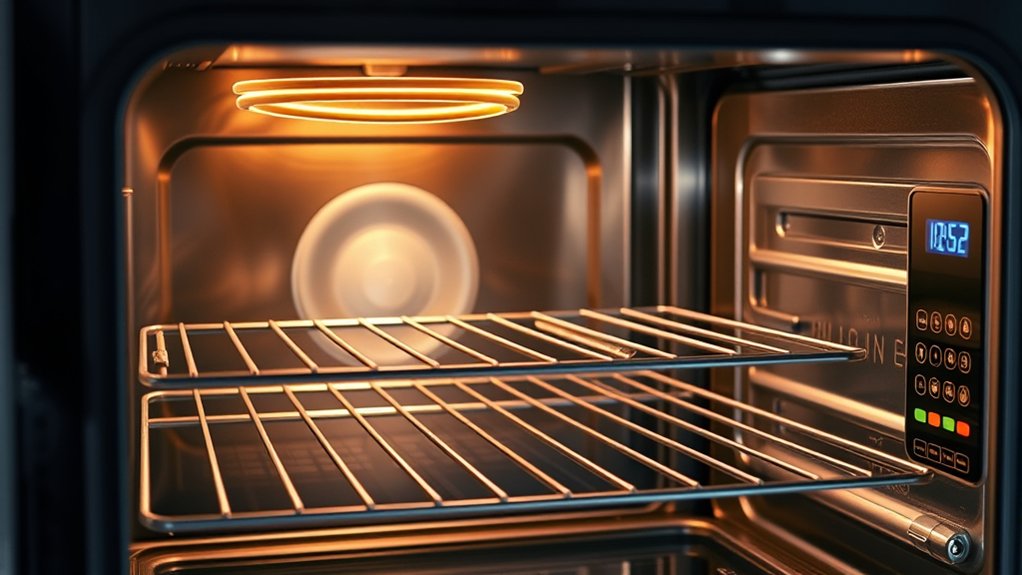
Your oven has key parts that work together to cook your food perfectly. The thermostat monitors and controls the temperature, while heating elements generate heat to cook. The oven cavity is where your food goes, and racks are adjustable for ideal positioning.
The control panel helps you set timers and temperatures. Safe operation also depends on the door latch and proper maintenance. To understand how each part functions for better cooking, keep exploring the details ahead.
Key Takeaways
- The thermostat controls the oven’s internal temperature, helping it stay consistent. This way, your food cooks evenly every time.
- The oven cavity is the insulated space where you place your dishes. It’s designed to keep heat in for efficient cooking.
- Heating elements generate the heat needed to warm up the oven. They’re responsible for making sure everything inside gets hot enough.
- The control panel is where you set your desired temperature, timers, and choose preset cooking modes. It’s the main interface for operating the oven.
- Racks support your dishes and can be moved to different heights. This allows you to adjust for the best heat exposure depending on what you’re cooking.
Key Oven Parts and What They Do
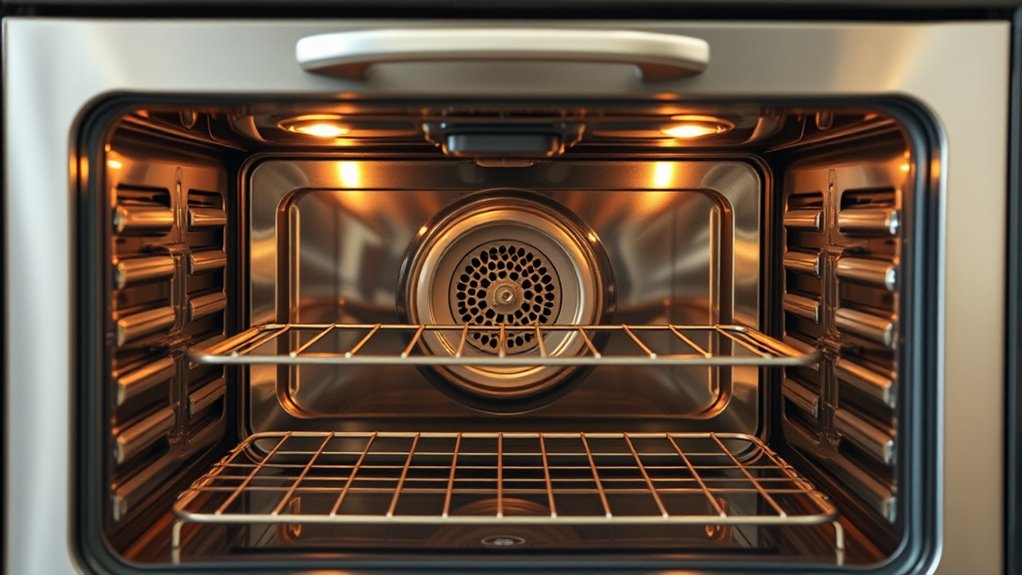
Your oven is made up of several key parts, each with a specific role to guarantee it heats properly and cooks your food evenly. The thermostat keeps the oven’s temperature steady during cooking so your food turns out just right.
The oven cavity is the main space where your food sits. It’s insulated to help maintain the heat so everything cooks evenly. The door latch keeps the door securely closed, which helps trap heat inside.
The racks inside hold your dishes and can be adjusted to different heights for even cooking. The control panel lets you select settings, timers, and temperature controls easily.
Finally, the oven light illuminates the interior so you can check on your food without opening the door and losing heat. These parts work together seamlessly to give you reliable, efficient cooking.
How Heating Elements Cook Your Food
Heating elements work by converting electrical energy into heat, directly warming your food. There are different types, like coil and ribbon elements, each providing specific heating patterns.
The way heat is distributed across the oven affects cooking efficiency and results.
How Heating Elements Work
When an oven’s heating element is turned on, electricity flows through its resistive wire, causing it to heat up quickly. The electrical current faces resistance in the wire, which turns electrical energy into heat.
This heat radiates outward, warming the oven cavity and cooking your food. The design of the heating element helps distribute heat evenly, so your food cooks thoroughly.
As the element heats, it reaches high temperatures fast, making preheating quick and cooking efficient. The material, usually metal alloys like nickel-chromium, can withstand high heat without breaking down.
Once the oven reaches the desired temperature, the element cycles on and off to keep the heat steady. This ensures your food cooks evenly and efficiently.
Types of Heating Elements
Different types of heating elements are designed to suit various cooking needs and oven models. The most common are coil elements, made of metal wires that heat up when electricity passes through them, providing direct, radiant heat.
Reflector oven elements sit at the bottom of the oven and radiate heat upward to cook food evenly. There are also hidden, or concealed, elements embedded within the oven walls, offering a sleek look and easier cleaning.
Some ovens use quartz or halogen heating elements, which heat up quickly and are energy-efficient for quick cooking tasks. Each type is chosen based on how you cook and the oven’s design, ensuring efficient heating and consistent results.
Distribution of Heat
The way heat is distributed inside an oven directly impacts how evenly your food cooks. If heat isn’t spread properly, some parts might be overcooked while others stay underdone.
Most ovens have heating elements at the top and bottom, creating a natural flow of warmth. Some models include fans that circulate hot air to promote even cooking, especially in convection ovens.
When heat is uneven, hot spots can form, making it important to understand how your oven distributes heat. Rotating trays or switching their positions during cooking can help improve results.
Proper heat distribution ensures your baked goods rise evenly and meats cook thoroughly. Knowing how your oven delivers heat lets you adjust settings for consistent, perfect results every time.
How the Oven Thermostat Keeps the Temperature Just Right
Your oven’s thermostat constantly monitors the internal temperature and adjusts the heat accordingly.
When it detects the temperature is too low or high, it signals the heating elements to turn on or off.
This process keeps your food cooking evenly and just right every time.
How Thermostat Regulates Heat
When you set the oven temperature, the thermostat kicks into gear to keep that heat steady. It keeps an eye on the oven’s internal temperature with a sensor that detects any changes.
If the temperature gets too high, the thermostat signals the heating element to turn off. When it drops below your set point, it turns the heating back on. This cycle repeats over and over.
The thermostat acts like a vigilant guard, making sure your oven stays just right for baking or roasting. Its quick responses stop temperature swings, helping your food cook evenly.
Without it, your dishes might burn or stay undercooked. That’s why the thermostat is essential for precise, reliable cooking results.
Adjusting for Precise Cooking
To get perfectly cooked dishes, the oven’s thermostat does more than just turn the heat on or off. It makes tiny adjustments to keep the temperature steady.
When the oven senses a slight drop or rise in heat, the thermostat responds quickly. It boosts or slows down the power to the heating elements as needed.
This constant fine-tuning keeps the temperature consistent, even if you open the door or if internal conditions change. It prevents fluctuations that could cause uneven cooking or burning.
By constantly monitoring and adjusting, the thermostat helps you achieve the best results. Whether you’re baking delicate pastries or roasting meats, it ensures everything cooks just right.
In the end, this small but vital process guarantees your dishes turn out perfect every time.
Using the Control Panel: Making Cooking Easier
Have you ever wondered how the control panel makes oven operation easier? It’s basically your command center, letting you set temperatures, timers, and cooking modes with ease.
With intuitive buttons and a digital display, you can quickly navigate functions without any guesswork. Many control panels even have preset options for common dishes, saving you time and effort.
Here’s a quick overview:
| Function | Description | Benefit |
|---|---|---|
| Temperature Control | Adjusts oven heat levels | Precise cooking results |
| Timer Settings | Sets cooking duration | Avoids overcooking |
| Preset Modes | Pre-programmed cooking options | Convenience and speed |
| Display Screen | Shows current settings and options | Easy monitoring |
| Start/Stop Button | Begins or halts cooking process | Control at your fingertips |
Why Racks and Interior Design Matter for Even Cooking
The placement of racks and the interior design of your oven are key to cooking evenly. Proper rack positioning helps heat circulate around your food, so there are no hot spots or cold areas.
For example, placing food on the middle rack gives balanced heat exposure. Adjusting rack positions can help you get better results for different dishes.
The interior design, like reflective surfaces and vent placement, also affects heat distribution. A well-designed interior keeps temperatures consistent and airflow steady.
When racks are too close to the heating elements or walls, uneven cooking can happen. Knowing how to position racks and understanding your oven’s layout helps you cook perfect meals every time.
Troubleshooting Common Oven Problems and When to Replace Parts
Even with proper rack placement and interior design, ovens can develop issues that impact cooking performance. If your oven isn’t heating evenly, check the heating element; it might need replacing.
When the oven doesn’t turn on at all, inspect the door switch or the control board. Strange noises or burnt smells often point to a failing fan or motor.
If your oven’s temperature isn’t accurate, a faulty thermostat could be be the culprit. Recognize when to replace parts by signs of damage, persistent malfunction after troubleshooting, or frequent repairs.
Sometimes, replacing a worn-out component saves you money and extends your oven’s life. If problems persist despite these efforts, consider consulting a professional or replacing the oven entirely for safety and efficiency.
Frequently Asked Questions
How Do I Calibrate My Oven’s Temperature Accurately?
To calibrate your oven’s temperature accurately, start by placing an oven-safe thermometer inside. Turn on the oven and set it to the temperature you want.
Once it reaches that temperature, check the thermometer’s reading. If it doesn’t match, adjust the oven’s temperature dial or control panel based on your oven’s manual.
Repeat this process until the thermometer shows the same temperature as your setting. This way, you can ensure your oven heats just right.
What Safety Features Are Built Into Modern Ovens?
Think of modern ovens as having a safety net woven into their design. They include features like automatic shut-off, which turns the oven off after a set time, preventing accidents.
Child locks stop little hands from tampering, and temperature alarms alert you if something’s off. These safety features work together to keep you safe in the kitchen, so you can cook without a worry in the world.
Can I Replace Oven Parts Myself or Should I Hire a Professional?
You can replace some oven parts yourself if you feel confident and have the right tools. However, for complex or electrical components, it’s safer to hire a professional. Always disconnect the power before starting any repairs.
Check your oven’s manual for guidance before you begin. If you’re unsure or uncomfortable with the repair, it’s best to call a licensed technician. This helps prevent potential damage or injury.
Prioritize safety and proper knowledge when attempting repairs. When in doubt, don’t hesitate to get professional help.
How Does Humidity Affect Oven Cooking Performance?
Humidity can really impact how your oven performs. When the air inside is too moist, baked goods might not brown or crisp up as they should, which can lead to soggy or uneven results.
High humidity also slows down evaporation, affecting roasting and baking times. To keep things running smoothly, make sure your oven is well-ventilated and try not to open it too often during baking, especially in humid weather.
What Are the Signs of a Failing Oven Heating Element?
If your oven’s heating element is failing, you’ll notice uneven cooking or food not reaching the right temperature. Sometimes, it might not heat at all or take longer than usual.
You might see visible signs like cracks, blisters, or breaks on the element. These are clear indicators something’s wrong.
Also, if your circuit breaker keeps tripping or you smell a burning odor, it’s probably time to replace the faulty heating element. Doing so ensures your oven stays safe and works efficiently.
Conclusion
Understanding your oven’s key parts helps you cook better and troubleshoot issues quickly. Did you know that over 75% of oven repairs happen because of faulty heating elements or thermostats?
By learning how each component works, you can keep your oven running smoothly and extend its lifespan. Stay attentive to signs of trouble, and you’ll enjoy delicious, perfectly cooked meals every time.
Your oven is an essential kitchen partner, so it’s worth knowing it well. Recognizing the key parts and their functions is the first step to mastering your oven and preventing common problems.