7 Best Cuts of Beef for Grilling
Looking to master the art of grilling but feeling overwhelmed by which cuts to choose? You’re not alone—many people struggle with picking the right beef for juicy, flavorful results.
The good news is, knowing the best cuts makes all the difference in turning your grill into a backyard steakhouse.
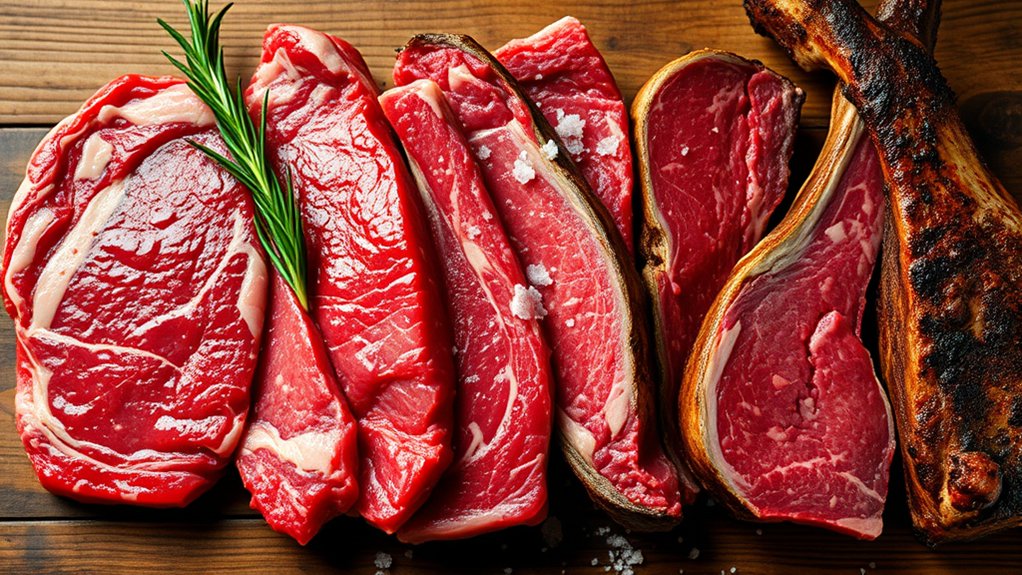
For the best grilling results, choose cuts like ribeye, New York strip, filet mignon, T-bone, flank steak, sirloin tip, and skirt steak.
These cuts are tender, well-marbled, and perfect for quick cooking on high heat. They deliver juicy, flavorful steaks and juicy burgers alike.
Proper prep, cooking, and resting make a difference, so knowing how to handle each cut helps you get the most out of your grill.
Keep going to uncover expert tips for grilling perfection.
Key Takeaways
- Top grilling cuts include ribeye, New York strip, filet mignon, T-bone, and skirt steak for flavor and tenderness.
- Choose well-marbled, high-quality beef labeled “prime” or “choice” for the best grilling results.
- Use high heat to sear quickly. Then, let the meat rest for 5-10 minutes to keep it juicy and tender.
- If you’re on a budget, options like flank steak, sirloin tip, and chuck eye are great for grilling without breaking the bank.
- Properly slicing against the grain and giving the meat a rest before serving will boost tenderness and flavor.
What Makes a Beef Cut Ideal for Grilling?
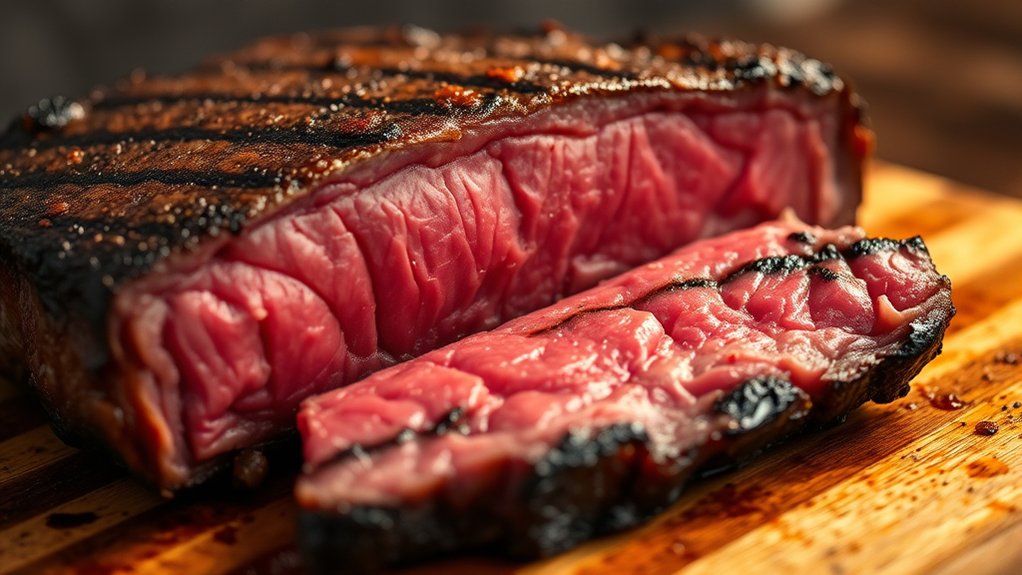
When choosing beef for grilling, the key factors are tenderness and marbling. Tenderness ensures your meat cooks evenly and stays juicy, while marbling—the fat streaks within the muscle—adds flavor and moisture.
Look for cuts with fine, evenly distributed marbling; these will stay moist and tender during high-heat grilling. Cuts with a good balance of fat and lean muscle resist drying out and develop a rich, beefy flavor.
Avoid overly muscular or tough cuts that need slow cooking, as they won’t hold up well on the grill. Instead, pick cuts that are naturally tender and have visible fat within the meat.
This combination guarantees a juicy, flavorful grilled beef experience every time.
Top Beef Cuts for Juicy Steaks and Burgers
When choosing beef for juicy steaks and burgers, you want cuts that balance flavor and tenderness.
For steaks, options like ribeye and sirloin deliver great results. Ground beef with the right fat content makes for tasty burgers.
Keep in mind, proper handling and cooking tips help guarantee your meat stays juicy and flavorful.
Ideal Cuts for Steaks
If you’re aiming for juicy, flavorful steaks and burgers, choosing the right cut of beef makes all the difference. For tender, well-marbled options, consider these top cuts:
- Ribeye: Known for its rich marbling and bold flavor, perfect for grilling.
- New York Strip: Offers a great balance of tenderness and beefy taste.
- Filet Mignon: The most tender cut, ideal if you prefer a melt-in-your-mouth experience.
- T-bone: Combines the tenderness of the filet with the flavor of the sirloin, great for a hearty steak.
These cuts deliver the juiciness and flavor you want on the grill, ensuring a satisfying steak every time.
Best Ground Beef Options
Choosing the right ground beef can really make a difference in how juicy and flavorful your burgers and grilled dishes turn out. Look for options with at least 80% lean meat and 20% fat for the best moisture and taste.
Ground chuck, from the shoulder, is a popular choice because it strikes a good balance of flavor and juiciness. If you prefer less fat, ground sirloin is leaner but still flavorful.
You can also try blends like chuck and brisket to add more richness. Always check for freshness and avoid overly processed options. Freshly ground beef or pre-packaged meat with a bright red color usually indicates good quality.
Choosing the right grind helps keep your grilled creations juicy and flavorful from the first bite to the last.
Tips for Juicy Results
For juicy steaks and burgers, choosing the right beef cuts is key, but how you handle and cook them makes all the difference. To get the most moisture, start with well-marbled meat—it naturally holds more juice.
Don’t forget to keep the meat at room temperature before grilling. This helps it cook evenly and prevents it from drying out. Use high heat to sear the outside quickly and lock in those juices.
Be careful not to flip the meat too often. Turn it once or twice for even results and better flavor. After cooking, let the meat rest for a few minutes so the juices can redistribute and stay inside.
Best Cuts of Beef for Roast and Slow Cooking
In relation to roasting and slow cooking, choosing the right cut of beef can really boost flavor and tenderness. You want cuts that break down over time and become melt-in-your-mouth good.
The best options include chuck roast, brisket, round, short ribs, and oxtail. These cuts have connective tissue that softens during long cooking, adding more flavor and better texture.
| Cut | Ideal Cooking Method | Typical Price Range |
|---|---|---|
| Chuck Roast | Braising, slow roasting | Moderate |
| Brisket | Smoking, slow roasting | Moderate to high |
| Round | Slow roasting, braising | Budget-friendly |
| Short Ribs | Braising, slow cooking | Moderate to high |
| Oxtail | Stewing, slow cooking | Higher |
Thin-Sliced Beef for Sandwiches and Fajitas
Thin-sliced beef is perfect for making tasty sandwiches and sizzling fajitas because it cooks quickly and absorbs marinades and seasonings really well. The trick is choosing the right cut, like sirloin, flank, or skirt steak, which become tender when sliced thin.
Thin-sliced beef cooks fast, absorbs flavors, and becomes tender—perfect for quick, delicious sandwiches and fajitas.
This way, you can get the right texture in no time, making it ideal for busy weeknights. To get the most flavor and tenderness, try marinating the slices for at least 30 minutes.
Use a sharp knife for clean, even cuts, and cook quickly over high heat to avoid dryness. Serve immediately so you can enjoy the juicy, flavorful results.
Thin-sliced beef is versatile and fast, making it a great choice for delicious, satisfying meals.
Affordable Beef Cuts That Grill Well
Some of the best budget-friendly beef cuts that grill well include flank steak, sirloin tip, and chuck eye. These cuts are affordable and flavorful, making them great choices when you’re on a budget.
Flank steak is lean and takes well to marinating, resulting in a tender, juicy bite when grilled properly. Sirloin tip is versatile and offers good flavor, especially when cooked to medium-rare or medium.
Chuck eye, often called the “poor man’s ribeye,” delivers rich, beefy taste at a lower cost. Keep in mind that these cuts might be slightly tougher than pricier options, so slicing against the grain and using proper grilling techniques will help you get the best results.
With the right approach, you can enjoy delicious grilled beef without overspending.
How to Prepare and Grill Each Beef Cut Perfectly
To get the best results, you need to know how to season each cut properly, set the right grilling temperature, and let the meat rest before serving. Proper seasoning boosts flavor, and choosing the right temperature ensures perfect doneness.
Setting the correct grilling temperature is key to cooking each cut just right. Too hot, and you might burn the outside before the inside cooks; too low, and it might dry out.
Letting the meat rest before serving is essential. It helps juices redistribute, making every bite tender and flavorful. Just a few minutes can make a big difference.
Proper Seasoning Techniques
Proper seasoning is key to bringing out the full flavor of each beef cut on the grill. Start simple—salt and pepper can do a lot, but don’t hesitate to add herbs or spices for extra depth.
Let the meat sit with your seasoning for at least 30 minutes so it can absorb the flavors. When applying seasonings, think about the cut’s texture and fat content to avoid overpowering the natural taste.
Here are some tips to step up your seasoning game:
- Use coarse salt for better flavor penetration
- Add garlic, paprika, or cumin for smoky notes
- Apply dry rubs or marinades for a richer taste
- Make sure to season both sides evenly
With proper seasoning, each cut will be flavorful, juicy, and perfectly suited for grilling.
Ideal Grilling Temperatures
Ever wondered how to get that perfect doneness for each beef cut on the grill? It all depends on knowing the right temperature. For steaks like ribeye or sirloin, aim for a hot grill around 130-135°F for medium-rare, or 135-145°F for medium.
Thinner cuts, such as flank or skirt steak, cook best at higher heat—around 400-450°F—so they sear quickly and lock in juices. Thick cuts like brisket or chuck roast need lower, indirect heat—around 225-250°F—and longer cooking times to become tender.
Use a reliable meat thermometer to keep track of the internal temperature. Remember, taking the beef off a few degrees before it hits your target allows carryover heat to finish the job perfectly.
Proper temperature control guarantees juicy, flavorful results every time.
Resting and Serving Tips
After grilling each beef cut to perfection, it’s important to let the meat rest before slicing or serving. Resting helps the juices redistribute, making the meat moist and flavorful.
Cover the meat loosely with foil and let it rest for 5-10 minutes. During this time, the temperature stabilizes, and the meat becomes more tender.
To serve your beef at its best, try slicing against the grain for maximum tenderness and use a sharp knife for clean cuts.
For thicker cuts, let them rest a bit longer to ensure even juiciness.
Serve immediately to enjoy the peak flavor and warmth.
Following these steps keeps your beef juicy, tender, and full of flavor, making your grilling experience truly memorable. Proper resting and serving are what turn good grilled beef into unforgettable.
Tips for Choosing the Best Beef for Your Next BBQ
Choosing the right beef is key to a successful BBQ, and there are a few simple tips to help you pick the best cuts.
First, look for marbling—thin streaks of fat within the meat—as it adds flavor and juiciness.
Second, choose cuts labeled “prime” or “choice” for better tenderness and taste.
Third, consider the cut’s thickness; thicker steaks are easier to cook evenly.
Here’s a quick guide:
| Cut Type | Best Features |
|---|---|
| Ribeye | Rich flavor, well-marbled |
| Sirloin | Leaner, affordable, flavorful |
| Skirt Steak | Great for marinating, tender when cooked properly |
Use these tips to select beef that guarantees a flavorful, juicy grill every time.
Frequently Asked Questions
How Long Should I Marinate Different Beef Cuts Before Grilling?
You should marinate beef cuts for different durations to get the best flavor and tenderness.
For thinner cuts like flank or skirt steak, marinate for 30 minutes to 2 hours.
Thicker cuts like ribeye or sirloin do well with 4 to 6 hours of marinating, but avoid overdoing it as it can change the texture.
For the best results, keep the meat refrigerated while it’s marinating.
And always discard the marinade before grilling to ensure safety and good flavor.
What Are Common Mistakes to Avoid When Grilling Beef?
When grilling beef, avoid amateur mistakes like overcooking, which ruins the richness, or under-seasoning, which weakens the flavor.
Don’t forget to preheat your grill properly, preventing poor searing and sticking. Overhandling the meat causes loss of juices, so resist incessant flipping.
Keep it simple, stay attentive, and make sure you’re cooking at the right heat. These mindful methods maximize your meat’s mouthwatering magnificence, making your grilling game truly great!
How Do I Tell When Grilled Beef Is Cooked to My Preferred Doneness?
To tell when grilled beef is cooked to your preferred doneness, use a meat thermometer to check the internal temperature.
For rare, aim for 125°F; medium-rare, 135°F; medium, 145°F; medium-well, 150°F; and well-done, 160°F.
Alternatively, you can use the finger test to gauge firmness.
Can I Grill Frozen Beef, or Should It Be Fully Thawed First?
Grilling frozen beef is like trying to light a fire with damp wood. It’s tough and can lead to uneven cooking.
It’s best to fully thaw your meat first. Thawing guarantees even heat penetration, helping you get that perfect, juicy interior without burning the outside.
Use a refrigerator or cold water bath to thaw safely. This way, your beef will cook evenly and lock in all those delicious flavors.
What Are Recommended Side Dishes to Serve With Various Grilled Beef Cuts?
You should choose side dishes that complement the richness of grilled beef. For leaner cuts like sirloin or flank steak, grilled vegetables, a fresh salad, or roasted potatoes work well.
If you’re serving fattier cuts like brisket or ribeye, consider hearty sides like creamy coleslaw, baked beans, or garlic bread. These options balance the flavors and textures, making your meal more satisfying and well-rounded.
Conclusion
Now that you know the best cuts for grilling, are you ready to impress your guests with perfectly cooked steaks, burgers, or fajitas? Choosing the right beef makes all the difference in flavor and tenderness, so don’t settle for anything less.
With these tips in mind, you’ll be confident to fire up the grill and create mouthwatering meals every time. After all, isn’t a great BBQ just waiting to happen with the perfect beef?