7 Best Beef Cuts for Beef Jerky
Many people struggle with making the perfect beef jerky, especially when it comes to choosing the right cut. You want it to be tender, flavorful, and ideally lean to avoid too much fat. Finding the best beef for jerky can feel overwhelming, but you’re not alone in that.
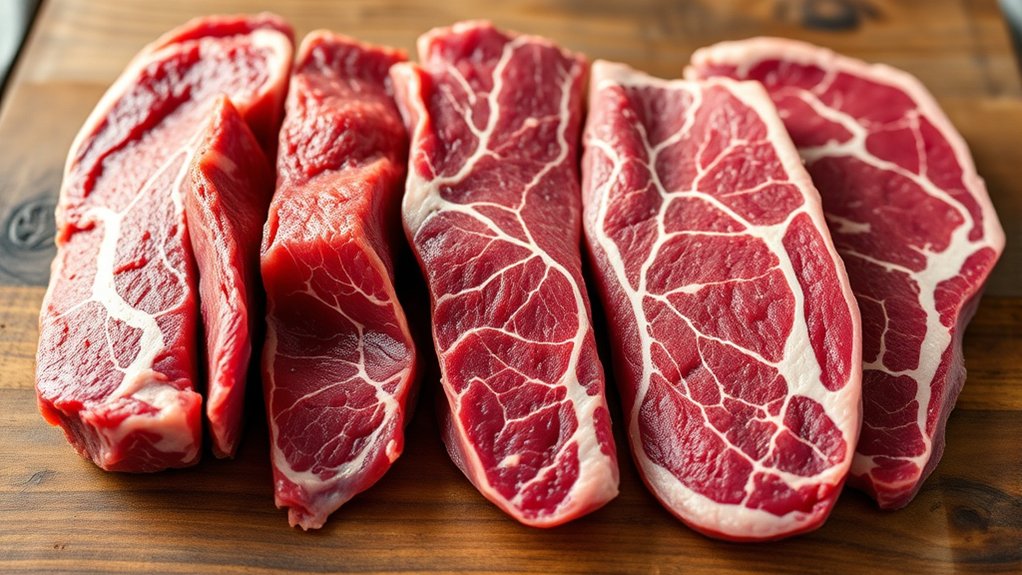
If you’re making beef jerky, focus on lean, tender cuts like eye of round, sirloin tip, top round, round steak, and flank steak.
These cuts have minimal fat, dense grain, and good muscle structure, which helps them dry evenly and develop great flavor.
Choosing high-quality beef with bright color and firm texture guarantees your jerky turns out perfect.
Keep exploring for more tips on selecting and preparing the best beef for your jerky.
Key Takeaways
- Opt for lean, muscle-focused cuts like eye of round, sirloin tip, or top round. These cuts make for tender, low-fat jerky.
- Choose high-quality beef such as USDA Choice or Prime. Look for bright color and firm texture to get the best results.
- Select cuts with minimal marbling and connective tissue. This makes slicing easier and helps the drying process go smoothly.
- Freezing the meat briefly can help improve slicing precision. It also helps you get uniform thickness for even drying.
- Trim off any excess fat. This prevents spoilage and off-flavors during drying, keeping your jerky tasting great.
What Makes a Good Beef Cut for Jerky?
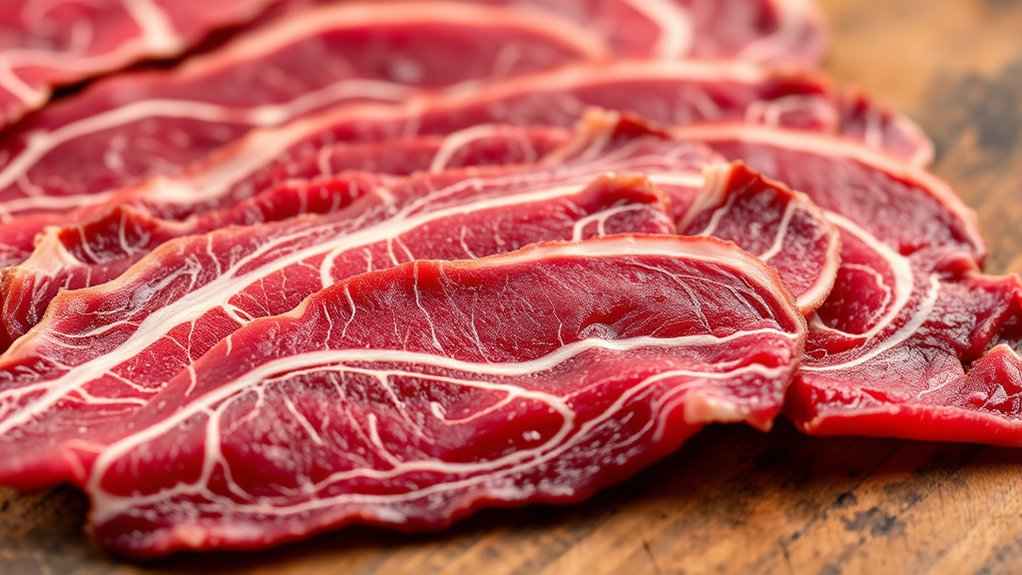
A good beef cut for jerky starts with lean meat that has minimal fat. Fat doesn’t dehydrate well and can spoil faster, so choosing lean cuts guarantees your jerky lasts longer and has a better texture.
Look for cuts with little marbling, as excess fat can turn rancid and affect flavor. You want meat that’s firm and dense, which helps it dry evenly without becoming tough.
Cuts from the round or sirloin are ideal because they’re lean and easy to slice thinly. Avoid cuts with connective tissue or lots of gristle, as these can make your jerky chewy or unevenly dried.
Selecting the right lean, firm meat sets the foundation for a flavorful, long-lasting jerky.
Characteristics of Ideal Beef for Jerky
You want beef with high lean muscle content and low fat so your jerky turns out tender and not greasy.
Consistent grain structure helps guarantee even drying and a uniform texture. Focusing on these characteristics makes it easier to create quality jerky every time.
Lean Muscle Content
Lean muscle content is key when choosing beef for jerky because it impacts the texture and flavor. Less fat and connective tissue mean a firmer, chewier jerky with a clean taste.
Cuts with lots of muscle fibers, like round or sirloin, work best because they give a consistent texture and dry evenly. You want meat that’s dense and firm, not too tender or fatty.
This kind of meat dries well and keeps its bite. Lean cuts also help prevent spoilage and rancidity, making your jerky last longer.
When picking beef, focus on muscle-rich parts that aren’t overloaded with fat or gristle. That way, your jerky will be flavorful, rugged, and satisfying.
Low Fat Levels
Low fat levels are essential because excess fat can cause your jerky to spoil faster and develop off-flavors. Fat doesn’t dry out well, so it can become rancid over time, affecting taste and shelf life.
When choosing beef, look for cuts with minimal marbling and visible fat. Lean cuts like eye of round, sirloin, or top round are ideal since they contain less intramuscular fat.
Removing surface fat and trimming any visible fat before drying helps improve both the texture and longevity of your jerky. Too much fat not only shortens shelf life but also makes the jerky greasy and less appealing.
Ensuring low fat content in your beef cuts will result in a cleaner, more durable, and flavorful jerky that keeps well over time.
Consistent Grain Structure
Choosing beef with a consistent grain structure guarantees your jerky has an even texture and predictable chewiness. When the muscle fibers run uniformly, your jerky will slice more easily and cook evenly.
This consistency helps prevent uneven drying or tough spots, so each piece has a balanced bite. Look for cuts where the grain is straight and parallel, like sirloin or round.
Avoid cuts with irregular or broken fibers, as they can lead to inconsistent texture. Properly aligned grains also make marinating and seasoning more effective, since flavors penetrate evenly.
What Are the Best Lean Cuts for Jerky?
Ever wonder which cuts of beef are best for making jerky that’s both flavorful and healthy? Lean cuts are your best choice since they have less fat and moisture, helping prevent spoilage and giving you a dense, chewy texture. Top options include eye of round, sirloin tip, and top round. These cuts are naturally low in fat, making them ideal for healthy, long-lasting jerky.
| Cut Name | Why It’s Great |
|---|---|
| Eye of Round | Very lean, affordable |
| Sirloin Tip | Tender and low-fat |
| Top Round | Dense, easy to slice |
| Round Steak | Classic, lean option |
Why Use Tender Cuts for Better Jerky?
Using tender cuts for jerky can really boost its texture and flavor. When you pick tender meats like sirloin or tenderloin, your jerky ends up more enjoyable—less chewy and tough.
Tender cuts have less connective tissue and fat, which means they dry more evenly and keep a better chew. They also soak up marinades better, giving each piece more flavor.
Because of this, your jerky will have a consistent, pleasant bite and a richer taste. Going for tougher cuts might save some money at first, but it often results in dry, fibrous jerky that’s harder to enjoy.
For a satisfying, flavorful jerky experience, sticking with tender cuts ensures your final product is both tender and delicious.
Top Beef Cuts for Homemade Jerky
When choosing beef for homemade jerky, look for cuts with high lean muscle content to ensure a good texture and effective drying process. These cuts tend to produce jerky that’s tender and not overly greasy.
They also absorb marinades better, which helps boost flavor throughout. Focusing on muscle composition and flavor potential makes your jerky both tasty and well-preserved.
Lean Muscle Composition
Choosing the right beef cuts for homemade jerky means focusing on lean muscle tissue, which keeps your jerky flavorful without excess fat. Lean muscle cuts are low in fat and high in protein, making them perfect for a chewy, savory snack.
When selecting cuts, look for those with minimal marbling to ensure your jerky stays lean and tender. These cuts usually come from muscles that get a lot of exercise, giving them a dense, firm texture ideal for jerky.
Properly choosing muscle tissue helps prevent greasy or greasy-tasting jerky. To get started, consider these top cuts:
- Top Round
- Eye of Round
- Sirloin Tip
- Flank Steak
Flavor Absorption Potential
Selecting beef cuts with good flavor absorption potential can take your homemade jerky to the next level. Cuts like sirloin, round, and flank are perfect because they’re porous enough to soak up marinades and seasonings well.
These cuts have a slightly looser grain, which helps flavors penetrate deeper, giving you a richer, more complex taste. Choosing the right cuts makes your jerky more flavorful and tender.
Avoid overly dense or fatty cuts, as they resist marinade penetration and can lead to uneven seasoning. Picking the right cuts ensures each bite is bursting with the marinade’s intended flavor.
This way, your homemade jerky will be consistently flavorful, making every bite more satisfying and enjoyable.
How to Recognize High-Quality Beef for Jerky
High-quality beef for jerky starts with fresh, well-marbled meat that’s lean but not dry. Look for meat with even fat distribution, which guarantees flavor and tenderness. Bright, vibrant color indicates freshness—avoid meat that looks dull or gray.
Check for a firm texture; it should feel firm but not hard or slimy. Smell the meat—fresh beef has a clean, meaty aroma, free from sour or off-putting odors. When shopping, opt for cuts labeled as high-grade beef, such as USDA Choice or Prime.
Guarantee the meat has uniform marbling for consistent flavor. Avoid meat with discoloration or excessive dryness. Select cuts that feel firm and moist to the touch. Trust your nose—fresh beef smells inviting and clean.
Tips for Preparing and Cutting Beef for Jerky
Once you’ve picked out the right beef, preparing and cutting it properly makes all the difference in getting flavorful, tender jerky. Start by trimming away excess fat because fat can spoil and cause mold during drying.
Freeze the beef for about 1-2 hours. This firms up the meat and makes it easier to slice. When slicing, cut against the grain into thin strips, about 1/8 to 1/4 inch thick, to ensure tenderness.
Consistent thickness helps the jerky dry evenly and speeds up the process. Use a sharp knife or a meat slicer for clean cuts. After slicing, marinate the beef to add flavor, but pat the strips dry before drying to prevent excess moisture.
Proper preparation and cutting are key to making delicious, well-textured jerky.
Frequently Asked Questions
How Does Marinating Affect the Choice of Beef Cut for Jerky?
Marinating influences your choice of beef cut because it helps tenderize tougher meats and infuses flavor. You should pick lean cuts like eye of round or sirloin because they absorb marinades well without becoming too fatty or greasy.
Marinating also helps break down connective tissues, making the jerky more tender. So, selecting a lean, flavorful cut allows your marinade to work effectively, resulting in tasty, high-quality jerky.
Are Grass-Fed or Grain-Fed Beef Better for Jerky?
You’ll find grass-fed beef often results in a leaner, more flavorful jerky. For example, a small batch producer recently preferred it because of its richer taste.
Grain-fed beef tends to be more tender and consistent, which makes it easier to work with. If you’re after a bold, natural flavor, go for grass-fed.
If you want tenderness and ease, grain-fed is the way to go. It really depends on what you’re looking for in your jerky.
Can You Use Ground Beef for Jerky, and Is It Safe?
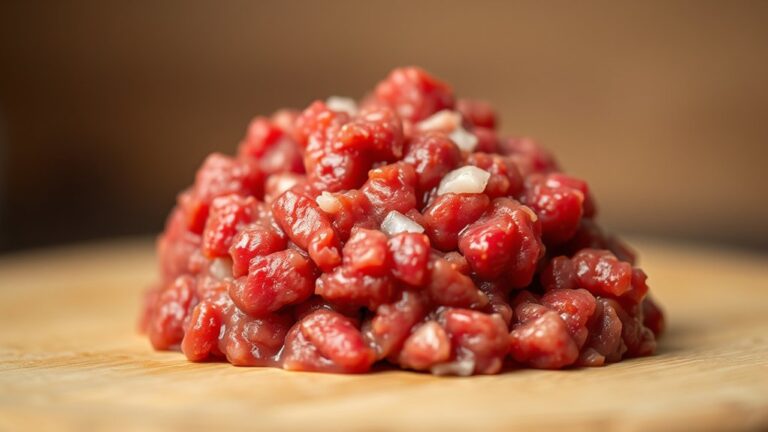
Yes, you can use ground beef for jerky, but it takes some careful handling. Make sure you choose lean ground beef with minimal fat to prevent spoilage and mold.
Mix in your favorite seasonings, then spread the mixture thinly on a baking sheet. Dehydrate thoroughly at a low temperature to ensure it dries properly.
Proper drying and storage are key for safety. Always follow safe jerky-making guidelines to prevent bacteria growth and make sure your jerky is safe to eat.
What Is the Ideal Thickness for Slicing Beef for Jerky?
You should slice your beef about 1/8 to 1/4 inch thick for jerky. Thinner slices dry out faster and become crisp, while thicker slices may stay chewy and take longer to dehydrate.
Use a sharp knife to guarantee clean cuts and maintain consistent thickness. If possible, partially freeze the meat beforehand to make slicing easier and more uniform.
This helps your jerky turn out evenly textured and flavorful.
How Does Aging Beef Influence the Flavor of Jerky?
Aging beef is like fine wine. It deepens the flavor and makes the meat more tender, which results in richer, more complex jerky.
When you age beef, it develops concentrated umami notes and a subtle nuttiness. These flavors become even more intense during drying.
For example, I once aged a roast for two weeks. The jerky from that was robust and savory—way better than fresh meat could ever be.
Aging really transforms your jerky into a gourmet treat.
Conclusion
Choosing the right beef cut transforms your jerky from good to legendary. With the perfect lean, tender, and high-quality meat, you’ll create jerky so delicious it could make even the toughest critics weep tears of joy.
Follow these tips, select top cuts, and prepare with care—your homemade jerky will be a flavor explosion that outshines store-bought varieties.
Get ready to impress everyone with your beef jerky mastery. Your taste buds will thank you!