How Many Calories Are in a Slice of Roast Beef?
Many people love roast beef but worry about the calorie count, especially if they’re watching their intake. You’re not alone—navigating what’s healthy and tasty can be tricky.
Finding the right balance while enjoying your favorite foods is a common challenge.
A typical 3-ounce slice of roast beef contains around 180 calories, but this can vary depending on the cut and preparation. Leaner cuts like sirloin have fewer calories, while fattier cuts like brisket are higher.
Cooking methods and added toppings also influence the calorie count. Paying attention to portion size and choosing healthier options help manage your intake.
Keep exploring for more tips on how to enjoy roast beef without piling on calories.
Key Takeaways
- A typical 3 oz slice of roast beef has about 180 calories.
- The calorie count can change depending on the cut. Leaner cuts tend to have around 150-180 calories, while fattier cuts can go up to 250 calories.
- How you cook it also matters. Roasting or grilling usually keeps the calorie count lower than frying or adding extra fats.
- Keep in mind, portion size makes a big difference. A standard serving is usually around 3 to 4 ounces.
- If you add toppings like gravy or cheese, they can add anywhere from 15 to 120 extra calories per serving.
How Many Calories Are in a Slice of Roast Beef?
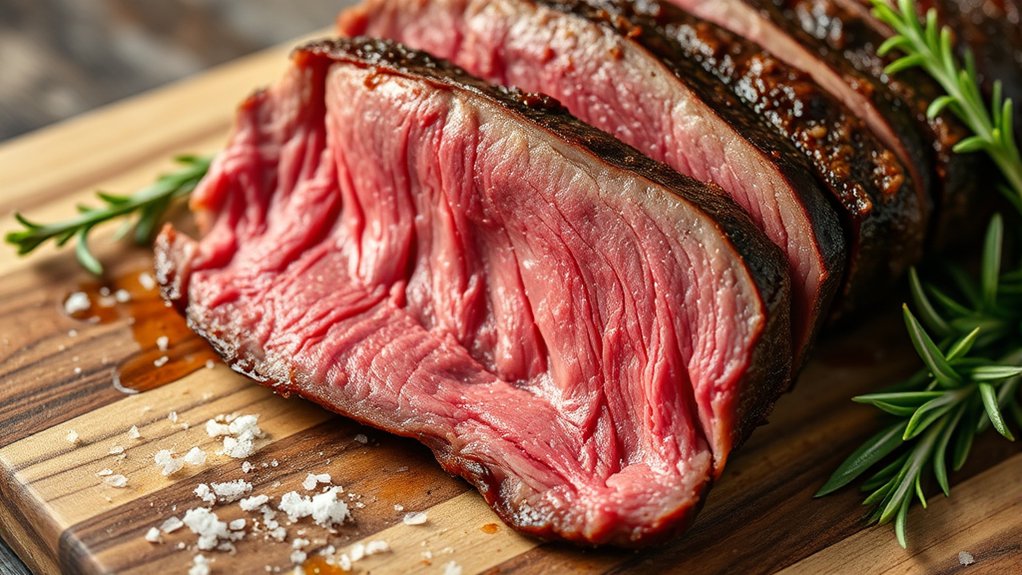
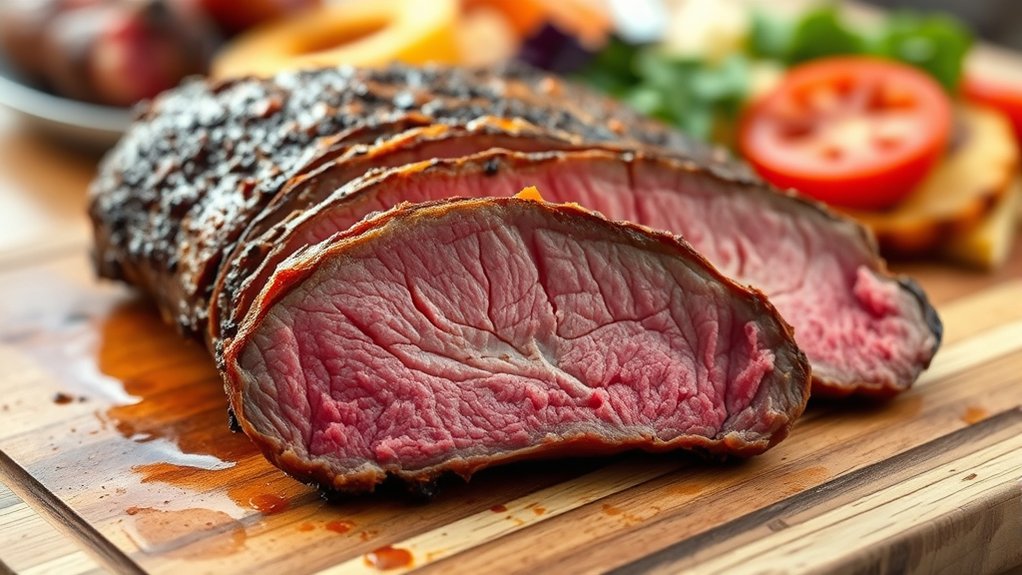
Curious about how many calories are in a slice of roast beef? A typical slice, around 3 ounces, has roughly 180 calories.
The calorie count can change based on the cut and how it’s prepared. Leaner cuts like sirloin or tenderloin usually have fewer calories. If you go for a fattier cut like ribeye, expect more calories.
How you cook the roast beef also makes a difference. Roasting with minimal added fat keeps it leaner. The thickness of the slice matters too—thicker slices have more calories.
What Factors Affect Roast Beef Calories?
The type of cut you choose can really change the calorie count in your roast beef. Different cuts have varying fat and protein levels, which impact the calories.
Cooking methods like roasting or braising also affect the final calorie content by adding or removing fats during the process. So, how you cook it matters.
Plus, portion sizes are key. Your serving amount plays a big role in the overall calorie intake, so keep that in mind when planning your meal.
Cut of Beef Variations
Different cuts of beef vary a lot in calories because of differences in fat and muscle. For example, lean cuts like sirloin or tenderloin usually have fewer calories since they contain less fat.
Fattier cuts such as ribeye or brisket tend to have more calories because of their higher fat content. The marbling, or fat streaks within the muscle, also affects how calorie-dense a cut is.
Plus, the thickness of the slice matters. Thicker pieces naturally have more calories. When choosing a cut, think about your dietary goals.
Lean options will help you cut down on calories, while fattier cuts add more flavor but also more calories. Knowing these differences can help you make smarter choices based on your nutritional needs.
Cooking Method Impact
Cooking methods can really influence the calorie content of roast beef, no matter which cut you pick.
Adding fats like butter or oil while roasting boosts the calorie count. Leaner techniques like grilling or broiling help keep calories lower.
Marinades or basting sauces can add extra calories, especially if they contain sugar or oil. Trimming excess fat before cooking helps reduce both fat and calories.
The temperature and cooking time affect moisture loss, which makes slices seem more calorie-dense but doesn’t change the total calorie content of the meat. Choosing healthier methods and controlling added fats are key to keeping roast beef lower in calories while still tasting great.
Portion Size Differences
Portion size plays a key role in how many calories you get from roast beef. The bigger the slice, the more calories you’ll consume. Even small differences in thickness or weight can make a big difference in your intake.
For example, a 3-ounce serving has fewer calories than a 6-ounce portion. Things like trimming fat or choosing leaner cuts also affect the calorie count, no matter the size.
Here’s a quick comparison:
| Portion Size | Calories | Fat Content |
|---|---|---|
| 3 oz | 180 | 9g |
| 4 oz | 240 | 12g |
| 6 oz | 360 | 18g |
| 8 oz | 480 | 24g |
Knowing these differences can help you manage your calorie intake and make smarter choices.
How Do Preparation Methods Impact Calories?
The way you prepare roast beef can really change its calorie content. For example, roasting or grilling usually adds fewer calories than frying, which involves extra fats.
If you baste or coat the beef with oils or butter, you’ll boost the calorie count quite a bit. Using lean cuts and trimming excess fat beforehand helps keep the calories lower.
Cooking at high heat for a shorter period can lock in juices without adding calories from extra ingredients. But slow-cooking often needs added oils or broths, which can increase calories.
Cooking at high heat preserves juiciness without extra calories, unlike slow-cooking that often requires added oils or broths.
Plus, marinades or sauces containing sugar or oil can add more calories, so choose those ingredients carefully. Overall, how you prepare your roast beef directly impacts its calorie level.
Lean vs. Fattier Cuts of Roast Beef: Which Is Lower in Calories?
Are you wondering which cuts of roast beef are lower in calories? Generally, leaner cuts have fewer calories because they contain less fat. For example, sirloin or round cuts are leaner options, while brisket or ribeye are fattier. Here’s a quick comparison:
| Cut Type | Approximate Calories (per 3 oz) |
|---|---|
| Lean cuts | 150-180 |
| Fattier cuts | 220-250 |
| Average cut | 180-200 |
Choosing leaner cuts helps reduce calorie intake without sacrificing flavor. Keep in mind, trimming visible fat further lowers calories. So, if you’re aiming for fewer calories, opt for leaner cuts like sirloin or round, and trim any excess fat before roasting.
How Serving Size Changes the Calorie Content
In relation to calorie control, how much roast beef you serve makes a big difference. A small slice might have around 50 calories, while a larger portion could contain 150 or more.
When you increase the serving size, the calorie count rises proportionally, making it easy to underestimate intake. Measuring your portions helps you stay on track, especially if you’re watching calories.
Using a scale or visual cues like knowing how a deck of cards equals about 3 ounces can guide you. Remember, even healthy food can add up if your portions are too large.
Being mindful of serving sizes guarantees you enjoy your roast beef without unintentionally consuming too many calories.
Adding Toppings and Sides: What’s the Calorie Impact?
Ever wondered how much extra calories toppings and sides add to your roast beef meal? Adding things like gravy, cheese, or creamy sauces can easily boost the calorie count.
For example, a tablespoon of gravy adds around 15-20 calories, while a slice of cheese can add 70-120 calories. Sides like mashed potatoes with butter or bread rolls also contribute notably—roughly 150-200 calories each.
Vegetables like roasted carrots or green beans are lower in calories but can still add up if prepared with butter or oil. Keep in mind that even small additions can quickly increase your meal’s total calorie content.
Being mindful of these extras helps you enjoy your meal without unknowingly consuming too many calories.
Health Benefits of Roast Beef Beyond Calories
Roast beef is a great source of protein, helping you build and maintain muscle. It also provides essential nutrients like iron and zinc that support your overall health. Including it in your diet can boost your muscle growth and keep your body functioning at its best.
Rich Source of Protein
Rich in high-quality protein, roast beef plays an essential role in supporting your overall health. Protein helps build and repair tissues, including muscles, skin, and organs, making it crucial for your body’s functioning.
Eating roast beef regularly can help you maintain muscle mass, especially as you age, and boost your immune system. It also supplies amino acids needed for various metabolic processes.
Unlike some other protein sources, roast beef offers a complete protein profile, meaning it contains all the essential amino acids your body needs. Incorporating it into your diet can help you feel full longer and support weight management.
Contains Essential Nutrients
In addition to providing high-quality protein, roast beef is packed with essential nutrients that offer big health benefits. It’s a rich source of iron, which helps your body produce red blood cells and prevents anemia.
Zinc in roast beef supports your immune system and helps with wound healing. Vitamin B12 is key for maintaining nerve health and producing DNA, while B6 helps with energy metabolism.
Plus, roast beef provides selenium, an antioxidant that protects your cells from damage. These nutrients work together to promote overall health, boost your immune function, and support proper brain and blood health.
Adding moderate amounts of roast beef to your diet can help you meet your nutritional needs while enjoying its flavorful, satisfying taste.
Supports Muscle Growth
Because of its high-quality protein content, roast beef plays a big role in supporting muscle growth and repair. When you eat it, you’re giving your body essential amino acids needed for building and maintaining muscle tissue.
This is especially important if you’re active or trying to increase muscle mass. The protein in roast beef helps kickstart muscle protein synthesis, helping your muscles recover properly after workouts.
It also helps prevent muscle loss as you age. Eating roast beef regularly can support your strength training goals by providing the nutrients your body needs to get stronger.
Its rich protein profile makes it a great choice for anyone looking to optimize muscle health and recovery. It’s more than just a tasty meal—it’s a valuable part of your muscle-building routine.
Tips for Choosing Lower-Calorie Roast Beef Options
When selecting roast beef, opt for leaner cuts like sirloin or tenderloin, which naturally contain less fat and fewer calories. These cuts are a smart choice if you’re trying to cut back on calories without losing flavor.
Look for roasts labeled as “extra lean” or “lean” at the store. Trim off any visible fat before cooking to further reduce calories.
Avoid pre-seasoned or processed options that often have added fats and sodium. How you cook matters too—roasting, grilling, or broiling helps drain excess fat and keeps the calorie count lower.
Using a meat thermometer can help prevent overcooking, which can dry out the meat and make you want to add high-calorie sauces. Being picky about cuts and cooking methods lets you enjoy roast beef without the extra calories.
How to Incorporate Roast Beef Into a Calorie-Conscious Diet
Incorporating roast beef into a calorie-conscious diet is easier when you focus on portion control and pairing it with nutrient-dense, low-calorie foods. Keep your servings small, about 3 to 4 ounces, so you can enjoy the flavor without overdoing calories.
Pair your roast beef with plenty of vegetables like leafy greens, broccoli, or peppers. They add fiber and nutrients with minimal calories, making your meal more balanced.
Pair roast beef with leafy greens, broccoli, or peppers for a nutrient-rich, low-calorie, and balanced meal.
Use herbs and spices instead of high-calorie sauces or gravies to boost flavor without extra calories. Choose lean cuts of roast beef and trim visible fat beforehand.
You can also incorporate roast beef into salads, wraps, or grain bowls for satisfying, balanced meals. By paying attention to portion sizes and food choices, you can enjoy roast beef while staying within your calorie goals.
Common Mistakes When Estimating Roast Beef Calories
Many people underestimate how much roast beef they’re actually eating or how the cooking process affects its calorie content. For example, slicing thickness varies, which influences calorie counts. Plus, cooking methods like roasting or braising can change the meat’s moisture and fat, affecting calorie density.
Common mistakes include relying only on restaurant portions, ignoring added sauces or oils, and forgetting to account for trimming fat. To help, here’s a quick comparison:
| Mistake | Effect | Tip |
|---|---|---|
| Overestimating portion size | Skews calorie count | Use a food scale for accuracy |
| Not considering cooking method | Changes calorie density | Research how cooking impacts calories |
| Ignoring added ingredients | Adds extra calories | Track sauces and oils used |
Being precise helps you make better calorie estimates.
Reading Labels and Nutrition Facts for Roast Beef Products
Reading labels and nutrition facts on roast beef products is essential to accurately gauge their calorie content. Labels give you details about serving size, calories per serving, and nutrients like protein, fat, and carbs.
Pay attention to the serving size because a small change can really affect your calorie calculations. Also, look for added ingredients or preservatives that might influence the calorie count.
Pay close attention to serving sizes and added ingredients to accurately track calories and make informed choices.
If the product is pre-packaged, check for extra info on sodium or other nutrients that could impact your diet. When buying fresh roast beef, ask the butcher for nutrition details or consult reliable sources.
Reading labels helps you make informed decisions and track your calorie intake accurately. This is especially helpful if you’re monitoring your diet or managing health conditions.
How Roast Beef Calories Compare to Other Protein Sources
How does roast beef stack up against other protein sources regarding calorie content? Generally, roast beef is moderate in calories compared to proteins like chicken or fish.
A typical 3-ounce serving of lean roast beef contains around 180 calories, making it a satisfying yet calorie-conscious choice. In contrast, skinless chicken breast has about 140 calories, while salmon packs roughly 200 calories for the same portion.
Lean cuts of pork or turkey tend to fall in the same range as roast beef, offering a good balance of flavor and calories. If you’re watching your intake, roast beef provides a hearty protein source without excessive calories, especially when trimmed of visible fat.
It’s a versatile option that fits well into balanced diets.
Frequently Asked Questions
How Does the Thickness of a Slice Affect Calorie Count?
Thicker slices of roast beef have more calories because they contain more meat overall. When you cut a slice thicker, you’re adding more grams of beef, which boosts the calorie count.
On the other hand, thinner slices have fewer grams and fewer calories. So, if you’re watching your calorie intake, go for thinner slices or control your portion sizes.
Are Processed Roast Beef Products Higher in Calories?
Yes, processed roast beef products tend to be higher in calories. Manufacturers often add preservatives, flavorings, and sometimes extra fats or sugars to improve taste and shelf life.
These additions increase the calorie content compared to freshly cooked, unprocessed roast beef. So, if you’re watching your calorie intake, it’s better to opt for plain, lean cuts and limit processed options, which can be calorie-dense.
Does Marinating Roast Beef Change Its Calorie Content?
Marinating roast beef doesn’t really change its calorie content unless you add high-calorie ingredients like sugar or oil.
For example, if you marinate a 3-ounce slice with soy sauce and honey, the honey adds extra calories. But the meat itself stays pretty much the same in calories.
How Do Leftovers Impact the Calorie Content of Roast Beef?
Leftovers can slightly change the calorie content of roast beef, depending on how you store and reheat them.
If you add extra sauces or oils when reheating, the calorie count goes up. Otherwise, the calorie content stays pretty close to the original portion.
Remember, portion sizes matter. Eating more leftovers means consuming more calories.
For accuracy, measure leftovers before eating, especially if you’re tracking your intake.
Can Cooking Temperature Influence the Calorie Density?
Yes, cooking temperature can influence calorie density, though it might seem surprising. When you cook roast beef at higher temperatures, you cause more moisture loss, which technically concentrates the calories in each bite.
Conclusion
Understanding the calorie content in a slice of roast beef helps you make smarter choices at mealtime. Remember, like a skilled artist, you can craft a balanced diet by considering factors like cut, preparation, and portion size.
With a little awareness, you’ll steer clear of hidden calories and keep your health journey on track. So, adopt these tips and let your plate be a canvas for nourishing, delicious choices that fuel your best self.
Knowing how many calories are in a slice of roast beef can help you enjoy it without overdoing it. Focus on quality cuts and mindful portion sizes to stay on track.
By paying attention to these details, you’ll make better decisions and enjoy your meals while supporting your health goals. A well-balanced diet starts with awareness about what’s on your plate.