How Many Calories Are in 1 Cup of Ground Beef?
Many people trying to eat healthier or watch their calorie intake often find themselves confused about portion sizes and nutritional details. You’re not alone—you want to enjoy your favorite foods without overdoing it.
A cup of cooked ground beef generally contains between 250 and 300 calories, depending on its fat content. Lean options like 90% lean have about 200–220 calories, while higher-fat varieties can reach 340 calories or more.
Cooking methods also affect calorie count—grilling and draining fat help reduce calories.
To make healthier choices and manage portion sizes, it’s helpful to understand what influences these numbers and examine practical tips for smarter eating. Keep going for more insights.
Key Takeaways
- One cup of cooked ground beef usually has between 250 and 300 calories.
- If you’re using lean ground beef, like 90% lean, it’s around 200 to 220 calories per cup.
- But if the beef has more fat, it can go up to 340 calories or more per cup.
- How you cook it can make a difference. Draining excess fat can lower the calorie count.
- Also, measuring raw versus cooked beef matters because cooking causes moisture loss, which affects the calorie estimates.
How Many Calories Are in a Cup of Ground Beef?
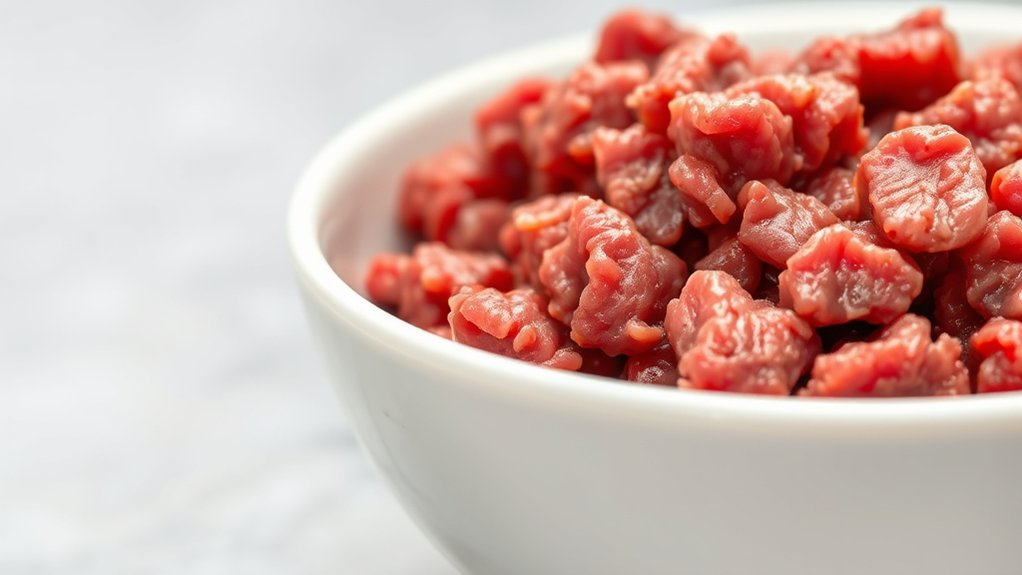
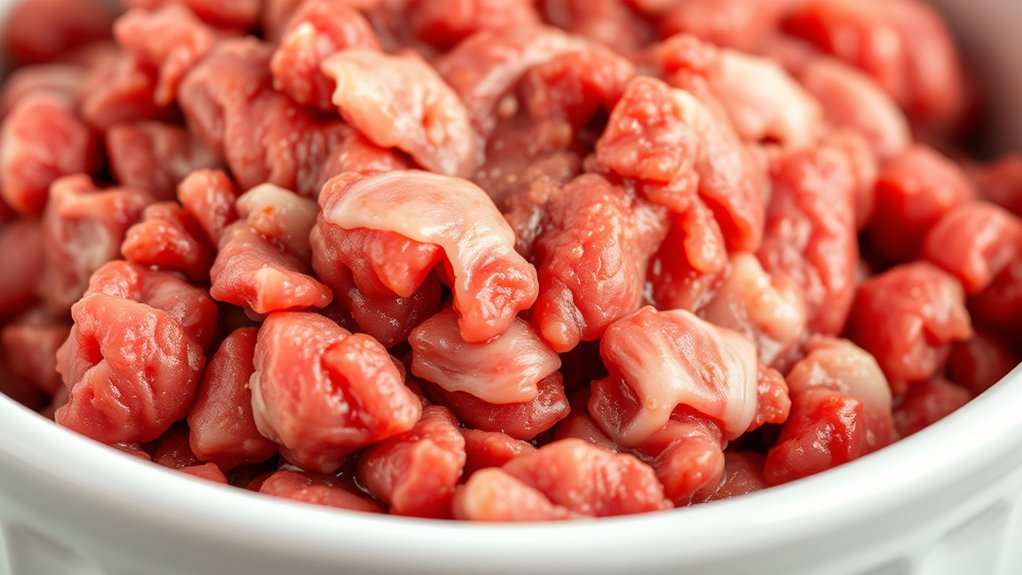
Ever wondered how many calories are in a cup of ground beef? A typical one-cup serving of cooked ground beef contains about 250 to 300 calories, depending on its fat content.
Leaner ground beef, like 90% lean, has fewer calories—closer to 200–220—while higher-fat versions can reach 340 calories or more. Keep in mind, cooking methods also influence calorie counts; draining excess fat reduces overall calories.
The size of your cup matters too—whether you’re measuring raw or cooked beef, it’ll impact the calorie estimate. Knowing these details helps you make better choices for your diet and meal planning.
What Factors Influence Ground Beef Calories?
Your ground beef’s calorie count is mainly influenced by its fat content and quality. Higher fat levels increase calories, while leaner options have fewer.
The meat’s source and processing also play a role in its overall caloric value.
Fat Content Variations
The fat content in ground beef plays a big role in how many calories it has. The more fat it contains, the more calories per cup. For example, 70% lean ground beef has more fat than 90% lean, so it delivers more calories.
Variations in fat levels depend on the meat cut used and how it’s processed. Ground beef labeled “lean” or “extra lean” usually has less fat, which means fewer calories. Some brands also trim excess fat, changing the overall calorie count.
When choosing ground beef, think about your dietary goals. Lower-fat options can help control calorie intake, while higher-fat versions offer more flavor but come with more calories. Knowing these differences can help you make better choices for your meal planning.
Meat Quality Differences
Different factors influence the calorie content of ground beef beyond just fat levels. Meat quality, including the cut and the animal’s diet, also plays a role. Higher-quality beef often has less connective tissue and marbling, which can slightly change the calorie count.
Grass-fed beef tends to be leaner than grain-fed options, affecting how many calories it has per serving. The age and breed of the animal are important too, as they influence fat content and overall calorie levels.
Here’s a quick overview:
| Factor | Effect on Calories | Explanation |
|---|---|---|
| Cut type | Varies | Leaner cuts have fewer calories |
| Grade | Higher grade, more marbling | More marbling raises calorie content |
| Feeding method | Grass-fed versus grain-fed | Grain-fed tends to be fattier |
| Animal breed | Different breeds, different fat | Some breeds are naturally leaner |
| Age of animal | Older animals, more fat | Leads to higher calorie content |
Which Types of Ground Beef Are Healthier?
Ever wondered which types of ground beef pack the most health benefits? Generally, leaner options like ground sirloin or 90% lean beef are healthier choices.
These cuts have less fat, which means fewer calories and saturated fats, helping your heart stay happy. Grass-fed ground beef often has more omega-3s and antioxidants like vitamin E, making it a nutritious pick.
If you’re watching your fat intake, go for ground beef labeled “extra lean” or “lean.” Avoid options with higher fat, like regular ground beef or 80% lean, unless your recipe calls for it.
Comparing labels is a smart way to choose healthier ground beef. Overall, picking lean, grass-fed, or organic options lets you enjoy ground beef while keeping your diet balanced and nutritious.
How Do Cooking Methods Impact Ground Beef Calories?
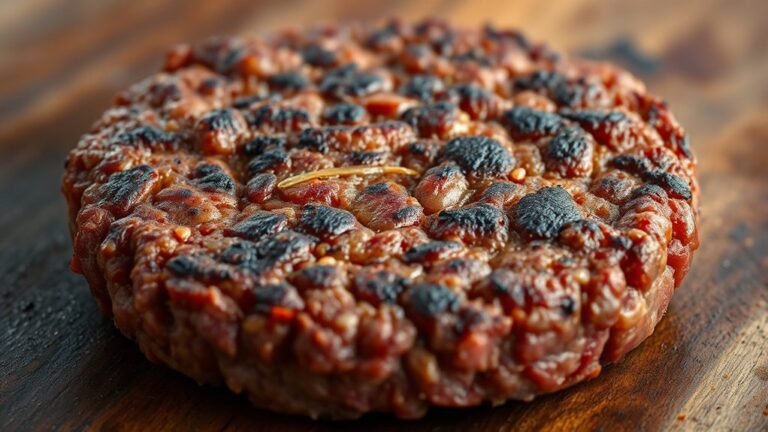
Cooking methods greatly influence the calorie content of ground beef, regardless of its lean level. When you fry or sauté ground beef in oil, you add extra calories from the fat, which increases the overall calorie count.
Grilling or broiling lets excess fat drip off, making the beef leaner and lower in calories. Boiling or simmering in water or broth keeps the calorie content close to raw since no extra fats are added.
Draining excess fat after cooking helps reduce calorie intake even more. On the other hand, cooking with added fats like butter or oil can significantly raise calorie levels.
How to Portion Ground Beef for Your Diet
To portion ground beef accurately, use proper measuring tools like a kitchen scale or measuring cups.
Adjust the serving size based on the fat content to keep your calorie intake in check.
Using portion control tools can help you stick to your diet goals effortlessly.
Proper Measuring Techniques
Accurately measuring ground beef helps you stick to your dietary goals and control portion sizes. Use a reliable kitchen scale for the best precision—just place the beef on it and note the weight.
For cup measurements, pack the ground beef loosely into a measuring cup without squeezing it, then level it off with a knife for accuracy. Avoid guessing or eyeballing, as that can lead to inconsistent portions.
If you’re measuring raw ground beef, consider dividing it into manageable portions beforehand. That way, you can easily grab the right amount later.
When cooking, keep in mind that weight and volume will change due to moisture loss. Starting with accurate raw measurements helps you better control calorie intake.
Proper measurement is key to staying on track with your diet.
Adjusting for Fat Content
Adjusting for fat content is essential when portioning ground beef to meet your dietary goals. Higher-fat ground beef has more calories per serving, so choosing leaner options can help control calorie intake.
If you’re aiming for a lower-calorie meal, opt for ground beef labeled 90% lean or higher. When portioning, remember that a 4-ounce cooked serving of lean ground beef has fewer calories than the same size portion of higher-fat beef.
You can also drain excess fat after cooking to cut calories even more. Keep in mind, the fat content affects not just calories but also flavor and texture, so balance your choices based on your taste and nutritional needs.
Adjusting for fat content helps you better manage your diet and reach your health goals.
Using Portion Control Tools
Using portion control tools makes it easier to stick to your dietary goals when preparing ground beef. Measuring your portions with tools like a food scale guarantees accuracy, helping you avoid overeating.
A digital scale lets you weigh exactly how much beef you need for each meal, giving you precise calorie counts. You can also use portion cups or measuring spoons to estimate serving sizes quickly.
Visual cues, like dividing a standard deck of cards or using your hand as a guide, can help if tools aren’t available. Consistently measuring your portions builds better awareness of serving sizes.
This makes it easier to control calorie intake over time. Incorporate these tools into your routine for more mindful eating and improved dietary tracking.
Tips to Enjoy Ground Beef Without Excess Calories
To enjoy ground beef without consuming too many calories, focus on healthier cooking methods and controlling your portions. Choose leaner cuts like sirloin or extra-lean beef, and drain any excess fat while cooking.
Use herbs, spices, and low-calorie seasonings instead of high-calorie sauces to add flavor. When serving, stick to proper portion sizes to avoid overeating. Cooking techniques like grilling, baking, or steaming help reduce added fats.
Here’s a quick guide:
| Preparation Method | Recommended Portion Size | Calories per Serving |
|---|---|---|
| Grilled Lean Beef | 3-4 ounces | ~150 calories |
| Baked Beef Patties | 4 ounces | ~180 calories |
| Steamed Beef | 3 ounces | ~140 calories |
| Stir-fried Beef | 3-4 ounces | ~200 calories |
Following these tips lets you enjoy flavorful ground beef without excess calories.
Are There Healthier Ground Beef Substitutes?
Are there healthier ground beef substitutes that can help you cut calories and reduce saturated fat? Yes, options like ground turkey or chicken are popular choices. They usually have less fat and fewer calories while still providing similar protein.
Plant-based alternatives, like lentil or mushroom-based grounds, are also great options for lowering saturated fat and boosting fiber. Fish, such as ground salmon or tuna, can be another nutritious substitute, offering healthy omega-3 fatty acids.
These alternatives not only cut calorie counts but also add variety to your meals. When choosing substitutes, check labels to ensure minimal added fats or fillers. Incorporating these options can help you enjoy flavorful dishes and support your health goals.
How to Read Ground Beef Nutrition Labels to Choose Leaner Options
Understanding how to read ground beef nutrition labels is key to picking leaner options that match your health goals. First, look for labels that say “lean” or “extra lean.” These signals mean lower fat content.
Check the percent fat listed, like 90% lean or 95% lean. The higher the percentage, the less fat there is. Focus on “Calories,” “Total Fat,” and “Saturated Fat” per serving to see how healthy it is.
Don’t forget to check the protein content too. Usually, more protein means a leaner choice. Also, read the ingredients list to make sure there are no added fillers or preservatives.
How to Track Ground Beef Calories for Meal Planning
Once you’ve learned to read ground beef labels and choose lean options, the next step is tracking your calories for better meal planning. Start by measuring your ground beef with a measuring cup or food scale for accuracy.
Check the nutrition label or use a reliable app to find out the calorie count per serving. Record how much you’re cooking, then calculate the total calories based on weight or volume.
Add this data to your daily food log or meal planner. Consistently tracking helps you stay on top of your calorie goals and makes it easier to balance your meals.
Over time, you’ll get a better sense of portion sizes and how ground beef fits into your overall nutrition plan.
Frequently Asked Questions
How Does Fat Content Affect Ground Beef Calorie Count?
Higher fat content in ground beef increases its calorie count because fat has more calories per gram than protein or carbs. When you choose ground beef with more fat, you’ll be consuming more calories per serving, which can affect your dietary goals.
On the other hand, leaner ground beef has fewer calories, making it easier to manage your intake. Always check labels or ask about fat percentages so you can make informed choices.
Are Organic Ground Beef Options Lower in Calories?
Organic ground beef isn’t necessarily lower in calories than conventional options. The calorie content mainly depends on the fat percentage, not whether it’s organic.
If you choose leaner ground beef, like 90% lean, you’ll consume fewer calories regardless of whether it’s organic. Always check the label for fat content to better estimate calories.
Organic just guarantees the beef comes from animals raised without synthetic additives or antibiotics, but it doesn’t automatically mean fewer calories.
Does the Breed of Cattle Influence Ground Beef Calories?
You are what you eat, so breed does influence ground beef calories. Different cattle breeds, like Angus or Hereford, have varying fat contents that affect calorie levels.
Leaner breeds produce ground beef with fewer calories, while breeds with more marbling have higher calorie counts. So, if you’re watching your intake, choose breeds known for lean meat.
Breed choice can make a big difference in the calorie content of your ground beef.
Can Leaner Ground Beef Still Be Flavorful?
Yes, leaner ground beef can still be flavorful. Just pick high-quality meat and season it well with herbs, spices, or marinades.
Cooking it properly, like searing to lock in juices, also boosts the flavor. Even with less fat, you can add moisture using ingredients like onions or tomato sauce.
With the right techniques, lean ground beef stays delicious and satisfying.
How Do Added Ingredients Impact Overall Calorie Content?
Added ingredients like oils, sauces, or cheese can really boost the calorie count of your ground beef dish. Even small amounts of these extras can add up quickly, making your meal more calorie-dense.
If you’re watching your calorie intake, try choosing healthier or low-calorie options like herbs and spices. They can add plenty of flavor without adding extra calories.
Always keep these additions in mind to help maintain a balanced, nutritious meal.
Conclusion
Remember, while a cup of ground beef can be full of flavor, it’s easy to overlook the calories hiding in its richness. Choosing leaner cuts and watching your portions can help you enjoy it without going overboard.
Just like a tasty meal can nourish your body, making informed choices about calories in ground beef keeps you on track. It’s not just about counting calories but balancing indulgence with wellness.
So enjoy your ground beef wisely, keeping an eye on the calories in 1 cup of ground beef, and stay mindful of your health goals.