How Long Should You Keep Beef in the Fridge Safely?
Are you tired of guessing how long your beef will stay fresh in the fridge? Many people struggle with knowing just how long raw or cooked beef is safe to eat, and it can be stressful trying to avoid spoiled meat.
You’re not alone—proper storage is key, and a little knowledge goes a long way.
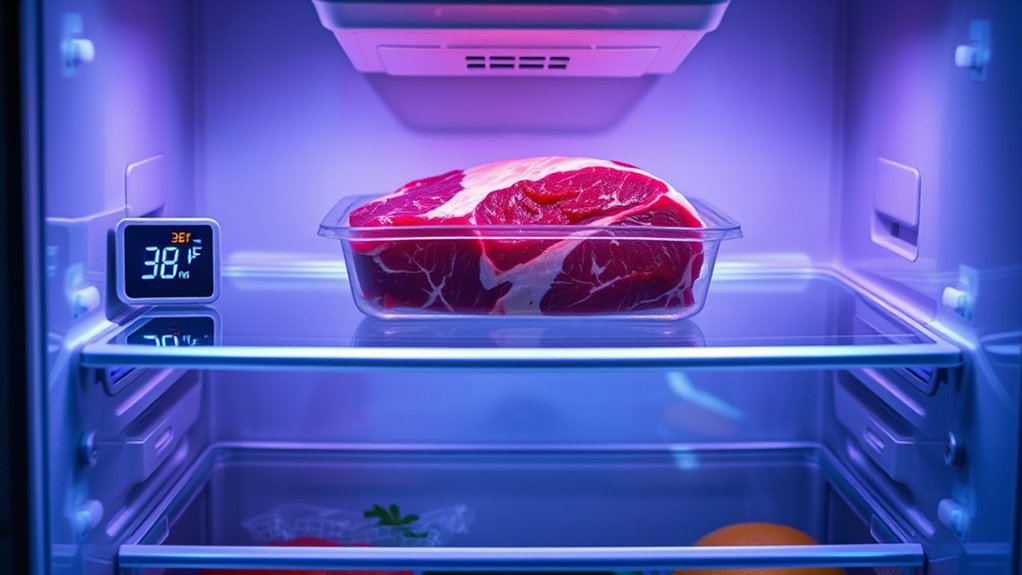
You should keep raw beef in the fridge for no more than 1 to 2 days at or below 40°F (4°C).
Cooked beef stays safe for about 3 to 4 days if stored properly in airtight containers. Be sure to check for signs of spoilage like foul odors, slimy textures, or discoloration before consuming.
To learn more about how to keep beef fresh and safe longer, keep going to find helpful tips and guidelines.
Key Takeaways
– Raw beef should be cooked or frozen within 1-2 days of purchase.
That way, you’re ensuring it’s still fresh and safe to eat.
Cooked beef can be stored safely in the fridge for 3-4 days.
Just make sure your fridge temperature stays at or below 40°F (4°C).
Keep an eye out for signs of spoilage, like a bad smell, sliminess, or discoloration.
If you notice any of these, it’s best to discard the beef.
Always check the storage timeframes and spoilage signs before consuming.
Better safe than sorry!
How Long Is Raw Beef Safe to Store in the Fridge?
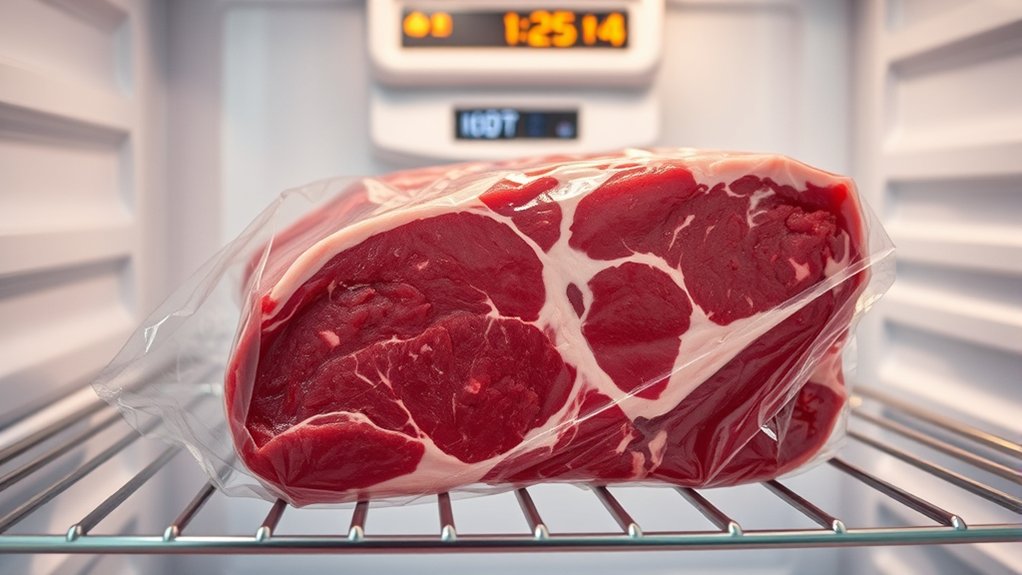
If you’re wondering how long raw beef stays safe in the fridge, it’s important to know that generally, it should be cooked or frozen within 1 to 2 days of purchase.
Bacteria can grow quickly at fridge temperatures, so leaving raw beef longer increases the risk of spoilage and foodborne illness.
If you don’t plan to cook it within this time frame, freezing the beef is your best option to preserve freshness.
Make sure your fridge is set at or below 40°F (4°C) to slow bacterial growth.
Always check for signs of spoilage like an off smell, slimy texture, or discoloration before cooking or consuming.
Staying within this window keeps your beef safe and maintains its quality.
The Best Ways to Store Cooked Beef Safely
To keep cooked beef safe, use airtight containers to prevent bacteria growth and keep flavors fresh. Make sure your fridge stays at or below 40°F (4°C) to slow spoilage.
Proper storage methods help ensure your leftovers stay safe to eat longer. Following these tips can make a big difference in keeping your beef tasty and safe.
Proper Container Usage
Choosing the right container is key for storing cooked beef safely and keeping its quality intact. Use airtight containers or resealable plastic bags to keep air out, which can cause spoilage and drying.
Glass or BPA-free plastic containers with tight-fitting lids are best because they seal well and won’t absorb odors. Make sure the container is clean and dry before storing the beef to prevent bacterial growth.
Portion the cooked beef into smaller servings so you only reheat what you need. Label the container with the date to keep track of freshness.
Avoid using flimsy or cracked containers that might leak or break. Proper container use helps preserve flavor, prevent cross-contamination, and extend your fridge’s safe storage time.
Ideal Storage Temperature
Maintaining the proper storage temperature is essential for keeping cooked beef safe and fresh. You should keep cooked beef between 40°F (4°C) and 140°F (60°C) to prevent bacterial growth.
The refrigerator’s ideal temperature is at or below 40°F (4°C). Use a reliable thermometer to monitor it regularly. Proper cooling and refrigerating quickly also help.
Here’s a quick guide:
| Storage Method | Temperature Range |
|---|---|
| Refrigerator | 33°F to 40°F (0.5°C to 4°C) |
| Freezer | 0°F (-18°C) or lower |
| Hot Holding | Above 140°F (60°C) |
| Thawing | Below 40°F (4°C) |
| Serving | 140°F (60°C) or higher during serving |
Keeping your fridge at the right temperature guarantees cooked beef stays safe longer.
How to Tell If Your Beef Has Gone Bad
How can you tell if your beef has gone bad? First, check the smell. If it has a sour, rotten, or off-putting odor, it’s a clear sign it’s spoiled. Next, look at the color. Fresh beef should be bright red or pink. If it’s turned brown, gray, or greenish, that’s a warning.
Examine the texture. Slimy, tacky, or sticky surfaces indicate bacterial growth. Also, think about how long it’s been in the fridge. If it’s over 3 to 5 days, it’s safer to discard it. Remember, your senses are your best tools for telling if beef is still good.
When in doubt, it’s better to throw out questionable beef. This helps you avoid foodborne illness and stay safe.
What Happens to Beef When You Freeze It?
When you freeze beef, it slows down bacterial growth, helping it stay safe longer.
Over time, the texture can change and become less tender. But its nutritional value mostly stays the same.
Freezing is a practical way to extend shelf life without sacrificing quality if you do it properly.
Freezing Slows Bacterial Growth
Freezing beef effectively slows down bacterial growth, helping to preserve its freshness for longer periods. When you freeze beef, the low temperatures inhibit the activity of bacteria and enzymes that cause spoilage and foodborne illnesses.
This means that, although it doesn’t kill bacteria, it puts them into a dormant state, preventing them from multiplying quickly. Proper packaging and maintaining a consistent freezer temperature (around 0°F or -18°C) are vital to maximize freshness and prevent freezer burn.
Keep in mind, once you thaw the beef, bacteria can become active again, so plan to cook it promptly. Freezing is a safe and effective way to extend shelf life, but it’s important to follow guidelines for storage duration and handling.
- Bacteria become dormant at freezing temperatures
- Freezing prevents rapid bacterial multiplication
- Maintaining consistent freezer temp is essential
- Thawed beef must be cooked soon after defrosting
Texture Changes Over Time
Freezing beef causes noticeable changes in its texture, which can affect how it feels when cooked or eaten. When beef is frozen, ice crystals form inside the muscle fibers, breaking them down. This can make the meat feel softer or sometimes slightly mushy after thawing.
Over time, the texture can get worse, leading to dryness or a crumbly feel. To give you an idea, here’s how different freezing durations impact beef:
| Freezing Duration | Texture Impact | Best Use Recommendations |
|---|---|---|
| 1-3 months | Slightly softer, firm | Ideal for steaks |
| 3-6 months | Mushier, less firm | Suitable for stews |
| 6+ months | Dry, crumbly | Best for ground beef |
Storing beef properly helps minimize these unwanted texture changes.
Preserves Nutritional Value
While freezing can change the texture of beef over time, it usually keeps most of its nutrients if done properly. Freezing slows down enzyme activity and bacterial growth, helping to preserve protein, iron, and zinc.
Proper packaging prevents freezer burn and nutrient loss. Keep the beef at a steady 0°F (-18°C) to maintain its nutritional quality. Some vitamins, like B vitamins and antioxidants, may degrade over time, but overall, the nutrition stays high if frozen correctly.
Freezing is a great way to extend beef’s shelf life without losing much of its nutrients. It helps maintain high protein levels and preserves essential minerals.
Using proper packaging also minimizes vitamin loss and prevents bacterial growth and spoilage. So, with good freezing practices, beef remains nutritious and safe to enjoy later.
Packaging Tips to Keep Beef Fresh Longer
Proper packaging is essential for keeping beef fresh longer in your fridge. Wrap it tightly in plastic wrap or aluminum foil to reduce exposure to air, which causes spoilage. For added protection, place the wrapped beef in an airtight container or resealable plastic bag to prevent odors from seeping in or out. Labeling the package with the date helps you keep track of freshness.
| Packaging Method | Benefits |
|---|---|
| Plastic Wrap | Keeps moisture in and prevents air exposure |
| Aluminum Foil | Good for short-term storage and provides a snug fit |
| Airtight Container | Maintains freshness and prevents odors |
Using proper packaging techniques extends beef’s shelf life and helps preserve its quality.
Common Mistakes That Shorten Beef’s Shelf Life
One common mistake that shortens beef’s shelf life is leaving it exposed to air for too long. When beef isn’t properly wrapped, bacteria can grow faster, and the meat can dry out or spoil sooner.
Storing beef at incorrect temperatures or keeping it beyond its recommended time also speeds up spoilage. Using the wrong packaging or not sealing it tightly lets moisture escape and increases the risk of contamination.
Ignoring these practices can lead to waste and potential foodborne illnesses.
- Leaving beef uncovered in the fridge
- Storing beef at temperatures above 40°F (4°C)
- Not wrapping beef tightly or using improper containers
- Keeping beef past its expiration or recommended storage time
Meal Planning Tips to Reduce Beef Waste and Keep It Safe
Effective meal planning can greatly reduce beef waste and ensure your meat stays safe to eat. Start by buying only what you need for the week to avoid excess.
Divide large cuts into smaller portions and freeze what you won’t use immediately, labeling each with the date. Plan your meals around your beef so you use it within safe timeframes, minimizing leftovers that might spoil.
Consider batch cooking and portioning meals, which helps you avoid unnecessary thawing and refreezing. Keep track of your beef’s storage duration, and rotate your stock so older meat gets used first.
Frequently Asked Questions About Beef Storage
Have questions about how long beef stays good in the fridge? It’s common to wonder about storage times and safety. To keep your beef fresh and safe, follow guidelines closely. Proper storage prevents spoilage and foodborne illnesses.
Here are some common questions:
- How long can I keep raw beef in the fridge?
- Can I freeze cooked beef?
- What signs indicate beef has gone bad?
- How should I store beef to maximize freshness?
Frequently Asked Questions
Can I Eat Beef After the Expiration Date if It Looks Okay?
You shouldn’t eat beef after its expiration date, even if it looks okay. The date is there to show safety, not just freshness.
Visual checks and smell can be misleading because bacteria might still be present.
Eating spoiled beef can lead to food poisoning, which is serious.
When in doubt, it’s better to throw it out. Trust your senses, but remember, expiration dates are there to keep you safe.
Better safe than sorry with perishable foods like beef.
How Does Temperature Affect Beef’s Shelf Life in the Fridge?
Think of temperature as the secret gatekeeper for your beef’s freshness. When you keep the fridge at or below 40°F (4°C), it slows down bacterial growth and extends your beef’s safe life to about 3-5 days.
But if the fridge runs warmer, bacteria become more active. That means your beef’s window for safe enjoyment shrinks. Keep it cool, and your beef stays fresher longer.
Is It Safe to Refreeze Thawed Beef?
Yes, it’s safe to refreeze thawed beef if you’ve thawed it in the refrigerator and it hasn’t been left out at room temperature for more than two hours.
Make sure to do it promptly because prolonged exposure to warmth can lead to bacteria growth. When refreezing, try to do it quickly to preserve the beef’s quality.
Keep in mind, refreezing may affect the texture of the beef but it won’t make it unsafe if you’ve handled it properly.
What’s the Ideal Fridge Temperature for Storing Beef?
Think of your fridge as a chilly fortress protecting your beef. Keep the temperature at or below 40°F (4°C) to keep bacteria at bay.
Use a reliable thermometer to monitor this, as even a slight rise can turn your beef into a risky venture.
Maintaining this cool climate guarantees your meat stays fresh and safe, like a well-guarded treasure awaiting your next delicious meal.
How Can I Prevent Cross-Contamination With Raw Beef?
To prevent cross-contamination with raw beef, always store it on the bottom shelf of your fridge. This way, drips won’t fall onto other foods.
Use separate cutting boards and utensils for raw meat. Be sure to wash your hands thoroughly after handling it.
Keep raw beef in sealed containers or plastic bags. And clean any surfaces or spills immediately to stay safe.
Conclusion
By following these beef storage tips, you’ll keep your meat fresh as a daisy and safe from any lurking bacteria. Proper storage isn’t just a small detail—it’s the superhero cape that keeps your meals safe and delicious.
Don’t let your beef turn into a culinary catastrophe. Treat it right, and it’ll serve you well, saving you from a kitchen nightmare.
Remember, how long you keep beef in the fridge matters. Generally, raw beef should be stored for no more than 3 to 5 days to stay safe and fresh.
Keep your fridge at or below 40°F (4°C) to prevent bacteria growth. Always store beef on the bottom shelf to avoid drips contaminating other foods.
Use airtight containers or wrap the beef tightly with plastic wrap or foil. This helps keep it fresh longer and prevents odors from spreading.
By following these beef storage tips, you’ll maintain the quality and safety of your meat. Your fridge will be a fortress of freshness, and your meals will turn out perfect every time.