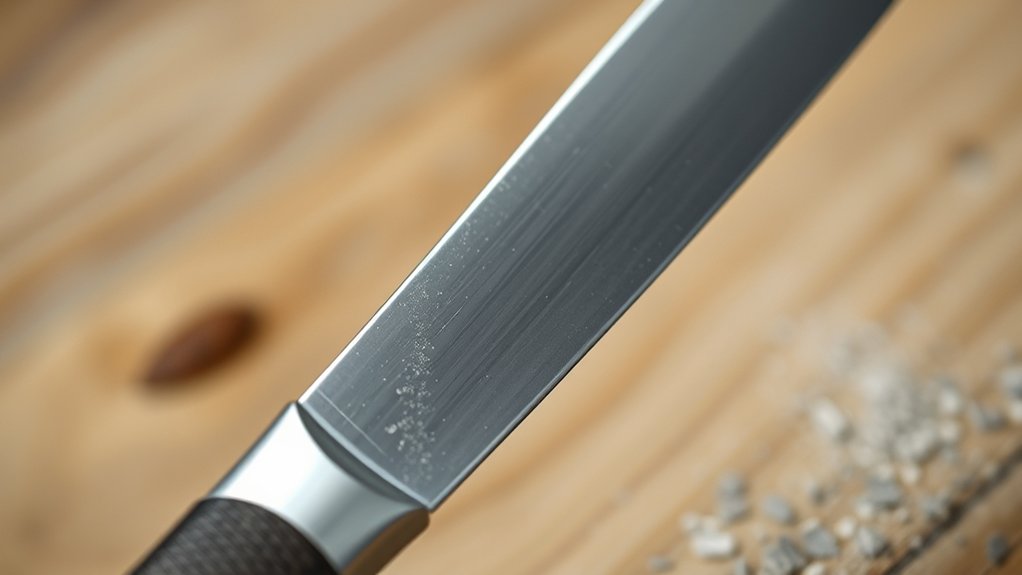
Mastering the Art of Sharpening Kitchen Knives With a Rod
Many home cooks find sharpening their kitchen knives to be a frustrating challenge. You’re not alone—many people struggle with keeping their blades sharp and safe to use.
Luckily, mastering the art of sharpening with a rod can make a big difference.
To master sharpening your kitchen knives with a rod, focus on honing regularly to realign microscopic edges, preventing dullness and damage. Choose the right rod (ceramic, steel, or diamond-coated) based on your needs, and hold your knife at the correct angle, using gentle pressure.
Avoid common mistakes like rushing or uneven strokes. With practice and proper maintenance, you’ll improve your technique.
Keep going, and you’ll uncover all the tips to achieve perfect, safe cuts every time.
Key Takeaways
- Choose the right honing rod material and size based on your knife type and your experience level.
- Keep your honing angles around 15-20 degrees for the best realignment.
- Use both coarse and fine grit rods in sequence to keep your blade in top shape.
- Don’t forget to clean and store your honing rod regularly. It helps keep it safe to use and lasts longer.
- Remember, honing and sharpening are different. Knowing the difference helps you properly maintain your knife’s sharpness and performance.
Why Honing Is Essential for Maintaining Sharp Knives
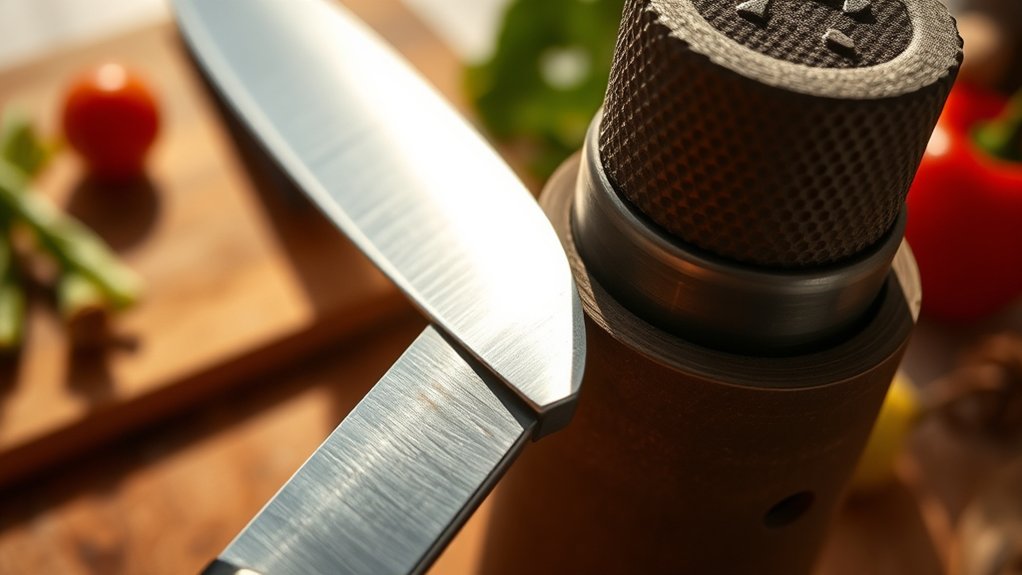
Honing is an essential step in keeping your knives performing their best, even when they still feel sharp to the touch. It realigns the microscopic edges on your blade, preventing tiny bends and dents from forming.
When you hone regularly, your knife maintains a consistent edge, making cutting smoother and safer. Without honing, your blade can become dull faster, which means you’ll need to sharpen more often.
Honing doesn’t remove metal like sharpening does; it simply restores the edge’s proper alignment. This process is quick and easy, fitting seamlessly into your routine.
How to Choose the Right Honing Rod for Your Needs
Choosing the right honing rod depends on the material, durability, and your knife’s specific needs.
You’ll also want to consider the rod’s length and flexibility to match your comfort and the size of your knives.
Plus, understanding the difference between coarse and fine grits helps you pick the best option for keeping your edges sharp.
Material Options and Durability
Selecting the right honing rod depends largely on the material it’s made from, as different options offer varying levels of durability and effectiveness. Ceramic rods are popular because they’re hard and maintain their edge well, but they can chip if used improperly.
Steel rods are durable and serve as excellent guides for realigning your blade’s edge, though they don’t remove metal as effectively as other materials. Diamond-coated rods are incredibly tough and can quickly straighten dull edges, making them ideal for frequent use.
In contrast, softer steel rods may wear out faster but can be more forgiving for beginners. Consider how often you’ll sharpen your knives and the type of maintenance you prefer—this will help determine the best material choice for your needs.
Rod Length and Flexibility
The length and flexibility of your honing rod are key factors in getting a precise and comfortable sharpening experience. A longer rod gives you more control, especially for larger knives, helping you keep consistent angles.
Shorter rods are easier to handle for smaller knives and tight spaces, but they require more effort to stay steady. Flexibility is important too—stiffer rods offer stable, precise honing for quick touch-ups, while more flexible rods work better on curved blades or delicate edges.
Choose a rod length that matches your knife collection and how comfortable you are with sharpening. Flexibility should align with your skill level so you can maintain proper angles without using too much force.
Picking the right combo helps you sharpen efficiently and keeps your knives protected.
Coarse vs. Fine Grits
Regarding honing rods, understanding the difference between coarse and fine grits is essential for achieving the ideal results. Coarse rods, usually with grit numbers around 200-300, are perfect for quickly realigning a dull or damaged edge.
They remove metal faster but can leave a rough finish if used excessively. Fine grit rods, typically 600 or higher, polish the edge and refine it for sharper, smoother cuts.
If your knife is already sharp but needs a quick realignment, a coarse rod works best. For maintaining a keen edge and honing regularly, a fine rod is the better choice.
Sometimes, using both in sequence provides the best combination: start with coarse to fix major dullness, then switch to fine to finish. Choose based on your knife’s condition and your sharpening goals.
How to Properly Hold Your Knife and Honing Rod
Holding your knife and honing rod correctly is key to sharpening effectively and staying safe. A proper grip helps you stay in control and get the best results from your honing.
When holding your knife, grip the handle firmly but comfortably, keeping your fingers away from the blade’s edge. For the honing rod, grasp it securely at the base or handle to stay stable.
Remember these key points:
- Feel confident and in control with a firm grip on both tools
- Keep your fingers curled away from the sharp edge
- Maintain a steady, consistent angle for the best results
Mastering how to hold your tools properly makes honing safer, more efficient, and more satisfying. It gets you closer to a razor-sharp, professional finish.
Step-by-Step: How to Hone Your Kitchen Knives Correctly
Choosing the right honing rod is key to getting good results. Making sure you keep the correct angle helps your knife stay sharp.
Keep your strokes steady and controlled. This way, you can evenly hone the edge without risking damage to the blade.
Focus on these tips, and you’ll hone your knives safely and efficiently.
Proper Rod Selection
Selecting the right honing rod is key to keeping your kitchen knives sharp and effective. When choosing one, think about the material, grit, and size to match your knives and skill level.
A ceramic rod gives a fine, durable surface that’s great for regular honing. A steel rod, on the other hand, offers quick and effective realignment of the edge.
The grit level affects how aggressive the honing feels—finer for delicate blades, coarser for duller ones. Make sure the length comfortably fits your knives to ensure even contact.
Picking the right rod makes you feel confident in maintaining sharp edges every day. It’s satisfying to make precise, effortless cuts.
Plus, caring for your knives properly protects your investment in quality tools.
Correct Angle Maintenance
Maintaining the correct angle while honing your knives is key to keeping a sharp, effective edge. It’s important to keep the blade at a consistent angle against the honing rod to avoid dulling or damaging it.
Usually, the ideal angle is between 15° and 20°, depending on your knife type. To help, here’s a simple guide you can follow:
| Knife Type | Recommended Angle | Tips |
|---|---|---|
| Western Chef’s | 20° | Use steady, gentle pressure |
| Asian Santoku | 15° | Keep the angle consistent |
| Paring Knives | 15°–20° | Focus on smooth, controlled motion |
Stay mindful of your angle, adjust as needed, and keep it steady for the best honing results.
Steady, Controlled Motion
To hone your knives effectively, focus on smooth, controlled motions along the honing rod. Keep your movements steady to ensure even contact and consistent sharpening. Rushing or jerking can damage the blade or create uneven edges.
Maintain a firm grip on both the knife and the rod, and move with purpose. Each deliberate stroke helps build a sharper, safer blade. Trust the process and stay confident in your control.
Feel the satisfaction of a blade that slices effortlessly. Enjoy the pride that comes with mastering this essential kitchen skill.
Common Mistakes to Avoid When Honing Your Knife
Honing your knife correctly is essential, but it’s easy to make mistakes that can damage the blade or reduce its effectiveness. One common mistake is applying too much pressure, which can bend or chip the edge instead of smoothing it. Always use a light, controlled touch.
Another error is honing at the wrong angle; sticking to the proper angle guarantees effective realignment. Moving the rod unevenly or rushing through the process also lessens results and can cause uneven wear. Moreover, neglecting to clean the rod regularly can transfer debris to your blade, dulling it faster.
Finally, honing too frequently or not enough can hinder your knife’s performance. Focus on proper technique, consistent angles, and gentle pressure to keep your knife sharp and in top condition.
How Often Should You Hone Your Knives?
How often you should hone your knives depends on how often you use them and how quickly they start to dull.
If you’re cooking every day and notice the blade isn’t cutting as smoothly, it’s a good idea to hone more often.
Knowing the right timing helps keep your knives sharp without overdoing it, so they perform their best.
Frequency Based on Use
The frequency with which you should hone your knives depends largely on how often you use them. If you cook daily, honing every few days helps keep your blades in top shape. For those who cook less often, once a week might be enough. Remember, honing realigns the edge, not removes metal like sharpening does.
Regular honing keeps your knife’s performance sharp and reduces the need for more aggressive sharpening. Consider honing when your cuts start to feel less smooth or your knife feels less responsive during prep. It’s also a good way to extend the lifespan of your blades.
Staying consistent with honing can really improve your cooking experience. It helps ensure your knives stay sharp and effective with less effort, making food prep safer and more enjoyable.
Signs of Dullness
A dull knife often shows itself through your cutting experience. You might need more effort, notice slipping, or see uneven cuts.
Foods may crush instead of slice cleanly, and you could feel more hand fatigue. If your knife struggles with tomatoes or herbs, it’s time to hone.
Use this table to spot other signs:
| Sign | Effect on Cutting | When to Hone |
|---|---|---|
| Increased effort | More force needed | After 8-12 uses or weekly |
| Food crushing | Poor slice quality | When cutting feels harder |
| Slipping or slipping | Reduced control | When resistance becomes noticeable |
| Uneven or ragged cuts | Lack of precision | When cuts aren’t smooth |
Stay aware of these signs to keep your knife performing at its best.
Optimal Hone Timing
Recognizing when to hone your knives is key to keeping them sharp and performing well. Regular honing helps keep blades aligned, making slicing easier and safer.
How often you hone depends on your use. Daily cooks might do it every few days, while occasional users may only need to hone weekly. Watch for signs like more effort when cutting or a dull feel—that’s your cue to hone.
Remember, honing is a quick fix that restores your knife’s edge without removing metal. Feel the frustration of dull blades slowing you down? Or the joy of effortless chopping? Hone regularly to keep your blades sharp, safe, and ready for any culinary challenge.
Stay attentive to your knives’ needs and keep them in top shape.
Signs Your Knife Needs More Frequent Honing
Ever wonder when your knife needs more frequent honing? You’ll notice it’s time if your cuts start to feel less smooth or require more pressure. Dull knives often cause tearing instead of clean slicing, making prep work frustrating.
If you see tiny burrs or rough edges along the blade’s edge, it’s a sign honing is overdue. Also, if your knife struggles to glide effortlessly through foods like tomatoes or bread, it indicates a need for more frequent honing sessions.
You might feel increased resistance or hear a dull scrape when cutting. These signs show your blade’s edge is losing its alignment, and honing can quickly restore its sharpness. Regular honing maintains performance and prevents the need for frequent sharpening.
Honing vs. Sharpening: What’s the Difference?
Have you ever wondered how honing and sharpening differ in maintaining your knife’s edge? Honing realigns the microscopic teeth on your blade, keeping it smooth and effective during regular use. It doesn’t remove material but restores the edge’s true position.
Sharpening, on the other hand, is more aggressive. It actually grinds away metal to create a new, sharper edge.
Feel the difference when you:
- *Save time and effort with a quick honing session before cooking.*
- *Experience the confidence of a razor-sharp knife through proper sharpening.*
- *Maintain your knife’s longevity, knowing you’re caring for it correctly.*
Understanding these differences helps you keep your knives in top shape, making every cut safer and more precise.
Tips to Keep Your Honing Rod in Top Condition
To keep your honing rod performing at its best, regular maintenance is essential. First, clean it after each use with warm water and a gentle brush to remove metal shavings and debris. Avoid abrasive cleaners or steel wool that can damage the surface.
Clean your honing rod after each use with warm water and a gentle brush to maintain its effectiveness.
Dry the rod thoroughly to prevent rust or corrosion, especially if it’s made of steel. Periodically check for nicks, cracks, or uneven wear. If you notice any, consider replacing the rod.
Store it in a dry, safe place, ideally upright or in a protective sleeve to prevent damage. If your rod has a textured surface, lightly sanding it with fine-grit sandpaper can remove buildup and restore smoothness.
Proper care guarantees your honing rod remains effective and extends its lifespan.
Troubleshooting: What to Do When Your Knife Isn’t Improving
When your knife isn’t improving despite regular sharpening, it’s important to look for the real cause rather than just repeating the process. Sometimes, the problem isn’t the rod or your technique but the blade itself.
Check for deep nicks, chips, or uneven edges that a rod alone can’t fix. It might also be dull because of a damaged or worn-out edge, which needs professional sharpening.
Make sure you’re sharpening at the correct angle and staying consistent. Improper angles can prevent your knife from getting sharper, no matter how often you sharpen it.
Consider these common issues: blade damage that needs professional repair, incorrect sharpening angles or inconsistent technique, and worn-out or misaligned honing rods.
Frequently Asked Questions
Can Honing Extend the Lifespan of My Kitchen Knives?
Yes, honing can extend the lifespan of your kitchen knives. When you hone, you realign the tiny edges of the blade, keeping it sharp and effective.
This helps prevent damage and reduces how often you need to sharpen or replace your knives. Regular honing, especially before or after use, keeps them performing well.
It’s a simple and cost-effective way to keep your knives in top shape and prolong their overall life.
Is It Safe to Hone Knives With a Ceramic Rod?
Yes, honing your knives with a ceramic rod is safe when done correctly. The sharp, brittle ceramic reminds you of delicate beauty, like a fragile crystal, so you’re cautious.
Use gentle pressure and a consistent angle to avoid chipping or damaging the blade. When you hone properly, it preserves your knife’s edge and keeps it safe to use.
This gives you peace of mind and confidence in your kitchen skills.
How Does Honing Compare to Professional Sharpening?
Honing keeps your knife’s edge aligned, making it feel sharper and more precise during regular use.
Professional sharpening, however, involves removing metal to reshape the blade entirely, restoring a dull or damaged edge.
While honing is quick and easy to do at home, professional sharpening offers a deeper, more thorough refresh.
Ideally, you should hone frequently and get your knives professionally sharpened when they become noticeably dull.
Can I Hone Serrated Knives Effectively?
You can’t effectively hone serrated knives with a rod because their scalloped edges are designed to cut differently than straight blades.
Hone serrated knives by carefully running a gentle, specialized tool like a ceramic or tapered honing rod through each scallop.
Or, better yet, have a professional sharpen them.
Honing straight knives realigns the edge, but serrated blades need more precise sharpening to keep their cutting performance.
What Are the Environmental Impacts of Different Honing Rods?
Imagine a shimmering honing rod, its surface glinting under your kitchen light. Different honing rods impact the environment in various ways.
Ceramic rods often come from non-renewable materials, which can produce more waste. Diamond-coated rods involve mining, which can harm ecosystems and deplete natural resources.
Steel rods, especially those made from recycled metals, are generally more eco-friendly. Choosing sustainable options and responsibly disposing of old or damaged rods helps reduce your culinary footprint.
Conclusion
So, you’ve mastered honing, and your knives are sharper than ever. Yet, somehow, slicing that elusive tomato still feels like a battle. Irony strikes: all that effort keeps your blades so finely tuned that you might forget how dull they once were.
Keep honing, stay vigilant, and enjoy the irony that the sharper your knives get, the more you’ll appreciate the simple joy of effortlessly perfect cuts. Mastering the art of sharpening your kitchen knives with a rod really makes all the difference. Happy honing!