What Should the Internal Temp of Beef Brisket Be?
Cooking a perfect beef brisket can feel like an endless puzzle, especially when you’re aiming for that tender, juicy bite. You’re not alone—many barbecue enthusiasts struggle to get it just right.
The key is hitting the right internal temperature, and knowing exactly when to pull it off the heat.
For perfect brisket, aim for an internal temperature between 195°F and 205°F. This range guarantees the collagen breaks down, making the meat tender and juicy.
It’s best to use a reliable meat thermometer to check the temperature in the thickest part of the meat. Waiting until it reaches this zone will give you a deliciously moist result.
Keep exploring to learn how to hit that target perfectly every time.
Key Takeaways
- The ideal internal temperature for brisket is between 195°F and 205°F for the best tenderness.
- Make sure to use a reliable meat thermometer to keep an eye on the temperature during cooking.
- Once it hits the target range, let the brisket rest for about 30 minutes. This helps lock in the juices and keeps it moist.
- Keep in mind that different parts of the brisket, like the flat and the point, have slightly different ideal temperatures. The flat is best at 190°F to 200°F, while the point should be cooked to 200°F to 205°F.
- Avoid cooking beyond 205°F, as that can make the meat dry. It’s best to take it off the heat within the recommended temperature range.
What Is the Ideal Internal Temperature for Brisket?
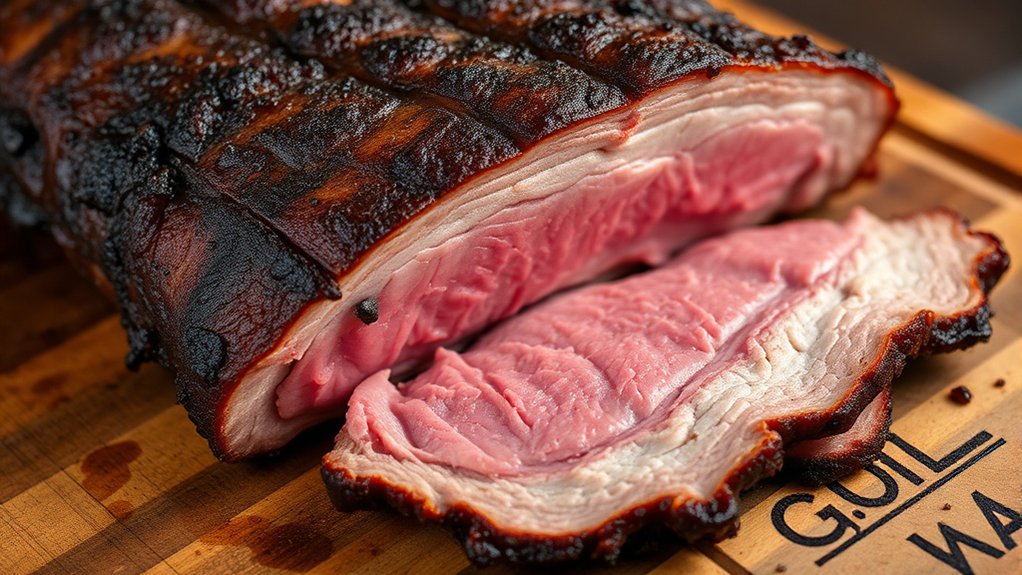
Have you ever wondered what the perfect internal temperature for brisket is? The ideal range is between 195°F and 205°F. When your meat hits this temperature, it’s tender enough to slice easily and keeps its juices well.
You want to cook it low and slow, allowing the collagen to break down completely. That’s what makes the brisket melt-in-your-mouth tender. If you pull it too early, it’ll be tough and chewy.
Wait until the internal temp reaches at least 195°F, and ideally around 200°F for maximum tenderness. Be sure to use a reliable meat thermometer for accuracy.
Understanding How Temperature Affects Meat Tenderness
Understanding how temperature affects meat tenderness is key to cooking a perfect brisket. As the meat heats up, collagen starts to break down, which makes the brisket more tender.
When you cook it low and slow, the muscle fibers relax, and the connective tissues dissolve, giving you a juicy, tender piece of meat. If you cook it too hot or too quickly, the proteins tighten up, making the meat tougher.
The goal is to reach the right internal temperature, usually around 195°F to 205°F, where collagen turns into gelatin. Keeping a steady, controlled temperature ensures even cooking and the best tenderness.
Different Types of Brisket: Point vs. Flat – What Are the Temperatures?
While both the point and flat are essential parts of a brisket, they cook differently and reach perfect temperatures at different times. The flat, being leaner, cooks relatively evenly and is best pulled at around 190°F to 200°F for tenderness.
The point, which has more fat marbling, can handle slightly higher temperatures, often between 200°F and 205°F, to break down connective tissue thoroughly. The fat in the point helps keep it moist and flavorful, so it might take a bit longer to reach the ideal temperature.
Keep in mind that cooking times vary, and internal temperature is the best guide to ensure each part reaches the perfect tenderness for slicing or shredding.
How to Measure Brisket Temperature Accurately
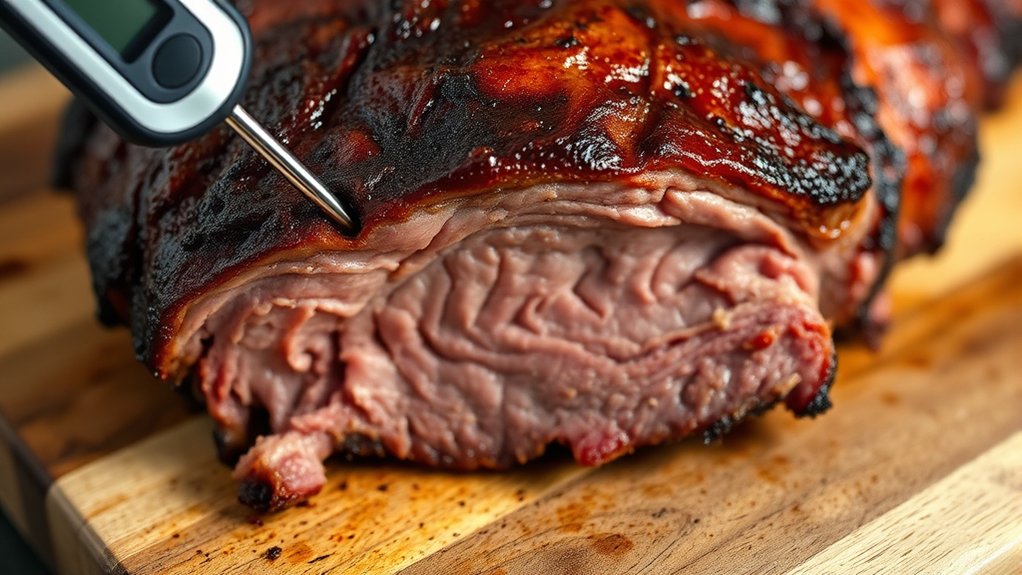
To guarantee your brisket reaches the perfect tenderness, measuring its internal temperature accurately is key. Use a reliable digital meat thermometer with a probe that can withstand high heat.
Insert the probe into the thickest part of the brisket, avoiding fat or bones, for a true reading. Do this while the meat is still on the smoker or oven, but make sure the probe doesn’t touch the cooking surface.
Wait a few seconds for the thermometer to stabilize before recording the temperature. For the best results, check in multiple spots if the brisket has uneven thickness.
Keep the thermometer steady to avoid inaccurate readings. Proper measurement ensures you cook the brisket to the right internal temp, preventing undercooking or overcooking.
Target Temperatures for Perfectly Cooked Beef Brisket
To get your brisket just right, aim for an internal temperature between 195°F and 205°F. Keep in mind, resting the meat allows the temperature to even out and improves tenderness.
Knowing these target temps helps you cook brisket to achieve the perfect balance of juiciness and softness.
Ideal Internal Temperature Range
Achieving the perfect beef brisket starts with monitoring its internal temperature closely. For tender, flavorful meat, aim for an internal temperature between 195°F and 205°F. This range allows collagen to break down, resulting in juicy, melt-in-your-mouth meat.
If you’re looking for a slightly firmer bite, target around 190°F. Just don’t go much lower or higher, or you might end up undercooking or drying out the brisket.
Use a reliable meat thermometer inserted into the thickest part of the meat for accurate readings. Remember, every brisket is different, so these temperatures are just guidelines.
Consistently checking the internal temp guarantees you hit that perfect spot for tenderness and flavor every time.
Resting Temperature Effects
Resting your brisket after cooking is super important because the temperature keeps rising a bit during this time, called carryover cooking. This can add about 5 to 10°F and helps the meat reach just the right doneness.
If you cut into it too soon, all those tasty juices will escape, leaving the meat dry and less flavorful. During resting, the internal temperature stays steady, and the muscle fibers relax, so they can reabsorb moisture.
This whole process makes sure your brisket stays juicy and tender. To get the best results, keep the meat wrapped and let it rest for around 30 minutes.
That pause allows the flavors to settle and makes sure the internal temperature hits its perfect final point. Proper resting is key to getting a consistently delicious, well-cooked brisket.
Temperature for Tenderness
Reaching the ideal internal temperature is key to making your brisket tender and flavorful. For the best results, aim for an internal temperature between 195°F and 205°F.
At this range, the collagen in the meat breaks down fully, turning into gelatin and giving your brisket that melt-in-your-mouth feel. Cooking it too low keeps the meat tough, while too high can make it dry and crumbly.
Use a reliable thermometer to keep an eye on the temperature, especially towards the end. Once it hits your target, let it rest so the juices can redistribute.
Getting the temperature right guarantees a brisket that’s both tender and juicy, making every bite satisfying.
How Internal Temperature Influences Flavor and Bark Development
As your brisket heats up, the internal temperature influences its flavor by activating different enzymes and breaking down connective tissues.
This process also affects bark development because higher temperatures encourage the Maillard reaction, which creates that tasty crust.
Knowing how temperature impacts these elements helps you control both the flavor and the texture of your brisket.
Temperature’s Impact on Flavor
Internal temperature plays a key role in shaping the flavor and texture of your brisket, especially when it comes to developing that desirable bark. As the meat heats, fat and collagen break down, boosting the smoky, savory flavors.
When you hit certain temperature zones, the Maillard reaction kicks in, creating those complex, caramelized flavors on the surface. Cooking too low can leave the flavors underdeveloped and lacking depth.
On the other hand, cooking too high risks drying out the meat and dulling its richness. Keeping the right internal temperature ensures you get the most flavor without sacrificing moisture.
It also helps the seasoning and rubs penetrate better, boosting taste overall. In the end, precise temperature control leads to a tender, flavorful brisket with a mouthwatering, well-developed crust.
Bark Formation Process
The formation of the bark on your brisket is directly influenced by its internal temperature, which drives the chemical reactions responsible for developing that flavorful crust. As you cook, the Maillard reaction intensifies, creating a rich, smoky flavor and a crispy texture.
When the internal temp reaches around 160°F, the bark begins to form, sealing in juices and adding depth to your meat. If you push the temperature higher, the bark deepens in color and flavor, becoming more complex. But be careful—too high too fast can burn the crust or dry out the meat.
Feel the pride swelling as your brisket transforms into a flavorful masterpiece with a perfect bark. Savor that crackling sound as you slice into your expertly formed crust.
Relish the aroma of caramelized sugars and smoky spices. Celebrate the visual appeal of a deep, beautiful bark that signals mastery.
Common Mistakes: Overcooking or Undercooking Your Brisket
One of the most common mistakes when cooking brisket is overcooking or undercooking it, which can ruin the meat’s texture and flavor. If you overcook it, the brisket becomes dry, tough, and difficult to chew.
On the other hand, undercooking leaves the meat too raw or chewy, lacking tenderness and juiciness. To avoid these issues, monitor the internal temperature carefully.
Relying solely on time is risky because brisket’s cooking time varies. Use a reliable meat thermometer to check for doneness, aiming for the right temperature range.
When and How to Rest Your Brisket for Juiciness
After removing your brisket from the heat, letting it rest is key to locking in juices and achieving that perfect tender bite. Resting allows the meat’s internal juices to redistribute evenly, so they don’t spill out when you slice.
Ideally, cover your brisket loosely with foil and let it rest for 30 to 60 minutes. During this time, the temperature stabilizes, ensuring each bite stays moist and flavorful.
Don’t rush this step—skipping it can lead to dry, tough meat. Imagine slicing into a juicy, tender brisket that melts in your mouth. Feel the anticipation of that first savory bite.
Resting transforms a good brisket into an unforgettable experience. It’s the final, essential step in delivering mouthwatering results every time.
- Savor the aroma as juices settle, promising flavor.
- Feel the anticipation of that perfect bite.
- Experience the juicy, tender meat you’ve worked for.
Best Cooking Methods and Their Recommended Internal Temperatures
Choosing the right cooking method for your brisket is key to reaching the perfect internal temperature and tenderness. If you want a tender, flavorful result, smoking is your best bet; aim for an internal temp of 195-205°F.
Low-and-slow methods like smoking or slow roasting break down connective tissues, giving you melt-in-your-mouth meat. For quicker cooking, you can oven roast at 325°F until it hits 190-200°F internally.
Braising involves cooking the meat in liquid at a low temperature, which also gets you to those same internal temps for tenderness. Grilling is less common but can work if you cook the brisket indirectly at lower temps, aiming for 190-200°F.
Understanding the Stall and When to Wrap Your Brisket
You’ll notice the brisket stops rising in temperature, which is called the stall. This usually happens around 150°F to 170°F and can last for several hours.
Knowing when to wrap your brisket helps push through the stall and keeps your meat tender. It’s a key step to getting that perfect, juicy bark.
Identifying the Stall Phase
The stall is a common and often confusing phase during brisket smoking, where the internal temperature seems to plateau for several hours. You’ll notice this when the thermometer stops climbing around 150-170°F, leaving you wondering if something’s wrong.
You feel a mix of frustration and impatience, questioning if your effort is wasted. The silence of the thermometer feels deafening, amplifying your doubt.
Suddenly, with patience, you see the temperature resume its climb, sparking relief and pride. Understanding these signs helps you stay calm and prepared.
The stall is a natural part of the process; it just tests your patience and dedication.
Timing for Wrapping
Timing your decision to wrap the brisket depends on understanding the stall and knowing when the internal temperature has plateaued.
During this phase, the meat’s internal temp stalls, usually around 150–170°F, as moisture evaporates. Keep a close eye on the temperature to spot this.
Once it stalls for about 30 to 60 minutes, it’s time to consider wrapping. Wrapping helps retain moisture and can speed up the cooking process.
Use the table below as a quick guide to help you decide:
| Stage | Indicators |
|---|---|
| Stall Phase | Temp stalls around 150–170°F |
| Wrapping Decision | Temp stalls for 30–60 mins |
| Post-Wrap | Temp rises steadily |
Food Safety Tips: Temperature Guidelines You Need to Know
Ensuring your beef brisket reaches the right internal temperature is key for both safety and quality. You want to avoid undercooking, which can leave bacteria behind, or overcooking, which makes it less tender.
Use a reliable meat thermometer to check the temperature in the thickest part of the meat. For safety, cook brisket to at least 195°F to 205°F. This range also helps ensure it’s tender and safe to eat.
Remember, controlling the temperature properly can turn a good brisket into an amazing meal. Keep these tips in mind:
- Feel confident you’re serving a safe, delicious dish
- Protect your loved ones from foodborne illnesses
- Achieve melt-in-your-mouth tenderness every time
Troubleshooting Tips for Perfect Brisket Every Time
Even experienced pitmasters run into issues when cooking brisket, but troubleshooting can help you get that perfect, melt-in-your-mouth result every time. If your brisket isn’t tender, check the internal temperature. Sometimes, it just needs more cook time or the heat was too high.
If your brisket turns out dry, it might have overcooked or lost moisture. Wrapping it in foil or butcher paper during the stall helps keep those juices in. Resting the meat is crucial—don’t cut into it immediately after cooking.
Use this table to troubleshoot common problems:
| Issue | Cause | Solution |
|---|---|---|
| Tough brisket | Undercooked or overcooked | Adjust cook time and temperature |
| Dry meat | Overcooked or too lean | Rest and wrap during cooking |
| Wrinkled bark | Too high heat or dry rub | Lower the temperature and apply oil |
| Stall | Evaporating moisture | Wrap early or increase the temperature |
| Not tender | Insufficient cook time | Cook longer and probe for doneness |
Frequently Asked Questions
How Does Altitude Affect Brisket Cooking Temperatures?
Altitude affects brisket cooking because the lower atmospheric pressure causes water to boil at a lower temperature. You might need to cook your brisket a bit longer or at a slightly higher temperature to reach the desired internal temp.
Keep an eye on your meat’s temperature with a reliable thermometer, and consider adjusting your cooking time or temperature to guarantee your brisket is tender and cooked thoroughly.
Can External Factors Influence Internal Temperature Readings?
External factors definitely influence internal temperature readings. You might think a thermometer reading is absolute, but things like ambient temperature, wind, or even how you insert the probe can skew results.
Always confirm the thermometer is calibrated correctly and inserted properly into the thickest part of the brisket. By doing this, you’ll get a more accurate reading and avoid under or overcooking your meat.
What Is the Best Thermometer Type for Measuring Brisket?
You should use a digital instant-read thermometer for measuring brisket. These thermometers give quick, accurate readings, which are super helpful when you want to keep an eye on the internal temperature.
Look for one with a thin probe for easy insertion and a sturdy build so it can handle repeated use. Avoid analog or dial thermometers, as they tend to be slower and less precise.
Investing in a reliable digital thermometer ensures your brisket cooks perfectly every time.
How Long Does It Take for Brisket to Reach Target Temperature?
On average, it takes about 1 to 1.5 hours per pound for brisket to reach its target temperature.
If you’re cooking a 10-pound brisket, that could mean around 10 to 15 hours.
Keep in mind, things like oven temperature, meat thickness, and resting time can affect this.
Using a reliable thermometer helps ensure you hit the perfect internal temp without overcooking.
Does Fat Content Impact the Desired Internal Temperature?
Fat content doesn’t really change the internal temperature you should aim for when cooking brisket.
Instead, focus on hitting the recommended range of 195-205°F for tender, juicy results.
That said, higher fat levels can affect how long it takes to cook and the texture of the meat.
It can make the brisket more forgiving and flavorful.
Keep a close eye on the internal temperature and adjust your cooking time as needed.
No matter the fat content, this will help you achieve the perfect brisket.
Conclusion
Achieving the perfect brisket isn’t just about hitting the right temperature. It’s about understanding how that heat transforms tough meat into tender, juicy goodness.
Did you know that cooking brisket to an internal temp of around 195-205°F results in ideal tenderness? This range helps break down connective tissues, making the meat melt in your mouth.
Mastering this guarantees flavorful, juicy results every time. Remember, patience and precise temperature control are your best tools.
With a little practice, you’ll consistently create mouthwatering brisket that impresses every time. So, keep an eye on that internal temp, and enjoy the delicious payoff.