10 Key Differences Between Wagyu Beef and Kobe Beef
Are you a steak lover overwhelmed by the endless options of premium beef? You’re not alone—many people struggle to tell Wagyu apart from Kobe beef and choose the best cut for their taste and budget.
Wagyu refers to Japanese cattle breeds known for rich marbling, while Kobe is a specific type of Wagyu from Hyogo Prefecture, Japan, with strict standards.
Kobe beef has finer, more uniform marbling and a delicate, buttery flavor, often fetching higher prices. It comes from cattle raised under unique regional practices.
Wagyu offers a broader range of flavors and origins, giving you more variety to explore.
If you want to learn more about these differences, keep exploring the details.
Key Takeaways
- All Kobe beef is a type of Wagyu, but not all Wagyu is Kobe. That’s because of differences in geography and breed specifics.
- Kobe beef has to meet strict certification standards. These include specific criteria for marbling, tenderness, and the origin from Hyogo Prefecture.
- Wagyu, on the other hand, covers a wider range of breeds and regional styles. This means it has a variety of flavor profiles and marbling qualities.
- Kobe beef is known for its exceptionally fine and uniform marbling. This gives it a delicate, buttery taste and a melt-in-your-mouth texture.
- Because of these strict rules and limited production, Kobe beef tends to be more expensive. It’s also less available around the world.
What Are Wagyu and Kobe Beef?
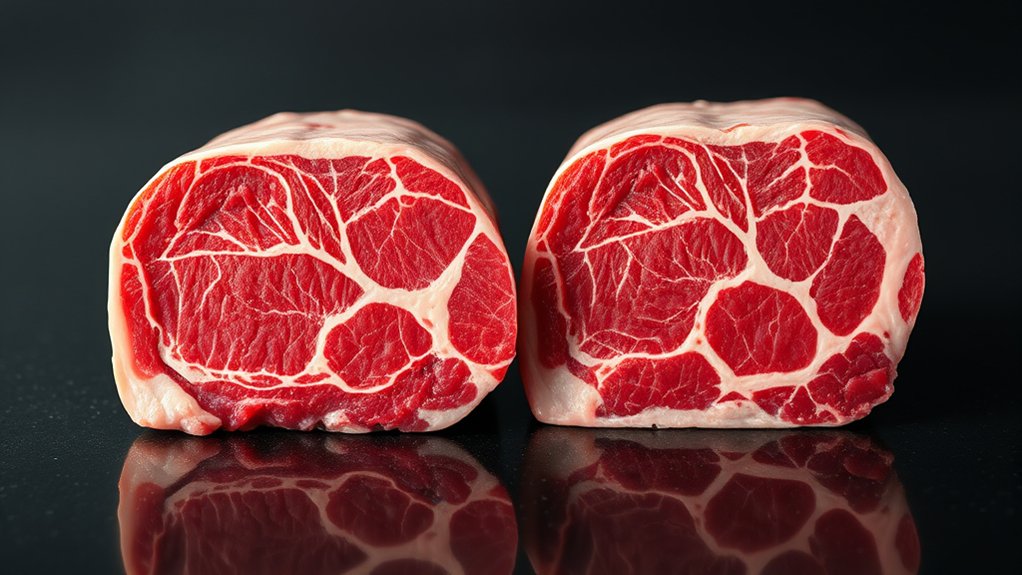
Wagyu and Kobe beef are famous for their tenderness and rich flavor, but they’re not the same thing. Wagyu refers to specific Japanese cattle breeds known for their high marbling and unique meat quality.
Kobe beef is a special type of Wagyu that comes from the Tajima strain of Japanese Black cattle raised in Hyogo Prefecture, where Kobe is the capital. It has to meet strict standards for lineage, diet, and slaughter, making it rare and highly prized.
While all Kobe beef is Wagyu, not all Wagyu is Kobe. Wagyu describes various Japanese cattle breeds with distinctive marbling, whereas Kobe is a premium, geographically specific subset. Both offer a luxurious eating experience, but Kobe has an even more exclusive reputation.
Understanding Wagyu Grading Standards
Understanding Wagyu grading standards helps you recognize quality at a glance.
You’ll learn about the grading system overview, how quality scores are determined, and the importance of marbling and color standards.
This knowledge guarantees you can select the best Wagyu beef for your preferences.
Grading System Overview
To properly appreciate the quality of Wagyu beef, it’s important to understand its grading system, which evaluates meat based on specific criteria. The grading mainly focuses on two factors: marbling and overall meat quality.
Marbling, which is the intramuscular fat, influences tenderness and flavor. The overall quality takes into account color, texture, and firmness. Wagyu grading uses a letter and number system, with higher grades indicating better meat.
Here’s a quick overview:
| Grade Component | Description |
|---|---|
| Marbling Score | Ranges from 1 to 12, with higher scores meaning more fat interlaced |
| Quality Grade | A to C, with A being the highest overall quality |
Quality Score Criteria
The quality score in Wagyu grading reflects the overall excellence of the meat beyond marbling, considering factors like color, texture, and firmness. You’ll find that this score assesses how vibrant and consistent the meat’s color is, which indicates freshness and quality.
It also evaluates texture, making sure the meat feels firm yet tender, not mushy or overly coarse. Firmness is key because it shows proper muscle development and handling.
These criteria help determine the meat’s overall appeal and how suitable it is for different culinary uses. Wagyu producers and graders focus on these aspects to guarantee a high standard of quality.
This approach gives you confidence in the meat’s flavor, tenderness, and visual appeal. Overall, it ensures Wagyu beef meets strict standards for excellence.
Marbling and Color Standards
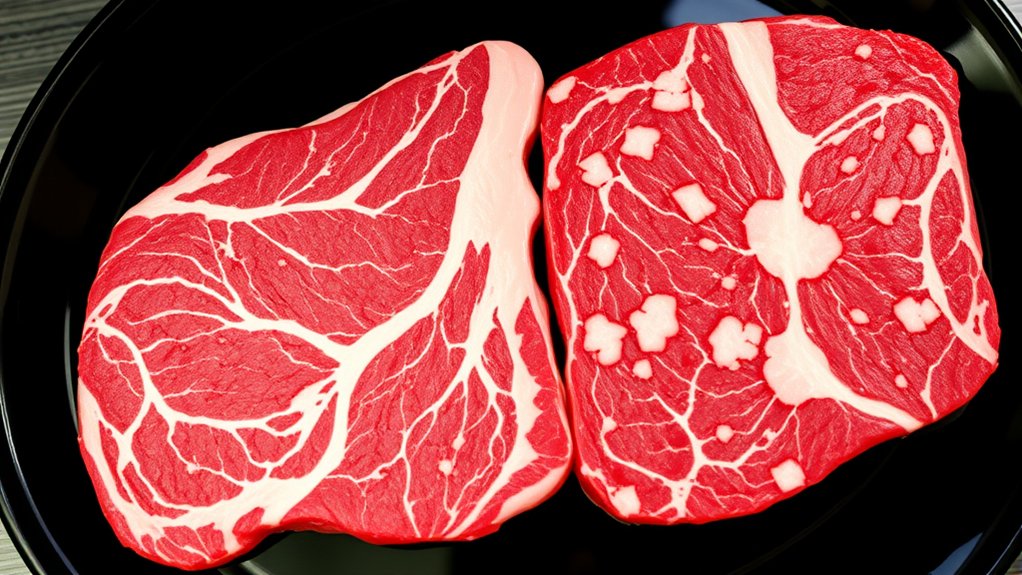
Marbling and color standards are key factors in evaluating Wagyu beef’s quality. The marbling, or intramuscular fat, is graded on a scale from 1 to 12. Higher scores mean more intense marbling, which helps make the meat tender and flavorful.
You’ll notice that top-quality Wagyu has fine, evenly distributed fat veins that create a melt-in-your-mouth experience. The meat’s color should be bright, cherry-red, with a firm texture and minimal discoloration.
The fat should be creamy white, indicating freshness and proper feeding practices. These standards help guarantee you’re getting authentic Wagyu with rich marbling and appealing color.
Both of these factors are essential for premium taste and texture. Understanding these grading criteria lets you better assess and appreciate Wagyu beef’s superior quality.
What Makes Kobe Beef Unique?
Kobe beef is special because of its strict production standards and regional heritage. Only cattle born and raised in Hyogo Prefecture, fed a specific diet, and certified by the Kobe Beef Certification and Registration Association can earn the Kobe label.
This exclusivity ensures high quality and consistency. The region’s climate, pure water, and dedicated farming practices create perfect conditions for raising cattle with incredible marbling and tenderness.
| Attribute | Description |
|---|---|
| Origin | Hyogo Prefecture, Japan |
| Certification | Strict standards for breed, diet, and care |
| Feeding | Special diet including rice and barley |
| Heritage | Unique regional farming traditions |
Kobe vs Wagyu: How Do Their Tastes and Marbling Differ?
While Kobe beef is renowned for its exceptional quality, Wagyu covers a broader category of Japanese cattle known for its rich flavor and intense marbling. Kobe beef, specifically from Kobe, Japan, has a delicate, buttery taste with a melt-in-your-mouth texture thanks to its high marbling.
Wagyu beef, in general, offers a more diverse flavor profile. It’s often described as beefy yet buttery, with marbling levels that vary depending on the breed and region. Kobe’s marbling is exceptionally fine and uniform, creating a luxurious mouthfeel.
Wagyu’s marbling can be more pronounced or varied, depending on the specific type. Both provide a tender, flavorful experience, but Kobe’s consistency offers a distinct, premium indulgence that stands out for its delicate richness.
How Geography and Breeding Impact Wagyu and Kobe
Your experience with Wagyu and Kobe beef is shaped by where and how the cattle are raised. Regional breeding practices, genetics, and the local climate influence their unique qualities.
Understanding these factors helps explain why these beefs differ so much in flavor and marbling. It’s all about the environment and methods behind their production.
Regional Breeding Practices
The geography and local breeding traditions really shape the characteristics of Wagyu and Kobe beef. In Japan, breeders follow strict standards, often raising cattle in specific regions with ideal climates.
Kobe cattle are bred only in Hyogo Prefecture, with careful practices that focus on diet and environment. Farmers usually feed high-quality grains like rice straw and corn to boost marbling.
Outside Kobe, Wagyu may have more relaxed practices, which can lead to differences in quality. Regional differences also affect cattle management, with some areas emphasizing stress reduction and specific feeding routines.
These regional practices create variations in flavor, tenderness, and marbling, making Kobe beef especially popular because of its strict breeding and regional focus.
Origin of Cattle Genetics
Geography and selective breeding directly influence the genetic makeup of Wagyu and Kobe cattle, shaping their unique traits. Wagyu cattle originated in Japan, where centuries of breeding focused on improving marbling and meat quality.
This careful selection created a genetically distinct herd with traits like high intramuscular fat. Kobe beef, a special Wagyu strain from the Kobe region, developed through local breeding practices that emphasized tenderness and flavor.
Japan’s isolated geography limited gene flow, helping these traits stay consistent over generations. Outside Japan, Wagyu often crossbreed with other breeds, changing their genetic profile.
Understanding their origins shows how geography and targeted breeding create the exceptional qualities that make Wagyu and Kobe stand out.
Climate and Terrain Effects
Climate and terrain have a direct influence on the characteristics of Wagyu and Kobe cattle, shaping how they are raised and how their unique qualities develop. The environment determines the cattle’s diet, activity levels, and stress, all of which impact meat quality.
Temperature control is crucial because it influences cattle stress levels, which in turn affects meat tenderness. In Japan’s Kobe region, the mild climate helps keep stress low, promoting high-quality beef.
Topography affects grazing patterns, which impacts muscle structure and development. Hilly or flat terrains can lead to different movement and muscle growth in the cattle.
Climate stability allows for consistent breeding and quality control, ensuring that the cattle grow in a predictable environment. This consistency is important for producing premium Wagyu and Kobe beef.
Why Is Kobe Beef More Expensive and Hard to Find?
Ever wonder why Kobe beef commands such high prices and is hard to find on most menus? The main reason is its strict production process and limited supply. Kobe beef comes from a specific breed of Wagyu cattle raised only in Hyogo Prefecture, Japan, and has to meet very strict standards.
Only beef that meets unique marbling, tenderness, and quality criteria can get the Kobe label. The cattle are raised with great care, often in small herds, which raises costs.
Kobe beef must meet strict marbling, tenderness, and quality standards, with cattle raised carefully in small herds to ensure premium quality.
Importing Kobe beef also involves strict rules, tariffs, and transportation costs. This reduces its availability outside Japan.
All these factors—limited supply, high standards, and strict regulations—drive up prices. That’s why Kobe beef is so rare globally, making it a luxury item that’s both hard to find and even harder to afford.
Best Ways to Prepare and Cook Wagyu and Kobe
To truly enjoy the rich flavors of Wagyu and Kobe beef, it’s important to prepare and cook them carefully. This helps highlight their exceptional marbling and tenderness. Keep the heat low to prevent fat from melting away and to keep the beef juicy.
Use simple seasonings like salt and pepper to enhance the natural flavor without overpowering it. Here are some tips to help you get it just right:
- Cook slowly: Pan-sear or grill over medium-low heat for a short time to keep the beef tender and flavorful.
- Avoid overcooking: Aim for rare or medium-rare to preserve the tenderness and marbling.
- Rest before slicing: Let the beef rest for a few minutes after cooking so the juices can redistribute.
Following these steps will help you savor the delicate texture and rich taste of Wagyu and Kobe beef.
How to Recognize Authentic Kobe and Wagyu Beef
To spot authentic Kobe and Wagyu beef, look for official certification labels that confirm their origin. These labels are a quick way to ensure you’re getting genuine products.
Next, pay close attention to the marbling patterns. Real Wagyu has finely textured, abundant fat streaks that run throughout the meat, giving it a distinctive look and flavor.
Finally, don’t hesitate to ask about the source and where the beef comes from. Reputable regions known for Kobe and Wagyu produce high-quality, authentic meats.
Authentic Certification Labels
Authentic Kobe and Wagyu beef are marked with specific certification labels that verify their quality and origin. These labels ensure you’re buying genuine products and help prevent fraud.
When shopping, look for official seals like the Kobe Beef Certification Mark from the Kobe Beef Marketing & Distribution Promotion Association or the Japanese Wagyu Certification.
Here are three key indicators to keep an eye on:
- Origin Certification – Confirms the beef comes from designated regions in Japan.
- Brand Labels – Official tags that indicate the specific breed and region.
- Quality Grading – Labels that detail marbling, meat quality, and grading standards.
Unique Marbling Patterns
When examining Kobe and Wagyu beef, the marbling pattern is one of the most distinctive features that sets authentic products apart from imitations. Genuine Wagyu has a web of fine, evenly distributed fat streaks throughout the muscle, creating a soft and silky marbled appearance.
Kobe beef, a specific Wagyu variety from the Tajima strain, shows even more refined marbling with a delicate, lace-like pattern. Look closely at the fat distribution: authentic Kobe and Wagyu should have fine, consistent marbling with no large fat pockets or streaks.
The marbling should appear glossy and vibrant, indicating high-quality fat content. If it looks coarse or uneven, it’s probably an imitation or lower-quality product. Recognizing these patterns helps ensure you’re selecting genuine, premium beef.
Source and Origin Details
The key to confirming the authenticity of Kobe and Wagyu beef is understanding their source and origin details. Genuine Kobe beef comes specifically from the Tajima strain of Wagyu cattle raised in Hyogo Prefecture, Japan. Authentic Wagyu, on the other hand, comes from designated regions within Japan, such as Kagoshima or Miyazaki, and follows strict breed and grading standards.
To verify authenticity, check for official Japanese cattle identification and certification labels. Also, make sure the beef specifies the exact region, like Kobe or Kagoshima. Authentic Kobe and Wagyu beef usually come with premium prices and clear labeling, so be wary of vague or generic terms.
Debunking Common Myths About Wagyu and Kobe
Many people believe that all Wagyu and Kobe beef are the same, but that’s not true. Kobe beef is a specific type of Wagyu from the Tajima strain in Hyogo Prefecture, Japan. Not all Wagyu is Kobe, and many Wagyu varieties don’t meet Kobe’s strict standards.
Some think that Wagyu automatically means Kobe, but that’s incorrect. Others assume Kobe beef is always more expensive or better, but quality depends on individual grading and processing.
Furthermore, some believe Kobe beef is universally tender and marbled. While it’s known for its marbling, tenderness varies based on factors like age and diet.
Disproving these myths helps you better understand the differences and avoid misconceptions about these premium beef types.
Choosing the Right Premium Beef for You
Understanding the differences between Wagyu and Kobe beef can help you make better choices when selecting premium meat. To find the perfect fit, consider these factors:
- Flavor Profile – Decide if you prefer the richer, buttery taste of Wagyu or the slightly sweeter flavor of Kobe.
- Price Range – Kobe beef is usually more expensive because of its exclusivity. Make sure to set your budget accordingly.
- Cooking Style – Wagyu’s marbling makes it great for quick, high-heat cooking. Kobe’s tenderness works best with gentle, slow preparations.
Frequently Asked Questions
Are All Kobe Beef Also Classified as Wagyu?
No, not all Kobe beef is classified as Wagyu, but all Kobe beef is a type of Wagyu. Kobe beef specifically comes from a particular breed of Japanese Wagyu cattle raised in Hyogo Prefecture.
It’s known for its strict standards and high quality. Wagyu, on the other hand, is a broader category of Japanese cattle with unique marbling traits, including Kobe, but also other regional varieties.
What Are the Differences in Fat Composition Between Wagyu and Kobe?
Imagine a delicate, swirling dance of clouds—that’s how Wagyu and Kobe fats differ.
Wagyu beef generally contains more monounsaturated fats, making it tender and healthier. Kobe beef, a specific type of Wagyu, has an even more intricate marbling with more intramuscular fat.
This creates a melt-in-your-mouth experience. Both have rich, buttery textures, but Kobe’s fat is more refined, adding to its luxurious appeal.
How Does the Aging Process Affect Wagyu and Kobe Beef?
Aging improves Wagyu and Kobe beef by boosting flavor and tenderizing the meat. When you age it, enzymes break down muscle fibers, making it more tender.
Moisture loss during aging concentrates the flavors, giving the beef a richer taste. Wagyu and Kobe often undergo dry or wet aging, which deepens their beefy, buttery notes.
Proper aging is key to unlocking their full potential. It helps showcase the marbling and creates a truly luxurious eating experience.
Can Wagyu or Kobe Be Farmed Outside Japan?
Yes, you can farm Wagyu or Kobe outside Japan, but it’s challenging. While Wagyu cattle are bred worldwide, replicating Japan’s strict standards and specific environment for authentic Kobe beef is tough.
You might get high-quality Wagyu elsewhere, but true Kobe requires precise lineage, feeding, and climate conditions. So, if authenticity matters to you, sourcing from Japan remains the best option, even if the cattle are farmed internationally.
What Certifications Ensure the Authenticity of Kobe Beef?
You can verify the authenticity of Kobe beef by checking for official certification labels like the Kobe Beef Certification Mark issued by the Kobe Beef Marketing & Distribution Promotion Association.
Authentic Kobe beef also has a detailed grading report that confirms its origin, quality, and strict standards.
Always buy from reputable suppliers and look for documentation that shows it comes directly from certified Kobe beef farms in Japan to ensure it’s genuine.
Conclusion
Now that you’ve uncovered the rich tapestry of Wagyu and Kobe beef, you’re ready to savor their unique flavors and textures. Think of each bite as a brushstroke on a culinary canvas—luxurious, intricate, and unforgettable.
Whether you’re drawn to the tender marbling of Wagyu or the legendary heritage of Kobe, your taste buds are in for an exciting journey.
Welcome the adventure and let these exquisite meats turn your dining experience into a true masterpiece.