Is Pink Salt the Same as Celtic Salt?
Are you tired of trying different salts and still not knowing which one to choose? You’re not alone—many people struggle with picking the right salt to enhance their dishes. Understanding the differences can make all the difference in your cooking and health.
Pink salt and Celtic salt aren’t the same; they come from different places and have unique textures and flavors. Pink salt, from the Himalayas, is usually coarse and slightly sweet with mineral notes.
Celtic salt, from France, is moist, earthy, and briny. Their mineral contents differ slightly, affecting taste and health benefits.
To learn more about how each can improve your dishes and preferences, keep exploring the details.
Key Takeaways
- Pink salt, also known as Himalayan salt, is mined from Pakistan. Celtic salt, on the other hand, is harvested from coastal Brittany in France.
- Pink salt has a rosy color and a mild, slightly sweet flavor. Celtic salt is grayish, moist, and has a briny taste.
- They differ quite a bit in mineral content. Pink salt is rich in iron oxide, which gives it that distinctive color. Celtic salt contains a broader spectrum of trace minerals.
- Their textures are also different. Pink salt tends to be flaky and dry, while Celtic salt is moist and dense.
- So, they are not the same. Each one has its own unique origins, appearance, flavor, and culinary uses.
Where Do Pink Salt and Celtic Salt Come From?
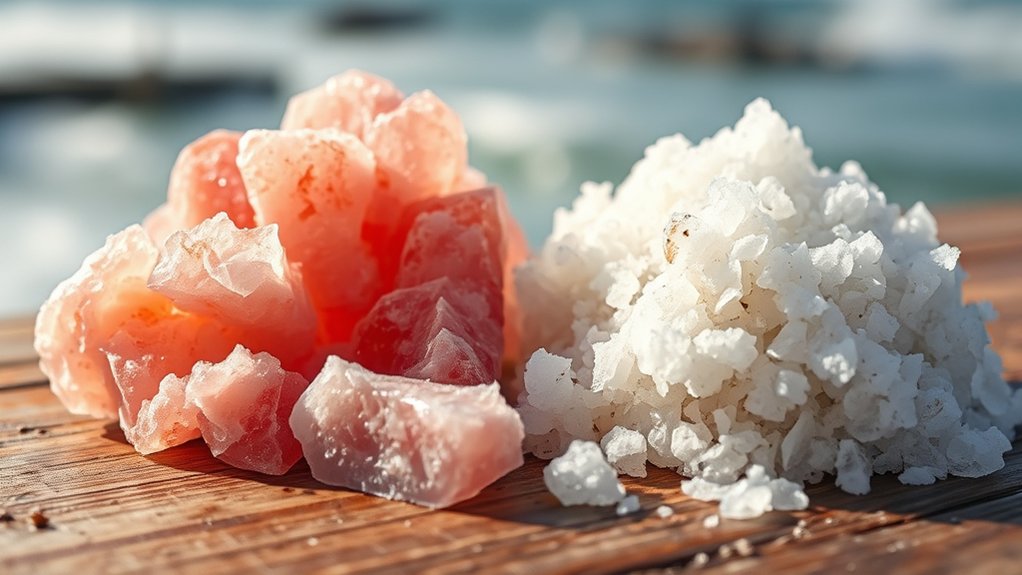
Pink salt and Celtic salt come from different parts of the world, each with its own unique sources and environments. Pink salt, often called Himalayan salt, is mined from salt deposits in the Himalayan mountain range, mainly in Pakistan. It forms naturally when ancient seawater evaporated and got trapped in underground rock formations.
Celtic salt, meanwhile, is harvested from the coastal regions of Brittany in France. It’s made using traditional methods where seawater is evaporated naturally by the sun and wind. The moisture and mineral content of Celtic salt are influenced by its coastal environment.
Pink salt’s rich mineral deposits in the mountains give it its distinctive pink hue. Celtic salt’s environment produces a moist, mineral-rich salt with a complex flavor. Both types of salt reflect their unique geographical and environmental origins.
What Are the Main Differences in Appearance and Texture?
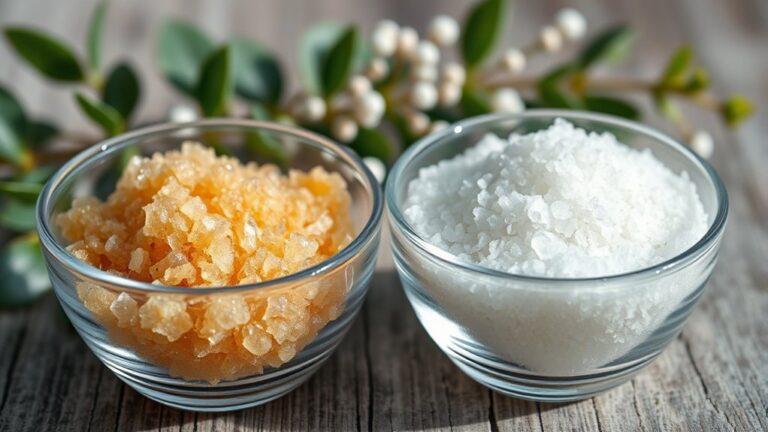
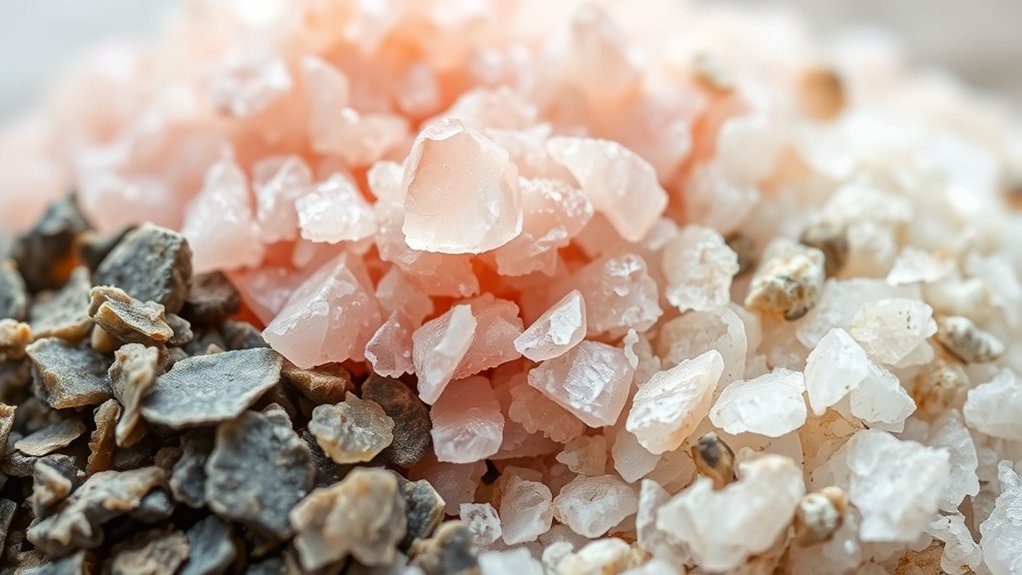
The appearance and texture of pink salt and Celtic salt are quite different, reflecting their unique origins and harvesting methods. Pink salt usually has a vibrant, rosy color caused by trace minerals like iron oxide.
It often comes in coarse crystals or fine grains, with a slightly moist, flaky feel. Celtic salt, on the other hand, looks grayish or light-colored, often moist and compact because of its traditional harvesting from salt flats or clay beds.
Its texture tends to be moist, slightly gritty, and dense, making it feel different from the dry, crumbly pink salt. These visual and tactile differences come from how they are harvested and their mineral makeup, giving each salt its own look and feel.
How Do Their Mineral Contents Differ?
Although both pink salt and Celtic salt are valued for their mineral content, they differ quite a bit in the types and amounts of minerals they contain. Pink salt, often from the Himalayas, gets its distinctive color from iron oxide and usually has higher levels of minerals like calcium, magnesium, and potassium.
Celtic salt, harvested from coastal regions, is known for its rich, moist texture and contains a wider variety of trace minerals, including manganese and zinc. However, the mineral levels in both salts are small compared to what we need daily.
While pink salt may have slightly more iron and calcium, Celtic salt’s mineral profile is more diverse. These differences can affect their taste and potential health benefits, but neither should be relied on as main mineral sources.
What Do Pink Salt and Celtic Salt Taste Like in Cooking?
Both pink salt and Celtic salt bring their own unique flavors to your cooking, thanks to their mineral content and how they’re harvested. Pink salt usually has a mild, slightly sweet taste with subtle mineral notes. It’s versatile and doesn’t overpower the dish’s other flavors.
It dissolves smoothly, making it perfect for salads, meats, or roasted vegetables. Celtic salt, on the other hand, has a briny, oceanic flavor with a hint of earthiness. Its moist texture can add a crunchy touch when sprinkled just before serving.
Celtic salt’s mineral richness can really enhance the depth of flavors in soups, stews, or grilled foods. Both salts offer distinctive tasting experiences, so you can pick based on the flavor profile you want to highlight in your dish.
Are Pink Salt and Celtic Salt Better for Your Health?
You might wonder if pink salt or Celtic salt offers any health advantages. Their mineral content varies, which can influence potential benefits or drawbacks.
Understanding these differences can help you decide which salt might be better for your well-being.
Mineral Content Differences
Pink salt and Celtic salt are both known for their mineral content, but they differ quite a bit in the types and amounts of minerals they contain. Pink salt, usually mined from Himalayan salt deposits, is rich in trace minerals like magnesium, potassium, and calcium, which give it that distinctive pink color.
Celtic salt, harvested from coastal regions, has a broader spectrum of minerals, including magnesium, calcium, and iron, in various amounts. Because of these differences, Celtic salt tends to have a wetter texture and a more complex mineral profile.
While both salts provide essential minerals, Celtic salt’s diversity might give it a slight edge in mineral variety. Still, the health impact really depends on your overall diet and mineral intake.
Health Benefits Comparison
When comparing the health benefits of pink salt and Celtic salt, it’s important to remember that neither is a miracle cure. Each offers unique advantages because of their mineral content. Pink salt has higher levels of trace minerals like iron, which may help blood health and boost energy.
Celtic salt has a balanced mineral profile that can support hydration and electrolyte balance, especially after exercise. Both salts contain fewer processed minerals compared to regular table salt, making them healthier choices in moderation.
However, neither should be relied on alone for health improvements. The best approach is to enjoy these salts as part of a balanced diet. Appreciate their mineral benefits without overdoing salt intake, since too much can affect blood pressure.
How Do Processing Methods Impact Salt Purity and Mineral Levels?
Processing methods greatly influence both the purity and mineral content of different salts. When salt is mined or harvested, it can contain unwanted impurities like heavy metals or pollutants.
Refining processes, such as washing, heating, or bleaching, often remove these contaminants but can also strip away valuable minerals, reducing nutritional benefits.
For example, highly processed table salt is usually refined to remove trace minerals, resulting in a more pure but less mineral-rich product.
Conversely, less processed salts like Celtic or pink Himalayan salt retain more natural minerals, enhancing their flavor and potential health benefits.
The level of processing determines not only the salt’s mineral profile but also its purity, flavor, and overall quality.
Understanding these differences helps you choose salts that align with your preferences and health considerations.
Can I Use Pink Salt and Celtic Salt Interchangeably in Recipes?
Pink salt and Celtic salt have different flavor profiles that can subtly change your dish’s taste. Their textures and grain sizes also vary, which can affect how they dissolve and distribute in recipes.
Because of these differences, you might want to adjust your seasoning when swapping between them.
Flavor Profiles Difference
Are pink salt and Celtic salt truly interchangeable in recipes? Both have unique flavor profiles that can change how your dish tastes.
Pink salt, often from Himalayan sources, has a mild, slightly earthy flavor with a hint of mineral sweetness. Celtic salt, harvested from coastal regions, offers a briny, seawater flavor with subtle mineral richness.
Using one instead of the other might change your dish’s seasoning, especially in delicate recipes. Pink salt’s milder taste works well for finishing dishes or light seasoning.
Celtic salt’s pronounced mineral notes add depth to hearty foods. While both salts can be swapped, knowing their flavor differences helps you pick the right one for your recipe’s intended profile.
Texture and Grain Size
Because their textures and grain sizes differ considerably, you can’t always use pink salt and Celtic salt interchangeably without adjusting your approach.
Pink salt usually has larger, coarser crystals, which can stand out in dishes if not ground finely. Celtic salt, on the other hand, often has a more moist, flaky texture with smaller, more uniform grains.
If a recipe calls for a fine salt, you’ll need to grind pink salt more finely or use less of it so you don’t overwhelm the dish. Celtic salt’s moisture can also affect how it dissolves and flavors your food.
Understanding these differences helps you decide whether to use them as substitutes or adapt your method to match their unique textures.
What Are the Best Ways to Use Pink Salt and Celtic Salt in the Kitchen?
Wondering how to incorporate pink salt and Celtic salt into your cooking? These salts are versatile and can enhance a variety of dishes.
Use pink salt as a finishing touch on grilled meats, salads, or roasted vegetables to add a subtle mineral flavor. It’s perfect for giving dishes a beautiful presentation and a delicate crunch.
Celtic salt works well in brines, marinades, or when seasoning soups and stews. Its moist texture and rich mineral content make it ideal for boosting flavor in hearty dishes.
Here’s a quick guide:
| Use Case | Salt Type | Best For |
|---|---|---|
| Finishing Touch | Pink Salt | Salads, grilled dishes |
| Brining & Marinating | Celtic Salt | Meats, vegetables |
| Cooking & Seasoning | Both | Soups, stews, roasted vegetables |
How Do Cost and Availability Affect Your Choice?
When choosing between pink salt and Celtic salt, your decision often depends on how much each costs and whether you can find them easily. Price and availability play a big role, especially if you’re on a budget or need the salt quickly.
Pink salt tends to be more expensive and is less common in regular grocery stores. You might need to buy it online or visit specialty shops.
Celtic salt is usually more accessible and affordable, making it a practical choice for many people. Online shopping also makes both types easier to find.
Ultimately, your budget and local stores will influence which salt you choose.
Which Salt Fits Your Lifestyle and Taste Preferences?
Choosing the right salt often comes down to your lifestyle and taste preferences.
Selecting the perfect salt depends on your taste, lifestyle, and culinary preferences.
If you prefer a mild, subtle flavor, fine table salt might suit you best. For a more mineral-rich, complex taste, Celtic salt offers a briny, earthy flavor that enhances dishes naturally.
If you’re into gourmet cooking or want a striking appearance, pink Himalayan salt adds color and mineral content. Athletes or those with specific dietary needs might favor less processed salts with higher mineral levels.
Consider your cooking style—if you enjoy finishing dishes with a crunchy salt topping, flaky sea salts could be perfect.
Ultimately, choosing a salt depends on how much you value flavor, texture, and health benefits. It should align with your culinary habits and personal taste.
Frequently Asked Questions
Are There Any Environmental Concerns Associated With Pink or Celtic Salt Production?
Yes, there are environmental concerns with both pink and Celtic salt production. You might worry about habitat disruption from mining or harvesting practices, especially if sustainable methods aren’t used. Pink salt mining can impact groundwater and local ecosystems, while Celtic salt harvesting, if not managed carefully, can disturb coastal environments.
Choosing ethically sourced salts helps reduce these impacts. Always check for sustainable certifications and responsible practices when purchasing.
How Do Their Sodium Levels Compare per Serving?
Pink salt generally contains about 98% sodium chloride, similar to Celtic salt. The exact levels can vary slightly depending on processing and mineral content.
Celtic salt, often harvested through traditional methods, may have a slightly lower sodium concentration because of its moisture content and mineral diversity.
When comparing servings, it’s important to check the specific product labels since sodium levels can differ and impact how much you absorb.
Can These Salts Be Used for Skincare or Wellness Purposes?
Think of pink and Celtic salts as nature’s treasure chests—both can boost your skincare and wellness routines. You can use them in baths to soothe muscles or as gentle exfoliants to invigorate your skin.
Their minerals nourish deeply, symbolizing balance and harmony. Just remember, while they’re beneficial, use them in moderation, respecting their rich mineral content.
Always patch-test before applying to sensitive skin areas to stay safe and enjoy their benefits.
Do They Contain Any Allergens or Contaminants?
Pink salt and Celtic salt generally don’t contain common allergens, but contaminants can vary depending on their source and processing. Pink salt, often mined from ancient salt deposits, may have trace minerals but can also carry impurities if not properly purified.
Celtic salt, harvested from coastal regions, might contain environmental contaminants like heavy metals. Always check labels and buy from reputable sources to minimize exposure to potential toxins or allergens.
How Long Do Pink and Celtic Salts Typically Last in Storage?
Pink and Celtic salts can last forever if you store them properly in a cool, dry place. You don’t really have to worry about them spoiling because their mineral content and low moisture make them resistant to going bad.
Just keep the salts in airtight containers to stop moisture and contaminants from getting in. Over time, they might harden or clump up, but you can easily break them apart and keep using them without losing any quality.
Conclusion
In the end, choosing between pink salt and Celtic salt is like picking a star in the night sky—each shines with its own unique beauty. Both offer distinct flavors, textures, and mineral profiles that can enhance your dishes.
So, trust your taste buds and lifestyle needs to guide your choice. Whether you prefer the vibrant hue of pink salt or the earthy richness of Celtic salt, your culinary journey will be transformed into an extraordinary adventure—brighter than a thousand sunsets.
It’s worth noting that pink salt and Celtic salt are not the same. Pink salt, often called Himalayan salt, gets its color from trace minerals like iron. Celtic salt, on the other hand, is a sea salt known for its moist texture and mineral-rich profile.