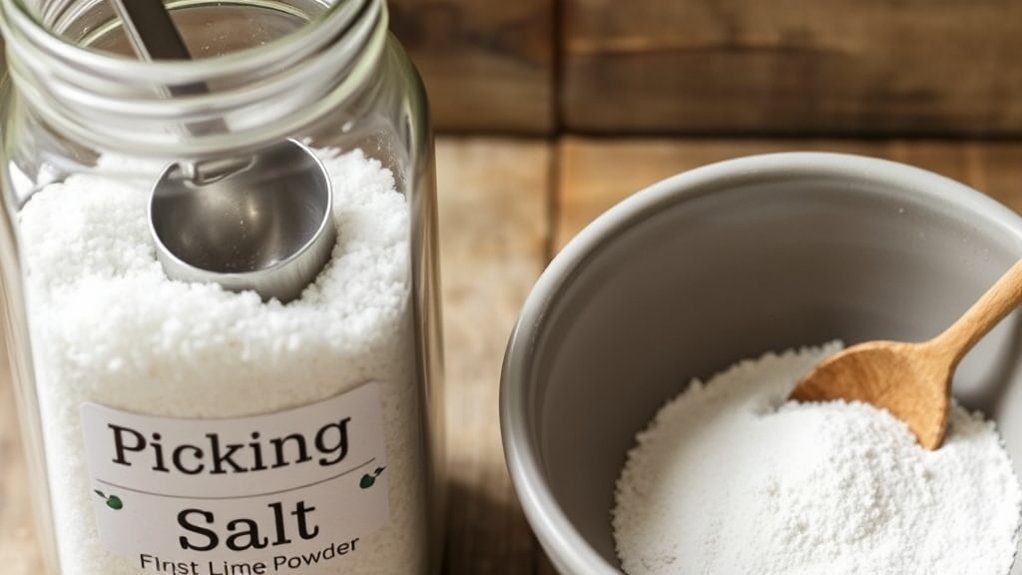
Is Pickling Lime the Same as Pickling Salt?
Are you trying to perfect your home-canned pickles but feeling overwhelmed by the many ingredients and confusing labels? You’re not alone—many people struggle to understand the differences between key pickling ingredients and how they impact their results.
Pickling lime and pickling salt are not the same. Pickling lime, or calcium hydroxide, is used to firm vegetables and improve texture, while pickling salt, or sodium chloride, boosts flavor and helps preserve food.
Using them interchangeably can lead to safety issues and poor results.
To make perfect pickles, you need to choose the right ingredient for each purpose. If you want to understand how they affect your pickling process, keep exploring the details.
Key Takeaways
- Pickling lime is calcium hydroxide, used to firm vegetables, while pickling salt is pure sodium chloride for preservation and flavor.
- They serve different functions. Lime improves texture, and salt enhances taste and prevents spoilage.
- Substituting lime for salt is unsafe and can change the safety, taste, and texture of preserved foods.
- Proper handling and measurement are essential. Lime and salt are not interchangeable in pickling.
- Alternatives like vinegar and fermentation can replace lime and salt for safer, natural preservation methods.
What Are Pickling Lime and Pickling Salt, and How Do They Differ?
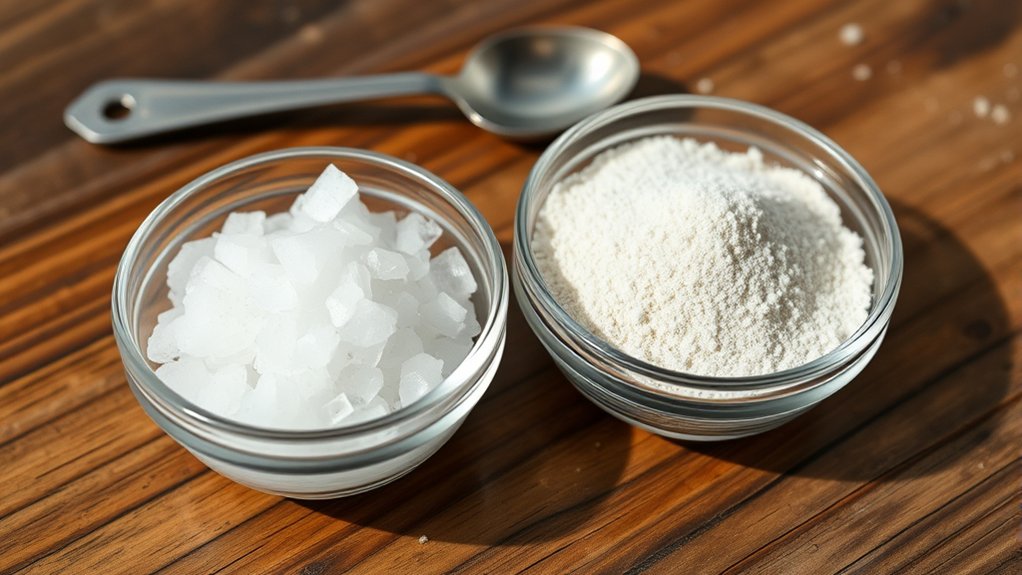
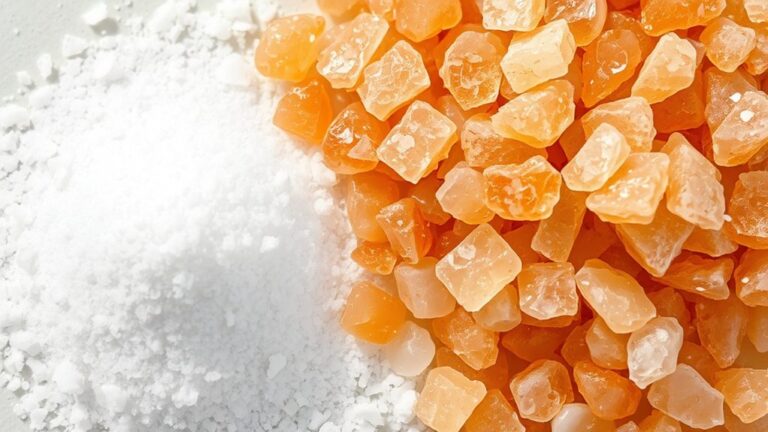
Although pickling lime and pickling salt are both common ingredients in preserving foods, they serve very different purposes. Pickling lime is calcium hydroxide, used to firm vegetables and improve texture. It helps vegetables stay crisp and prevents spoilage during processing.
Pickling salt, on the other hand, is pure sodium chloride with no added ingredients. Its main role is to enhance flavor and assist in the fermentation process or preservation by creating an environment that inhibits bacteria.
Pickling salt dissolves easily and leaves no residue, unlike regular table salt. While both are essential in pickling, they cannot be substituted for each other because they perform distinct functions—lime for texture and salt for flavor and preservation.
What Is Pickling Lime and How Do You Use It?
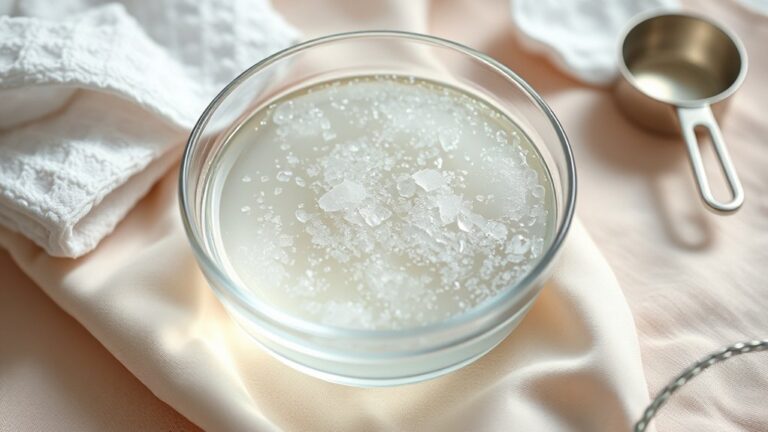
Pickling lime is a food-grade calcium hydroxide used to improve the texture and firmness of vegetables during pickling. You use it by soaking vegetables in a lime solution before pickling, which helps keep them crisp.
To do this, dissolve a small amount of lime in water according to your recipe’s instructions. Submerge your vegetables in the solution for a few hours, then rinse thoroughly to remove any excess lime.
Proper rinsing is essential to prevent a chalky taste or potential health issues. After rinsing, you can move on with your pickling recipe.
Using pickling lime correctly guarantees your vegetables stay firm and crisp. This gives your preserved foods a better texture that lasts longer.
What Is Pickling Salt and Why Is It Important in Preservation?
Pickling salt, also known as kosher salt or canning salt, is a pure, fine-grain salt made specifically for preservation. It’s free of additives like iodine or anti-caking agents, which could cloud your pickles or change the flavor.
Using the right salt helps keep your preserved foods crisp and flavorful. It plays a key role in maintaining texture, preventing spoilage, and supporting proper fermentation.
Imagine how satisfying it feels to enjoy perfectly preserved vegetables, knowing you used the correct salt. It makes all the difference in the final result.
| Preservation Benefits | Emotional Impact |
|---|---|
| Keeps food crisp | Confidence in your skills |
| Prevents spoilage | Peace of mind |
| Guarantees flavor integrity | Pride in your homemade recipes |
Can You Substitute Pickling Lime for Pickling Salt? Risks and When to Avoid It
Can you substitute pickling lime for pickling salt? No, it’s not recommended. Pickling lime is calcium hydroxide, used to improve firmness in some pickles, but it’s not a salt and doesn’t have the preservative properties of pickling salt.
Using lime instead of salt can cause safety issues, like creating a cloudy, unsafe product or messing up the fermentation process. Lime can also change the taste and texture in unpredictable ways.
Avoid substituting lime unless a recipe specifically calls for it, and even then, follow the instructions carefully. If you accidentally use lime instead of salt, you risk contamination or spoilage.
Always stick to the recommended ingredients to ensure your pickles are safe and properly preserved. When in doubt, check a trusted recipe or preservation guide.
How Do Pickling Lime and Pickling Salt Affect Food Texture and Taste?
Have you ever noticed how the texture and taste of your preserved foods change depending on whether you use lime or salt? Pickling salt mainly boosts flavor and keeps things crisp and firm by drawing out moisture without adding extra ingredients. It helps vegetables stay crunchy and gives a clean, salty taste.
On the other hand, pickling lime affects texture by making foods firmer through calcium compounds that strengthen cell walls. It can make foods denser and slightly chalky if you don’t rinse thoroughly. Lime can also add a subtle earthiness or bitterness to the flavor.
What Are Common Mistakes When Using Pickling Lime and Pickling Salt?
One common mistake is using incorrect ingredient ratios, which can affect the safety and quality of your pickles.
Another mistake is choosing unsuitable containers that can react with the lime or salt, potentially ruining your batch.
Paying attention to these details helps guarantee your pickling process turns out just right.
Incorrect Ingredient Ratios
Using the wrong ingredient ratios when working with pickling lime or pickling salt is a common mistake that can lead to unsafe or undesirable results.
If you add too much lime, it can cause excessive hardness or gritty textures in your pickles. Too much salt, on the other hand, can make your preserved foods too salty or cause fermentation issues.
Conversely, using too little of either ingredient may result in spoilage or unsafe products, especially if the acidity isn’t properly balanced.
Always measure carefully and follow trusted recipes. Using incorrect ratios can compromise safety, flavor, and texture.
Using Unsuitable Containers
Choosing the wrong containers for pickling lime or pickling salt can lead to serious issues, like contamination, chemical reactions, or spoilage. Glass jars are perfect because they don’t react with the ingredients.
But plastic or metal containers can cause problems. Metal might corrode or leach chemicals into your pickles, and some plastics aren’t food-safe and may break down over time.
To avoid these issues, pick containers labeled specifically for food use. Here’s a quick comparison to help you decide:
| Material | Pros | Cons |
|---|---|---|
| Glass | Non-reactive, easy to clean | Breakable |
| Plastic | Lightweight, inexpensive | May leach chemicals |
| Metal (like aluminum) | Durable, heat-resistant | Reacts with acids, can corrode |
Always go with food-grade containers to keep your pickles safe and high-quality.
Which Ingredient Should You Use for Perfectly Pickled Foods?
Deciding which ingredient to use is essential for achieving perfectly pickled foods. The key is selecting the right salt or lime to guarantee safety, flavor, and texture.
Pickling salt is preferred because it dissolves easily and leaves no residue, preventing cloudiness or spoilage. If you opt for salt, make sure it’s pure and free of additives like iodine or anti-caking agents, which can affect the pickling process.
Pickling lime, on the other hand, is used for specific recipes like some cucumber or green bean pickles, but only in small quantities and with proper handling. Avoid using regular table salt or other types that contain additives.
Your choice of ingredient influences the final product’s taste, clarity, and preservation, so choose carefully based on your recipe’s requirements.
Are There Safer Alternatives or Tips for Using Pickling Lime and Salt?
You can consider natural preservation methods like fermenting instead of using pickling lime or salt.
Always handle these ingredients carefully and follow proper safety guidelines to prevent contamination.
Using safer alternatives and proper techniques helps ensure your preserved foods are both delicious and safe to enjoy.
Natural Preservation Options
While pickling lime and salt are traditional preservation methods, many people seek natural alternatives that are safer and easier to handle. You can look into options like vinegar, fermentation, or dried herbs, which naturally inhibit spoilage. These methods often rely on natural acidity or beneficial bacteria to preserve foods effectively.
Consider these alternatives:
- Vinegar: Its acidity creates an environment where bacteria can’t thrive, making it great for pickling vegetables.
- Fermentation: Using salt to encourage beneficial bacteria growth, which preserves and adds flavor to foods naturally.
- Dried herbs: Such as thyme or rosemary, which contain natural antimicrobial compounds that help prevent spoilage.
These options reduce chemical handling risks and can also give your preserved foods unique, delicious flavors.
Proper Handling Practices
Handling pickling lime and salt safely means paying close attention to proper procedures to reduce health risks. Always wear gloves and eye protection when handling these substances to stay safe.
Store them in clearly labeled, airtight containers away from children and pets. Use dedicated utensils to prevent cross-contamination and keep your workspace clean.
Follow the recommended measurements carefully to avoid using too much, which can be risky. Remember to wash your hands thoroughly afterward and clean your work surfaces regularly.
For safer options, consider using vinegar or fermentation methods instead. These can be effective alternatives with fewer safety concerns.
Frequently Asked Questions
Can Pickling Lime and Salt Be Used Together in the Same Recipe?
Yes, you can use pickling lime and salt together in the same recipe, but you need to be careful.
Pickling lime, or calcium hydroxide, helps keep vegetables crisp, while salt boosts flavor and helps preserve.
Make sure to add the lime during preparation and rinse it well before processing.
Follow your recipe closely to avoid overpowering flavors or impacting the safety of your pickles.
How Long Does It Take for Pickling Lime to React During Processing?
It usually takes about 24 to 48 hours for pickling lime to react during processing. You’re waiting for the lime to do its thing, making sure the vegetables get the right texture and are safe to eat.
The reaction time can vary depending on factors like temperature and the recipe you’re following. Keep an eye on the process, and remember, patience is key—rushing it might not give you the best results.
Are There Health Risks Associated With Improper Use of Pickling Lime?
Yes, improper use of pickling lime can pose health risks. If you don’t rinse it thoroughly, residual lime can cause irritation or stomach issues when eaten.
Overuse or incorrect handling may lead to chemical burns or allergic reactions. Always follow safety instructions, wear gloves, and make sure all lime is completely removed from your preserved foods.
When used correctly, pickling lime is safe, but misuse increases health risks.
Do Pickling Lime and Salt Have Different Shelf Lives?
Pickling lime and salt have different shelf lives. You can usually store pickling salt for years if kept in a cool, dry place since it doesn’t spoil, but it can clump over time.
Pickling lime, on the other hand, loses potency after about two years. It’s best to replace it to keep the proper pH levels and ensure your preserves are safe.
Always check the expiration dates to get the best results and stay safe when pickling.
What Are the Signs of Using the Wrong Ingredient in Pickling?
If you’ve used the wrong ingredient in pickling, you might see issues like cloudy brine, uneven texture, or strange flavors.
For example, using salt instead of lime can make your pickles soft or mushy. On the other hand, lime might make them overly firm or gritty.
You could also notice off-odors, discoloration, or a sour taste that doesn’t get better with time.
Always double-check your ingredients to make sure your fermentation is safe and successful.
Conclusion
In the world of pickling, understanding the difference between pickling lime and pickling salt is like knowing the difference between a brush and a palette—you need both for a perfect masterpiece.
Stick to the right ingredients to avoid turning your jars into a culinary minefield. Pickling lime is used for firming and crisping, while pickling salt is essential for flavor and preservation.
When used correctly, they’ll transform your preserves into delightful treasures, making your kitchen feel like a treasure chest. Remember, pickling lime and pickling salt are not the same, so choose wisely.
Happy pickling!