How Many Eggs Does a Chicken Lay in a Year?
Are you curious about how many eggs your backyard chicken might lay in a year? Many people struggle with figuring out how to maximize their hens’ egg production or simply want to understand what’s normal. If you’re wondering about the typical egg yield, you’re not alone.
A chicken typically lays between 250 and 300 eggs a year, depending on breed, age, and living conditions. High-yield breeds like Leghorns and Rhode Island Reds can produce closer to 300 eggs.
Heritage breeds like Sussex may lay fewer eggs overall. Egg production peaks when hens are around 6 months to 2 years old.
If you want to know how to boost your hen’s output and what affects it, there’s more to uncover below.
Key Takeaways
- Healthy hens usually lay between 250 to 300 eggs a year, but this can vary based on breed and living conditions.
- They tend to produce the most eggs from around 6 months to 2 years old. During this time, most hens lay about one egg per day.
- Some high-yield breeds like Leghorns and Rhode Island Reds can lay over 300 eggs in a year.
- After 2 or 3 years, egg production tends to decline, and older hens will lay fewer eggs each week.
- To get the most eggs from your hens, proper nutrition, good lighting, and a comfortable environment are really important.
How Many Eggs Does a Chicken Usually Lay in a Year?
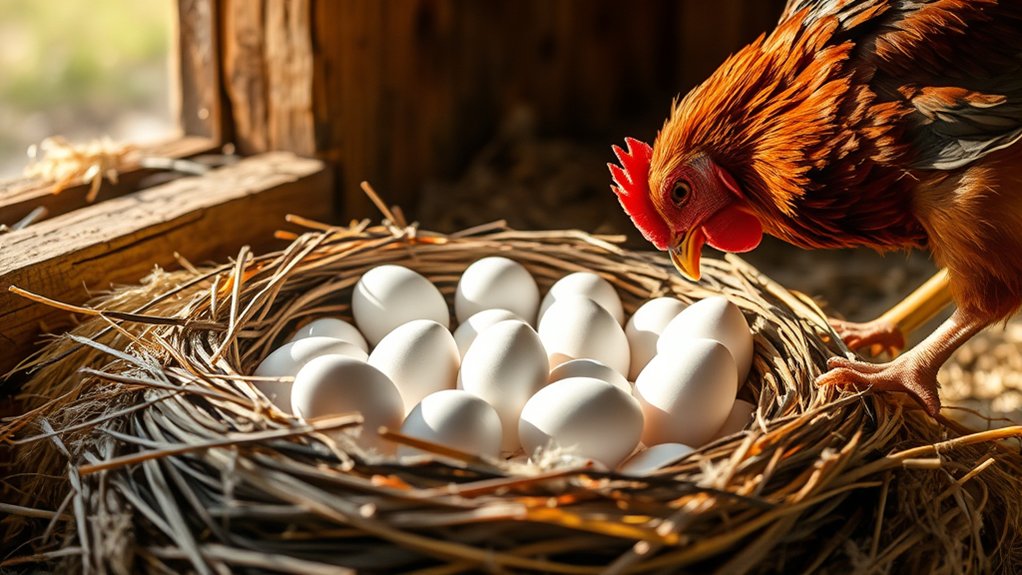
On average, a healthy hen lays about 250 to 300 eggs per year. This can vary depending on the breed, age, and overall health of your hen.
Most hens produce a steady number of eggs during their peak laying years, usually from about 6 months to 2 years old. During this time, you can expect roughly one egg per day.
Some breeds are known for higher yields, while others might lay fewer eggs but produce larger or tastier ones. Keep in mind, individual hens may lay more or fewer eggs depending on their conditions.
If you care for your hen properly, you’re likely to enjoy a good supply of eggs throughout the year.
What Factors Influence Your Hen’s Egg Production
Your hen’s age and maturity really matter when it comes to how many eggs she lays. Generally, younger hens tend to produce more eggs than older ones.
Lighting and environment also play a big role. Hens need the right amount of light and a comfortable space to stay productive.
Age and Maturity
Age and maturity are key factors that greatly influence how many eggs a hen lays throughout her life. When hens reach maturity, usually around 16 to 24 weeks, they start laying eggs.
Early laying can be sporadic, but production increases as they mature fully. As hens age beyond two years, egg production declines. Younger hens produce more eggs, but their output tapers as they grow older.
The table below shows how age affects egg production:
| Age Range | Egg Production Level |
|---|---|
| 16-24 weeks | Increasing, peak production |
| 1-2 years | High and steady |
| 2-3 years | Slight decline |
| 3-5 years | Noticeable decrease |
| Over 5 years | Considerably reduced |
Understanding your hen’s age helps predict her laying patterns and overall productivity.
Lighting and Environment
Lighting and environmental conditions are crucial for how many eggs a hen lays. Proper lighting helps regulate your hen’s reproductive cycle and keeps egg production steady.
Hens need about 14 to 16 hours of light each day to stay productive. If natural light isn’t enough, you can add artificial lighting to fill in the gaps.
Temperature also plays a big role. Keep the coop between 55-75°F because too hot or cold can cut down on egg laying.
Make sure the coop is well-ventilated, clean, and free from drafts or excess humidity. A comfortable, safe environment helps reduce stress, which affects laying.
Providing a consistent, clean, and well-lit space helps your hens stay healthy and produce eggs consistently all year round.
How Breed Affects Egg-Laying Capacity
The breed of a chicken really influences how many eggs it can lay. Some breeds are bred specifically for high egg production, while others focus on meat or ornamental features.
Chicken breed selection greatly impacts egg-laying potential and overall poultry success.
For example, Leghorns and Rhode Island Reds are known for laying lots of eggs—around 250 to 300 a year. Heritage breeds like Sussex or Orpingtons usually lay fewer, about 180 to 200 annually.
Hybrid breeds like Isa Browns are designed for maximum egg production. Under good conditions, they can lay over 300 eggs a year. Your choice of breed can make a big difference in your egg yield.
Picking the right breed based on your goals can really boost your poultry-keeping success.
How Age Impacts Egg Production in Chickens
You’ll notice that chickens lay the most eggs when they’re around 6 months to a year old. After this peak, egg production gradually declines as they age.
Understanding this pattern helps you plan for a steady egg supply throughout your flock’s lifespan.
Peak Laying Age
A chicken’s egg-laying capacity peaks during a specific age window, which varies depending on breed and health. Typically, hens lay the most eggs between 20 to 30 weeks of age. During this period, their bodies are fully matured, and hormone levels support peak egg production.
After this peak, laying can slow down gradually. To give you a clearer picture: most breeds reach peak laying age around 6 months. Egg production is at its highest during the first year.
Some hens may continue strong laying for up to 18 months. Production usually tapers off after 12 to 18 months, depending on the breed and care.
Understanding this window helps you plan for a steady egg supply and manage your flock effectively.
Decline Over Time
As chickens age beyond their peak laying years, their egg production steadily declines, often quite noticeably. You’ll see fewer eggs as their bodies slow down, usually starting around 2 to 3 years old.
The decline isn’t sudden but gradual, with a big drop after the first year or two. Older hens may only lay a few eggs each week, compared to nearly an egg a day at their peak.
Hormonal changes and decreased fertility play a big role in this decline. Environmental factors like stress or poor nutrition can speed it up too.
While some hens might still lay sporadically into their third or fourth year, overall productivity drops off.
Knowing this helps you set realistic expectations and plan for replacing hens or adding new ones to keep your egg supply steady.
How Diet and Nutrition Boost Egg-Laying
Proper diet and nutrition are key to maximizing a chicken’s egg production. When you feed your hens well, you support their overall health and ability to lay eggs.
To boost production, focus on these important nutrients:
- Protein – Necessary for egg formation; include high-quality sources like soybean meal or fishmeal.
- Calcium – Keeps eggshells strong; provide crushed oyster shells or limestone.
- Vitamins – Help with metabolic processes; add supplements rich in vitamins A, D, and E.
- Energy – Keeps them active; include grains like corn or wheat to meet their energy needs.
A balanced diet ensures your hens produce more eggs and stay healthy, leading to a more productive flock.
Creating Living Conditions That Encourage Egg Production
To encourage consistent egg production, make sure your chickens have enough space and enriching environments to keep them active and happy. Giving them room to move around makes a big difference.
Ensure they have access to proper nutrition and plenty of fresh water, as these are vital for their health and ability to lay eggs. A well-fed hen is a happy, productive hen.
Creating comfortable living conditions helps your hens stay healthy and naturally produce more eggs. Happy chickens are more likely to lay consistently.
Adequate Space and Enrichment
Providing chickens with enough space and enrichment is essential for maximizing their egg production. When hens have room to move and explore, they’re less stressed and more likely to lay consistently.
Enrichment keeps them stimulated and helps prevent boredom, which can negatively affect laying. Think about spacious coops with at least 2-3 square feet per bird to avoid overcrowding.
Include perches and nesting boxes so they can express natural behaviors. Giving access to outdoor areas for foraging and exercise is also really important.
Adding toys or objects like hanging treats or mirrors encourages mental stimulation. Creating a comfortable, engaging environment helps hens stay healthy, happy, and productive, leading to more eggs over the year.
Proper Nutrition and Hydration
Guaranteeing your hens receive the right nutrition and ample hydration is key to maintaining high egg production. A balanced diet rich in good-quality proteins, grains, and calcium helps with strong eggshells and overall health.
Use layer feeds designed specifically for laying hens, and add oyster shells or crushed limestone to boost their calcium intake. Fresh, clean water should always be available because dehydration can really cut down egg production.
Keep an eye on water intake, especially during hot weather. Sudden diet changes can stress your hens and lower their laying, so try to keep their diet steady.
Providing proper nutrition and hydration encourages steady egg production, better eggshells, and healthy, active hens. Focusing on these essentials keeps your flock productive and vibrant all year round.
How Seasonal Changes Affect Egg Numbers
Seasonal changes have a big effect on how many eggs a chicken lays during the year. As daylight hours change, hens adjust their laying habits. Longer days in spring and summer usually lead to more eggs, hitting peak production.
In winter, shorter days can cause laying to slow down or even stop altogether. Cold weather stresses hens and reduces their egg output, while moderate warmth helps keep them active and productive.
Temperature matters too. Extreme cold stresses chickens and lowers egg production, but warm, comfortable conditions support steady laying. Humidity levels also impact hen comfort and egg quality.
To picture it: longer daylight hours boost egg production, while shorter winter days decrease it. Cold temperatures stress hens, reducing output, whereas warm, cozy conditions encourage consistent laying.
Signs That Your Chicken Is About to Lay Eggs
As your chickens get more daylight and the weather warms up, you’ll notice some signs that they’re about to lay eggs. One clear sign is that they start to chatter more or seem restless as they prepare.
You might also see physical changes, like their combs and wattles swelling and turning red, which shows hormonal changes. Plus, hens often become more curious and active, exploring their environment more than usual.
They may spend extra time in nesting areas or pick specific spots to lay eggs. Sometimes, you’ll see a soft swelling near the vent, which means their eggs are forming and they’re about to lay. Recognizing these signs helps you know when an egg is on the way.
Tips to Maximize Your Hen’s Egg Output
To boost your hens’ egg production, focus on giving them a balanced diet rich in high-quality proteins, calcium, and essential nutrients. Good nutrition keeps hens healthy and encourages consistent laying. Also, make sure they always have access to clean water.
A balanced diet with high-quality proteins and calcium keeps hens healthy and encourages steady egg laying.
Creating a comfortable, stress-free environment is just as important. Here are four key tips to help you get the best egg output:
- Offer a diet with layer pellets or grains fortified with calcium.
- Provide oyster shells or crushed eggshells for extra calcium.
- Keep the coop comfortable with good ventilation and proper lighting.
- Reduce stress by limiting predators and handling hens gently.
Following these tips will help keep your hens healthy, which directly boosts egg production and keeps them laying steadily all year round.
What to Expect From Different Chicken Breeds
Different chicken breeds vary quite a bit in how many eggs they lay, their temperament, and their care needs. Some breeds produce eggs almost daily, while others lay less often. For example, Leghorns are great layers, laying up to 280 eggs a year, while Silkies are more for looks and lay fewer eggs.
Your choice depends on what you want—whether it’s high egg production or friendly pets. Here’s a quick comparison of some popular breeds:
| Breed | Egg Production (per year) | Temperament |
|---|---|---|
| Leghorn | Up to 280 | Active, alert |
| Rhode Island Red | 250-280 | Hardy, friendly |
| Sussex | 200-250 | Calm, gentle |
| Orpington | 180-200 | Docile, friendly |
| Silkie | 100-120 | Quiet, ornamental |
Matching breed traits with your needs will help you find what’s right for you and make your chicken keeping experience successful and enjoyable.
Troubleshooting Low Egg Production in Chickens
Low egg production can be frustrating, but understanding the common causes can help you identify and fix the problem quickly. First, check if your chickens have proper nutrition because a lack of calcium or protein can reduce egg output.
Low egg production may be due to poor nutrition, so ensure your chickens get enough calcium and protein.
Second, make sure they have enough light; hens need about 14-16 hours daily for ideal laying. Third, monitor their health—illnesses or parasites can lower production.
Finally, consider environmental stressors like extreme temperatures or predators, which can disturb laying cycles. By addressing these factors, you can boost your hens’ productivity.
For example, providing a balanced diet, improving coop lighting, treating health issues, and reducing stressors can make a significant difference. Troubleshooting these common issues helps keep your chickens healthy and productive.
Frequently Asked Questions
How Long Is a Typical Hen’s Laying Cycle?
A typical hen’s laying cycle lasts about 24 to 26 hours, so she usually lays an egg roughly every day or every other day during peak seasons.
This cycle can change depending on things like the breed, her age, and the environment she’s in.
Once she reaches maturity, she’ll generally lay consistently for about 1 to 2 years.
After that, her egg production starts to decline gradually, signaling the end of her peak laying period.
Do Backyard Chickens Lay as Many Eggs as Commercial Hens?
Backyard chickens usually lay fewer eggs than commercial hens. Commercial hens are bred for high productivity, often producing around 250-300 eggs a year.
In comparison, backyard chickens typically lay about 150-250 eggs annually, depending on breed, age, and conditions. You might notice their laying is less consistent, especially during winter or molting.
But many people enjoy keeping backyard chickens because they get to experience a more natural lifestyle, which can be very rewarding.
Can Environmental Stress Reduce a Hen’s Egg Production?
Environmental stress can greatly reduce a hen’s egg production. When your chickens face factors like extreme temperatures, predators, or poor living conditions, they become anxious or uncomfortable.
This stress redirects their energy away from laying eggs, leading to fewer eggs or irregular laying patterns. To keep your hens productive, make sure they have a stable, comfortable environment, access to clean water, proper nutrition, and protection from stressors.
How Do Light Hours Influence Egg-Laying?
Light hours greatly influence a hen’s egg-laying. When days are longer, around 14-16 hours of light daily, hens tend to produce more eggs. Increased light boosts their reproductive hormones, encouraging consistent laying.
On the other hand, shorter daylight hours, like in winter, can lead to fewer eggs or even a pause in laying altogether. To keep up production, you can add artificial light to your coop to simulate longer days.
Are There Health Issues That Decrease Egg Output?
Yes, health issues can decrease your chicken’s egg output. Imagine a vibrant hen suddenly weighed down by illness, her productivity waning like a fading sun.
Diseases like mites, infections, or nutritional deficiencies stress her system, reducing laying. Stressful conditions or poor diet weaken her immune system, making her lay fewer eggs.
Regular health checks and balanced nutrition help keep her healthy and guarantee she continues laying consistently.
Conclusion
So, by now you’re probably dreaming of a hen that lays golden eggs every day, like some poultry fairy tale. Remember, your chicken’s egg count depends on breed, age, diet, and a little luck.
Think of her as a tiny, feathered factory—sometimes she’s on fire, sometimes she’s taking a nap. With proper care and a bit of patience, you’ll enjoy a steady supply.
In fact, a typical hen can lay about 250 to 300 eggs a year, depending on those factors.
So, if you’re aiming for a consistent egg supply, knowing how many eggs a chicken lays in a year is key. No magic wand needed—just good care and a happy hen.