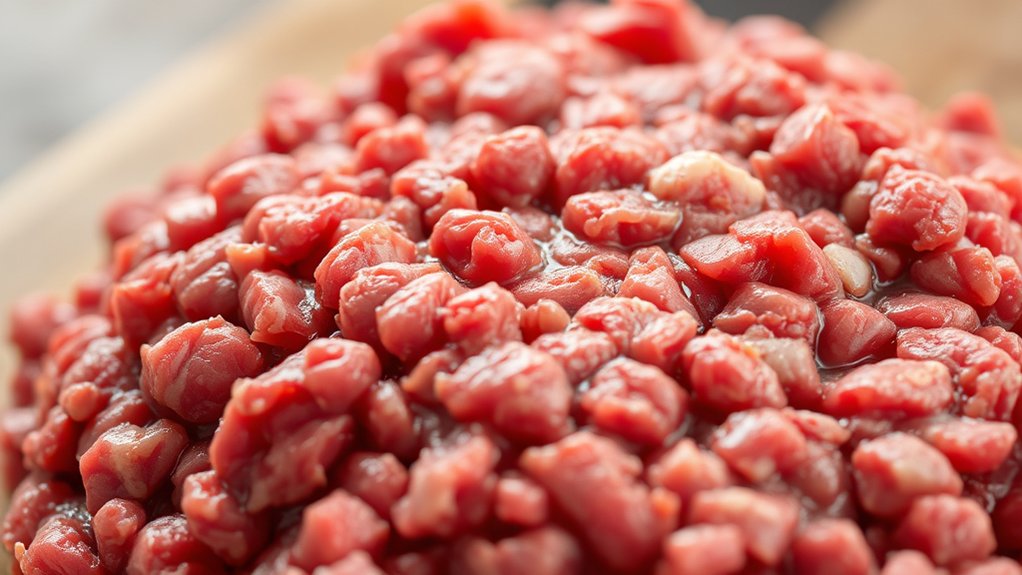
How Many Calories Are in 1/2 Cup of Ground Beef?
Many of us want to enjoy tasty, satisfying meals without going overboard on calories. If you’re watching your intake, figuring out how much ground beef fits into your diet can be tricky — you’re not alone in that struggle.
A half-cup of ground beef contains about 150 calories, but this can vary depending on its fat content. Lean ground beef (10% fat) tends to have fewer calories than regular ground beef, which can have up to 30% fat.
The way you cook it also matters—grilling or draining fat can reduce calorie intake.
If you want to understand how to make healthier choices and manage your calorie intake, there’s more to investigate.
Key Takeaways
- Half a cup of lean ground beef (around 90% lean) has about 150 calories.
- The calorie count can change depending on the fat content. For example, regular ground beef with around 30% fat contains roughly 250 calories per half-cup.
- How you cook it matters too. Draining the fat after cooking can cut down the calorie content.
- For the most accurate info, measure the beef after cooking because water and fat are lost during the process.
- Choosing leaner options or other protein sources can help you keep the calorie count lower for the same portion size.
How Much Ground Beef Is in Half a Cup? Understanding Serving Sizes
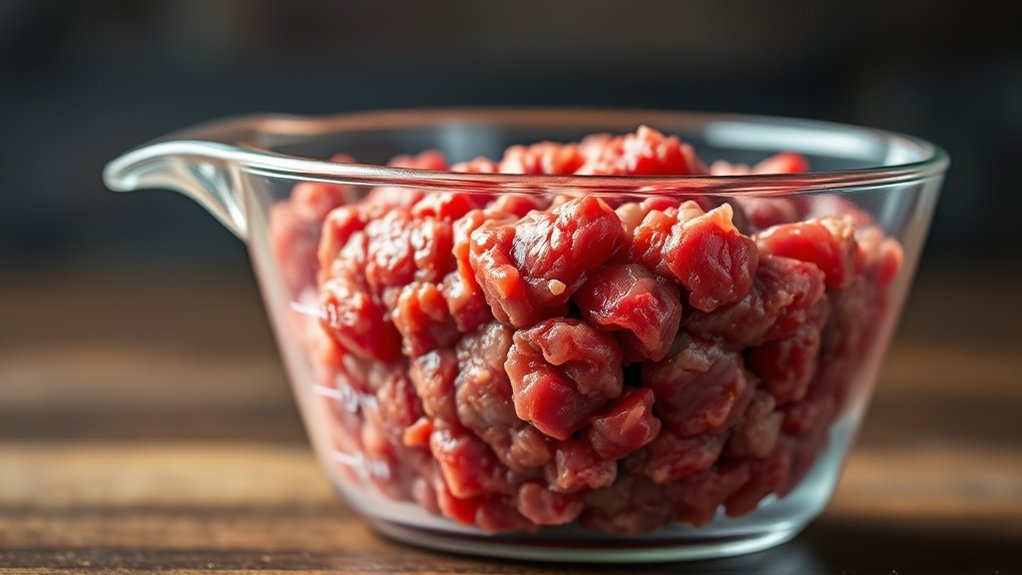
A half-cup of ground beef usually weighs around 4 ounces or 113 grams. When measuring it, remember that the volume can vary a little based on how finely it’s chopped or packed.
If you’re scooping it into a measuring cup, gently press the meat without packing it down too much, as that can increase the weight. This serving size is common in recipes and helps you keep track of portions.
For more accuracy, you can weigh your ground beef on a kitchen scale. Knowing that half a cup is roughly 4 ounces makes it easier to estimate servings, whether you’re cooking for yourself or preparing larger meals.
Understanding this helps you manage portion sizes and track nutrition better.
How Many Calories Are in Half a Cup of Lean Ground Beef?
When measuring half a cup of lean ground beef, you’re looking at roughly 150 calories. This makes it a good protein source while keeping fat intake lower.
Lean ground beef usually contains about 90% lean meat, meaning less fat and fewer calories compared to fattier options. If you’re watching your calorie intake or trying to maintain a balanced diet, this portion provides plenty of protein without excess calories.
Keep in mind that cooking methods can slightly change the calorie content. Draining excess fat or cooking without added fats helps keep calories in check.
How Fat Content Affects Ground Beef Calories
The amount of fat in ground beef directly impacts its calorie count, with fattier varieties containing more calories per serving.
Choosing leaner options reduces calorie intake but may also affect flavor and texture.
Understanding how fat content influences nutritional value helps you make better choices for your diet.
Fat Content and Calories
Fat content directly impacts the calorie count of ground beef, with higher fat levels resulting in more calories per serving. The more fat in your ground beef, the more energy it provides since fat packs about 9 calories per gram.
For example, a 70% lean ground beef contains more fat and calories than a 90% lean variety. When you choose fattier options, your 1/2 cup serving will have considerably more calories, which can add up quickly if you’re watching your intake.
Fat also affects how filling the beef is and can influence flavor and texture. So understanding the fat content helps you gauge how many calories you’ll consume, making it easier to manage your diet and nutritional goals.
Lean vs. Fatty Beef
Choosing lean or fatty ground beef significantly affects the calorie content of your meal. Lean beef has fewer calories—about 120 per 1/2 cup—while fatty beef can have around 180 calories for the same amount.
The fat content directly impacts both calorie density and flavor. Here’s a quick comparison:
| Beef Type | Calories per 1/2 Cup | Fat Content |
|---|---|---|
| Lean (90% lean) | 120 | 5g |
| Regular (80% lean) | 180 | 9g |
| Extra Fatty | 220 | 15g |
| Very Lean | 100 | 3g |
Knowing the fat content can help you pick the right ground beef for your dietary goals and meal planning.
Impact on Nutritional Value
Since higher fat content increases the calorie density of ground beef, it directly impacts your overall nutritional value. Fatty ground beef provides more calories per serving compared to lean options, which can influence your dietary goals.
While fat adds flavor and juiciness, it also raises saturated fat intake, potentially affecting heart health if eaten in excess. Choosing leaner ground beef reduces calorie intake and decreases saturated fat, making it a better choice for weight management and heart health.
However, some fat is essential for nutrient absorption and energy. Balancing fat content with your nutritional needs helps you make smarter choices.
Understanding how fat affects calories allows you to tailor your ground beef consumption to fit your health goals.
Different Types of Ground Beef and Their Calorie Counts
There are several types of ground beef available, each with different fat content and calorie counts. Your options include lean, extra-lean, and regular ground beef.
Lean ground beef usually has about 10% fat and provides roughly 170 calories per 3-ounce cooked serving. Extra-lean ground beef has around 5% fat and about 150 calories per serving.
Regular ground beef can have up to 30% fat, offering closer to 250 calories per cooked serving. The higher the fat, the more calories you’ll consume.
When choosing, think about your dietary goals. Leaner options tend to have fewer calories, which can help with weight management. Always check labels or ask your butcher for specifics to make sure you’re getting the right type for your nutritional needs.
Calculating Calories in Cooked Ground Beef
When calculating calories in cooked ground beef, think about how your cooking method impacts the final calorie count.
Different methods like grilling, frying, or baking can change the fat content and calorie density.
Remember, raw and cooked weights can vary a lot, so it’s important to measure your portions accurately.
This helps you get a better idea of the true calorie content of your cooked ground beef.
Effects of Cooking Method
Cooking method greatly impacts the calorie content of ground beef, as different techniques can cause varying levels of moisture and fat loss.
For example, grilling drips fat away, which reduces calories, while pan-frying can leave fat in the meat and increase calorie density. Baking tends to preserve more moisture, often resulting in slightly higher calories per serving.
Here’s a quick comparison:
| Method | Typical Calorie Effect |
|---|---|
| Grilling | Lower, fat drips away |
| Pan-frying | Higher, fat stays in meat |
| Baking | Moderate, retains moisture but loses less fat |
Your choice of cooking method influences the calorie count, so think about how you prepare your ground beef to manage intake effectively.
Raw vs Cooked Variance
The way ground beef is prepared can noticeably change its calorie count, especially when comparing raw and cooked forms. When you cook ground beef, moisture and fat content decrease due to evaporation, making it denser.
This means that a cooked half-cup weighs less than raw but contains more calories per volume because the water loss concentrates the nutrients. If you measure raw ground beef, you’ll get a different calorie count than if you measure it after cooking.
To accurately track calories, it’s best to weigh the beef after cooking. Keep in mind that cooking methods like frying or draining fat can greatly impact calorie content.
Portion Size Accuracy
Accurately calculating calories in cooked ground beef depends on measuring your portion size precisely. When you cook beef, it loses water and fat, which changes its weight but not the calorie content.
To get an accurate count, measure your cooked beef carefully—using a scale if you can. Don’t rely only on volume, like cups, because cooked meat shrinks unevenly.
If you start with raw beef weight, use cooking yield tables or a nutritional database to find out the cooked weight and calorie content. Consistency is key: weigh your portions regularly and record the cooked weight.
This way, you’ll know exactly how many calories you’re eating, making your calculations reliable. It helps you stay on track with your dietary goals.
Raw vs. Cooked Ground Beef Calories: What’s the Difference?
Have you ever wondered if there’s a difference in calorie content between raw and cooked ground beef? The answer is yes. When you cook ground beef, it loses water and fat, which makes the calories per serving more concentrated.
That means cooked ground beef generally has more calories per ounce than raw. For example, a raw 3-ounce portion might have about 150 calories, but the same cooked portion could have around 200 calories because of water loss.
Keep in mind, if you drain the fat after cooking, the calorie content decreases. So, understanding whether your beef is raw or cooked helps you track calories more accurately.
Always measure portions after cooking for the most precise calorie count since water content changes during cooking.
Tips to Reduce Calories When Cooking Ground Beef
To cut calories when cooking ground beef, start by draining any excess fat as it cooks.
Opt for leaner meat options to reduce fat content from the beginning.
These simple steps can make your meals healthier without sacrificing flavor.
Drain Excess Fat
Pour cooked ground beef into a colander or drain it in the sink to remove excess fat. This simple step helps cut down calories and reduces greasiness.
After cooking, let the beef sit for a minute to allow the fat to separate. Gently shake or tilt the colander to drain the liquid fat away.
You can also press the beef lightly with a spoon or spatula to squeeze out more fat, but avoid pressing too hard, which can squeeze out moisture and flavor.
If you prefer, you can pat the beef with paper towels to soak up remaining grease. Removing excess fat lowers calorie content and makes your meal healthier and less greasy.
It also enhances the overall flavor and texture of your dish.
Use Leaner Meat
Choosing leaner ground beef options can really cut down the calorie content of your meals. When shopping, look for labels like 90% lean or higher to reduce fat and calories from the start. You can also ask your butcher for lean cuts or ground beef with less fat.
Cooking with leaner meat means you’ll naturally take in fewer calories and saturated fats. Just remember, even lean meat benefits from proper cooking methods—avoid adding high-fat ingredients or oils. Consider mixing ground beef with vegetables like mushrooms or zucchini to bulk up dishes without adding many calories.
How Ground Beef Calories Fit Into Your Overall Diet
Understanding how ground beef calories fit into your overall diet is key to maintaining a balanced and nutritious eating plan. Calories from ground beef add to your daily energy intake, so it’s important to watch portion sizes and how often you include it in your meals.
If you enjoy ground beef regularly, balancing it with plenty of vegetables, whole grains, and lean proteins can help prevent consuming too many calories. Be mindful of cooking methods—draining fat or choosing leaner options can make a big difference.
Thoughtfully incorporating ground beef ensures you meet your nutritional needs without overdoing it. Ultimately, moderation and balanced meals are the way to enjoy ground beef while supporting your health goals.
Healthier Alternatives to Ground Beef for Lower-Calorie Meals
If you’re looking to cut calories without sacrificing flavor, there are several healthier alternatives to ground beef that can help you create lower-calorie meals. Ground turkey or chicken offer similar texture and taste but with fewer calories and less fat.
Plant-based options like lentils, mushrooms, or textured vegetable protein provide hearty, satisfying textures while greatly reducing calorie content. Cauliflower rice or zucchini noodles can replace traditional grains or pasta, helping you lower calorie intake without losing volume or flavor.
Seafood such as shrimp or white fish is also lean and nutrient-dense, making great substitutes. Using these alternatives allows you to enjoy flavorful, filling meals while reducing overall calorie consumption, supporting your health goals without sacrificing taste or satisfaction.
Frequently Asked Questions About Ground Beef Calories
Are you wondering how many calories are in ground beef and how it fits into your diet? The calorie content varies based on fat percentage and preparation.
For example, a 3-ounce cooked serving of lean ground beef (90% lean) has about 170 calories, while the same amount of regular ground beef (80% lean) has around 215 calories.
If you’re watching your intake, choosing leaner options helps reduce calories without sacrificing protein.
Keep in mind that cooking methods also affect calories—draining fat or grilling can lower the calorie count.
Questions like “How does adding ingredients change calorie content?” or “Is ground beef healthier than other meats?” are common.
Knowing these details helps you make better choices aligned with your dietary goals.
Frequently Asked Questions
How Does Adding Sauces or Toppings Change the Calorie Content of Ground Beef?
Adding sauces or toppings increases the calorie content of ground beef because many condiments like ketchup, mayonnaise, or cheese are calorie-dense. When you include these extras, you’re adding extra fats, sugars, and carbs, which boost the overall calorie count.
To keep your meal healthier, opt for low-calorie toppings like fresh herbs, salsa, or mustard. Also, watching portion sizes can help you manage your calorie intake more effectively.
Are Organic or Grass-Fed Ground Beef Higher in Calories?
Organic or grass-fed ground beef isn’t notably higher in calories than regular ground beef. While some think it’s a big calorie jump, the difference is usually just 10-20 calories more per serving.
You’ll mostly notice these options for their better omega-3s and antioxidants. So, if you’re watching calories, focus on portion size and how you prepare your meat instead of just choosing organic or grass-fed.
What Are the Calorie Differences Between Cooked and Processed Ground Beef Products?
Cooked ground beef usually has a bit fewer calories per serving than raw because cooking reduces water content and concentrates nutrients.
Processed ground beef products, like pre-cooked or seasoned types, might have added fats, sodium, or fillers, which can boost their calorie count.
Always check labels to compare calorie amounts accurately. When you cook ground beef yourself, you can drain excess fat to help lower your overall calorie intake.
Can Portion Control Help Manage Calorie Intake Effectively?
Yes, portion control helps you manage calorie intake effectively. When you measure your servings, you prevent overeating and stay aware of how much you’re consuming.
Using tools like measuring cups or scales makes it easier to stick to your goals. By controlling portions, you can enjoy your favorite foods, like ground beef, without exceeding your daily calorie limit.
This supports healthier eating habits and weight management.
How Do Cooking Methods Impact the Calorie Count of Ground Beef?
Cooking methods are like the brushstrokes on a culinary canvas, dramatically shaping the calorie portrait of your ground beef.
Grilling or broiling lets excess fat drip away, trimming calories, while frying or sautéing in oil adds extra weight.
To keep it light, choose lean cuts, cook without added fats, and drain off excess grease.
Your choices turn a calorie-heavy ingredient into a healthier, flavorful masterpiece.
Conclusion
Remember, the calories in ground beef aren’t just numbers—they reflect choices you make daily. Whether you go for leaner cuts or watch your portion sizes, each decision impacts your health journey.
Sometimes, the smallest change—like measuring your servings—can lead to better outcomes unexpectedly. These little tweaks add up over time.
So, as you plan your meals, keep in mind that every bite is a chance to align your habits with your goals. When considering how many calories are in 1/2 cup of ground beef, it’s all about making mindful choices and understanding how it fits into your overall diet.